

The Bishop's House, Kalundborg Travel Guide
Free Guide: Historic bishop’s residence turned intimate art venue, where medieval brickwork, vaulted cellars and changing exhibitions bring Kalundborg’s past into quiet focus.


A brief summary of The Bishop's House
Historic bishop’s residence turned intimate art venue, where medieval brickwork, vaulted cellars and changing exhibitions bring Kalundborg’s past into quiet focus.
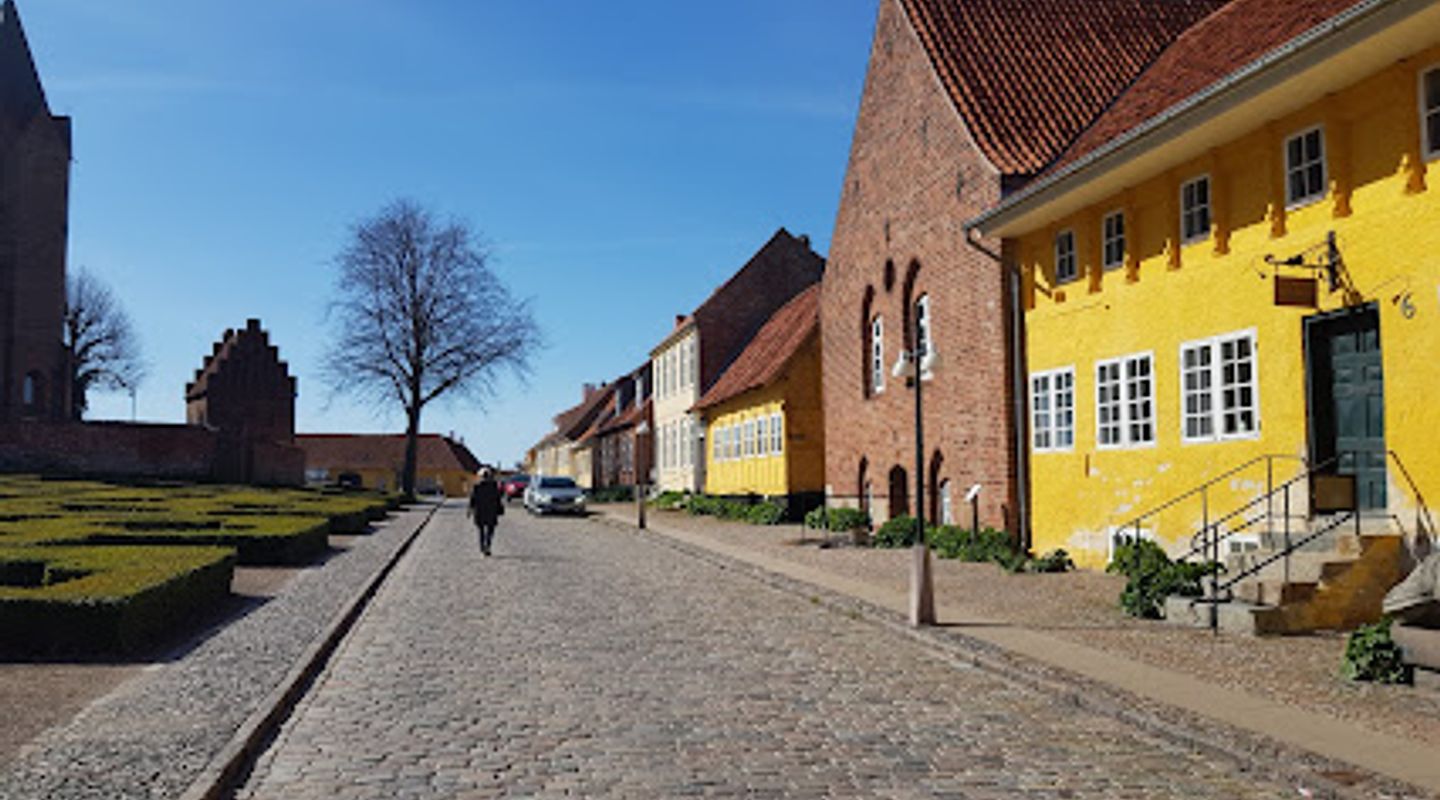
Tucked into Kalundborg’s medieval quarter, The Bishop’s House (Bispegården) is a beautifully preserved complex of historic buildings that now hosts changing art exhibitions. Behind the timbered façades and old brick walls you’ll find intimate gallery rooms, vaulted cellars and a calm courtyard atmosphere that feels far from modern traffic. Entry is free, making it an easy cultural stop to pair with a stroll around Kalundborg’s old streets and the nearby churches.
On-site amenities
 Restrooms
 Seating areas
 Sheltered areas
 Trash bins
 Information boards
Opening hours
- MonClosed
- Tue11 am–4 pm
- Wed11 am–4 pm
- Thu11 am–4 pm
- Fri11 am–4 pm
- Sat11 am–4 pm
- Sun11 am–4 pm
Opening hours as listed on the venue’s Google Business Profile. Hours can change for services and special events, so check with the venue before you go.
- Address
- Adelgade 6, 4400 Kalundborg
- Phone
- Website
Getting there
Train and short walk from Copenhagen
Regional bus within Kalundborg area
Car from western Zealand
Discover more about The Bishop's House
A historic bishop’s residence in the heart of old Kalundborg
The Bishop’s House, or Bispegården, sits on Adelgade among Kalundborg’s oldest streets, a short walk from the town’s distinctive churches and hilltop skyline. Once the residence of the local bishop, it formed part of the ecclesiastical power centre that shaped this coastal town in the late Middle Ages and early modern era. Thick brick walls, steep roofs and small-paned windows speak of a time when church and crown competed for influence along Zealand’s western shore.The complex is not a single building but a small cluster, with structures dating back to the 1500s and a cellar whose foundations reach into the 1200s. Moving between the wings, you can trace how the house grew over centuries, absorbing new functions as religious authority waned and civic life took over. Today’s peaceful surroundings make it hard to imagine the political weight once carried by decisions made within these rooms.
Medieval masonry and atmospheric cellars
Architecturally, Bispegården is a textbook example of how Danish town houses evolved from fortified residences to more comfortable urban homes. On the street side, you notice the restrained brick façades and simple decorative details that hint at status without ostentation. Inside, low beams, worn floorboards and deep window recesses create an intimate, almost domestic scale, even when the rooms are used for exhibitions.One of the most evocative spaces lies below ground. The vaulted cellar from the 13th century, with its heavy brick arches and cool, dim air, offers a tangible sense of continuity. Standing under the curved ceilings, you are surrounded by masonry that has survived trade booms, wars and the Reformation. The cellar has been cleverly adapted for cultural use, offering a dramatic backdrop for art without losing its original character.
From episcopal seat to contemporary art venue
In recent decades, The Bishop’s House has been reborn as a setting for art and cultural events. Kalundborg Kunstforening, the local art association, curates a rolling programme of exhibitions that make inventive use of the historic rooms. Intimate chambers become salons for painting and printmaking, while larger halls host sculpture, photography or themed group shows.The building has also played host to notable special exhibitions devoted to Danish Golden Age artists, including J.Th. Lundbye and his contemporaries. During such events, works from private collections have been gathered here, turning the old bishop’s residence into a temporary treasury of 19th-century landscape and figure painting. This alternating rhythm of contemporary and historical art gives the house a dynamic life that contrasts with its static brick shell.
A quiet cultural hub beside the old town churches
Bispegården’s location in Kalundborg’s oldest quarter is one of its great strengths. Step outside and you are immediately surrounded by crooked lanes, merchant houses and views towards the town’s prominent churches. The complex itself frames a small inner world: courtyards and corners where you can pause between exhibition rooms, sheltered from the wind off the fjord.On exhibition days, the house often forms part of a wider cultural circuit that might also include nearby museums, church interiors or seasonal events. Because admission is free, it lends itself easily to spontaneous visits: a short dip into art and history before or after exploring the streets nearby. The blend of modest scale and rich context makes it feel more like stepping into a lived-in story than entering a formal institution.
Planning your visit to The Bishop’s House
The Bishop’s House operates as an art venue rather than a conventional museum, and its rhythm reflects that. It is typically open in the middle of the day, with gallery hours concentrated from late morning to late afternoon on several days each week. Exhibitions are mounted by the local art association, so what you see will change across the year – from regional artists and craft makers to curated thematic shows.Visits here are rarely rushed. Most people find that an hour is enough to explore the rooms, read exhibition texts and spend time in the most atmospheric corners, though art enthusiasts may linger longer. Combining Bispegården with a walk around Kalundborg’s old town and a church visit easily fills half a day. Comfortable shoes and a light layer are useful, as some interiors can feel cool, especially in the historic cellar, even when the streets outside are warm.
Evendo Review Centre
 Google
Guest reviews
Best time to go
Quietest: Jan, Feb & Mar · before 9am or from 6pm
Busy times are Evendo estimates for a typical year, to help you plan. Actual crowds vary with events, school holidays and the weather.
Explore The Bishop's House on the map
A handpicked selection of must-see spots near The Bishop's House, mapped for you.
Get your free copy of our complete guide to The Bishop's House, delivered straight to you.
Everything on this page, from opening hours and how to get there to Eve’s tips and the best time to go, in one PDF you can read offline, print or share.
Already have an account? Sign in
Your The Bishop's House guide is ready.
We'll send it to · Not you? Sign out

Getting your guide ready…
We are putting together a fresh copy of the The Bishop's House guide. This can take up to a minute.
This can take a few moments. If your browser asks, choose Allow so the download can start. You'll find the guide in your Downloads folder.
Nothing happened? Download it again
Sorry, the guide is taking longer than usual. Please try again in a minute, or get it by email instead.
Other nearby places you may find interesting
The closest places of the same kind, if this one is not quite what you had in mind.
-
-
-
-
-


Swipe for more places
More to explore near The Bishop's House

 Best experiences near The Bishop's House
 Best hotels near The Bishop's House
 Best landmarks near The Bishop's House
 Best attractions near The Bishop's House
 Best shops near The Bishop's House
 Best restaurants near The Bishop's House
 Best bars near The Bishop's House
Do you manage this location?
Take control to get all the benefits, like improved information, better appearance, and stronger visibility across AI-powered discovery.
Explore more

Explore more of Kalundborg
Discover Kalundborg, a picturesque Danish town with rich history, stunning landscapes, and a vibrant cultural scene. Perfect for nature lovers and history enthusiasts alike.
Explore Kalundborg
Explore more of Denmark
Discover Denmark: A perfect blend of history, modern design, and the cozy concept of hygge. Explore vibrant cities, serene landscapes, and world-class cuisine.
Explore Denmark
