Lupinmark Travel Guide
Free Guide: A simple Lolland farm field turned into a shimmering sea of lupins, where color, scent and wide-open skies create a brief but unforgettable countryside pause.


A brief summary of Lupinmark
A simple Lolland farm field turned into a shimmering sea of lupins, where color, scent and wide-open skies create a brief but unforgettable countryside pause.
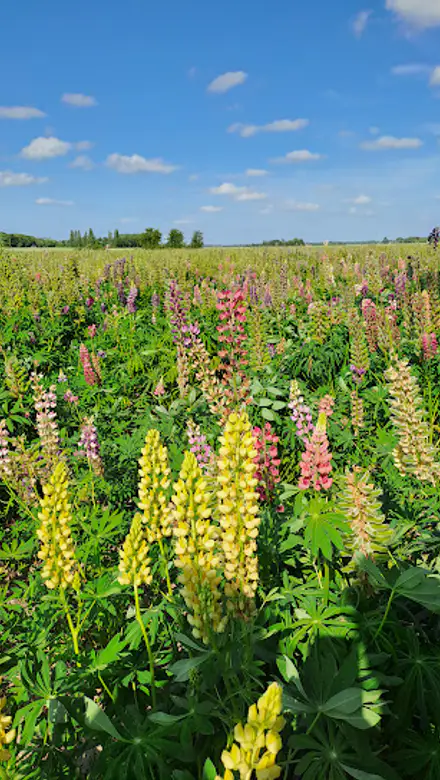
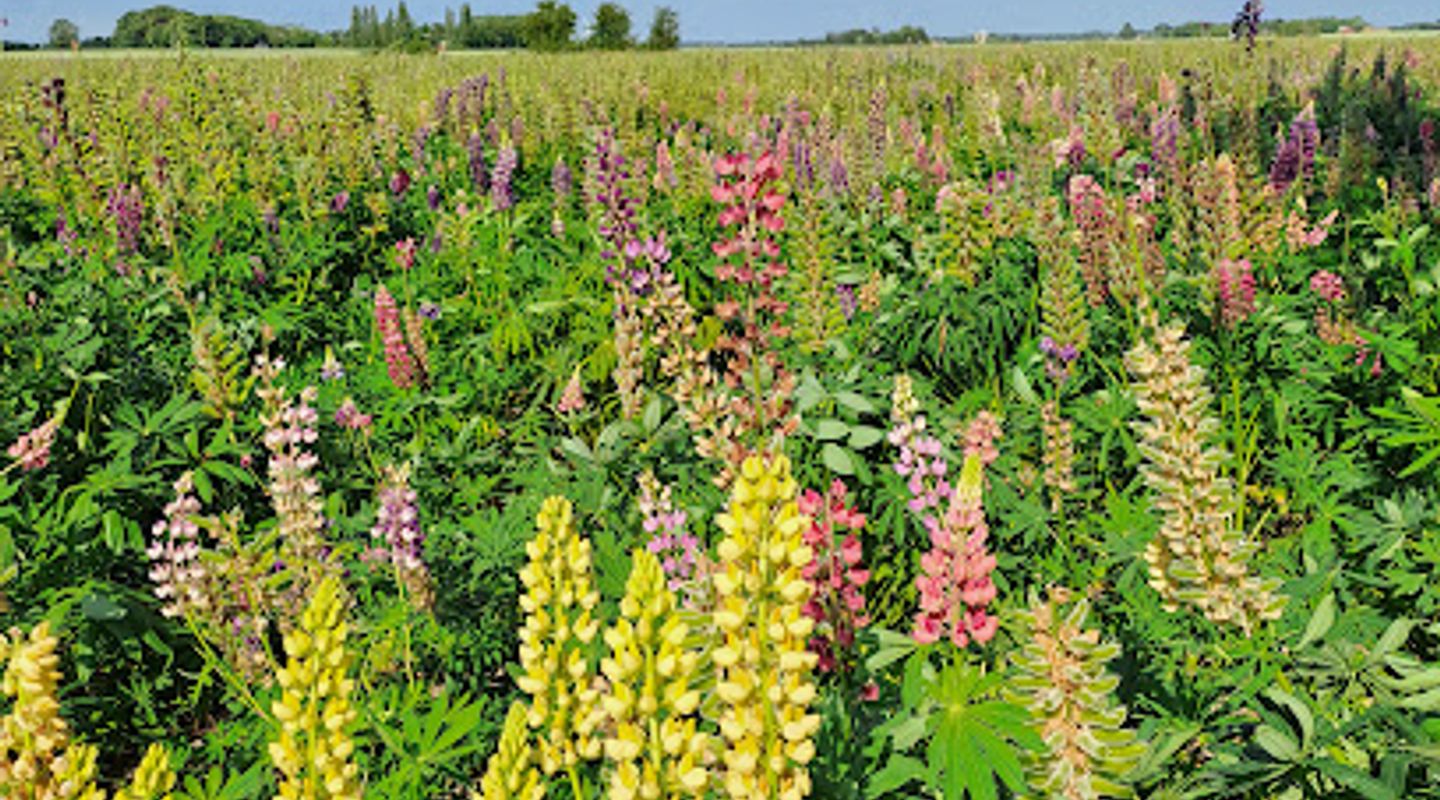
Just outside the village of Landet on western Lolland, Lupinmark at Askøvej 21 is a sweeping field planted with colorful lupins. In late spring and early summer, the gently rolling plot turns into a sea of purple, pink, blue and white flower spikes, framed by open farmland and big Danish skies. This small, unfenced roadside attraction is simple but striking, inviting a short stop to walk along the edges, take photos and enjoy the scent of blooming lupins in the countryside air.
On-site amenities
 Trash bins
- Address
- Askøvej 21, 4920 Søllested
Getting there
Car from Nakskov
Car from Maribo
Bicycle from nearby villages
Discover more about Lupinmark
A Rainbow Field on Rural Lolland
Lupinmark at Askøvej 21 is a cultivated flower field on the quiet western side of Lolland, a few kilometres from the hamlet of Landet. Here, a once ordinary agricultural plot has been transformed into a vivid canvas of lupins in many different shades. From late May into early summer, tall spires of purple, pink, blue and white flowers ripple across the field, creating a striking contrast against the low horizon and wind-brushed crops around it.There is no gate or grand entrance; Lupinmark feels more like stumbling upon a secret garden beside a country road. The simplicity is part of its charm. You arrive straight into open landscape: rows of lupins, a narrow verge or field edge to walk along, and skies that seem to stretch endlessly above the island.
Seasonal Spectacle and Flowering Time
Lupins are hardy perennials, and at Lupinmark they are planted in generous sweeps so their flowering peaks around late spring and early summer. At that time the field becomes almost painterly, with dense clusters of blossoms rising from lush green foliage. On cloudy days the colours appear velvety and rich; in bright sun they glow against the pale sandy soil.Outside the main bloom period, the field looks quieter and more agricultural, with foliage and seed pods replacing the showy spikes. Visiting in shoulder seasons can still be rewarding if you enjoy rural walks, but the full visual impact comes when the flowers are at their height, and bees and other pollinators are busy weaving through the blossoms.
Atmosphere of a Danish Backroad Stop
The mood at Lupinmark is unhurried and distinctly rural. You hear the wind in nearby trees and hedges, the distant sound of tractors, and the soft hum of insects working the flowers. The surrounding farmland is flat to gently rolling, so your view stretches far, taking in red-roofed farmhouses, shelterbelts of trees and, on clear days, a big dome of sky.Because the site is modest in size and lacks formal facilities, visits tend to be short and contemplative. It is the kind of place where you might sit on a low verge, watch light and clouds move over the field, and simply enjoy ten or twenty minutes of colour and scent before continuing your journey through Lolland.
Photography and Respectful Wandering
Lupinmark lends itself naturally to photography. The repeating rhythm of flower spikes creates leading lines, while subtle variations in height and colour provide depth in images. Soft evening light often works best, when the sun is low and the field glows with warm tones, but even overcast days can produce atmospheric shots with saturated hues.Although it is a tourist attraction, the land is still privately owned and cultivated. Visitors typically stay on paths, grass verges or obvious tracks to avoid trampling plants. Being mindful of crops and respecting any informal boundaries keeps the field in good condition and preserves the experience for others, as well as for the owners who choose to maintain it as a floral landmark.
A Quiet Counterpoint to Bigger Lolland Sights
In a region known for coastal nature reserves, beaches and larger attractions, Lupinmark offers a gentler, low-key stop. It pairs naturally with scenic drives along Lolland’s south coast or with visits to nearby forests and bird-rich reserves. The field works well as a brief detour: a pause to stretch your legs, breathe in the sweet, slightly peppery fragrance of lupins and collect a handful of colourful photos before heading on.For travellers who enjoy small, characterful places rather than big-ticket sights, Lupinmark becomes a memorable detail in a wider exploration of the island’s countryside, embodying the quiet pleasures of Denmark’s rural backroads.
Evendo Review Centre
 Google
Guest reviews
Best time to go
Quietest: Jan, Feb & Nov · before 8am or from 10pm
Busy times are Evendo estimates for a typical year, to help you plan. Actual crowds vary with events, school holidays and the weather.
Explore Lupinmark on the map
A handpicked selection of must-see spots near Lupinmark, mapped for you.
Get your free copy of our complete guide to Lupinmark, delivered straight to you.
Everything on this page, from opening hours and how to get there to Eve’s tips and the best time to go, in one PDF you can read offline, print or share.
Already have an account? Sign in
Your Lupinmark guide is ready.
We'll send it to · Not you? Sign out

Getting your guide ready…
We are putting together a fresh copy of the Lupinmark guide. This can take up to a minute.
This can take a few moments. If your browser asks, choose Allow so the download can start. You'll find the guide in your Downloads folder.
Nothing happened? Download it again
Sorry, the guide is taking longer than usual. Please try again in a minute, or get it by email instead.
Other nearby places you may find interesting
The closest places of the same kind, if this one is not quite what you had in mind.
-
-
-
-
-


Swipe for more places
More to explore near Lupinmark

 Best experiences near Lupinmark
 Best hotels near Lupinmark
 Best landmarks near Lupinmark
 Best attractions near Lupinmark
 Best shops near Lupinmark
 Best restaurants near Lupinmark
 Best bars near Lupinmark
Do you manage this location?
Take control to get all the benefits, like improved information, better appearance, and stronger visibility across AI-powered discovery.
Explore more

Explore more of Lolland-Falster
Discover Lolland-Falster: Denmark's serene southern islands with stunning beaches, historic castles, and charming coastal towns offering a perfect blend of nature and culture.
Explore Lolland-Falster
Explore more of Denmark
Discover Denmark: A perfect blend of history, modern design, and the cozy concept of hygge. Explore vibrant cities, serene landscapes, and world-class cuisine.
Explore Denmark