

Cold war museum Stevnsfort Travel Guide
Free Guide: A once-top-secret fortress carved into the chalk cliffs of Stevns Klint, where underground tunnels, heavy artillery and radar tell Denmark’s Cold War frontline story.


A brief summary of Cold war museum Stevnsfort
A once-top-secret fortress carved into the chalk cliffs of Stevns Klint, where underground tunnels, heavy artillery and radar tell Denmark’s Cold War frontline story.
Hidden beneath the chalk cliffs near Rødvig, the Cold War Museum Stevnsfort is a former top-secret fortress carved 18 metres underground in the limestone of Stevns Klint. Once part of NATO’s frontline defence, it monitored the Baltic Sea and the Warsaw Pact with heavy artillery, radar and missile systems. Today, guided tours lead you through 1.6–1.8 km of tunnels, command rooms and gun emplacements, while an outdoor exhibition of missiles, tanks and radar gear reveals how close Denmark stood to the nuclear front line.
On-site amenities
 Restrooms
 Drink options
 Food options
 Seating areas
 Sheltered areas
 Picnic areas
 Trash bins
 Information boards
 Visitor centre
Opening hours
- Every day10 am–5 pm
Opening hours as listed on the venue’s Google Business Profile. Hours can change for services and special events, so check with the venue before you go.
- Address
- Korsnæbsvej 60, 4673 Rødvig Stevns
- Phone
- Website
Getting there
Regional train and bus from Copenhagen
Car from Copenhagen and Zealand
Cycling from Rødvig and Stevns Klint area
Discover more about Cold war museum Stevnsfort
Where Denmark Watched the Baltic Front
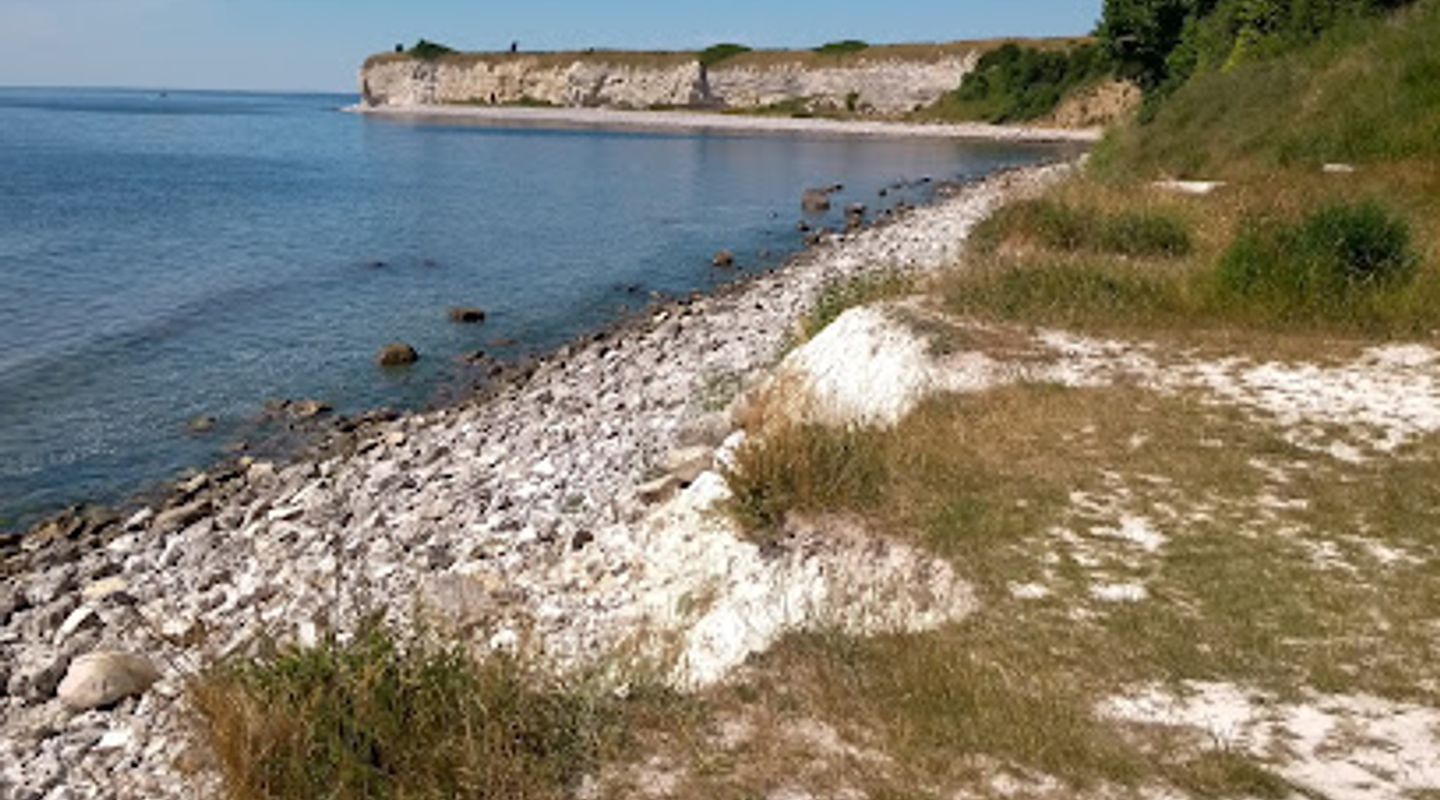
Stevnsfort sits on a flat stretch of coast just outside Rødvig, perched above the white limestone cliffs of Stevns Klint and looking straight out over the Baltic Sea. From this low profile position, Danish forces could monitor every ship moving through the waters between Denmark and Sweden and, crucially, control access to the straits leading towards Copenhagen. The setting feels deceptively peaceful today, with open fields, sea views and grazing birds belying the former strategic importance of this small headland.Built in the early 1950s and operational throughout the Cold War, the fortress formed part of NATO’s first line of defence. Its job was to detect and, if necessary, stop a Warsaw Pact attack coming through the Baltic. For decades the installation was strictly classified; even many locals knew little about what was hidden in the ground beneath their feet.
Life Inside an Underground Fortress
Eighteen metres below the surface, the military complex is carved directly into the solid limestone bedrock, forming an underground maze of roughly 1.6 kilometres of corridors and chambers. Down here, the temperature holds at about 10°C year-round, and the atmosphere is a mix of cold stone, metal doors and dense cables running along the walls. This was designed as a self-contained world where several hundred soldiers could live and work for weeks, sealed off in case of chemical, biological or nuclear attack.As you move through the tunnels, you pass sleeping quarters, power and ventilation rooms, communication hubs and a fully equipped operations centre. The spaces are tight and functional, more like the interior of a ship than a building. The thick rock overhead provided not just physical protection, but also a sense of isolation from the world above – an environment shaped entirely by readiness for a conflict that, fortunately, never came.
Guns, Missiles and a Nuclear Target
Stevnsfort was armed to influence events far beyond its modest footprint. The main artillery consisted of two large twin 150 mm gun turrets with a range of about 23 kilometres – enough to reach the Swedish coast and command the entrance to Øresund. Each turret sat above ground but was served by underground magazines and control rooms, and could rotate a full 360 degrees to fire both out to sea and inland against troops that might have landed on Zealand.Alongside the guns, the fort hosted radar installations and a HAWK missile unit designed to engage enemy aircraft. Together, these systems fed into a NATO warning centre buried within the complex, where data from across the Baltic approaches were processed. In military planning, Stevnsfort was considered such a critical node that it was expected to be an early target for a tactical nuclear strike in any major East–West confrontation.
From Secret Installation to Open-Air Classroom
Today, the site has been transformed into a museum that balances technical detail with vivid storytelling. The underground complex can only be visited on a guided tour, both for safety and to make sense of the many rooms and instruments. Above ground, you can explore at your own pace, wandering between radar dishes, missile launchers, tanks and smaller guns set out across the terrain.An exhibition hall and visitor building introduce the wider Cold War context, explaining how Denmark’s geography placed it squarely on the dividing line between NATO and the Warsaw Pact. Rather than focusing on battles, the displays highlight everyday routines, standby shifts and the constant preparation involved in guarding a frontline that was never supposed to erupt into open war.
Experiencing the Edge of the Nuclear Era
Visiting Stevnsfort is less about spectacle and more about atmosphere. The chill of the tunnels, the echo of footsteps on concrete and the low hum of air systems create a sensory impression of what it meant to operate underground around the clock. Many of the control rooms retain their analogue consoles, maps and equipment, giving a tangible sense of 20th-century technology and the human hands that worked it.Above ground, the contrast is striking: wide Baltic horizons, chalk cliffs and sea air frame radar masts and missile batteries. The combination of coastal landscape and preserved military hardware makes the museum as much about place as about politics. It is a rare opportunity to step inside the machinery of deterrence and see how a small corner of Denmark was woven into global power struggles during one of history’s most tense periods.
Evendo Review Centre
 Google
Guest reviews
Best time to go
Quietest: Jan, Nov & Dec · before 8am or from 7pm
Busy times are Evendo estimates for a typical year, to help you plan. Actual crowds vary with events, school holidays and the weather.
Explore Cold war museum Stevnsfort on the map
A handpicked selection of must-see spots near Cold war museum Stevnsfort, mapped for you.
Get your free copy of our complete guide to Cold war museum Stevnsfort, delivered straight to you.
Everything on this page, from opening hours and how to get there to Eve’s tips and the best time to go, in one PDF you can read offline, print or share.
Already have an account? Sign in
Your Cold war museum Stevnsfort guide is ready.
We'll send it to · Not you? Sign out

Getting your guide ready…
We are putting together a fresh copy of the Cold war museum Stevnsfort guide. This can take up to a minute.
This can take a few moments. If your browser asks, choose Allow so the download can start. You'll find the guide in your Downloads folder.
Nothing happened? Download it again
Sorry, the guide is taking longer than usual. Please try again in a minute, or get it by email instead.
Other nearby places you may find interesting
The closest places of the same kind, if this one is not quite what you had in mind.
-
Labyrint Lolland-Falster Lose yourself in a leafy forest maze where quiz clues, gentle trails and fresh Lolland-Falster air turn getting lost into an easygoing family adventure.
-
Evolution Museet World-class real dinosaur fossils and a 300-million-year journey through evolution, set inside Denmark’s Knuthenborg Safaripark on the island of Lolland.
-
Lupinmark A seasonal sea of lupins turning the Lolland farmland into a vivid carpet of color, perfect for a peaceful countryside pause and striking photographs.
-
Skelsnæs-pavillionen A restored 1822 forest pavilion on a lakeside promontory in Naturpark Maribosøerne, offering peaceful picnic shelter amid historic woods and bird‑rich waters.
-
Relic of the Castle Revshale Subtle grassy earthworks on Borgø Island where a forgotten royal fortress, fierce 13th‑century battles and the serene Maribo Lakes Nature Park meet.
Swipe for more places
More to explore near Cold war museum Stevnsfort
-
 Best experiences near Cold war museum Stevnsfort
-
 Best hotels near Cold war museum Stevnsfort
-
 Best landmarks near Cold war museum Stevnsfort
-
 Best attractions near Cold war museum Stevnsfort
-
 Best shops near Cold war museum Stevnsfort
-
 Best restaurants near Cold war museum Stevnsfort
-
 Best bars near Cold war museum Stevnsfort







Do you manage this location?
Take control to get all the benefits, like improved information, better appearance, and stronger visibility across AI-powered discovery.
Explore more
Explore more of Lolland
Discover Lolland, Denmark's tranquil island retreat, offering lush landscapes, historic sites, and delightful local cuisine for an unforgettable escape.
Explore Lolland
Explore more of Denmark
Discover Denmark: A perfect blend of history, modern design, and the cozy concept of hygge. Explore vibrant cities, serene landscapes, and world-class cuisine.
Explore Denmark
