Boesdal Kalkbrud Travel Guide
Free Guide: A dramatic former limestone quarry where industrial heritage meets 66-million-year-old geological secrets.


A brief summary of Boesdal Kalkbrud
A dramatic former limestone quarry where industrial heritage meets 66-million-year-old geological secrets.
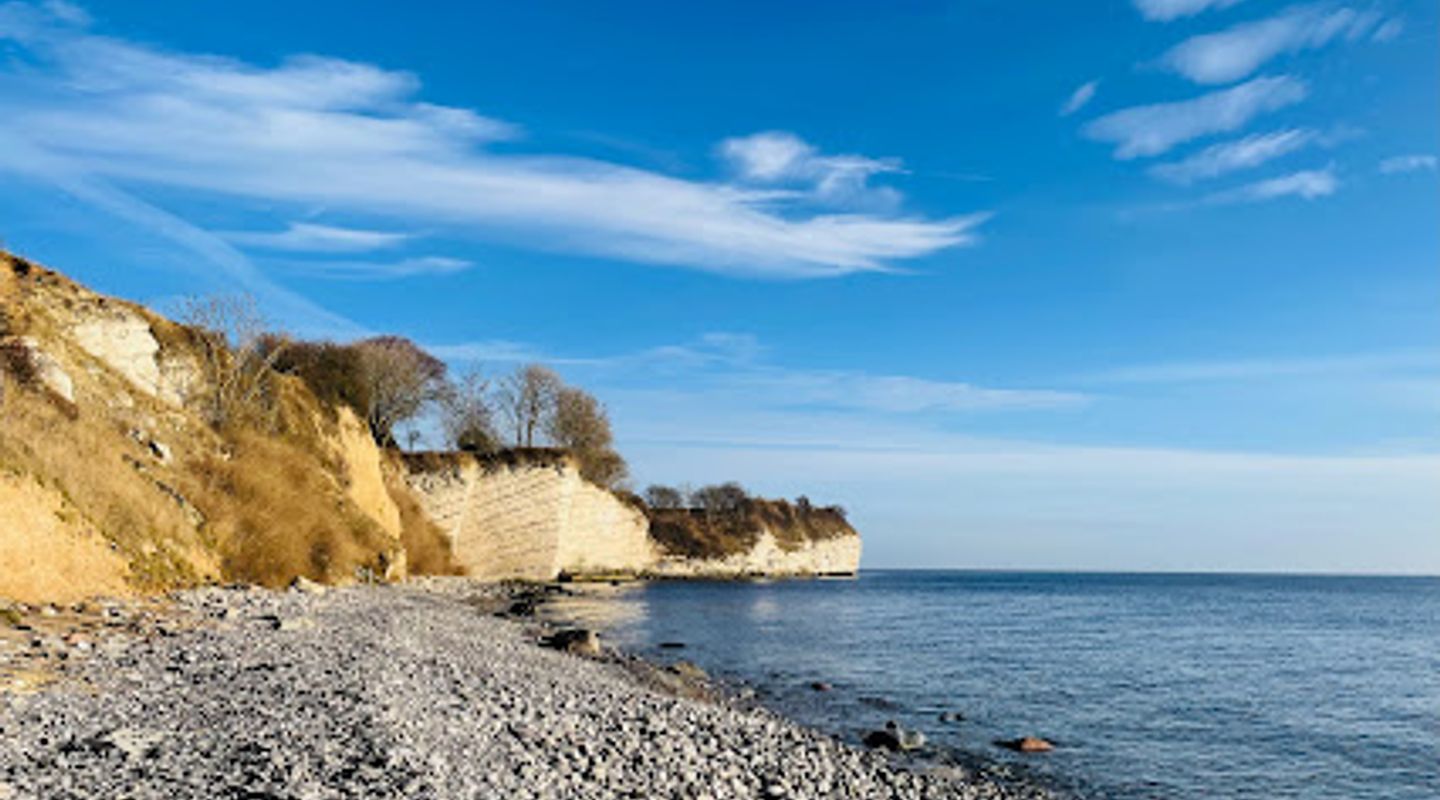
Boesdal Kalkbrud is a former limestone quarry near Rødvig Stevns on Denmark's east coast, transformed into a striking recreational landscape where towering chalk cliffs and industrial heritage meet. Operating from 1914 to 1978, the quarry carved deep into the earth, leaving behind dramatic geological formations and remnants of its industrial past. Today, it serves as a free public space for walking, picnicking, and exploring the unique geology that connects to the nearby UNESCO World Heritage site of Stevns Klint, famous for evidence of the asteroid impact that caused dinosaur extinction 66 million years ago.
On-site amenities
 Restrooms
 Drink options
 Food options
 Seating areas
 Sheltered areas
 Picnic areas
 Trash bins
 Information boards
 Visitor centre
Opening hours
- Every dayOpen 24 hours
Opening hours as listed on the venue’s Google Business Profile. Hours can change for services and special events, so check with the venue before you go.
- Address
- Boesdalsvej 14, 4673 Rødvig Stevns
Getting there
Car from Rødvig
Public Bus from Rødvig Station
Hiking Trail from Rødvig Harbour
Train and Bus Combination from Copenhagen
Discover more about Boesdal Kalkbrud
Industrial Heritage Carved in Stone
Boesdal Kalkbrud stands as a testament to Denmark's industrial past, operating as a limestone quarry from 1914 to 1978. During those six decades, workers extracted limestone for agricultural lime, mortar, and construction materials, fundamentally reshaping the landscape. The quarry's operation carved deep into the earth, creating towering chalk cliffs that rise sharply from the quarry floor—a dramatic scar that nature has slowly been healing since the site's closure. The iconic Pyramid, a massive cone-shaped warehouse that once stored crushed and dried lime, remains visible today as a striking reminder of the industrial machinery that once dominated this space. Remnants of lime kilns used to burn limestone are also scattered throughout the site, offering tangible connections to the quarry's working years.
Nature's Reclamation and Geological Significance
Since the quarry closed in the late 1970s, nature has begun its patient work of reclaiming the industrial landscape, softening harsh edges and creating a haven for local flora and fauna. The site's geological importance extends far beyond its quarrying history. Boesdal Kalkbrud sits within the broader context of Stevns Klint, a 17-kilometer-long coastal cliff formation that is a UNESCO World Heritage site. This cliff contains a thin layer of fish clay rich in iridium, marking the boundary between the Cretaceous and Paleogene periods—direct evidence of the asteroid impact that led to the extinction of the dinosaurs 66 million years ago. While the fish clay layer is not directly visible within Boesdal Kalkbrud itself, the quarry offers a unique perspective on the geological forces that shaped the surrounding landscape and provides insight into the ancient history preserved in these cliffs.
A Modern Recreational Haven
Today, Boesdal Kalkbrud is a popular and freely accessible recreational area managed by Stevns Municipality. The site welcomes locals and tourists alike, offering a unique blend of industrial archaeology and natural beauty. Visitors can wander through the quarry, marveling at the sheer scale of the cliffs and the distinctive geological formations. The area supports various outdoor activities including walking, picnicking, and fossil hunting along the chalk faces. Two basic overnight shelters are available for those seeking to extend their visit, though these are primarily used by local visitors. In 2022, the Stevns Klint Experience visitor center opened at Boesdal Kalkbrud, providing interactive exhibitions about the asteroid impact, VR experiences, and educational displays that contextualize the site's geological and historical significance.
Gateway to Coastal Exploration
The quarry's location near Rødvig Stevns positions it as an ideal starting point for exploring the broader Stevns Klint region. A notable feature is a tunnel blasted through the cliff by miners to dump excess flint on the beach; over time, erosion enlarged this passage into the only place where visitors can walk straight through Stevns Klint to reach the beach. The Stevns Klint Trampesti hiking trail winds along the ocean and through fields for 8 kilometers from Rødvig to the lighthouse, offering rich natural and cultural experiences. From Boesdal Kalkbrud, this trail provides access to other significant sites including Højerup Old Church, built around 1250 and dramatically perched on the cliff's edge, and the Stevns Lighthouse, a 27-meter limestone tower built in the 1870s that offers panoramic views of the Baltic Sea coast.
Practical Access and Visitor Experience
The site is entirely free to access and operates year-round as an open recreational area. Free parking is available on-site, and facilities include restrooms, sheltered areas for picnics, and information boards explaining the site's history and geology. The landscape supports various weather conditions, though the exposed cliff faces and open quarry floor offer limited natural shelter during rain or wind. The area's accessibility makes it suitable for families, solo travelers, and those seeking both active exploration and quiet contemplation. Whether visitors come for a brief walk, a full day of hiking, or to connect with Denmark's geological heritage, Boesdal Kalkbrud offers an authentic experience where human industry and natural forces have created something genuinely unique.
Evendo Review Centre
 Google
Guest reviews
Best time to go
Quietest: Jan, Feb & Dec · before 6am or at 9pm
Busy times are Evendo estimates for a typical year, to help you plan. Actual crowds vary with events, school holidays and the weather.
Explore Boesdal Kalkbrud on the map
A handpicked selection of must-see spots near Boesdal Kalkbrud, mapped for you.
Get your free copy of our complete guide to Boesdal Kalkbrud, delivered straight to you.
Everything on this page, from opening hours and how to get there to Eve’s tips and the best time to go, in one PDF you can read offline, print or share.
Already have an account? Sign in
Your Boesdal Kalkbrud guide is ready.
We'll send it to · Not you? Sign out

Getting your guide ready…
We are putting together a fresh copy of the Boesdal Kalkbrud guide. This can take up to a minute.
This can take a few moments. If your browser asks, choose Allow so the download can start. You'll find the guide in your Downloads folder.
Nothing happened? Download it again
Sorry, the guide is taking longer than usual. Please try again in a minute, or get it by email instead.
Other nearby places you may find interesting
The closest places of the same kind, if this one is not quite what you had in mind.
-
-
-
-
-


Swipe for more places
More to explore near Boesdal Kalkbrud

 Best experiences near Boesdal Kalkbrud
 Best hotels near Boesdal Kalkbrud
 Best landmarks near Boesdal Kalkbrud
 Best attractions near Boesdal Kalkbrud
 Best shops near Boesdal Kalkbrud
 Best restaurants near Boesdal Kalkbrud
 Best bars near Boesdal Kalkbrud
Do you manage this location?
Take control to get all the benefits, like improved information, better appearance, and stronger visibility across AI-powered discovery.
Explore more
Explore more of Møn
Discover the breathtaking cliffs, rich history, and serene beauty of Møn, Denmark's hidden gem in the Baltic Sea, perfect for nature lovers and history enthusiasts alike.
Explore Møn
Explore more of Denmark
Discover Denmark: A perfect blend of history, modern design, and the cozy concept of hygge. Explore vibrant cities, serene landscapes, and world-class cuisine.
Explore Denmark