

Amalienborg Palace Travel Guide
Free Guide: Four Rococo palaces where Danish royalty has lived for over two centuries, crowned by daily ceremonial pageantry.


A brief summary of Amalienborg Palace
Four Rococo palaces where Danish royalty has lived for over two centuries, crowned by daily ceremonial pageantry.
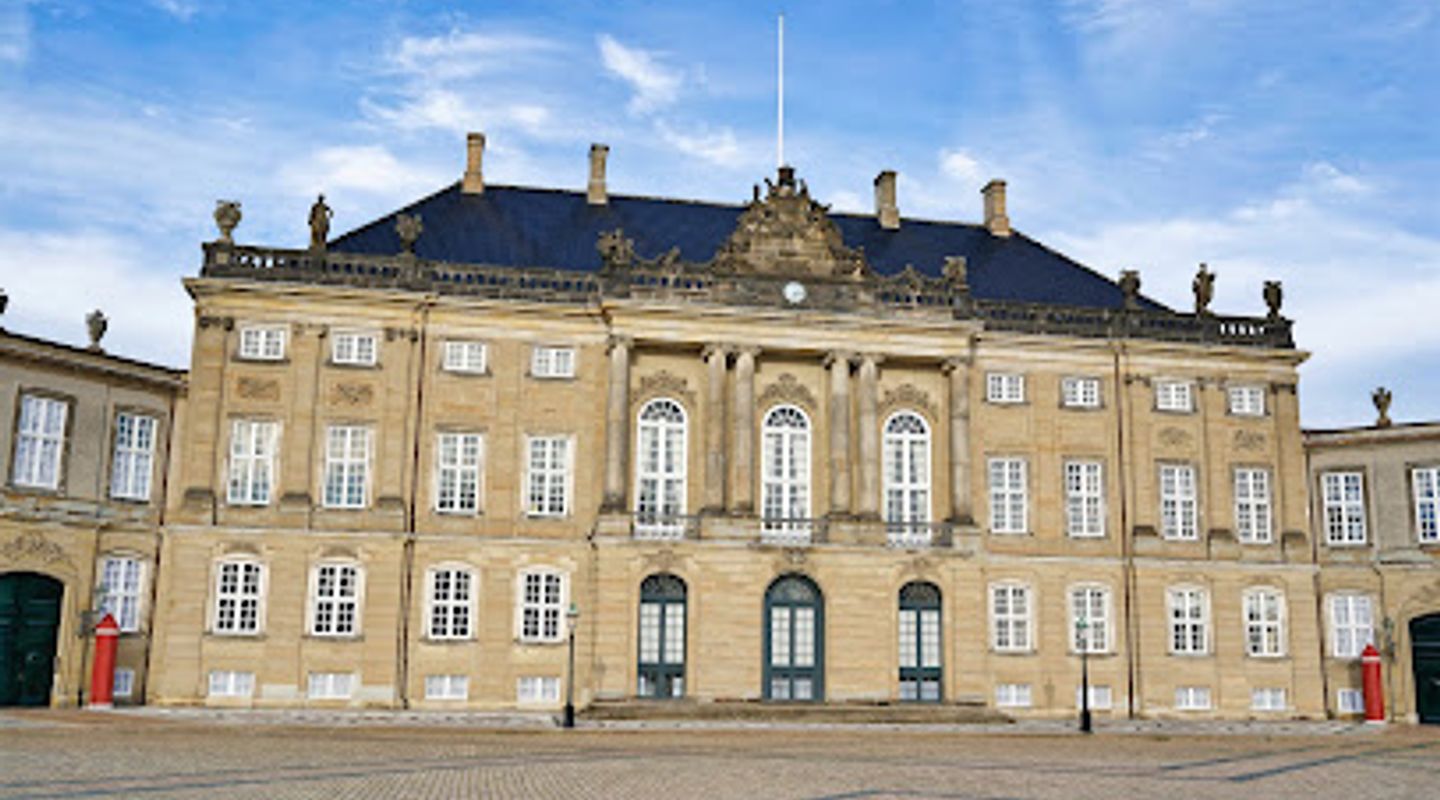
Amalienborg Palace is the official residence of the Danish Royal Family, comprising four identical Rococo palaces arranged around an octagonal square in central Copenhagen. Originally built in the 1750s for noble families, the royal family acquired the complex in 1794 after a fire destroyed Christiansborg Palace. Visitors can explore the Amalienborg Museum in Christian VIII's Palace, which showcases royal life through private chambers, the renowned Fabergé jewellery collection, and state reception rooms. The daily changing of the guard ceremony at noon is a beloved tradition.
On-site amenities
 Restrooms
 Drink options
 Food options
 Seating areas
 Information boards
 Visitor centre
- Address
- Amalienborg Slotsplads, 1257 København K
- Phone
- Website
Getting there
Metro and Walking
Bus
Walking from Nyhavn
Taxi or Rideshare
Discover more about Amalienborg Palace
Four Palaces Around an Octagonal Square
Amalienborg Palace consists of four identical mansions arranged symmetrically around a central octagonal courtyard, creating one of Copenhagen's most architecturally harmonious ensembles. Each palace was originally built between 1750 and 1760 for distinguished Copenhagen families, designed in the elegant Rococo style under the vision of King Frederik V. The architect Nicolai Eigtved led the initial design, though his death in 1754 meant other architects completed the work. The four buildings are now named Christian VII's Palace, Christian VIII's Palace, Christian IX's Palace, and Frederik VIII's Palace, each serving distinct roles within the royal household.The octagonal square itself is dominated by an equestrian statue of King Frederik V, created by French sculptor Jacques Saly and installed in 1771. This bronze monument symbolises the king's pivotal role in establishing the Frederiksstaden district and remains the focal point of the palace square, drawing visitors and photographers throughout the day.
From Noble Residences to Royal Seat
The transformation of Amalienborg from aristocratic townhouses to the primary royal residence occurred dramatically in 1794. When Christiansborg Palace burned in February that year, the Danish Royal Family, led by King Christian VII, purchased the first of the four palaces and commissioned architect Caspar Frederik Harsdorff to convert it into a royal residence. The family occupied their new home by December 1794, beginning a relationship with Amalienborg that continues to the present day. King Frederik and Queen Mary currently reside in Frederik VIII's Palace with their children, while other palaces serve as guest residences and official ceremonial spaces.The palace complex underwent significant modernisation in the early 19th century. In 1827–28, architect Jørgen Hansen Koch refurbished one palace in French Empire style to prepare it for King Frederik VII and his bride, Princess Vilhelmine. Later restorations, particularly in the 1980s, ensured the palaces maintained their grandeur while accommodating contemporary royal functions.
The Amalienborg Museum and Royal Collections
Christian VIII's Palace houses the Amalienborg Museum, offering public access to the private world of Danish royalty across 150 years of history. The museum presents the intimate chambers of former kings and queens, revealing how successive monarchs personalised their spaces and conducted daily life within these formal settings. The centrepiece is the Fabergé Chamber, displaying one of the world's most important collections of Russian imperial jewellery, much of it acquired through Empress Dagmar (Maria Feodorovna), daughter of Christian IX and Queen Louise—figures known as the in-laws of Europe for their extensive royal connections.On most days, visitors gain admittance to the Gala Hall and other magnificent reception rooms on the Piano Nobile, where the royal family still conducts state functions and official ceremonies. A large garden room offers insight into modern royal life and the contemporary monarchy in the 21st century, bridging historical displays with current royal duties and traditions. The museum's interactive design, refreshed in 2013, allows visitors to immerse themselves in the history and significance of the Danish monarchy.
The Daily Changing of the Guard
Amalienborg is renowned for the daily changing of the guard ceremony, a tradition steeped in military protocol dating back to 1658. Every day at noon, the Royal Life Guard marches through Copenhagen's streets from their barracks at Rosenborg Castle, often accompanied by military musicians, covering over a kilometre to reach Amalienborg's courtyard. The ceremony itself, performed with precision and pageantry, has evolved from practical security into a cherished spectacle that draws locals and tourists alike. This ritual represents continuity in Danish royal tradition and remains one of Copenhagen's most photographed moments.
Architectural Significance and Urban Context
Amalienborg stands as the centrepiece of Frederiksstaden, a district conceived by King Frederik V to commemorate the tercentenary of the Oldenburg family's ascent to the Danish throne. The district's geometric planning and the palace's Rococo design reflect 18th-century ideals of royal grandeur and urban order. The four palaces, with their mansard roofs, ornamental details, and symmetrical facades, exemplify the refined aesthetics of the period. The complex sits near the Marmorkirken (Marble Church) and overlooks Copenhagen Harbour, positioning it within both the city's historical and contemporary geography.
A Living Royal Residence
Unlike many European palaces that function primarily as museums, Amalienborg remains an active royal residence where the Danish Royal Family conducts both private and official business. This duality—part working palace, part museum—creates a unique atmosphere where history and contemporary monarchy coexist. Visitors witness not merely preserved interiors but spaces that continue to serve the functions for which they were designed, making Amalienborg a living testament to Denmark's unbroken monarchical tradition.
Evendo Review Centre
 Google
Guest reviews
Best time to go
Quietest: Jan, Feb & Nov · before 6am or at 9pm
Busy times are Evendo estimates for a typical year, to help you plan. Actual crowds vary with events, school holidays and the weather.
Explore Amalienborg Palace on the map
A handpicked selection of must-see spots near Amalienborg Palace, mapped for you.
Get your free copy of our complete guide to Amalienborg Palace, delivered straight to you.
Everything on this page, from opening hours and how to get there to Eve’s tips and the best time to go, in one PDF you can read offline, print or share.
Already have an account? Sign in
Your Amalienborg Palace guide is ready.
We'll send it to · Not you? Sign out

Getting your guide ready…
We are putting together a fresh copy of the Amalienborg Palace guide. This can take up to a minute.
This can take a few moments. If your browser asks, choose Allow so the download can start. You'll find the guide in your Downloads folder.
Nothing happened? Download it again
Sorry, the guide is taking longer than usual. Please try again in a minute, or get it by email instead.
Unlock the best of Amalienborg Palace
Skip-the-line tickets, guided tours with entry, and walking tours of the area, booked in a few clicks.


Other nearby places you may find interesting
The closest places of the same kind, if this one is not quite what you had in mind.
-
-
-
-
-


Swipe for more places
More to explore near Amalienborg Palace

 Best experiences near Amalienborg Palace
 Best hotels near Amalienborg Palace
 Best landmarks near Amalienborg Palace
 Best attractions near Amalienborg Palace
 Best shops near Amalienborg Palace
 Best restaurants near Amalienborg Palace
 Best bars near Amalienborg Palace
Do you manage this location?
Take control to get all the benefits, like improved information, better appearance, and stronger visibility across AI-powered discovery.
Explore more

Explore more of North Zealand
Explore North Zealand, Denmark's enchanting region of castles, beaches, and royal estates, perfect for history buffs, nature enthusiasts, and seaside lovers.
Explore North Zealand
Explore more of Denmark
Discover Denmark: A perfect blend of history, modern design, and the cozy concept of hygge. Explore vibrant cities, serene landscapes, and world-class cuisine.
Explore Denmark
