Rytterstatuen, Copenhagen Travel Guide
A towering bronze king on horseback, Rytterstatuen anchors Amalienborg’s royal square, uniting art, power and urban design in the heart of Copenhagen.
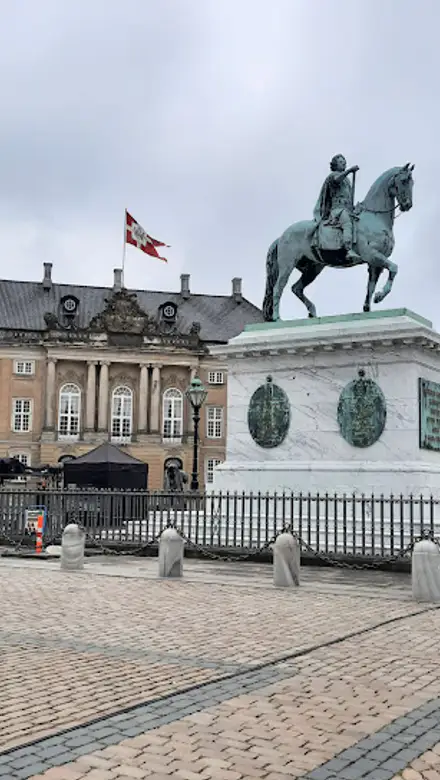
Rytterstatuen, the equestrian statue of King Frederik V, commands the centre of Amalienborg Slotsplads in Copenhagen, perfectly framed by the four rococo palaces of the royal residence. Cast in bronze in the 18th century by French sculptor Jacques-François-Joseph Saly, this 12m monument is a masterpiece of neoclassical art and royal propaganda, symbolising absolute monarchy and the birth of the Frederiksstaden district.
A brief summary to Rytterstatuen
- Amalienborg Slotsplads, København K, København K, 1257, DK
- Click to display
- Duration: 0.5 to 1.5 hours
- Free
-
 Outdoor
- Mobile reception: 5 out of 5

Know before you go
Hi, I'm Eve. Here are a few practical things to know before exploring Rytterstatuen.
- Arrive shortly before the changing of the guard at Amalienborg to see the ceremonial march pass around the statue and animate the entire square.
- Walk to each corner of the octagonal square to photograph the statue against different backdrops, from the Marble Church dome to the harbour axis.
- Check the weather forecast; clear or slightly overcast days give the best light for capturing the bronze details without harsh shadows.
- Combine your visit with the Amalienborg museum to deepen your understanding of the royal family and the era when the statue was created.
- In winter, dress warmly; the exposed square can feel much colder due to wind from the nearby harbour.
Do you manage this location?
Take control to get all the benefits, like improved information, better appearance, and stronger visibility across AI-powered discovery. Learn more about listing your business on Evendo
Activate your presenceOther nearby places you may find interesting
The closest places of the same kind, if this one is not quite what you had in mind.


Explore Rytterstatuen on the Map
A handpicked selection of must-see spots near Rytterstatuen, mapped for you.
Unlock the Best of Rytterstatuen
Buy tickets
-
No tickets available
Book tours with entry
-
No tours available


Getting There
-
Metro
From central Copenhagen, take the M1 or M2 metro line to Kongens Nytorv station. The ride from Nørreport or København H typically takes 3–6 minutes, with trains running every few minutes throughout the day. A single-zone ticket usually costs around 20–30 DKK depending on ticket type. From the station it is a pleasant, level walk through the historic centre to Amalienborg Slotsplads, suitable for most visitors with basic mobility.
-
City Bus
Several city bus routes stop near Amalienborg and the Frederiksstaden district, with journey times of 10–20 minutes from the central station area depending on traffic. Standard bus tickets are in the same price range as metro fares, roughly 20–30 DKK for the relevant zones. Buses generally have low-floor access, but they can be crowded at peak commuting times and may experience delays in bad weather or during major city events.
-
Bicycle
Copenhagen is strongly geared towards cycling, and reaching Amalienborg by bike from most central neighbourhoods typically takes 5–15 minutes via dedicated cycle lanes. You can use city bikes or rental shops, usually priced from about 50–150 DKK per day depending on the provider and bike type. The terrain is flat, but be prepared for strong winds near the harbour and follow local cycling rules at all times.
-
On Foot from the Inner City
If you are already in the historic centre around Strøget, Nyhavn or Kongens Nytorv, walking to Rytterstatuen is straightforward and takes roughly 10–20 minutes at a relaxed pace. The route is mostly flat and paved, passing through atmospheric streets and squares. Surfaces are generally good, though cobblestones around Amalienborg may feel uneven for visitors using wheelchairs, strollers or mobility aids.
For the on-the-go comforts that matter to you
-
 Trash Bins
-
 Information Boards
-
 Seating Areas
Discover more about Rytterstatuen
A royal rider at the heart of Amalienborg
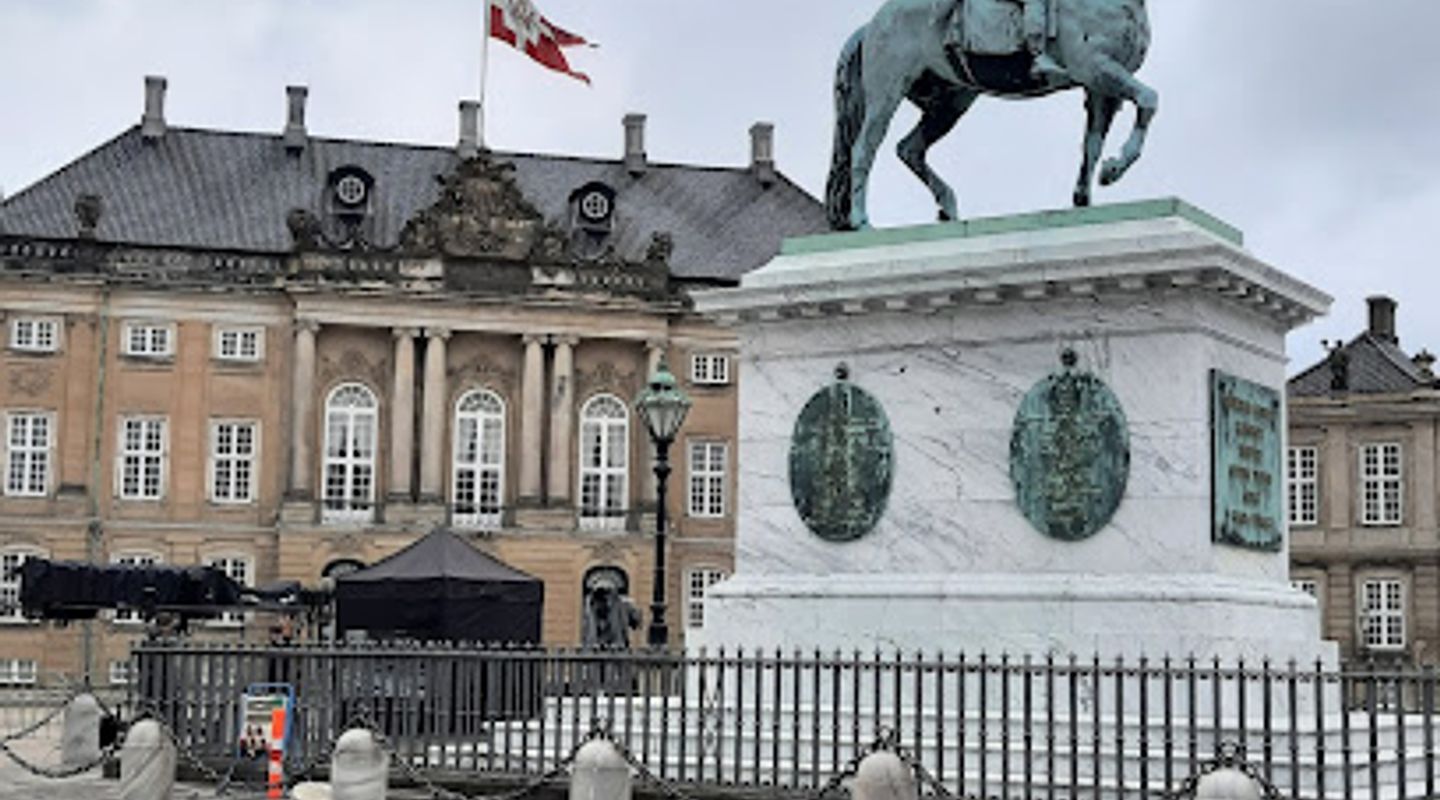
Rytterstatuen stands precisely in the middle of Amalienborg Slotsplads, encircled by the four near-identical rococo palaces that make up the Danish royal residence. The bronze king sits tall on a powerful horse, his outstretched arm holding a marshal’s baton, a poised gesture of command rather than aggression. From this central point, straight sightlines run towards the harbour on one side and the copper dome of the Marble Church on the other, turning the statue into the pivot of an entire ceremonial landscape.In the soft northern light, the dark bronze contrasts with the pale stone of the surrounding facades. Cobblestones radiate from the plinth, and the rhythmic façades of the palaces seem to bow toward the monument. Even on quiet days, the statue feels like the still centre of an elaborate stage set designed for royal power.The long creation of a neoclassical masterpiece
Commissioned in the 1750s and executed by French sculptor Jacques-François-Joseph Saly, the statue took around fourteen years to complete, an astonishing timeframe for a single artwork. When the huge bronze casting was finally poured, it required tens of thousands of pounds of molten metal and meticulous engineering. The finished monument cost more than the four palaces that surround it, underscoring its importance as a symbol of the Danish state.The equestrian figure is rendered in neoclassical style: Frederik V wears antique armour and a laurel wreath rather than contemporary dress, presenting him as a timeless ruler rather than a transient monarch. The horse, modelled from years of close observation, balances dynamic movement with controlled calm, reinforcing the image of a king who governs with composed authority.Symbol of absolutism and the Frederiksstaden vision
Rytterstatuen was conceived as the focal point of the Frederiksstaden district, a grand urban project celebrating the 300th anniversary of the Oldenburg royal house. The radiating streets, octagonal square and palace façades were all planned to honour Frederik V and the system of absolute monarchy that he embodied. From the statue, the king appears to ride symbolically towards the Marble Church, aligning royal power with divine sanction.Seen from different angles in the square, the monument reveals how carefully it was integrated into the urban plan. From one perspective the king closes the vista down Amaliegade; from another he appears silhouetted against the harbour and the modern skyline, linking 18th-century ambitions with contemporary Copenhagen.Craftsmanship, transport and later restoration
Beyond its political message, the statue is a feat of craftsmanship. The horse’s tense muscles, the flowing tail and the intricate harness are all rendered with extraordinary precision in bronze. The stone pedestal, decorated with reliefs and inscriptions, anchors the monument and gives it a dignified elevation above the cobbles.When the finished statue was moved into place in the 18th century, it was so heavy that hundreds of men and sailors were needed to haul it on a sledge across the city over several days. Centuries later, conservation efforts carefully cleaned and stabilised both bronze and stone, ensuring that wind, rain and salty harbour air would not erode its detail. Today, the monument remains remarkably close to its original appearance.Experiencing Rytterstatuen today
Visitors encounter Rytterstatuen as both artwork and backdrop to everyday royal ritual. The daily changing of the guard marches around its base, reinforcing the statue’s role as sentinel of the royal household. At different times of day, the light shifts across the bronze surfaces, revealing new highlights and shadows on armour, mane and cloak.Stand near the plinth to appreciate the scale of the horse and rider, or step back to the edges of the square to see how the statue locks the palaces, church dome and harbour axis into a single composition. Whether you stay a few minutes or linger to watch the guards and the passing city life, Rytterstatuen offers one of Copenhagen’s most concentrated lessons in power, art and urban design.












Your all‑in‑one travel companion app
Explore expert travel guides, compare and book tours, experiences, hotels, and more—all from the palm of your hand. Download now for seamless trip planning wherever your wanderlust takes you.


Explore More of Copenhagen
Looking beyond Rytterstatuen? Discover Copenhagen for broader travel guides, local hot-spots, and regional highlights.
Explore Copenhagen
Copenhagen's iconic waterfront plaza where culture, harbor views, and the famous kissing stairs meet the sea.
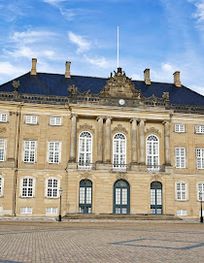
Discover Amalienborg, Copenhagen’s stunning rococo palace complex—current home to the Danish royal family and a cultural window into centuries of regal Danish tradition.