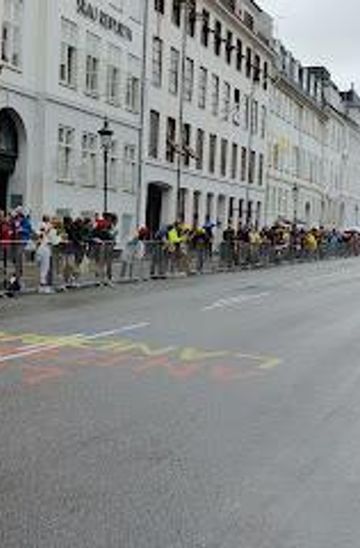
Amaliegade
Copenhagen's most elegant street, where Rococo palaces and neoclassical mansions frame centuries of Danish cultural heritage.
Amaliegade is a prestigious street in Copenhagen's Frederiksstaden district, forming the longer axis of this elegant Rococo neighborhood. Lined with refined 18th-century mansions and neoclassical buildings, the street extends from Sankt Annæ Plads to Esplanaden, passing through the iconic Amalienborg Palace square. Home to historic residences, cultural landmarks, and architectural treasures, Amaliegade embodies Copenhagen's golden age of urban design and remains a centerpiece of the city's most distinguished district.
A brief summary to Amaliegade
- Copenhagen, Indre By, DK
- Duration: 0.75 to 2.5 hours
- Free
-
 Outdoor
- Mobile reception: 5 out of 5

Know before you go
Hi, I'm Eve. Here are a few practical things to know before exploring Amaliegade.
- Visit during late afternoon to capture the soft light illuminating the facades of the historic mansions and to experience the street's most photogenic hours.
- Explore the colonnade at Amalienborg Palace square, an architectural feature that connects the street to the royal palaces and offers a unique perspective on Rococo urban design.
- Combine your visit with nearby attractions including Amalienborg Palace, Marble Church, and the Rococo gardens to fully appreciate Frederiksstaden's integrated design.
- Note the architectural details and variations between buildings—each mansion reflects the tastes and circumstances of its original owner and the era of its construction.
- Walk the entire length from Sankt Annæ Plads to Esplanaden to experience the street's full urban composition and the transition between different architectural periods.
Do you manage this location?
Take control to get all the benefits, like improved information, better appearance, and stronger visibility across AI-powered discovery. Learn more
Activate your presenceOther nearby places you may find interesting

Getting There
-
Metro
Copenhagen Metro Line M1 or M2 to Kongens Nytorv station, approximately 8–10 minutes travel time from central Copenhagen. From the station, walk northeast through the Nyhavn area toward Amalienborg Palace and Amaliegade, approximately 5–7 minutes on foot. Single ticket costs approximately 24 DKK (3.20 USD).
-
Bus
Multiple bus routes serve the area, including routes 1A, 15, and 26 which stop near Amalienborg Palace or Sankt Annæ Plads. Travel time from central Copenhagen is typically 10–15 minutes depending on traffic and starting point. Single ticket costs approximately 24 DKK (3.20 USD). Buses run frequently throughout the day.
-
Walking
From Nyhavn, walk northeast along the waterfront for approximately 10–12 minutes to reach Amaliegade. The route is flat and entirely on paved streets through the historic Frederiksstaden district. From Kongens Nytorv, walk northeast through the old town for approximately 8–10 minutes. This is the most atmospheric approach, passing through narrow historic streets.
-
Bicycle
Copenhagen's extensive cycle network provides access to Amaliegade. Bike rental is available throughout the city at approximately 80 DKK (11 USD) per day. The street itself has limited cycling infrastructure, but nearby parallel streets offer good cycling routes. Travel time from central Copenhagen is approximately 5–8 minutes by bike.
For the on-the-go comforts that matter to you
-
 Restrooms
-
 Drink Options
-
 Food Options
-
 Seating Areas
-
 Information Boards
Discover more about Amaliegade
The Heart of Frederiksstaden's Architectural Vision
Amaliegade forms the longer of two principal axes organizing the Frederiksstaden district, one of Copenhagen's most cohesive and elegant neighborhoods. The street extends from Sankt Annæ Plads in the east to Esplanaden in the west, passing through the central plaza of Amalienborg Palace where it intersects Frederiksgade. This carefully planned urban layout, conceived in the 18th century, represents a masterpiece of Rococo town planning and remains remarkably intact today. The street's architecture is dominated by a succession of elegant mansions, most constructed during the second half of the 18th century, creating a harmonious streetscape of refined proportions and classical detailing.Architectural Landmarks and Notable Residences
Amaliegade showcases an exceptional collection of historic buildings that document Copenhagen's architectural evolution. Collin's House at No. 9, built in 1751–1752, breaks with the schematic guidelines of the period and features a recessed facade that sets it apart from its neighbors. The building at No. 15–17, designed by Nicolai Eigtved and constructed in 1754–1756, comprises two symmetrical houses, one of which received an additional floor. King Frederick VI purchased this property in 1810 as a guest residence for visiting royal relatives, and it later became home to Prince Christian of Glücksborg, who would become Christian IX, Denmark's first Glücksburg king. The Yellow Palace at No. 18, built between 1759 and 1764, was designed by French architect Nicolas-Henri Jardin and represents a significant example of neoclassical design on the street.At No. 23, another Rococo masterpiece designed by Nicolai Eigtved and built in 1752–1753 showcases the style at its finest. The infill building at No. 23b, constructed between 1785 and 1787, demonstrates the neoclassical transition that followed. No. 26–30, built in 1896 to designs by architect Ole Boye, features a distinctive painted animal frieze depicting dragonflies, fish, frogs, tigers, and penguins. The building at No. 49, completed in 1788 by architect Andreas Hallander, represents the neoclassical style and once served as headquarters for the shipping company D/S Norden for over a century.Cultural Significance and Historical Connections
Amaliegade has been intimately connected to Danish cultural and intellectual life. Hans Christian Andersen was a frequent visitor to Collin's House at No. 9, where he was considered part of the family during his association with the prominent Collin household. The Casino Theatre, located on Amaliegade and established in 1847, became an important cultural venue designed by H.C. Stilling, the architect who also created Tivoli Gardens. The theatre hosted significant political gatherings during Denmark's March Revolution and presented works by Andersen, including performances in 1849 and 1850. The venue achieved international recognition when Edvard Grieg's Piano Concerto in A minor received its first public performance there on April 3, 1869.Urban Design and the Amalienborg Connection
The street's relationship with Amalienborg Palace defines much of its character. A colonnade designed by royal architect Caspar Frederik Harsdorff and built in 1794–1795 spans Amaliegade at the palace square, connecting Moltke's Palace, the residence of the king, to Schack's Palace, where the Crown Prince resided. This architectural feature creates a ceremonial connection between the street and the palace complex, emphasizing the formal hierarchy of the district. The street's intersection with Frederiksgade at the palace square creates one of Copenhagen's most recognizable urban spaces, where the geometry of Rococo planning achieves its most complete expression.Evolution and Preservation
Amaliegade's development reflects changing architectural tastes and economic circumstances of Copenhagen's merchant and aristocratic classes. The street began as part of a grand vision for Frederiksstaden, initiated by Frederik V in the mid-18th century. Early construction followed strict Rococo principles established by royal architect Nicolai Eigtved, while later additions incorporated neoclassical elements as tastes evolved. The street has been carefully preserved, with many buildings listed in the Danish registry of protected buildings and places. This conservation effort has maintained Amaliegade's character as a living museum of 18th and 19th-century Danish architecture and urban design.Explore the best of what Amaliegade has to offer













More about North Zealand
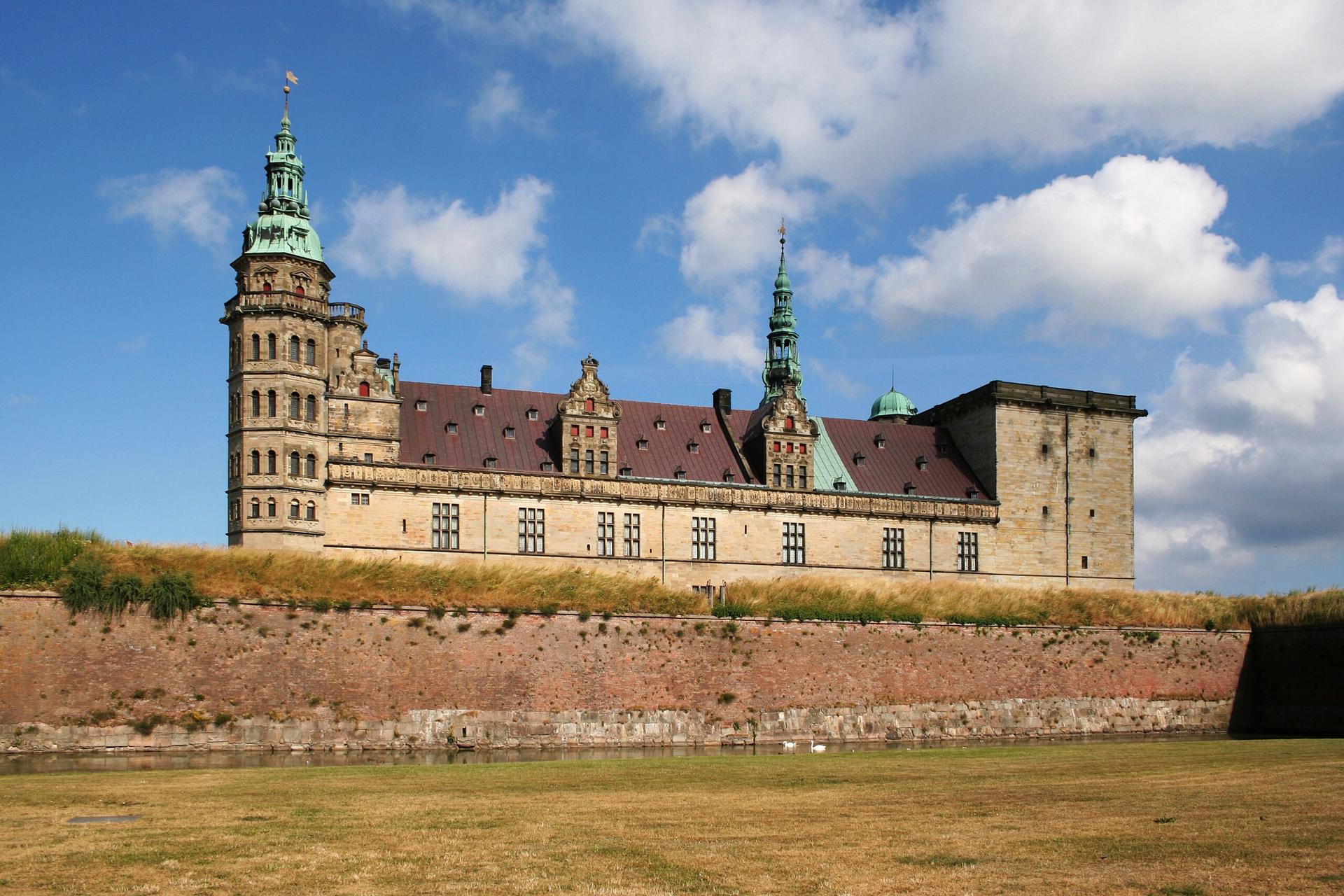
Explore North Zealand, Denmark's enchanting region of castles, beaches, and royal estates, perfect for history buffs, nature enthusiasts, and seaside lovers.
Tell me more about North Zealand
An understated townhouse address on Copenhagen’s grandest historic street, surrounded by mansions, churches, galleries and the elegant geometry of Frederiksstaden.
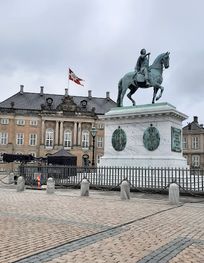
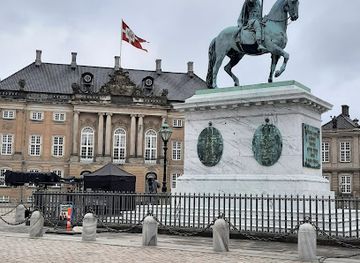
An 18th‑century royal equestrian statue anchoring Amalienborg’s palace square, where art, monarchy and cityscape meet in one iconic Copenhagen vista.