
Odense Dyrskueplads, Odense Travel Guide
Odense’s flexible fairground, where quiet open fields transform into bustling arenas for Det Fynske Dyrskue, major concerts and large outdoor events.
Odense Dyrskueplads is a spacious fairground on the southwestern edge of Odense, best known as the home of Det Fynske Dyrskue agricultural fair and as a major outdoor event site. Set at Broløkkevej 2, this open field complex transforms throughout the year into a bustling hub for livestock shows, festivals, big-name concerts and city-wide gatherings. Outside major events it is a quiet, open expanse used for casual strolls, dog walking and local community activities.
A brief summary to Odense Dyrskueplads
- Broløkkevej 2, Odense Municipality, Odense SV, 5250, DK
- Click to display
- Click to display
- Duration: 1 to 8 hours
- Free
-
 Outdoor
- Mobile reception: 4 out of 5

Know before you go
Hi, I'm Eve. Here are a few practical things to know before exploring Odense Dyrskueplads.
- Check the events calendar in advance; Odense Dyrskueplads is quiet outside fairs and concerts but can feel like a small city during major gatherings.
- For large events, arrive early to navigate entry checks calmly and to find a comfortable spot, especially if you prefer some distance from the main stage or arenas.
- Wear sturdy, closed footwear; the grounds are mostly grass and gravel, which can become uneven or muddy in wet weather.
- Bring weather-appropriate layers and rain protection—this is a fully outdoor venue with limited permanent shelter.
- During Det Fynske Dyrskue, set aside at least half a day to explore livestock areas, machinery displays, food stalls and family activities at a relaxed pace.
Do you manage this location?
Take control to get all the benefits, like improved information, better appearance, and stronger visibility across AI-powered discovery. Learn more about listing your business on Evendo
Activate your presenceOther nearby places you may find interesting
The closest places of the same kind, if this one is not quite what you had in mind.
Explore Odense Dyrskueplads on the Map
A handpicked selection of must-see spots near Odense Dyrskueplads, mapped for you.
Getting There
-
Bus from central Odense
From central Odense, use a city bus service heading toward the southwestern districts and alight near the Broløkkevej area; the ride typically takes 15–25 minutes depending on traffic. Standard single tickets within the city usually cost around 18–30 DKK, and services run more frequently on weekdays than late evenings, so check the timetable if returning after a concert.
-
Bicycle from city centre
Odense is well known for its cycling infrastructure, and reaching the Dyrskueplads by bike from the central district generally takes about 15–20 minutes at a moderate pace. The route uses regular city streets and cycle paths, is mostly flat and suitable for casual cyclists, but bring lights and reflective gear if travelling after dark, especially following late events.
-
Taxi within Odense
A taxi from the inner city to Odense Dyrskueplads usually takes around 10–15 minutes outside peak traffic. Fares within Odense commonly fall in the range of 120–220 DKK depending on distance, time of day and waiting time. During major concerts or large fairs, demand increases and you may experience longer waits and slightly higher costs.
-
On foot from nearby districts
If you are staying in the southwestern neighbourhoods of Odense, you can walk to the Dyrskueplads in roughly 20–40 minutes. Pavements are generally well maintained and the terrain is flat, but this is a longer urban walk, so it may not be ideal for visitors with limited mobility or when returning late at night after large events.
For the on-the-go comforts that matter to you
-
 Restrooms
-
 Drink Options
-
 Drinking Water
-
 Food Options
-
 Seating Areas
-
 Sheltered Areas
-
 Trash Bins
-
 Information Boards
Discover more about Odense Dyrskueplads
A wide-open stage on the edge of Odense
Odense Dyrskueplads is the city’s primary fairground, a broad stretch of grass and gravel just southwest of the centre where Odense opens itself up to large-scale gatherings. For most of the year it looks deceptively simple: open fields bordered by trees, low utility buildings, and access lanes designed for trucks, temporary stages and animal transport. That apparent simplicity is deliberate, allowing the site to be reshaped again and again for different events.Stand here on a quiet day and you notice the scale. The grounds feel more like a rural showfield than an urban park, with big skies, plenty of fresh air and long sight lines across the open space. It is this size and flexibility that have made the Dyrskueplads a natural choice for everything from agricultural fairs to international rock concerts.Heartland of Det Fynske Dyrskue
The name “Dyrskueplads” literally means “animal show grounds”, and agriculture is still at the core of this place. Each year, the fields are transformed for Det Fynske Dyrskue, Funen’s traditional agricultural fair. Pens and exhibition tents rise from the ground, and the quiet lawns become a temporary town dedicated to farming and rural life.During the fair you can expect cattle and horses groomed to perfection, pens of sheep and pigs, and demonstrations of modern farm machinery alongside local food stalls and family activities. The event has roots stretching back generations, reflecting Funen’s strong farming culture and the continuing importance of agriculture to the island’s identity.From livestock rings to festival crowds
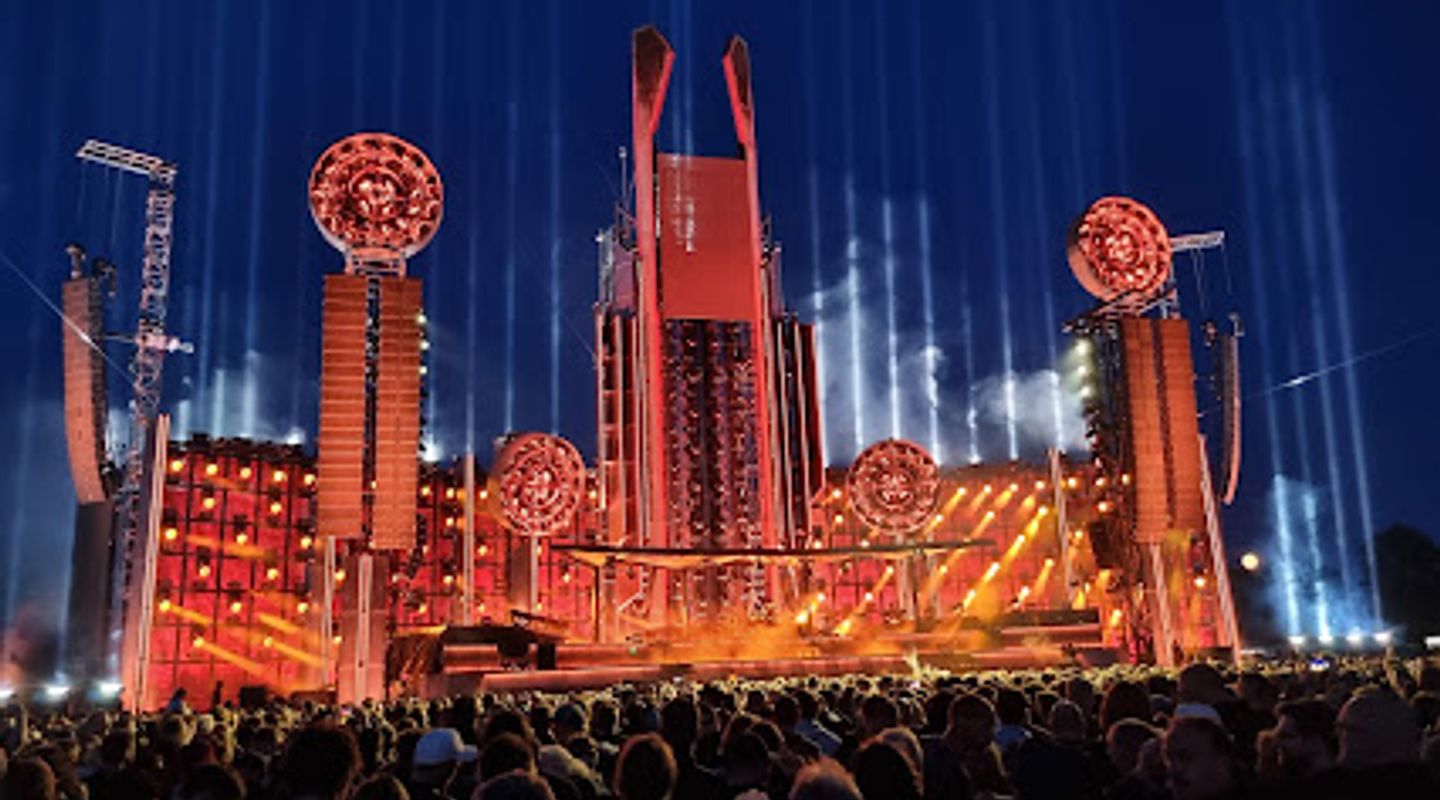
In recent years Odense Dyrskueplads has also gained a reputation as an outdoor concert and festival venue. Temporary stages, lighting towers and sound systems can be brought in to turn the open field into an arena capable of hosting tens of thousands of people. Large international tours have made use of the grounds, drawn by the combination of space, relative ease of access and the possibility to control crowd flows.When set up for a major concert, the otherwise bare surroundings are filled with food trucks, merchandise stands, portable bars and long lines of temporary toilets. Security fencing and clearly marked entrance zones define how people move, while the flat terrain ensures good visibility from much of the field.Everyday uses and quiet interludes
Outside headline events, Odense Dyrskueplads reverts to a more low-key role in city life. Locals use the open areas for dog walking, casual exercise or simply cutting across the grounds as part of a longer stroll between nearby neighbourhoods and green spaces. Without stages or pens, the site feels almost like leftover countryside pressed up against the urban edge.There are few permanent decorative features; instead you see gravel roads, utility poles and simple structures that support power, water and logistics when the grounds are active. This lack of ornamentation is part of the character: the Dyrskueplads is infrastructure more than park, designed to be built upon and taken down again without leaving a heavy footprint.Practical character and surrounding context
Facilities here are tied to events. Restrooms, food options and additional seating usually arrive in the form of temporary units and mobile kiosks. On non-event days, amenities are limited and the experience is more about open space than services. The relatively flat ground and broad access points, however, make it straightforward to navigate when crowds are present.The fairground sits in a mixed urban-fringe landscape, with residential areas, sports facilities and other attractions such as Odense Zoo and Fruens Bøge within a few kilometres. During major events, local public transport lines and taxis focus on getting people in and out efficiently, while managed parking areas are set up around the site to handle large numbers of vehicles.Atmosphere that shifts with the calendar
Perhaps the most striking aspect of Odense Dyrskueplads is how different it can feel depending on when you visit. During Det Fynske Dyrskue, the air is filled with animal sounds, loudspeaker announcements and the smell of hay and grilled food. On concert nights, you might encounter intense lighting, powerful sound systems and crowds stretching as far as you can see.Come between events, though, and you experience a blank canvas: a calm, slightly utilitarian open space that hints at the gatherings to come. For travellers, that makes the Dyrskueplads less of a traditional sightseeing stop and more of a context-dependent venue—somewhere that can be a highlight of a trip if your timing aligns with a fair, festival or show, and a quiet, spacious corner of Odense when it does not.












Your all‑in‑one travel companion app
Explore expert travel guides, compare and book tours, experiences, hotels, and more—all from the palm of your hand. Download now for seamless trip planning wherever your wanderlust takes you.


Explore More of Odense
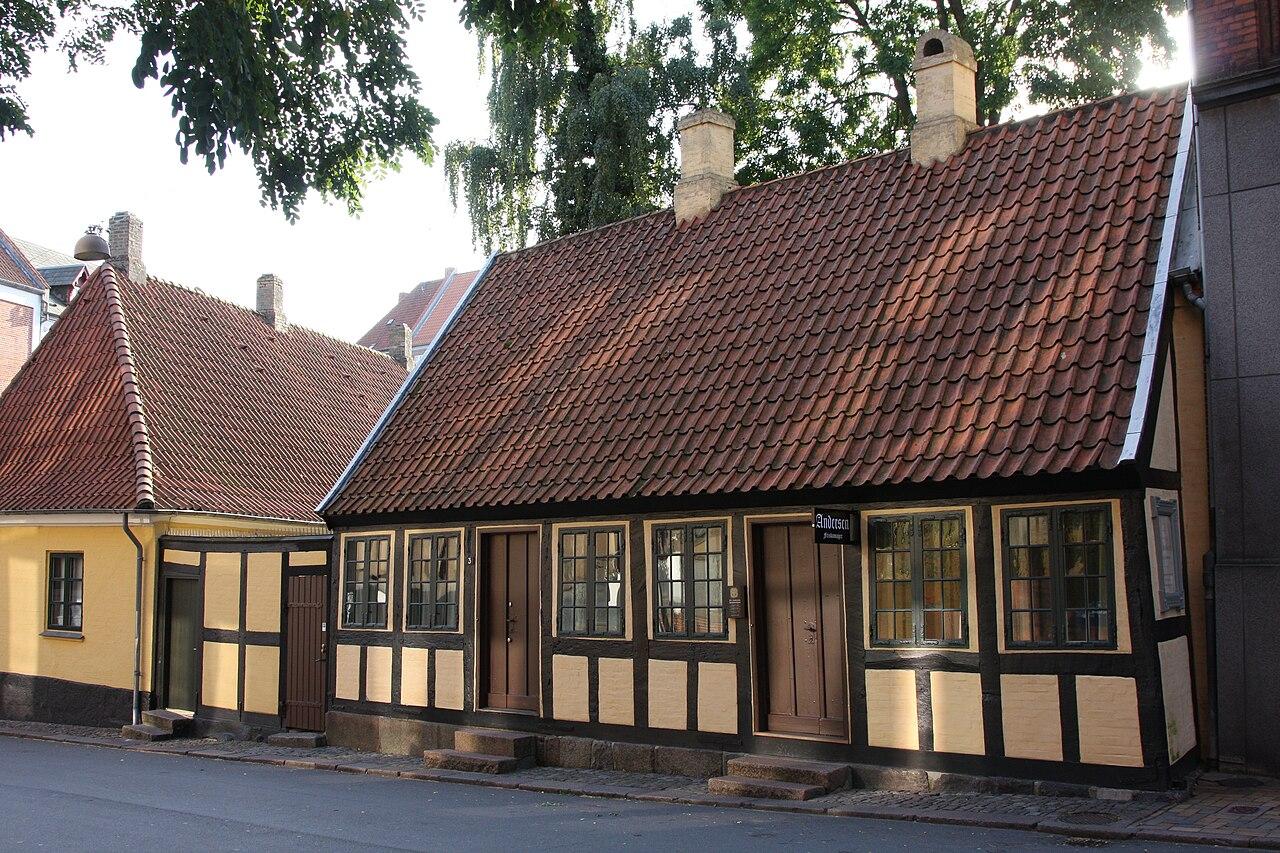
Looking beyond Odense Dyrskueplads? Discover Odense for broader travel guides, local hot-spots, and regional highlights.
Explore Odense
Authentic 19th-century brick-making workshop preserving Denmark's industrial heritage within a living open-air village museum.
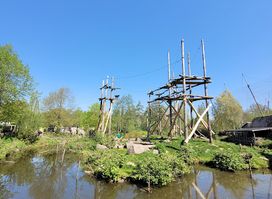
Green, riverside zoological gardens in Odense, where manatees, penguins and savannah animals share leafy parkland, treetop walks and playful spaces for all ages.
