

The Funen Village, Odense Travel Guide
Step into a living Funen countryside village of thatched farms, mills, orchards and heritage animals, where 18th- and 19th-century rural Denmark comes vividly to life.
Set on the edge of Odense’s woods, The Funen Village is an immersive open-air museum that recreates rural life on Funen in the 18th and 19th centuries. More than two dozen half-timbered farmhouses, mills, an inn, a school and workshops have been relocated here, surrounded by fields, orchards, ponds and grazing Danish heritage breeds. Costumed interpreters, working farms and seasonal activities bring Hans Christian Andersen–era Denmark vividly to life for visitors of all ages.
A brief summary to The Funen Village
- Sejerskovvej 20, Odense, Odense S, 5260, DK
- Click to display
- Click to display
- Duration: 2 to 4 hours
- Mid ranged
-
 Outdoor
- Mobile reception: 4 out of 5
- Tuesday 10 am-4 pm
- Wednesday 10 am-4 pm
- Thursday 10 am-4 pm
- Friday 10 am-4 pm
- Saturday 10 am-5 pm
- Sunday 10 am-5 pm

Know before you go
Hi, I'm Eve. Here are a few practical things to know before exploring The Funen Village.
- Plan at least 2–3 hours to explore; the village is spread out and many buildings are best appreciated at an unhurried walking pace.
- Wear comfortable shoes and weather-appropriate layers; paths are uneven in places and much of the experience is outdoors.
- Check the museum’s seasonal programme in advance if you are interested in specific activities such as craft demonstrations or carriage rides.
- If visiting with children, allow time for meeting the animals and free play around the ponds and grassy areas.
- Bring a reusable water bottle and consider a picnic to enjoy in the designated areas while taking in the rural scenery.
Do you manage this location?
Take control to get all the benefits, like improved information, better appearance, and stronger visibility across AI-powered discovery. Learn more about listing your business on Evendo
Activate your presenceOther nearby places you may find interesting
The closest places of the same kind, if this one is not quite what you had in mind.
Explore The Funen Village on the Map
A handpicked selection of must-see spots near The Funen Village, mapped for you.
Getting There
-
City bus from central Odense
From central Odense, use a local city bus service toward the Fruens Bøge or southern districts; typical journeys from the main station area take around 15–25 minutes depending on the line and traffic. Buses run frequently during the day but less often in the evening, and you can expect a single adult ticket to cost roughly 20–30 DKK within the city zones. There is a short walk on level pavements from the nearest stop to the museum entrance, generally suitable for most visitors including families with strollers.
-
Bicycle within Odense
Odense is very bike-friendly, and cycling to The Funen Village is a practical option from most central neighbourhoods. The ride from the historic centre typically takes 15–25 minutes along marked cycle paths with only modest gradients. You can use your own bike or rent one in town; day rentals often range from about 80–150 DKK depending on type. This option suits visitors comfortable cycling in light urban traffic and offers a pleasant approach through green areas near Fruens Bøge.
-
Taxi from Odense city centre
Taxis are widely available around Odense Station and central squares. A direct ride to The Funen Village usually takes 10–15 minutes outside rush hour. Fares vary with traffic and time of day, but for this short urban trip a typical one-way cost is around 120–180 DKK, making it convenient for small groups or travellers with limited mobility. Advance booking is recommended during busy periods or in poor weather.
-
Seasonal river boat plus walk
In the warmer months, a seasonal river boat runs from central Odense’s riverside park area towards Fruens Bøge, turning the journey into a scenic outing. The boat trip generally lasts 30–45 minutes and offers views of parkland and woodland along the river. One-way fares for adults are usually in the region of 35–50 DKK, with discounts for children. From the landing point near Fruens Bøge, allow around 15 minutes of easy walking on forest and park paths to reach the museum, which may be less suitable for visitors needing fully paved, step-free access.
For the on-the-go comforts that matter to you
-
 Restrooms
-
 Drink Options
-
 Food Options
-
 Seating Areas
-
 Sheltered Areas
-
 Picnic Areas
-
 Trash Bins
-
 Information Boards
-
 Visitor Center
-
 Drinking Water
Discover more about The Funen Village
A rural time capsule on the edge of Odense
The Funen Village unfolds like a living storybook of Danish countryside life, tucked beside the woodland of Fruens Bøge just south of central Odense. Conceived as an open-air museum, it gathers historic buildings from across the island of Funen and sets them within a patchwork of fields, lanes and ponds. As you walk in, cobbled paths, thatched roofs and timbered façades immediately shift the pace from city tempo to rural rhythm.Rather than a single grand structure, the site feels like a small community frozen in the era when Hans Christian Andersen was writing his tales. Farmsteads, a parsonage, village school and workshops line up along winding tracks, each doorway opening onto another fragment of everyday life from two centuries ago.Historic farmsteads, mills and village institutions
Around 25 to 30 buildings have been dismantled from their original locations on Funen and carefully reassembled here, most dating from the 18th and 19th centuries, with a few older survivors. Among them are half-timbered farmhouses with low doorways and deep thatched roofs, a parsonage farmhouse originating in the 17th century, and a brickworks kiln from the late 1800s that hints at early industrial change.Essential village functions are all represented: a watermill driven by a channel of running water, a windmill silhouetted above the fields, a tollhouse at the notional edge of the settlement, and modest almshouses. Inside many buildings, rooms are fully furnished with period furniture, tools and textiles, so you can compare, for example, a farmer’s simple interior with the more refined surroundings of the clergy or innkeeper.Fields, orchards and heritage livestock
The museum’s landscape is as carefully curated as its architecture. Surrounding the buildings you find tilled plots, small gardens and meadows laid out much as they would have been when self-sufficiency was the norm. Old Funen varieties of fruit trees are planted in orchards and cottage gardens, framing views with blossom in spring and heavy branches later in the season.Livestock plays a central role. Traditional Danish breeds of cattle, sheep, goats, pigs, horses and geese animate the paddocks and pastures, often moving freely between barns and fields. The presence of these animals turns the village into a working environment rather than a static display, underlining how closely people’s lives were bound to the land and to the changing seasons.Living history, crafts and seasonal activity
What sets The Funen Village apart is its emphasis on living history. On many days, costumed interpreters and volunteers move through the site as cooks, field workers, blacksmiths, beekeepers or goose herders, demonstrating skills such as weaving, candle making, flax processing or farm tasks. Workshops and kitchens may be alive with activity, from baking to textile work, offering a multisensory glimpse of pre-industrial routines.Across the open season, the museum hosts themed days, storytelling, small-scale theatre and sometimes horse-drawn carriage rides, all designed to explore a particular aspect of village life. Rather than staging grand spectacles, the programming tends to focus on the rhythm of ordinary days: sowing, harvesting, preserving, preparing for winter or celebrating traditional holidays.Sustainability lessons from the past
Beyond nostalgia, the museum consciously highlights how earlier generations lived in close dialogue with nature. Buildings are constructed from local materials, household goods are repaired and repurposed, and almost everything grown in the fields has a role in sustaining people or animals. Exhibits and interpretation draw these threads together, suggesting how historical practices of circular use, careful resource management and shared labour can inform more sustainable lifestyles today.This blend of environmental focus and cultural heritage has earned the site recognition as a green attraction, with efforts made to manage energy, waste and purchasing responsibly. For visitors, it means that wandering the lanes of The Funen Village is both a journey into Denmark’s rural past and an invitation to consider how those older patterns of living might inspire a more balanced future.












Your all‑in‑one travel companion app
Explore expert travel guides, compare and book tours, experiences, hotels, and more—all from the palm of your hand. Download now for seamless trip planning wherever your wanderlust takes you.


Explore More of Odense
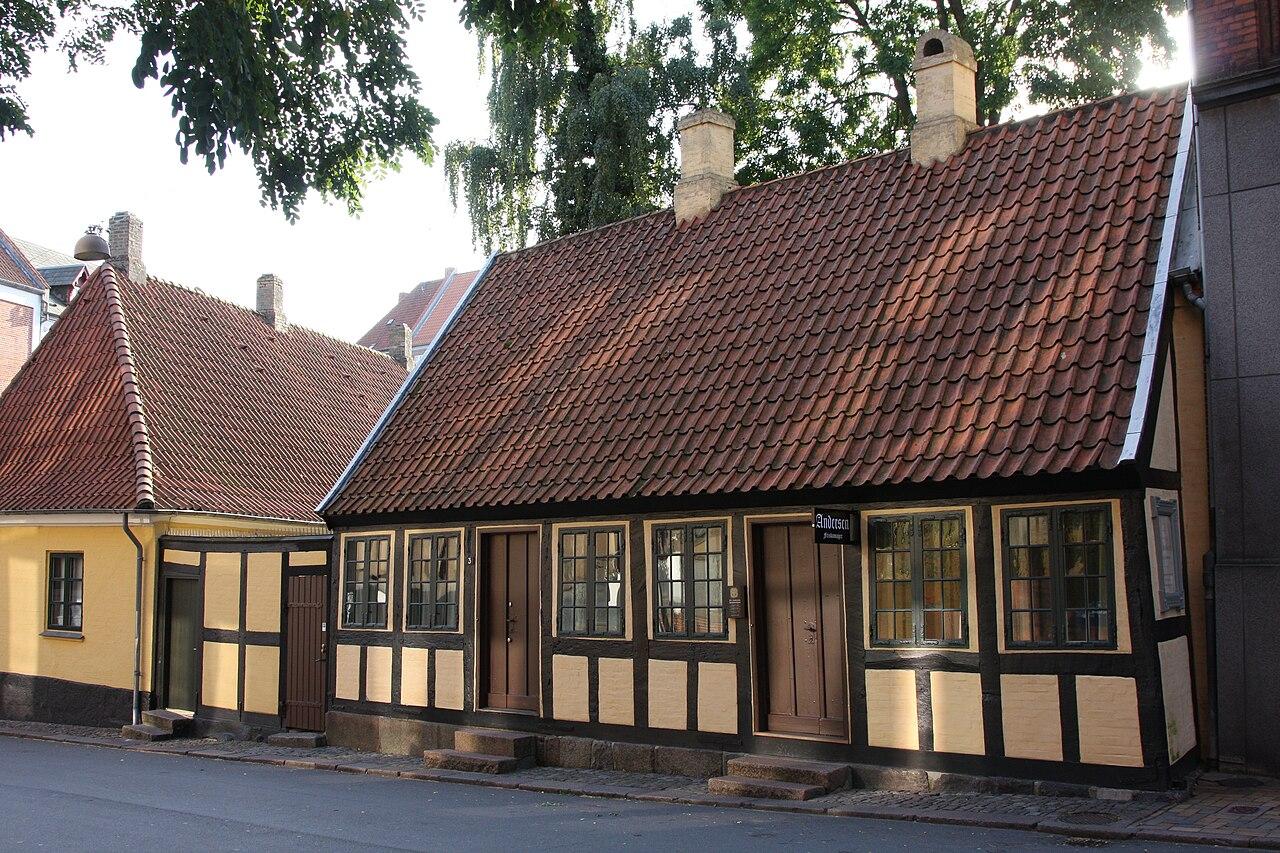
Looking beyond The Funen Village? Discover Odense for broader travel guides, local hot-spots, and regional highlights.
Explore Odense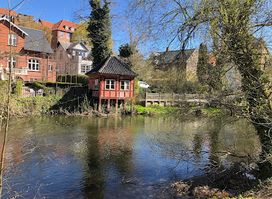
A tiny red timber pavilion on stilts above Odense Å, Bispens Lysthus blends riverside calm, ecclesiastical history and postcard-perfect charm in the city’s green heart.
Step into a full‑scale Funen village of thatched farms, mills and animals, where 18th‑ and 19th‑century rural Denmark is carefully brought back to life.
