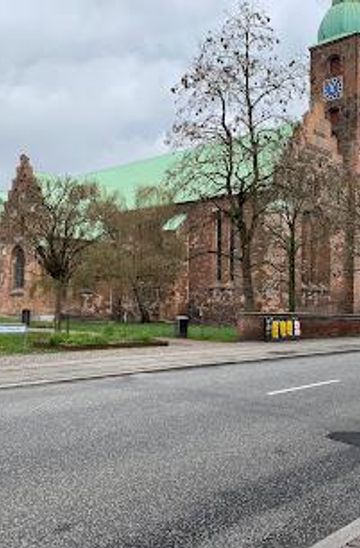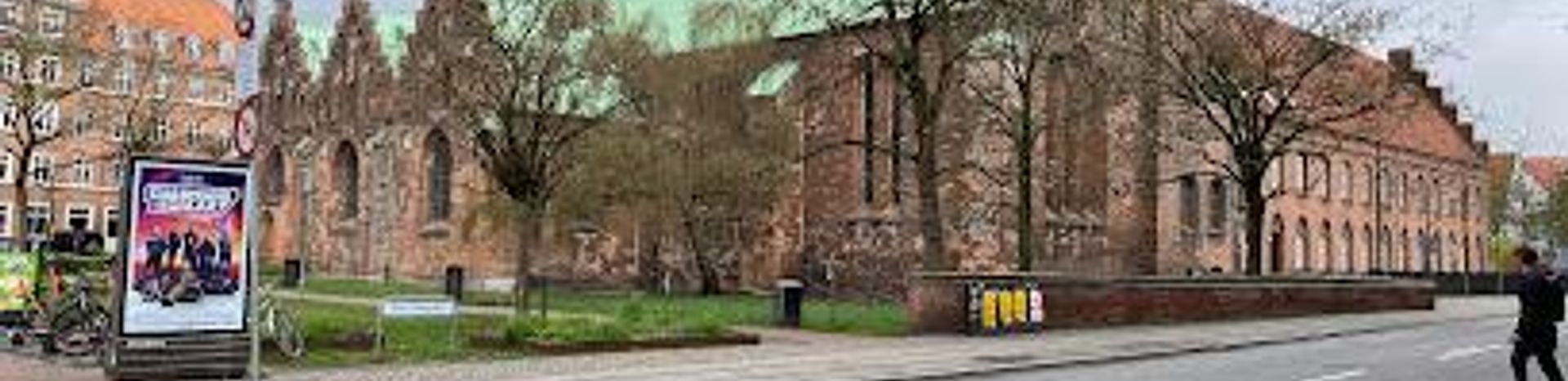
Church of Our Lady (Vor Frue Kirke), Aarhus
A thousand years of Aarhus history layered above a cool stone crypt, where one of Scandinavia’s oldest church rooms lies hidden beneath a tranquil city square.
Tucked just behind Aarhus Cathedral, the Church of Our Lady is one of Denmark’s most historic sacred sites. Above ground, a graceful medieval brick church and remnants of a Dominican monastery frame a quiet courtyard garden. Below, a small crypt church dated to around 1060 is considered one of the oldest preserved rooms in Scandinavia, offering a rare, intimate glimpse into Denmark’s earliest stone church architecture and Christian past.
A brief summary to Our Lady Church
- Frue Kirkeplads 3, Aarhus Municipality, Aarhus C, 8000, DK
- Click to display
- Click to display
- Duration: 0.5 to 1.5 hours
- Free
-
 Indoor
- Mobile reception: 5 out of 5
- Monday 10 am-4 pm
- Tuesday 10 am-4 pm
- Wednesday 10 am-4 pm
- Thursday 10 am-4 pm
- Friday 10 am-4 pm
- Saturday 10 am-2 pm

Know before you go
Hi, I'm Eve. Here are a few practical things to know before exploring Our Lady Church.
- Allocate time both above and below ground: visit the main nave and abbey chapel first, then descend to the crypt church to appreciate the contrast in scale and atmosphere.
- Check current opening hours in advance; on Sundays and church holidays access is often limited to services, and the crypt can occasionally be closed during events.
- Bring a light jacket, as the crypt remains noticeably cooler and more humid than the nave, even on warm summer days.
- Photography is generally possible, but keep noise to a minimum and avoid flash in the crypt or near frescoes to help protect delicate surfaces.
- Combine your visit with a short stroll to nearby Aarhus Cathedral to compare two very different expressions of medieval ecclesiastical architecture.
Do you manage this location?
Take control to get all the benefits, like improved information, better appearance, and stronger visibility across AI-powered discovery. Learn more
Activate your presenceOther nearby places you may find interesting

Getting There
-
Walking from central Aarhus
From the pedestrian heart of Aarhus around Strøget and the cathedral area, the Church of Our Lady is an easy 5–10 minute walk on mostly flat, paved streets. The route crosses busy shopping lanes and small squares but involves no steep gradients, so it is suitable for most visitors and for wheelchairs with assistance. Allow extra time in wet or icy weather when cobblestones can be slippery.
-
City bus within Aarhus
Several city bus lines stop near the cathedral and the central bus corridors along Park Allé and Nørre Allé, from where it is about 5–8 minutes on foot to the church. Typical inner-city bus journeys take 10–20 minutes depending on distance and traffic, with departures every few minutes during the day. Standard adult tickets usually cost in the range of 20–30 DKK for a short trip within the Aarhus urban zone.
-
From Aarhus Central Station by foot
From Aarhus Central Station the church lies roughly 1 km away, a 10–15 minute walk along level pavements through the compact city centre. The route passes main shopping streets and can be crowded at peak times, but there are frequent crossings and curb ramps. This is the simplest and fastest option for most rail arrivals who are comfortable walking with light luggage.
-
Taxi within the city
Taxis are widely available around Aarhus Central Station and major hotels. A short ride to the Church of Our Lady from central districts typically takes 5–10 minutes depending on traffic and costs roughly 80–140 DKK, including basic starting fare and a few kilometres of driving. Narrow streets and pedestrianised sections mean vehicles cannot stop directly at the church door, so expect a brief walk from a nearby drop-off point.
For the on-the-go comforts that matter to you
-
 Restrooms
-
 Seating Areas
-
 Sheltered Areas
-
 Trash Bins
-
 Information Boards
Discover more about Our Lady Church
An ancient church at the heart of Aarhus
The Church of Our Lady stands in central Aarhus, a short stroll from the cathedral yet in its own calm enclave off Frue Kirkeplads. Today’s church grew out of a stone church completed around 1060 and later a larger St Nicholas’ Church, which served as one of the town’s first cathedrals. Over the centuries, expansions, fires, and rebuilding have layered Romanesque and Gothic features into the complex that now fills much of the block.Within the main nave you see a tall, whitewashed interior punctuated by pointed arches and ribbed vaults. Simple brickwork, pale walls and clear light from tall windows create a restrained, almost Nordic minimalism that contrasts with select historical details such as carved memorial tablets and older altar pieces. The space still functions as a parish church, so you encounter it as a living building, not just a monument.From Dominican priory to monastery courtyard
In the 13th century Dominican friars established a priory here, adding three wings around a cloister that turned the church into the south side of a compact monastery. Parts of these medieval ranges still survive, enclosing a sheltered courtyard garden just off the square. This cluster of buildings, with its stepped gables and mellow brick, is among the best-preserved monastic ensembles in the city.After the Reformation the priory was dissolved and the buildings took on new social roles, including housing for the poor and later apartments for older residents. Walking around the courtyard you sense that layered history: monastic cloister, charitable institution and quiet residential enclave. It remains a surprisingly peaceful pocket in the middle of Denmark’s second-largest city.The rediscovered crypt beneath the chancel
During renovation works in the 1950s, workers uncovered a small underground church beneath the chancel. This crypt, dating from about 1060, is regarded as the oldest ecclesiastical space in Aarhus and one of the earliest vaulted stone rooms in Scandinavia. Low, sturdy pillars carry rounded arches, creating three short aisles that once each held an altar.Steps lead down from the main church into this compact, atmospheric chamber. The stonework is rougher and closer to human scale than the lofty nave above, and the air feels noticeably cooler. A simple cross, modeled on one of Denmark’s earliest crucifixes, hints at the era when Christianity was still taking root among Viking-age communities along the Jutland coast.Art, fresco fragments and quiet details
Scattered through the church and its side spaces are traces of changing artistic tastes. In a smaller abbey chapel you may notice late medieval fresco fragments, their once-bright pigments softened by time and whitewash. Elsewhere, more recent interventions such as contemporary stained glass add color without overpowering the restrained interior.Memorial plaques from the 16th and 17th centuries commemorate prominent townspeople once buried under the church floor. Their carved coats of arms and carefully rendered costumes form a kind of stone family album, linking the building to the merchants, officials and clergy who shaped Aarhus over the centuries.Experiencing the mood of the square
Outside, Frue Kirkeplads opens as a modest square framed by trees, the church walls and nearby townhouses. A modern fountain and low surrounding wall soften the transition between sacred precinct and city streets, and from here you can peer into the garden courtyard that wraps around the monastery buildings. The tower and rooflines rise above the surrounding roofs, quietly asserting their presence without dominating the skyline.Spend a little time to sit on a bench or lean on the wall and watch daily life swirl past: cyclists, students, office workers and churchgoers all moving through a space that has anchored the city for nearly a thousand years. It is this blend of deep continuity and unforced everyday use that gives the Church of Our Lady its particular character.Explore the best of what Our Lady Church has to offer













More about East Jutland
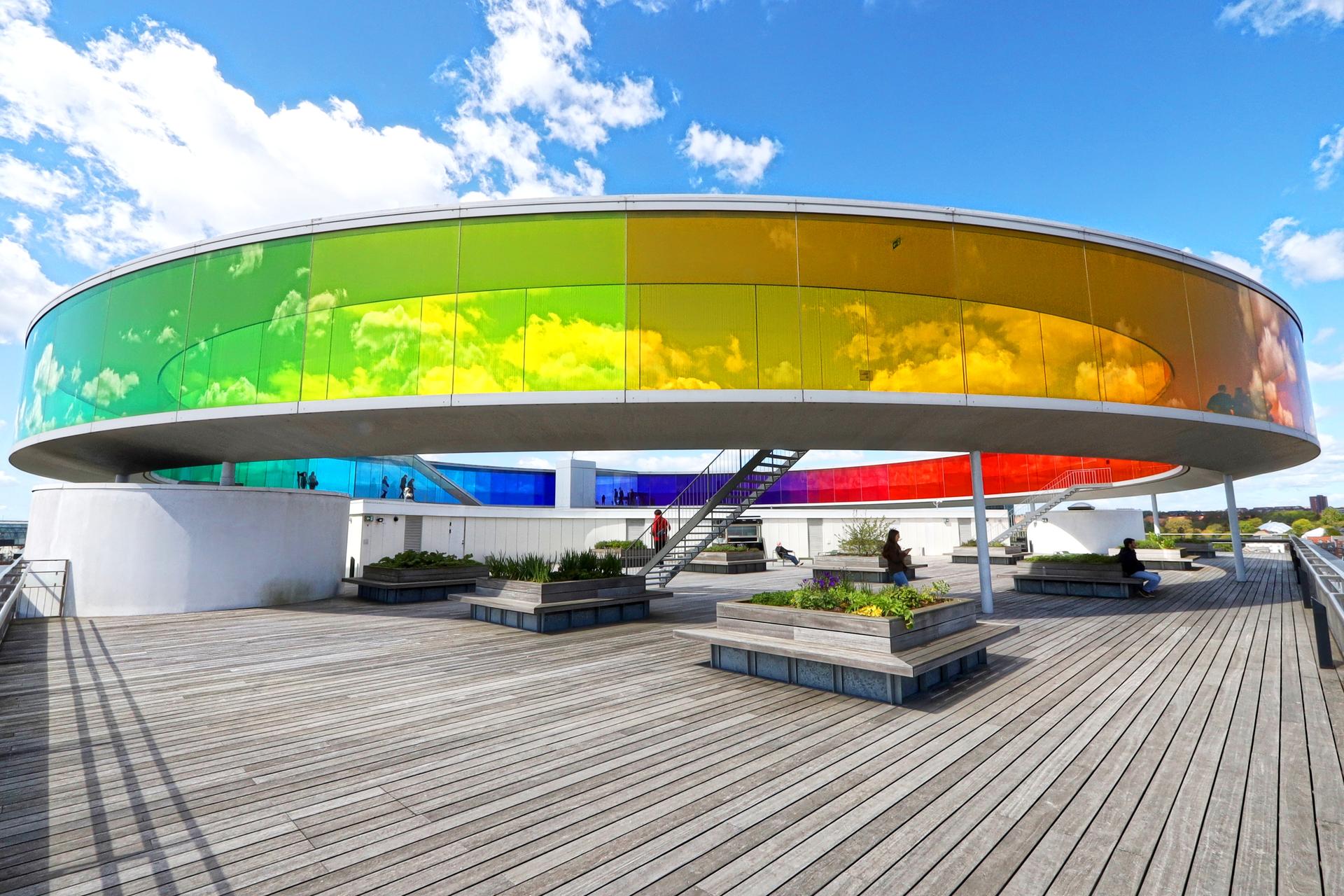
Discover East Jutland, Denmark's enchanting region blending vibrant cities, rich history, and stunning natural landscapes, perfect for every type of traveler.
Tell me more about East Jutland
Art Nouveau splendour, four busy stages and more than a century of theatre-making in the cultural heart of Aarhus, just across the square from the cathedral.

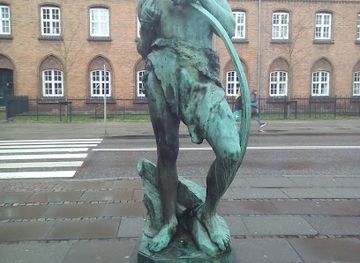
A poised bronze boy with bow and arrow brings quiet drama and historic artistry to the intimate city square of Klostertorvet in central Aarhus.