

Den Blå Bro, Randers, Randers Travel Guide
Free Guide: A striking blue bridge spanning the Gudenå river—where industrial heritage meets modern leisure.


A brief summary of Den Blå Bro, Randers
A striking blue bridge spanning the Gudenå river—where industrial heritage meets modern leisure.
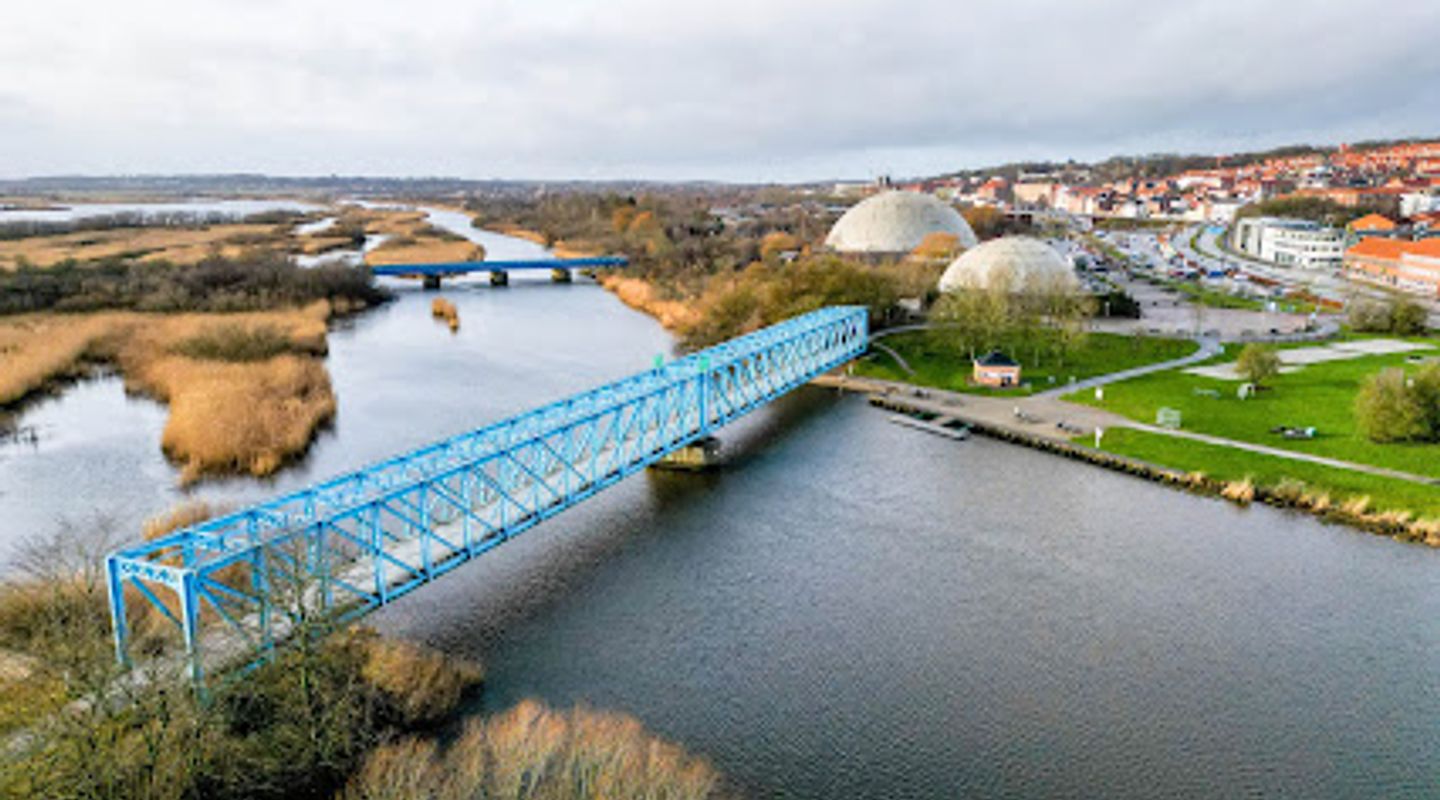
Den Blå Bro is a striking blue pedestrian and cycling bridge spanning the Gudenå river in Randers, Denmark. Originally constructed as a railway bridge for the Grenå Line, this 110-meter architectural landmark has been repurposed as a beloved public crossing that invites leisurely walks with panoramic views of the river landscape. Its distinctive blue color and modern steel construction make it one of Randers' most recognizable structures.
On-site amenities
 Seating areas
 Trash bins
 Information boards
Opening hours
- Every dayOpen 24 hours
Opening hours as listed on the venue’s Google Business Profile. Hours can change for services and special events, so check with the venue before you go.
- Address
- Fjordgade, 8930 Randers
Getting there
Walking from Randers City Centre
Cycling from Randers City Centre
Public Transport and Walking
Parking and Walking
Discover more about Den Blå Bro, Randers
From Railway Heritage to Modern Pedestrian Gateway
Den Blå Bro began its life as a functional railway bridge, serving the Grenå Line that once connected Randers' northern and southern districts. The bridge was engineered and assembled at a factory in Odense before being installed across the Gudenå river. When rail traffic ceased, the structure was thoughtfully repurposed rather than demolished, transforming it into a public pedestrian and cycling bridge that now serves thousands of visitors and locals annually. This adaptive reuse reflects a broader Scandinavian approach to preserving industrial heritage while meeting contemporary community needs.
Distinctive Design and Visual Identity
The bridge's most striking feature is its bold blue color, a deliberate aesthetic choice that references the water below and creates an unmistakable landmark visible from considerable distances. The clean, modern construction employs steel framework with a minimalist design philosophy, avoiding unnecessary ornamentation while maintaining structural integrity and visual elegance. At 110 meters in length, the bridge provides ample space for pedestrians and cyclists to move comfortably while pausing to absorb the surrounding landscape. The engineering is robust yet refined, exemplifying early-to-mid 20th-century industrial design principles adapted for contemporary public use.
A River Crossing with Scenic Reward
Walking or cycling across Den Blå Bro offers more than functional transit—it provides an immersive experience of the Gudenå river valley. From the bridge's vantage point, visitors encounter expansive views of the waterway, riparian vegetation, and the urban fabric of Randers beyond. The crossing invites a contemplative pace, encouraging people to linger and observe seasonal changes in the landscape. The river itself, a significant natural feature in East Jutland, becomes a focal point for reflection and photography. The bridge's elevated position creates a sense of separation from street-level activity, offering a peaceful interlude within the urban environment.
Integration with Randers' Urban Landscape
Located near Justesens Plæne and accessible from Fjordgade, Den Blå Bro sits within a broader network of riverside attractions and recreational spaces. The bridge connects different neighborhoods and serves as a gateway to waterfront promenades and parks. Its prominence in local consciousness—ranking among Randers' most recognized structures alongside the historic Randersbro—reflects its cultural significance beyond mere infrastructure. The bridge has become a symbol of the city's identity and a focal point for community gatherings, casual recreation, and tourism.
Accessibility and Year-Round Appeal
The bridge remains open to the public at all times, with no entrance fees or restricted hours. Its flat, well-maintained surface accommodates pedestrians of varying mobility levels, families with strollers, and cyclists of all abilities. The structure withstands Denmark's variable weather conditions, remaining safe and navigable throughout the year. Whether visited during spring's awakening, summer's golden light, autumn's color transformation, or winter's stark beauty, the bridge offers distinct seasonal experiences while maintaining its essential character and function.
Evendo Review Centre
 Google
Guest reviews
Best time to go
Quietest: Jan, Feb & Nov · before 6am or at 10pm
Busy times are Evendo estimates for a typical year, to help you plan. Actual crowds vary with events, school holidays and the weather.
Explore Den Blå Bro, Randers on the map
A handpicked selection of must-see spots near Den Blå Bro, Randers, mapped for you.
Get your free copy of our complete guide to Den Blå Bro, Randers, delivered straight to you.
Everything on this page, from opening hours and how to get there to Eve’s tips and the best time to go, in one PDF you can read offline, print or share.
Already have an account? Sign in
Your Den Blå Bro, Randers guide is ready.
We'll send it to · Not you? Sign out

Getting your guide ready…
We are putting together a fresh copy of the Den Blå Bro, Randers guide. This can take up to a minute.
This can take a few moments. If your browser asks, choose Allow so the download can start. You'll find the guide in your Downloads folder.
Nothing happened? Download it again
Sorry, the guide is taking longer than usual. Please try again in a minute, or get it by email instead.
Other nearby places you may find interesting
The closest places of the same kind, if this one is not quite what you had in mind.
-
-
-

-
-


Swipe for more places
More to explore near Den Blå Bro, Randers

 Best experiences near Den Blå Bro, Randers
 Best hotels near Den Blå Bro, Randers
 Best landmarks near Den Blå Bro, Randers
 Best attractions near Den Blå Bro, Randers
 Best shops near Den Blå Bro, Randers
 Best restaurants near Den Blå Bro, Randers
 Best bars near Den Blå Bro, Randers
Do you manage this location?
Take control to get all the benefits, like improved information, better appearance, and stronger visibility across AI-powered discovery.
Explore more

Explore more of Randers
Discover Randers, Denmark's riverside jewel, where history meets nature in a city full of cultural charm and scenic beauty.
Explore Randers
Explore more of Denmark
Discover Denmark: A perfect blend of history, modern design, and the cozy concept of hygge. Explore vibrant cities, serene landscapes, and world-class cuisine.
Explore Denmark
