The Jutland Stallion, Randers Travel Guide
Free Guide: A colossal bronze workhorse on Østervold, The Jutland Stallion transforms Randers’ horse‑trading heritage into a powerful modern city symbol.


A brief summary of The Jutland Stallion
A colossal bronze workhorse on Østervold, The Jutland Stallion transforms Randers’ horse‑trading heritage into a powerful modern city symbol.
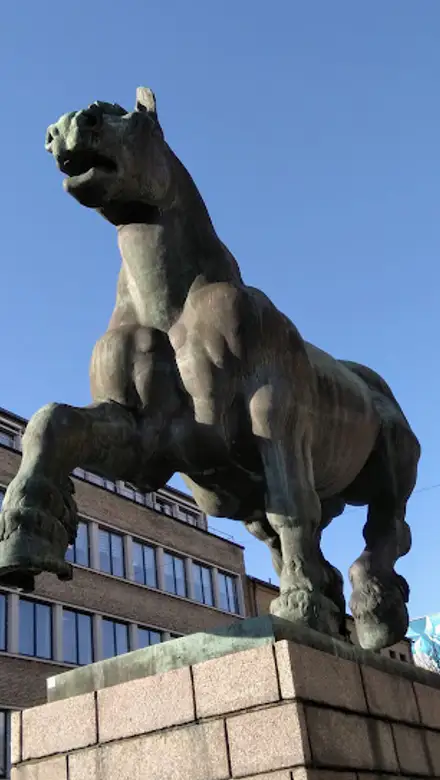
Towering above the broad Østervold promenade in central Randers, The Jutland Stallion is a monumental bronze sculpture celebrating the region’s powerful Jutland workhorses and the city’s historic horse fairs. This riderless giant, rearing high above the street, has become a defining symbol of Randers and its local football club, “The Horses.” The open plaza around the statue invites a quick photo stop, a reflective pause, or a short stroll to admire its muscular detail and commanding urban presence.
On-site amenities
 Seating areas
 Trash bins
 Information boards
Opening hours
- Every dayOpen 24 hours
Opening hours as listed on the venue’s Google Business Profile. Hours can change for services and special events, so check with the venue before you go.
- Address
- Østervold 21-17, 8900 Randers
Getting there
From Randers city center on foot
Local city bus within Randers
Train to Randers and short walk
Discover more about The Jutland Stallion
A giant workhorse at the heart of Randers
The Jutland Stallion rises dramatically from the wide Østervold promenade, a massive bronze horse that immediately dominates the cityscape around it. Set on a raised plinth in the middle of a broad concrete and stone plaza, the stallion appears mid-stride, muscles taut and head lifted as if about to surge forward. Its size alone turns heads: at several stories tall, it dwarfs nearby pedestrians and passing traffic, anchoring this open urban space with a bold, sculptural focal point.Unlike many equestrian monuments, there is no rider on its back. The horse stands alone, celebrated on its own terms as a symbol of strength, endurance, and character. This choice gives the sculpture a certain dignity and independence, as if the animal itself embodies the spirit of the city.
Echoes of Randers’ historic horse fairs
The monument pays tribute to the Jutland horse, a robust draft breed that played a crucial role in agriculture, transport, and trade across Jutland. For generations, Randers hosted major horse markets where animals like this stallion were bought, sold, and showcased. The sculpture works almost like a memory cast in bronze, recalling a time when the clatter of hooves and the bustle of traders filled the streets nearby.Even though the era of large horse fairs has passed, the stallion keeps that heritage visible in everyday city life. Its powerful frame and workmanlike build reflect the practical, hardworking reputation of both the horses and the region. Standing in front of it, you get a sense of Randers as a place shaped by commerce, countryside, and physical effort rather than royal pageantry.
Symbol of a strong, modern city
Over time, The Jutland Stallion has evolved from a tribute to working horses into an emblem for the city itself. Its silhouette is used widely as a symbol of Randers, and the local professional football team has fittingly adopted the nickname “The Horses.” The sculpture’s broad chest, heavy neck, and planted hooves translate easily into a visual metaphor for resilience and power on and off the sports field.The surrounding promenade reinforces this sense of ceremony. Wide sightlines draw your eye straight toward the statue, while open space around the base allows you to circle it and see how different angles alter its mood—from imposing and monumental head‑on to almost surprisingly graceful in profile. In the evening, the form stands out against the city lights, sometimes enhanced by seasonal illumination that traces its contours in warm points of light.
Appreciating the sculpture up close
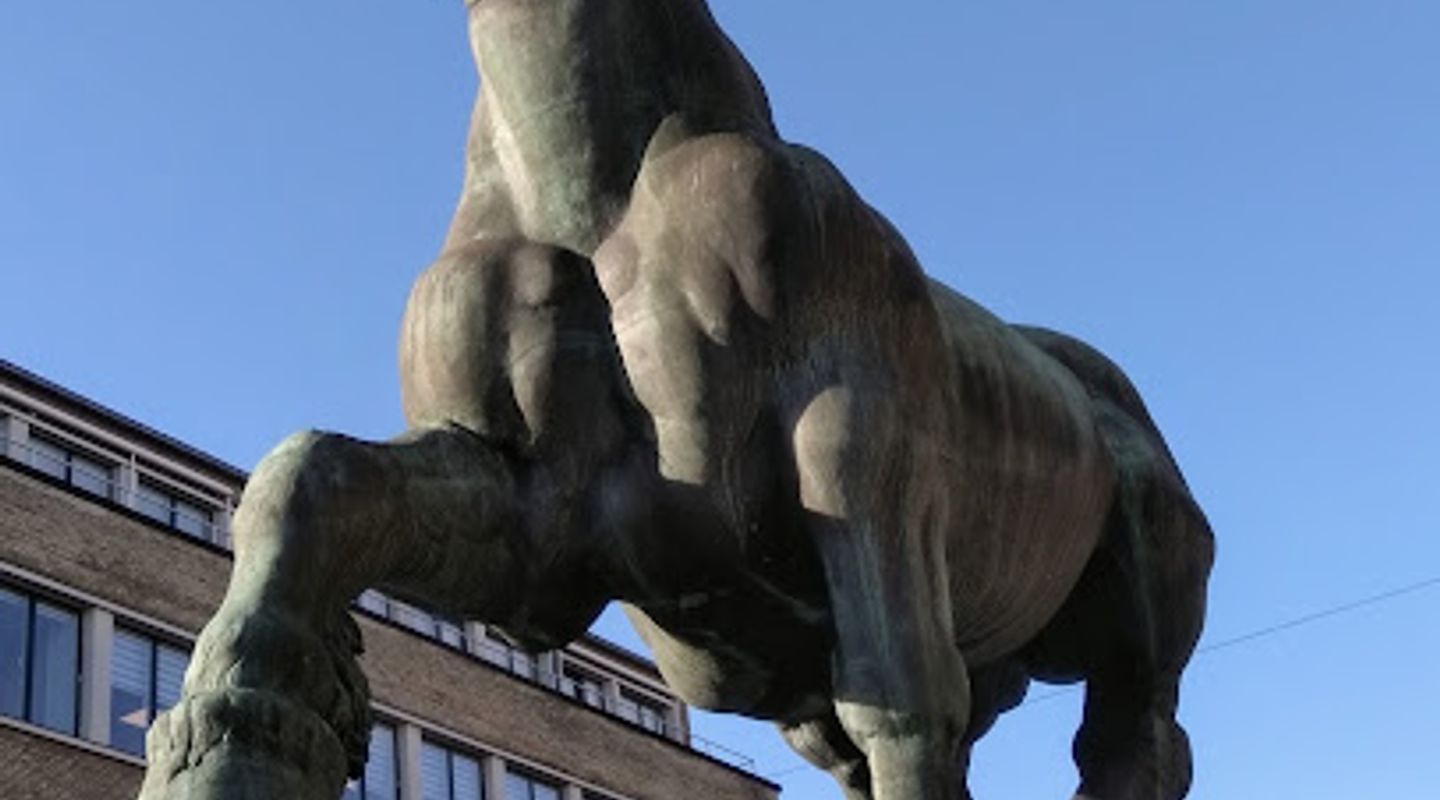
Step nearer and you can pick out fine modeling in the legs, belly, and mane. The sculptor has exaggerated the stallion’s musculature slightly, giving it a near-mythic physicality without losing the recognizable proportions of a real Jutland horse. The bronze surface carries a patina that changes subtly with the weather, from deep brown in dry conditions to a darker, almost black sheen when it has rained.Because the sculpture stands in an open public area, you can move freely around it, experiment with compositions for photos, and compare its scale with the surrounding buildings. Children often enjoy standing at the base and looking up at the horse’s head, while photographers seek reflections in nearby windows or puddles after a shower.
An easy urban stop between sights
The location on Østervold makes the stallion a natural waypoint as you wander between Randers’ older streets, shops, and cultural venues. Benches and informal seating spots along the promenade invite a short break, with the horse in view as an unmistakable landmark that makes it easy to orient yourself.Whether you stay for five minutes or linger longer, The Jutland Stallion offers a quick but vivid introduction to Randers’ identity: a working‑horse town that has turned its muscular past into a proud modern symbol. It is the kind of urban sculpture that does more than decorate a square—it tells you, in one powerful figure, what the city wants to say about itself.
Seasonal atmosphere and changing light
The character of the statue shifts with the seasons. On bright summer days, sharp shadows carve out every muscle, and the open plaza feels spacious and airy. In autumn and winter, the wind along Østervold can be bracing, adding a raw edge that suits the stallion’s rugged personality. Around dusk, when the sky softens and city lights flicker on, the sculpture often looks its most dramatic, a dark silhouette stepping out against the evening glow. Each visit offers a slightly different reading of this enduring city icon.
Evendo Review Centre
 Google
Guest reviews
Best time to go
Quietest: Jan, Feb & Nov · before 7am or from 11pm
Busy times are Evendo estimates for a typical year, to help you plan. Actual crowds vary with events, school holidays and the weather.
Explore The Jutland Stallion on the map
A handpicked selection of must-see spots near The Jutland Stallion, mapped for you.
Get your free copy of our complete guide to The Jutland Stallion, delivered straight to you.
Everything on this page, from opening hours and how to get there to Eve’s tips and the best time to go, in one PDF you can read offline, print or share.
Already have an account? Sign in
Your The Jutland Stallion guide is ready.
We'll send it to · Not you? Sign out

Getting your guide ready…
We are putting together a fresh copy of the The Jutland Stallion guide. This can take up to a minute.
This can take a few moments. If your browser asks, choose Allow so the download can start. You'll find the guide in your Downloads folder.
Nothing happened? Download it again
Sorry, the guide is taking longer than usual. Please try again in a minute, or get it by email instead.
Other nearby places you may find interesting
The closest places of the same kind, if this one is not quite what you had in mind.
-
-

-
-
-


Swipe for more places
More to explore near The Jutland Stallion

 Best experiences near The Jutland Stallion
 Best hotels near The Jutland Stallion
 Best landmarks near The Jutland Stallion
 Best attractions near The Jutland Stallion
 Best shops near The Jutland Stallion
 Best restaurants near The Jutland Stallion
 Best bars near The Jutland Stallion
Do you manage this location?
Take control to get all the benefits, like improved information, better appearance, and stronger visibility across AI-powered discovery.
Explore more

Explore more of Randers
Discover Randers, Denmark's riverside jewel, where history meets nature in a city full of cultural charm and scenic beauty.
Explore Randers
Explore more of Denmark
Discover Denmark: A perfect blend of history, modern design, and the cozy concept of hygge. Explore vibrant cities, serene landscapes, and world-class cuisine.
Explore Denmark