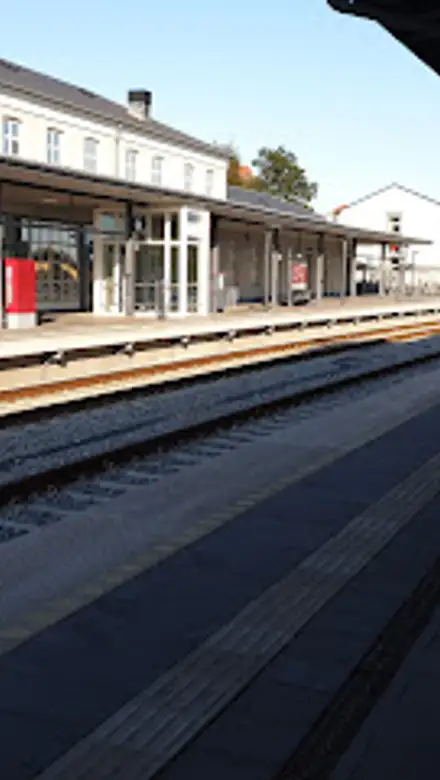
Randers Railwaystation, Randers Travel Guide
Free Guide: Historic rail gateway of Randers, linking East Jutland’s river town with Aarhus, Aalborg and Copenhagen from a compact, practical 19th‑century station hub.


A brief summary of Randers Railwaystation
Historic rail gateway of Randers, linking East Jutland’s river town with Aarhus, Aalborg and Copenhagen from a compact, practical 19th‑century station hub.
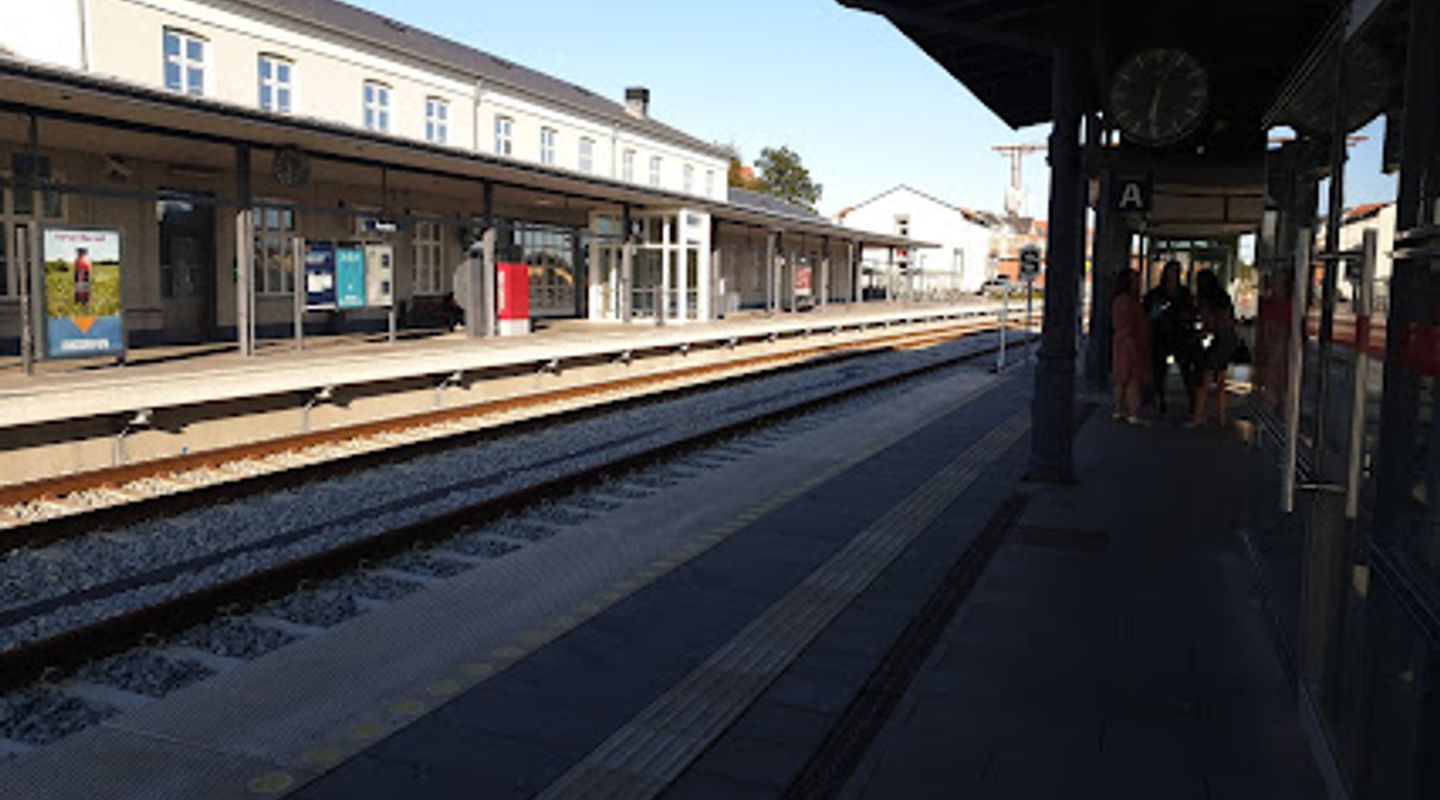
Randers Railway Station is the compact, red-brick rail hub of this East Jutland town, set on Jernbanegade just a short stroll from the historic center and the Gudenå riverfront. Opened in 1862 as part of Jutland’s first railway, it now sits on the main Aarhus–Aalborg line, with InterCity and InterCityLyn services linking Randers directly to Copenhagen, Aarhus and Aalborg. Inside, you’ll find a practical mix of ticket machines, a 7‑Eleven kiosk, toilets, seating and sheltered platforms.
On-site amenities
 Restrooms
 Drink options
 Food options
 Seating areas
 Sheltered areas
 Trash bins
 Information boards
- Address
- Jernbanegade 29, 8900 Randers
- Phone
- Website
Getting there
Train from Aarhus
Train from Aalborg
Train from Copenhagen
Regional bus and local arrival
Discover more about Randers Railwaystation
A historic gateway into East Jutland
Randers Railway Station is more than a simple stop on the map: it is the historic rail gateway into one of East Jutland’s oldest trading towns. Opened in 1862 on Jutland’s very first railway line between Aarhus and Randers, the station quickly became a vital link in Denmark’s expanding north–south network. Within just a few years it was also the southern end of the Randers–Aalborg line and a junction for branch lines heading towards Ryomgård and Hadsund, placing Randers firmly on the country’s transport spine.Today the station remains on the busy Aarhus–Aalborg corridor, with InterCity and faster InterCityLyn services carrying travellers to Copenhagen, Aarhus, Aalborg and beyond. Long-distance trains share the platforms with regional services, so it feels like a compact but genuinely important node in the national system.
Architecture with quiet, Victorian-era roots
The station building sits slightly back from Jernbanegade, a modest red-brick structure with simple classical detailing that hints at its mid-19th-century origins. The original design came from an unknown architect working for the English consortium that built the line, and similar station types could be seen in provincial England of the same era. Over time, rebuilds and a thorough renovation in the early 2000s have refreshed the interior while retaining the building’s basic, no‑nonsense outline.Step into the concourse and you find a practical, light-filled space rather than grand ornament. Floors and walls are finished in durable materials, with clear signage towards platforms, toilets and exits. Large windows frame glimpses of tracks and passing trains, while the low, linear platforms outside keep everything on a human scale.
Facilities designed for everyday journeys
Randers Station is set up for daily commuters as much as long-distance travellers. In the main hall you will find ticket machines and a DSB 7‑Eleven, useful for grabbing coffee, pastries or a quick sandwich before boarding. Toilets, including accessible facilities, are available for a small card payment, and the concourse stays open from early morning until late evening, giving shelter when the Danish weather turns wet or windy.Outside, there are marked car parks with a substantial number of spaces, including options linked to rail loyalty schemes, and an area for both standard and locked cycle parking that reflects Denmark’s strong bike culture. Platforms are covered in key sections, providing protection from rain, and level access plus assistance services make the station workable for travellers with reduced mobility.
Link between town center and riverfront
One of the station’s strengths is its position at the edge of Randers’ compact center. Step outside and you are only a few minutes’ walk from pedestrian streets, shops and cafés in one direction, and the Gudenå river and harbor area in the other. This makes the station a convenient starting point for exploring: many of the town’s main sights, from historic streets to modern cultural venues, can be reached comfortably on foot.The station also functions as a hinge between rail and local buses, with stops nearby connecting to suburban districts and surrounding countryside. For travellers arriving with luggage, the short, mostly level routes between the station and central hotels or guesthouses keep logistics simple.
Atmosphere of a working Danish rail hub
At peak hours, the platforms fill with commuters heading to Aarhus or students travelling north, while quieter midday periods give the place a more relaxed, almost small-town feel. The sounds are familiar to anyone who uses Scandinavian trains: clear announcements, the chime of doors closing, and the hum of electric units pulling in and out.This is very much a functional station rather than a showpiece, but its long history, practical layout and central location make it an essential part of Randers’ daily life—and a natural arrival point for anyone discovering the town by rail.
Railway stories and local culture
Randers Station has also seeped into Danish culture. Its role as a junction on early Jutland railways is part of the country’s industrial story, and the station even lent its name to a Danish pop song in the early 2000s, reflecting how familiar the place is to many travellers. Old maps and photographs show how tracks once fanned out towards closed branch lines, underlining how the station has adapted as routes changed.For today’s visitor, those layers of history sit quietly behind a thoroughly modern operation: digital displays, contemporary trains and easy onward connections. Whether you are pausing briefly between services or starting a stay in Randers, the station offers an accessible, straightforward and subtly historic introduction to the town.
Evendo Review Centre
 Google
Guest reviews
Best time to go
Quietest: Jan, Feb & Mar · before 3am
Busy times are Evendo estimates for a typical year, to help you plan. Actual crowds vary with events, school holidays and the weather.
Explore Randers Railwaystation on the map
A handpicked selection of must-see spots near Randers Railwaystation, mapped for you.
Get your free copy of our complete guide to Randers Railwaystation, delivered straight to you.
Everything on this page, from opening hours and how to get there to Eve’s tips and the best time to go, in one PDF you can read offline, print or share.
Already have an account? Sign in
Your Randers Railwaystation guide is ready.
We'll send it to · Not you? Sign out

Getting your guide ready…
We are putting together a fresh copy of the Randers Railwaystation guide. This can take up to a minute.
This can take a few moments. If your browser asks, choose Allow so the download can start. You'll find the guide in your Downloads folder.
Nothing happened? Download it again
Sorry, the guide is taking longer than usual. Please try again in a minute, or get it by email instead.
Other nearby places you may find interesting
The closest places of the same kind, if this one is not quite what you had in mind.
-
-
-

-
-


Swipe for more places
More to explore near Randers Railwaystation

 Best experiences near Randers Railwaystation
 Best hotels near Randers Railwaystation
 Best landmarks near Randers Railwaystation
 Best attractions near Randers Railwaystation
 Best shops near Randers Railwaystation
 Best restaurants near Randers Railwaystation
 Best bars near Randers Railwaystation
Do you manage this location?
Take control to get all the benefits, like improved information, better appearance, and stronger visibility across AI-powered discovery.
Explore more

Explore more of Randers
Discover Randers, Denmark's riverside jewel, where history meets nature in a city full of cultural charm and scenic beauty.
Explore Randers
Explore more of Denmark
Discover Denmark: A perfect blend of history, modern design, and the cozy concept of hygge. Explore vibrant cities, serene landscapes, and world-class cuisine.
Explore Denmark