

Moesgaard Museum Travel Guide
Free Guide: World-class archaeology meets innovative architecture in Denmark's premier museum of human history and cultural heritage.


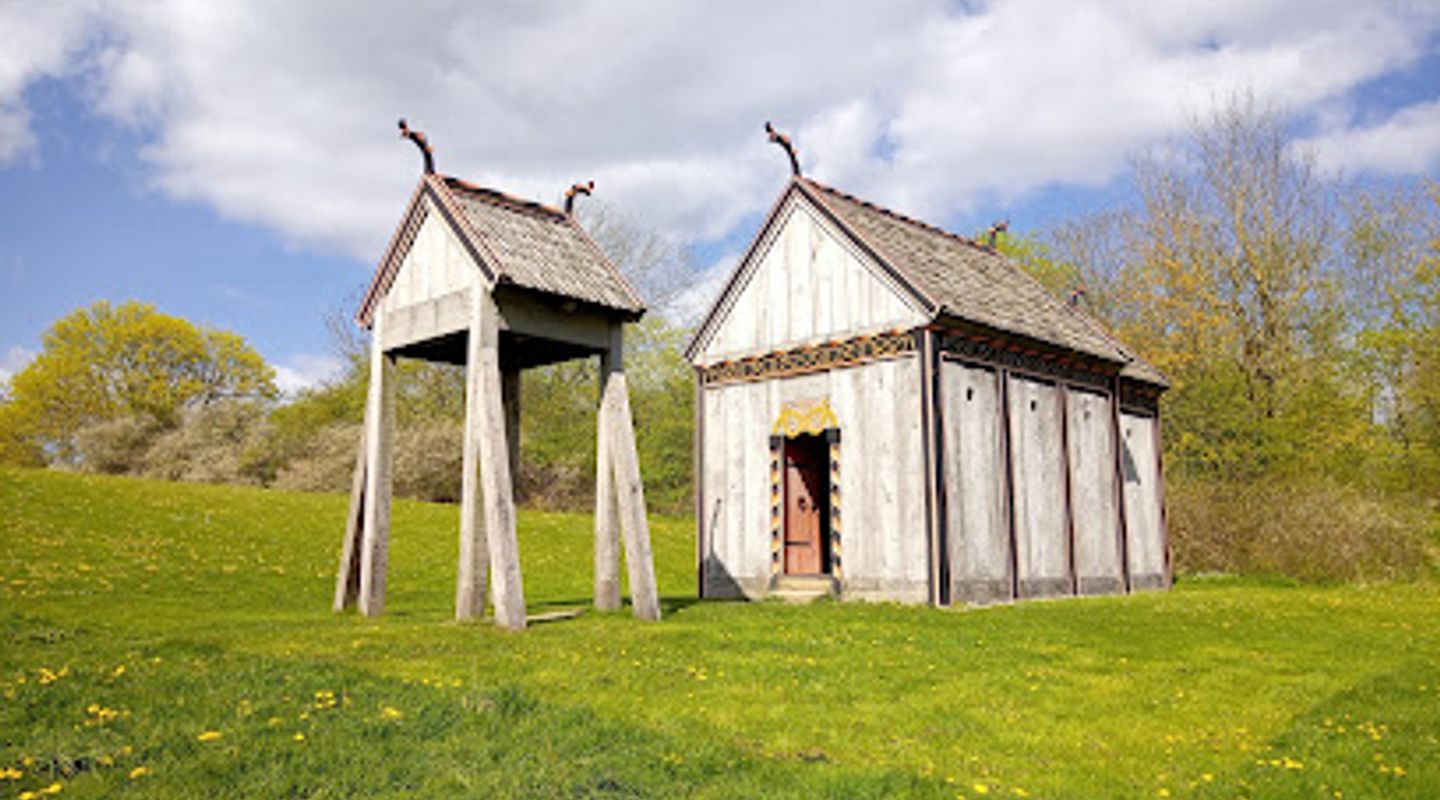
A brief summary of Moesgaard Museum
World-class archaeology meets innovative architecture in Denmark's premier museum of human history and cultural heritage.
Moesgaard Museum in Aarhus is a world-class archaeological and ethnographic institution showcasing over 10,000 years of human history through innovative exhibitions and cutting-edge research. Set in a striking architectural masterpiece with a grass-covered roof overlooking forests and the sea, the museum features iconic exhibits including the Grauballe Man—one of the world's best-preserved bog bodies—alongside interactive displays on prehistoric Denmark, Viking heritage, and human evolution. The dramatic Stairway of Evolution presents seven anatomically reconstructed hominins, while the ethnographic collections offer global perspectives on human culture and origin.
On-site amenities
 Restrooms
 Drink options
 Food options
 Seating areas
 Information boards
 Visitor centre
Opening hours
- Mon10 am–5 pm
- Tue10 am–5 pm
- Wed10 am–9 pm
- Thu10 am–5 pm
- Fri10 am–5 pm
- Sat10 am–9 pm
- Sun10 am–5 pm
Opening hours as listed on the venue’s Google Business Profile. Hours can change for services and special events, so check with the venue before you go.
- Address
- Moesgård Allé 15, 8270 Højbjerg
- Phone
- Website
Getting there
City Bus 18
Regional Bus 100
Taxi or Ride-Share
Private Vehicle
Discover more about Moesgaard Museum
A Museum Where Architecture Meets Archaeology
Moesgaard Museum stands as one of Denmark's most significant cultural institutions, seamlessly blending world-class archaeological research with breathtaking architectural design. The building itself is a landmark—its distinctive grass-covered roof slopes naturally into the surrounding landscape, creating a visual harmony between structure and nature. Visitors can walk directly onto the roof to experience panoramic views stretching across forests and coastline, transforming the building envelope into an exhibition space in itself. This innovative design reflects the museum's philosophy: presenting human history not as isolated artifacts, but as an integrated narrative woven into the fabric of our natural world.
The Grauballe Man and Iron Age Mysteries
At the heart of Moesgaard's collections lies one of archaeology's most remarkable discoveries: the Grauballe Man. This 2,000-year-old bog body, preserved with extraordinary completeness by the unique chemistry of peat, allows visitors to see details rarely visible in ancient remains—fingernails, toenails, and strands of hair remain intact. The Iron Age exhibition contextualizes this haunting figure within the ritual practices, beliefs, and daily life of prehistoric Jutland communities. The Grauballe Man has achieved international recognition as a world-class archaeological find, drawing scholars and curious travelers alike to contemplate the mysteries of ancient death and preservation.
The Stairway of Evolution: Meeting Our Ancestors
The museum's central architectural feature—the Stairway of Evolution—functions as both circulation and exhibition. Seven lifelike reconstructions of human ancestors guide visitors through three million years of human development, from Lucy, the 3.2-million-year-old hominin discovered in Ethiopia, to the Koelbjerg Man, Denmark's oldest known skeleton from the Stone Age. These anatomically precise figures were created in collaboration with Aarhus University's Centre for Biocultural History and the renowned Kennis brothers from the Netherlands. As you descend the stairs, you encounter not abstract concepts but tangible representations of our evolutionary journey, making the deep past viscerally present.
Global Perspectives on Human Culture
The Stairway of Origin ascends toward the ethnographic galleries, introducing visitors to three contemporary figures representing different world cultures: Paul Gurrumuruwuy from the Yolngu people of Australia, Galina Ainatgual from the Chukchi of Siberia, and physicist Stephen Hawking. Each presents their own perspective on human origins and future direction, creating a dialogue between past and present, between archaeological evidence and living cultural knowledge. This approach reflects the museum's commitment to understanding humanity not through a single narrative, but through multiple voices and viewpoints spanning continents and centuries.
Spanning Millennia: From Stone Age to Medieval Times
Moesgaard's permanent exhibitions chart Denmark's cultural development across distinct historical periods. The Stone Age galleries explore the first immigrants to Scandinavia and their adaptation to glacial landscapes. Bronze Age displays celebrate the "People of the Sun" and their sophisticated metalworking traditions. The Iron Age section encompasses bog offerings and ritual practices. Viking Age exhibitions present maritime adventures and cultural expansion, while Medieval galleries address religious transformation and social structures. Each period is presented through carefully selected artifacts—tools, weapons, jewelry, ceramics, and grave goods—supported by the latest archaeological research and interactive storytelling techniques that engage visitors of all ages.
Setting and Visitor Experience
Located south of Aarhus in the municipality of Højbjerg, Moesgaard benefits from a landscape of natural beauty. The surrounding forests and proximity to the coast create an environment that complements the museum's mission of connecting human history to the natural world. The building includes a modern café serving traditional Danish cuisine and organic coffee, with views across the woodland and bay. A gift shop offers curated selections, and the grass roof provides space for contemplation and picnicking. The museum's commitment to accessibility ensures that elevators, wide pathways, and facilities on every floor accommodate visitors with varying mobility needs, while multilingual staff enhance the experience for international guests.
Evendo Review Centre
 Google
Guest reviews
Best time to go
Quietest: Jan, Feb & Dec · before 8am or at 6pm or from 9pm
Busy times are Evendo estimates for a typical year, to help you plan. Actual crowds vary with events, school holidays and the weather.
Explore Moesgaard Museum on the map
A handpicked selection of must-see spots near Moesgaard Museum, mapped for you.
Get your free copy of our complete guide to Moesgaard Museum, delivered straight to you.
Everything on this page, from opening hours and how to get there to Eve’s tips and the best time to go, in one PDF you can read offline, print or share.
Already have an account? Sign in
Your Moesgaard Museum guide is ready.
We'll send it to · Not you? Sign out

Getting your guide ready…
We are putting together a fresh copy of the Moesgaard Museum guide. This can take up to a minute.
This can take a few moments. If your browser asks, choose Allow so the download can start. You'll find the guide in your Downloads folder.
Nothing happened? Download it again
Sorry, the guide is taking longer than usual. Please try again in a minute, or get it by email instead.
Other nearby places you may find interesting
The closest places of the same kind, if this one is not quite what you had in mind.
-
Tidselkorridoren A winding botanical art corridor celebrating Samsø's wildflowers and native plants.
-
Vesborg Fyr Historic lighthouse on Samsø’s southwestern tip, blending medieval ramparts, sweeping sea views and classic Danish coastal atmosphere in one compact headland.
-
Falkecenter Samsø ApS High‑speed falcons, soaring eagles and silent owls in a one‑hour open‑air show that brings the ancient art of falconry to life on the island of Samsø.
-
Ballebjerg Samsø’s highest hill, crowned by a 1920 watchtower and wrapped in wide Kattegat horizons, offering simple, far-reaching views over fields, sea and islands.
-
Samsø Labyrinten Lose yourself in the world’s largest labyrinth, where quiz questions guide you through 5.5 km of leafy paths, hidden goals, play areas and tranquil island nature.
Swipe for more places
More to explore near Moesgaard Museum

 Best experiences near Moesgaard Museum
 Best hotels near Moesgaard Museum
 Best landmarks near Moesgaard Museum
 Best attractions near Moesgaard Museum
 Best shops near Moesgaard Museum
 Best restaurants near Moesgaard Museum
 Best bars near Moesgaard Museum
Do you manage this location?
Take control to get all the benefits, like improved information, better appearance, and stronger visibility across AI-powered discovery.
Explore more
Explore more of Samsø
Samsø: Explore Denmark's eco-friendly island, rich in natural beauty, culinary delights, and cultural heritage.
Explore Samsø
Explore more of Denmark
Discover Denmark: A perfect blend of history, modern design, and the cozy concept of hygge. Explore vibrant cities, serene landscapes, and world-class cuisine.
Explore Denmark
