Moesgaard Museum Travel Guide
Free Guide: Cut into a green hillside above Aarhus Bay, Moesgaard Museum fuses bold architecture, deep-time archaeology and global cultures in one immersive landscape.


A brief summary of Moesgaard Museum
Cut into a green hillside above Aarhus Bay, Moesgaard Museum fuses bold architecture, deep-time archaeology and global cultures in one immersive landscape.
Set in rolling countryside south of Aarhus, Moesgaard Museum blends cutting-edge archaeology and ethnography with bold architecture and sweeping coastal views. Beneath its grass-clad, walkable roof, immersive exhibitions trace Danish prehistory from Stone Age to Vikings and explore world cultures through engaging storytelling, original artefacts, and innovative multimedia. Outside, woodland trails, the historic Moesgaard Manor and a shoreline landscape invite you to extend your visit into nature.
On-site amenities
 Restrooms
 Drink options
 Drinking water
 Food options
 Lockers
 Seating areas
 Sheltered areas
 Trash bins
 Information boards
 Visitor centre
Opening hours
- MonClosed
- Tue10 am–5 pm
- Wed10 am–9 pm
- Thu10 am–5 pm
- Fri10 am–5 pm
- Sat10 am–9 pm
- Sun10 am–5 pm
Opening hours as listed on the venue’s Google Business Profile. Hours can change for services and special events, so check with the venue before you go.
- Address
- Moesgård Allé 15, 8270 Højbjerg
- Phone
- Website
Getting there
City bus from central Aarhus
Taxi from Aarhus city centre
Car from the Aarhus region
Cycling from southern Aarhus districts
Discover more about Moesgaard Museum
A hillside museum woven into the landscape
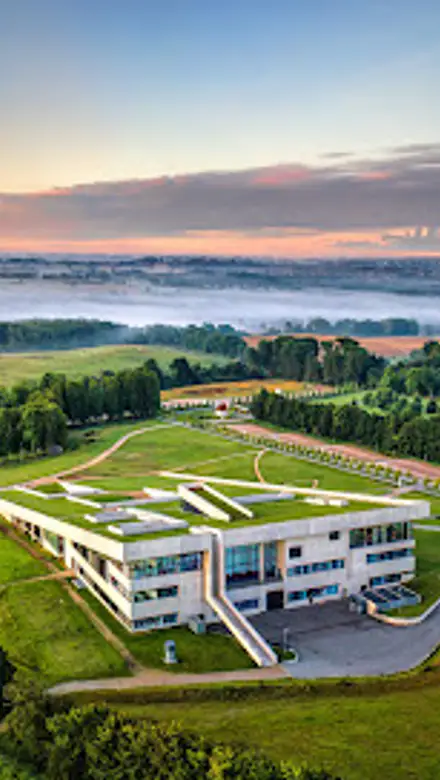
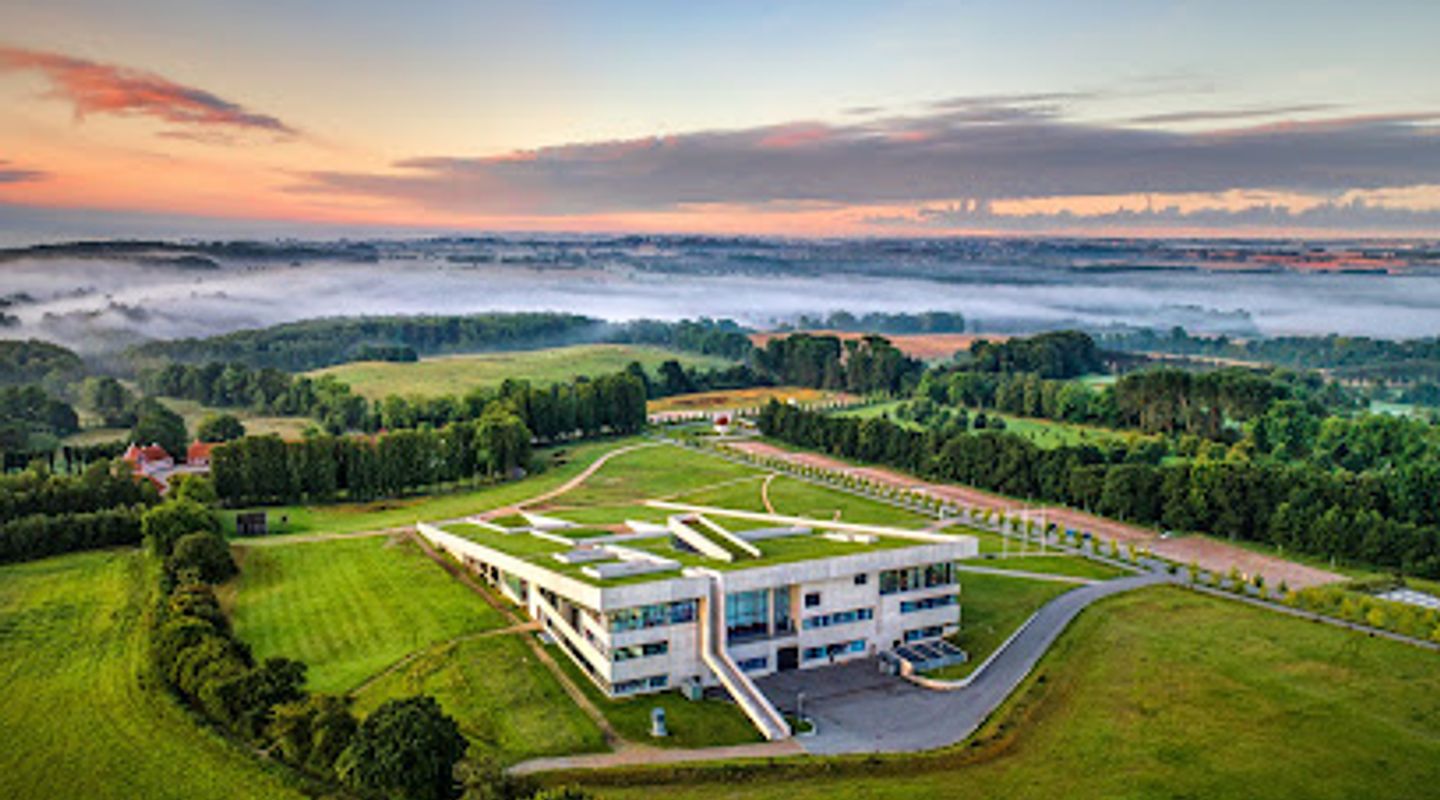
Moesgaard Museum sits in the hilly terrain south of Aarhus, its striking building embedded in the slope like a giant wedge of earth. The sloping roof is carpeted with grass and wildflowers, turning the entire structure into a walkable viewpoint that feels like a natural extension of the surrounding fields and forest. From the upper terraces you can gaze towards Aarhus Bay, watching the light shift over the water while the museum itself almost disappears into the landscape.Inside, the architecture continues the theme of excavation and layers. A dramatic central staircase drops through the building, flanked by terraces that evoke archaeological trenches cut into the ground. Concrete, wood and filtered daylight create a softly industrial yet warm atmosphere, with long lines of sight that constantly remind you of the building’s connection to the terrain outside.
Journeys through Denmark’s deep past
The museum’s core story is Denmark’s prehistory, told through a sequence of immersive galleries that pull you from the Stone Age through the Bronze and Iron Ages into the Viking world and the Middle Ages. Instead of rows of glass cases, the spaces are staged like fragments of vanished landscapes: a dim bog here, a reconstructed burial mound there, a Viking harbour buzzing with sound and light. Objects are spotlighted within these environments, their context explained through clear text, film, and soundscapes.Among the most compelling encounters is the Grauballe Man, a more than 2,000-year-old bog body whose preserved skin, hair and facial features make the Iron Age startlingly immediate. Nearby, weapons dredged from Illerup Ådal speak of warfare, alliances and ritual in an era often reduced to myth. The result is a timeline that feels less like a chronology and more like a series of lived human moments.
World cultures and the story of humanity
Beyond the Danish narrative, Moesgaard devotes substantial space to ethnographic collections from across the globe. These exhibitions shift perspective from one region to another, comparing rituals, beliefs, clothing, and everyday tools in a way that highlights both difference and shared human concerns. Carefully chosen artefacts are paired with film clips, audio, and reconstructions, so that a ceremonial mask or household object is anchored in the lives of the people who once used it.Threading through the building is the so‑called evolutionary stairway, where life-sized reconstructions of early hominins line the walls. As you descend, you move from ancient ancestors like Lucy towards more recent human relatives, visually tracing millions of years of evolution. The effect is quietly powerful, placing the archaeological and ethnographic material in the broader story of what it means to be human.
Historic manor, forest and seashore
The museum forms part of the larger Moesgaard estate, a patchwork of parkland, woodland, fields and coastline that stretches from the hilltop down to the bay. Paths lead from the museum through beech forest, past clearings and viewpoints, towards the shoreline where the landscape flattens and the air smells of salt. Scattered in the grounds are traces of the area’s longer history, including Moesgaard Manor, an 18th-century house now used by Aarhus University.Outdoor installations and reconstructed features occasionally punctuate the trees and meadows, extending the museum’s themes into the open air. On fine days, the grassy roof becomes a de facto picnic spot, with families and walkers spreading out across the slope and children testing how far they can roll before the view of the sea distracts them.
Practical comforts and a full-day visit
Moesgaard is designed for unhurried exploration. A spacious foyer doubles as a hub where ticketing, information and a museum shop cluster around a café serving Danish-style lunches, cakes and coffee. Large windows keep you connected to the landscape even as you warm up indoors, and seating is scattered throughout, making it easy to pause between exhibits.Signage is clear and multilingual, and lifts and wide circulation routes support step-free access through all main exhibition levels. Restrooms are distributed across the building, and lockers or cloak areas usually handle coats and bags so you can move freely. With permanent galleries, changing special exhibitions and the option to explore the estate, Moesgaard naturally stretches to a half or full day, particularly for anyone with a curiosity about how archaeology, architecture and landscape can be woven into a single experience.
Evendo Review Centre
 Google
Guest reviews
Best time to go
Quietest: Jan, Feb & Mar · before 8am or from 8pm
Busy times are Evendo estimates for a typical year, to help you plan. Actual crowds vary with events, school holidays and the weather.
Explore Moesgaard Museum on the map
A handpicked selection of must-see spots near Moesgaard Museum, mapped for you.
Get your free copy of our complete guide to Moesgaard Museum, delivered straight to you.
Everything on this page, from opening hours and how to get there to Eve’s tips and the best time to go, in one PDF you can read offline, print or share.
Already have an account? Sign in
Your Moesgaard Museum guide is ready.
We'll send it to · Not you? Sign out

Getting your guide ready…
We are putting together a fresh copy of the Moesgaard Museum guide. This can take up to a minute.
This can take a few moments. If your browser asks, choose Allow so the download can start. You'll find the guide in your Downloads folder.
Nothing happened? Download it again
Sorry, the guide is taking longer than usual. Please try again in a minute, or get it by email instead.
Other nearby places you may find interesting
The closest places of the same kind, if this one is not quite what you had in mind.
-
-
-
-
-


Swipe for more places
More to explore near Moesgaard Museum

 Best experiences near Moesgaard Museum
 Best hotels near Moesgaard Museum
 Best landmarks near Moesgaard Museum
 Best attractions near Moesgaard Museum
 Best shops near Moesgaard Museum
 Best restaurants near Moesgaard Museum
 Best bars near Moesgaard Museum
Do you manage this location?
Take control to get all the benefits, like improved information, better appearance, and stronger visibility across AI-powered discovery.
Explore more

Explore more of East Jutland
Discover East Jutland, Denmark's enchanting region blending vibrant cities, rich history, and stunning natural landscapes, perfect for every type of traveler.
Explore East Jutland
Explore more of Denmark
Discover Denmark: A perfect blend of history, modern design, and the cozy concept of hygge. Explore vibrant cities, serene landscapes, and world-class cuisine.
Explore Denmark