Mols Bjerge National Park, Samso Travel Guide
Soft Danish “mountains” of heather and oak, Ice Age landforms, Bronze Age mounds and bright bays combine in one richly varied national park on Djursland.
Spread across 180 sq km of glacially shaped hills, heathland, coastline and forest on the Djursland peninsula, Mols Bjerge National Park is one of Denmark’s most evocative landscapes. Rolling “mountains” rise to 137m with sweeping views over bays and inlets, Bronze Age burial mounds punctuate the ridgelines, and wild horses and grazing livestock help maintain rich biodiversity. Well-marked trails, including the 80km Mols Bjerge Trail, make this a superb area for hiking, cycling, nature watching and slow, contemplative exploration in all seasons.
A brief summary to Mols Bjerge National Park
- Molsvej 29, Rønde, 8410, DK
- Click to display
- Click to display
- Duration: 2 to 8 hours
- Free
-
 Outdoor
- Mobile reception: 3 out of 5

Know before you go
Hi, I'm Eve. Here are a few practical things to know before exploring Mols Bjerge National Park.
- Carry a detailed park map or offline app: trails interweave and junctions can be frequent, especially when combining short loops with sections of the Mols Bjerge Trail.
- Weather changes quickly on exposed ridges; pack layers and a windproof jacket even in summer, plus sun protection for long stretches through open heath and grassland.
- Respect grazing animals by keeping distance, skirting around herds calmly and closing gates behind you; dogs must stay on a leash in most areas to protect wildlife and livestock.
- If you plan longer hikes, bring sufficient water and snacks; facilities are concentrated near visitor centres and towns, not along more remote hill and forest sections.
- Visit at different times of day: early morning brings misty valleys and birdsong, while late daylight can bathe the heather‑clad slopes and bays in particularly soft light.
Do you manage this location?
Take control to get all the benefits, like improved information, better appearance, and stronger visibility across AI-powered discovery. Learn more about listing your business on Evendo
Activate your presenceOther nearby places you may find interesting
The closest places of the same kind, if this one is not quite what you had in mind.
Explore Mols Bjerge National Park on the Map
A handpicked selection of must-see spots near Mols Bjerge National Park, mapped for you.
Getting There
-
Car from Aarhus
From central Aarhus, driving to the main areas of Mols Bjerge typically takes 35–50 minutes, depending on which entrance or trailhead you choose. The route uses major regional roads suitable for all standard vehicles and is straightforward year‑round. Parking areas near Kalø Castle, Femmøller and key viewpoints are generally free, but some can fill up on sunny summer weekends and school holidays, so arriving earlier in the day offers more choice of spaces.
-
Bus from Aarhus region
Regional buses run between Aarhus and towns such as Rønde and Ebeltoft, which lie within or at the edge of the national park. Typical travel time is about 45–70 minutes depending on the route and destination. From these towns you can access nearby trailheads on foot or by local bus where available. Standard single adult fares on regional buses are usually in the range of 30–70 DKK, with tickets purchased from machines, drivers or travel apps depending on the service.
-
Cycling from Djursland towns
For confident cyclists already staying on Djursland, reaching Mols Bjerge by bike is an appealing low‑impact option. From Rønde or Ebeltoft, well‑signed local and national cycle routes lead into the park through gently hilly countryside. Expect 30–60 minutes of riding each way for many common starting points. Surfaces are a mix of paved roads and good gravel stretches, so a touring or hybrid bike is ideal. Strong winds and rolling terrain can make the ride moderately demanding, and lighting is recommended outside summer evenings.
-
Walking from nearby villages
If you are staying in accommodation close to the park boundary, such as in villages around Femmøller or along the coast, you can often start your visit on foot directly from your door. Allow 30–90 minutes of walking to reach central viewpoints, depending on your exact location and chosen route. Paths may include forest tracks, farm lanes and sometimes steeper hill sections, which can be slippery after rain. This option suits visitors comfortable with moderate distances and limited wayfinding using local signs and maps.
For the on-the-go comforts that matter to you
-
 Restrooms
-
 Drinking Water
-
 Seating Areas
-
 Sheltered Areas
-
 Picnic Areas
-
 Trash Bins
-
 Information Boards
-
 Visitor Center
Discover more about Mols Bjerge National Park
Hills from the Ice Age
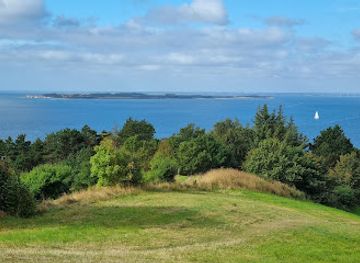
Mols Bjerge National Park unfolds across the southern tip of Djursland, where ancient glaciers sculpted a landscape of rounded hills, deep meltwater valleys and kettle holes that still feel raw and elemental. Here the so‑called “mountains” rise to a modest 137m, yet the contrast with the surrounding lowlands makes the ridges feel strikingly high, with long views over Kalø Bay, Begtrup Vig and the patchwork of fields and forests below. The terrain shifts quickly underfoot: sandy soils on exposed crests, damp hollows in former ice depressions, and old pathways once used by farmers moving between scattered hamlets.Today these landforms tell a clear story of the last Ice Age. Standing on a windswept summit, it is easy to trace the curves of terminal moraines and imagine ice tongues grinding their way seaward. Interpretive panels at key viewpoints help decode the geology in simple terms, making this a rare place where dramatic scenery and natural history line up perfectly before your eyes.Wild heaths, bright beaches and quiet woods
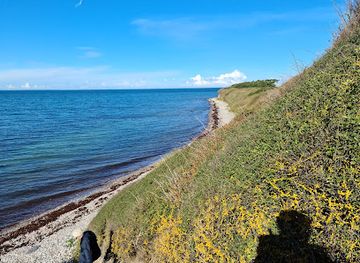
The park’s great appeal lies in the variety of habitats packed into 180 sq km. Dry, sun‑baked heaths carpeted in heather and juniper give way to open grasslands alive with butterflies and rare insects, while old oak woods and mixed forests shelter mossy hollows and shaded paths. Along the coast, chalky pale beaches and shallow coves create a softer, maritime mood, with calm water ideal for wading, paddling and simple shoreline picnics.Grazing animals are part of the scenery as well as the ecosystem. Cattle, sheep and, in some enclosures, hardy horses keep the vegetation in check and maintain the open character that so many species depend on. Birdlife is rich: at lakes such as Stubbe Sø, a bird tower allows quiet observation of waterfowl and raptors, while skylarks, buzzards and other upland birds circle over the hills. On warm days you may spot sand lizards basking on sandy banks and hear crickets in the grass.Layers of history in a living landscape
Human traces are woven through the park, often in subtle but powerful ways. Bronze Age burial mounds still punctuate the skyline, sometimes in clusters that speak of long‑vanished communities honouring their dead on high ground. Many mounds remain unexcavated, so they stand as silent, grass‑covered mysteries from more than three thousand years ago.Later eras added their own marks. Manor landscapes with avenues, fields and shelterbelts frame the approach to the coast, and the medieval Kalø Castle ruin on its causewayed islet is an unmistakable landmark on the park’s western fringe. In the interior, old farmsteads and mills hint at centuries of small‑scale agriculture. Rather than being a pristine wilderness, Mols Bjerge is a cultural landscape where nature and rural life have shaped each other over millennia, giving the area a depth that rewards unhurried exploration.Trails, viewpoints and days on the move
For walkers, the park is a delight. The 80km Mols Bjerge Trail forms the backbone of the network, linking coastal stretches, hill ridges, forests and small settlements in four well‑defined stages that can be tackled over several days or sampled in shorter sections. Waymarking is clear, and surfaces range from wide farm tracks to narrow, root‑laced paths that demand sturdy footwear and a reasonable level of fitness.Cyclists find both family‑friendly paved routes and more challenging off‑road sections, particularly near Ebeltoft and in plantations where mountain bike trails snake through the trees. Many viewpoints are accessible by short walks from parking areas, making it easy to mix gentle strolls with longer hikes. Throughout, the feeling is of space and choice: you can design anything from a one‑hour circuit to a full day’s traverse, guided by maps, waymarkers and your own curiosity.Visitor centres and quiet corners
Information hubs such as Karlsladen near Kalø and Øvre Strandkær in the heart of the park provide exhibitions, maps and seasonal activities that illuminate the park’s ecology and cultural history. Here you can learn about conservation projects, grazing schemes and the remarkable richness of plant species that thrive in the varied microhabitats.Away from these hubs, it is easy to find solitude. A side path up to a lesser‑known hilltop, a bench at the edge of a forest opening onto sunlit grassland, or a low bluff above a cove can quickly become your own private lookout. Even on busy days, the size of the park and its web of paths allow you to step aside into quieter pockets. Whether you come for serious hiking, relaxed nature encounters or simply to breathe deeply and gaze across the Danish “mountains,” Mols Bjerge offers a calm, expansive backdrop for time outdoors.More to explore near Mols Bjerge National Park













Your all‑in‑one travel companion app
Explore expert travel guides, compare and book tours, experiences, hotels, and more—all from the palm of your hand. Download now for seamless trip planning wherever your wanderlust takes you.


Explore More of Samso

Looking beyond Mols Bjerge National Park? Discover Samso for broader travel guides, local hot-spots, and regional highlights.
Explore Samso
A quiet farmstead in Mols Bjerge where free-roaming horses, grazing cattle and long-term research turn a Danish hillside landscape into a living laboratory of wild nature.
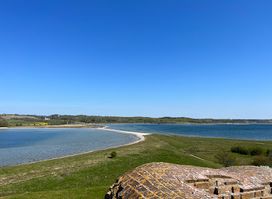
Sweeping Ice Age hills, Bronze Age mounds and sea‑flecked horizons make Mols Bjerge National Park a serene Danish classic for hikers, cyclists and nature lovers.