
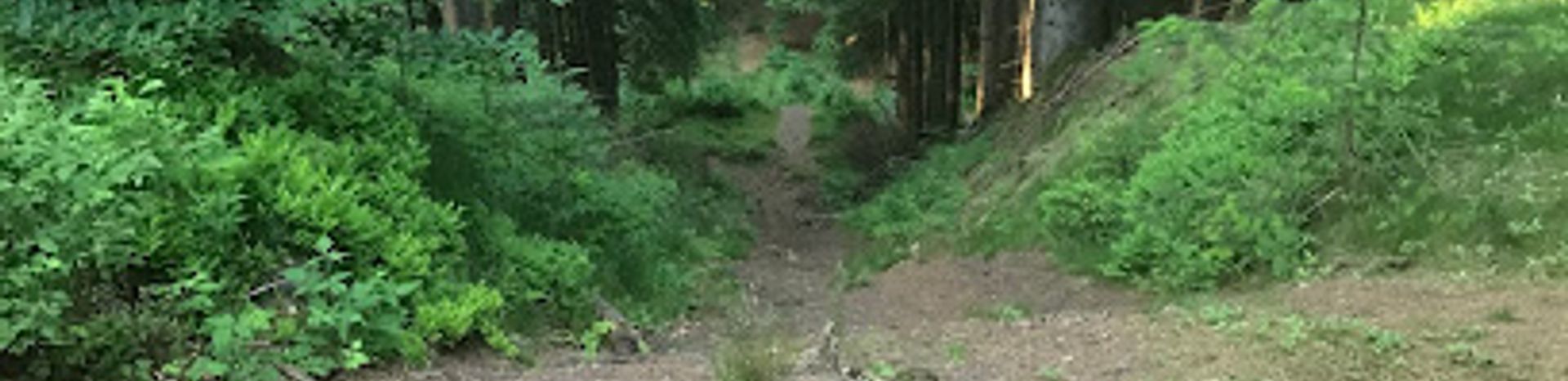
Duedal Bjerg, Thorsø Bakker
A steep forest hill near Silkeborg where traces of a 1940s ski jump linger among trees, offering short, rewarding walks and a glimpse into local mountain lore.
Duedal Bjerg is a 117 m forested hill in Thorsø Bakker near Silkeborg, once famous as a small Danish ski area in the 1940s. Today it is a quiet, steep woodland hike with traces of the former ski jump cut like a broad scar between the trees. Short trails, soft forest floors and glimpses over the Søhøjlandet landscape make it a rewarding stop for walkers and local history fans exploring the Silkeborg forests.
A brief summary to Duedal Bjerg
- 8600, Silkeborg, 8600, DK
- Duration: 1 to 2 hours
- Free
-
 Outdoor
- Mobile reception: 3 out of 5

Know before you go
Hi, I'm Eve. Here are a few practical things to know before exploring Duedal Bjerg.
- Wear shoes with good grip; the slopes on Duedal Bjerg are short but steep and can be slippery in wet or frosty weather.
- Bring a small snack or thermos and pause near the top to enjoy the forest quiet and filtered views over the surrounding hills.
- Combine the hill with nearby trails in Thorsø Bakker for a 1–2 hour circular walk rather than visiting it as a standalone stop.
Do you manage this location?
Take control to get all the benefits, like improved information, better appearance, and stronger visibility across AI-powered discovery. Learn more
Activate your presenceOther nearby places you may find interesting
Getting There
-
Car from central Silkeborg
From central Silkeborg, driving to the Thorsø Bakker area near Duedal Bjerg typically takes around 15–20 minutes via local roads. Expect small, winding forest access roads near the destination and limited informal parking lay-bys rather than large car parks. Parking is usually free, but spaces can fill on sunny weekends and in autumn. In winter, minor roads may be icy, so allow extra time and drive cautiously.
-
Local bus and walk
Regional buses from Silkeborg towards Virklund and nearby villages run regularly during the day, with journeys of about 20–30 minutes depending on route. A standard single ticket within the local zone typically costs the equivalent of 25–35 DKK. From the nearest bus stop you should plan on a forest walk of 1–3 km on unpaved paths with some hills, which is not ideal for wheelchairs or prams but manageable for reasonably fit walkers.
-
Bicycle from Silkeborg area
Cycling from Silkeborg or Virklund to the Thorsø Bakker forests around Duedal Bjerg is a popular option, taking roughly 30–45 minutes from central Silkeborg depending on your starting point and pace. The route combines paved country roads with sections on forest or gravel tracks, some of which can be muddy after rain. There are no formal bike racks at the hill itself, so you will need to lock your bicycle to a tree or place it discreetly off the main path.
For the on-the-go comforts that matter to you
-
 Trash Bins
-
 Information Boards
-
 Seating Areas
Discover more about Duedal Bjerg
A steep hill in the heart of Silkeborg’s forest country
Duedal Bjerg rises to about 117 metres, making it the highest point in the Thorsø Bakker hills at the eastern end of lake Thorsø. Hidden in conifer and mixed woodland, it feels more like a rugged knoll than a mountain, yet in the gently rolling landscape of Søhøjlandet it stands out as a surprisingly steep climb. Paths weave up through mossy undergrowth and tree roots, and in places the slope drops away so sharply that you sense why this modest rise has such an outsized story.The hill sits within the wider Silkeborg forest area, a patchwork of plantations, natural woodland and heather slopes. Underfoot you tread on sandy, glacially formed soil, and in clearings you may catch sight of the surrounding ridges that characterise this part of central Jutland. Birds are constant companions here, and the quiet is broken mainly by wind in the treetops and the occasional mountain bike on nearby tracks.From ski jump arena to silent hillside
In the 1940s Duedal Bjerg briefly transformed into one of Denmark’s unlikeliest winter sports venues. The natural gradient of the hill was harnessed for a ski jump and downhill course, and on cold, snowy winters local competitions and championships took place here. The fall line from the starting point to the run-out was dramatic by Danish standards, and a visiting Norwegian jumper reportedly reached close to 25 metres in one leap.By the mid‑1950s ski jumping on the hill had faded out, leaving only subtle physical traces of this intense period. Look closely between the trees and you can still make out the broad cleared swathe that once formed the take‑off and landing zone. It cuts straight down the slope like a pale corridor in the forest, a reminder that this quiet spot once rang with crowds, announcements and the hiss of skis on packed snow.Walking the gradients of Thorsø Bakker
Today visitors experience Duedal Bjerg primarily on foot. Short loop trails of a few kilometres link the hill to neighbouring ridges and viewpoints, offering a compact but varied walk with around 70 metres of ascent. The climb is short yet noticeably steep, giving your legs and lungs a brief workout as you zigzag upward through the pines and spruces.At the top the trees partly enclose the summit, but small openings allow filtered views across the wooded hills and towards the lake landscape that defines the Silkeborg area. The reward is less a wide panorama and more an immersive sense of being in the middle of a layered forest terrain, with slopes falling away on several sides and paths disappearing into the trees.Traces of ice and forest management
Duedal Bjerg and the surrounding Thorsø Bakker are products of the last Ice Age, when moving ice and meltwater sculpted ridges, depressions and steep moraines. Walking here, the sudden ups and downs of the ground underfoot tell that geological story more clearly than any diagram. The sandy banks, erratic boulders and uneven contours show how the landscape was built from debris left behind by retreating glaciers.Much of the forest here has been managed for timber, with tall conifers and noble firs creating long, straight trunks and shafts of light. Between them, natural regeneration fills gaps with younger birch, rowan and oak, softening the lines of the old ski run and framing views along the hillside. In autumn the forest becomes a patchwork of greens, golds and browns, and in winter the skeletal branches reveal more of the underlying shape of the hill.A quiet pause on a wider forest day
For many travellers, Duedal Bjerg is a short but memorable stop within a larger day of walking or cycling in the Silkeborg forests. Its compact scale makes it easy to add into a route linking lakes, viewpoints and other hilltops, while the steep ascent provides a satisfying contrast to gentler lakeside paths. Benches and informal resting spots along nearby tracks allow you to pause, listen and absorb the woodland atmosphere.Whether you are drawn by its brief ski‑sport chapter or simply curious about one of the steeper hills in this part of Denmark, the site invites an unhurried visit. Take time to notice the gradient beneath your feet, the faint lines of the old jump, and the way the forest has quietly reclaimed a once-busy slope, turning it back into a calm corner of the Søhøjlandet landscape.Explore the best of what Duedal Bjerg has to offer













More about Central Jutland
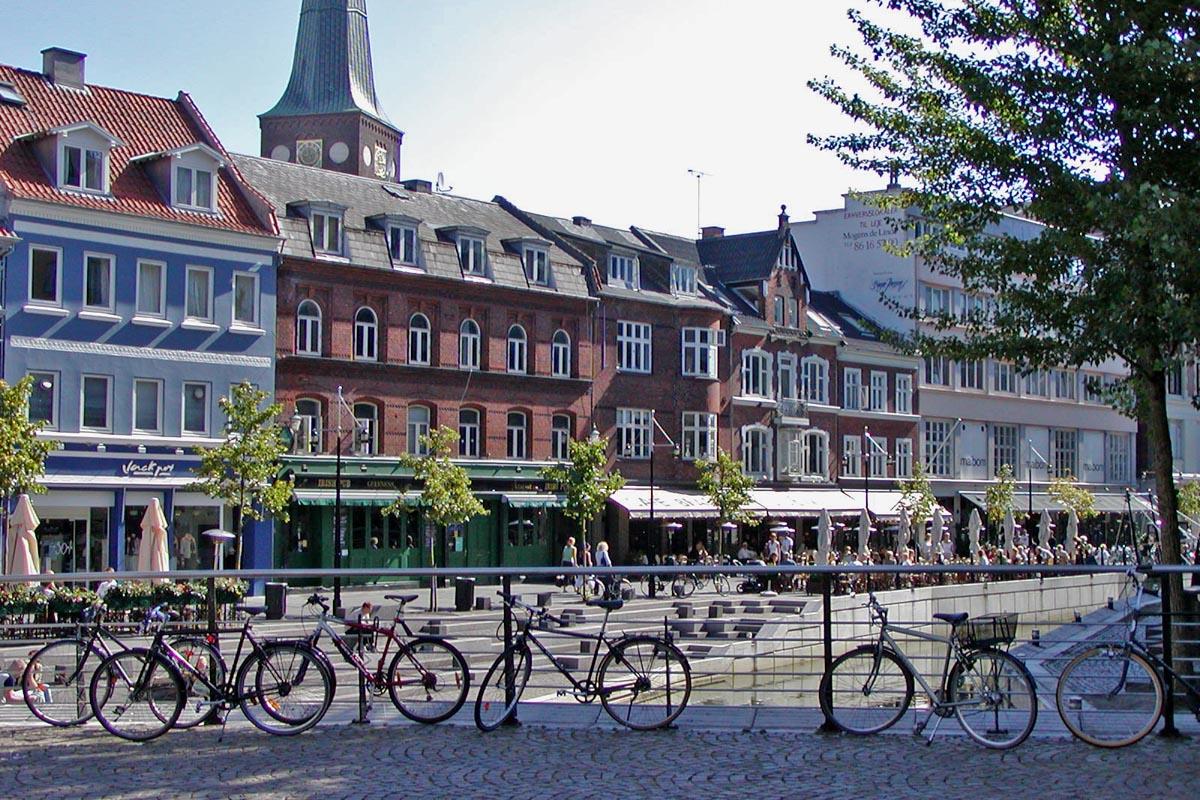
Explore Central Jutland in Denmark: A perfect blend of natural beauty, cultural heritage, and family-friendly attractions.
Tell me more about Central Jutland
A living paper workshop in Silkeborg’s old factory, where you watch pulp become sheets, learn about banknote paper and try your hand at this quietly magical craft.
A creaking enclave of old forest in Silkeborg Vesterskov, where gnarled trunks, deadwood and birdsong create a quietly wild escape close to town.
