Folkemøde Mindesten anno 1839, Himmelbjerget Travel Guide
Denmark's first democratic gathering, 1839—where ordinary citizens claimed their political voice.
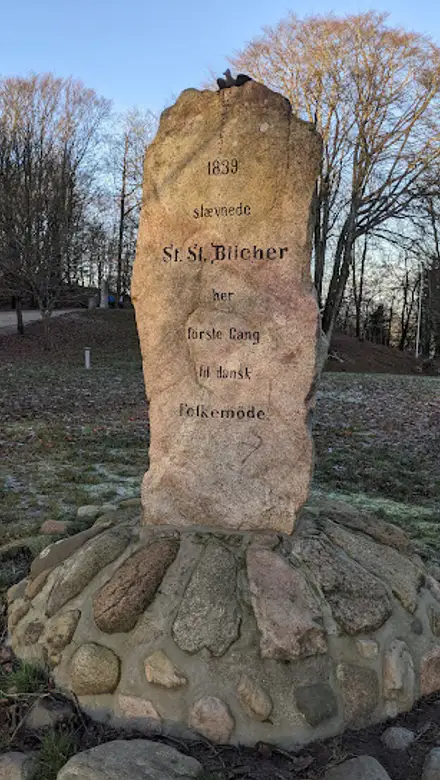
A historic memorial stone marking the site of Denmark's first major democratic gathering, held on Himmelbjerget in 1839. Steen Steensen Blicher convened this pivotal assembly of 500–600 ordinary citizens—farmers, merchants, and officials—to foster national unity and political awakening. The stone, erected in 1882 on Blicher's centenary, stands as a testament to the democratic ideals that would shape modern Denmark.
A brief summary to Folkemøde Mindesten anno 1839
- Ry, 8680, DK
- Duration: 1 to 3 hours
- Free
-
 Outdoor
- Mobile reception: 4 out of 5

Know before you go
Hi, I'm Eve. Here are a few practical things to know before exploring Folkemøde Mindesten anno 1839.
- Visit early morning or late afternoon to avoid peak crowds and enjoy clearer views across the Gudenå valley and toward Silkeborg.
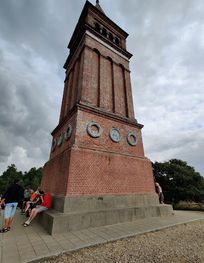
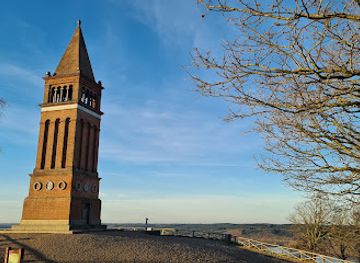
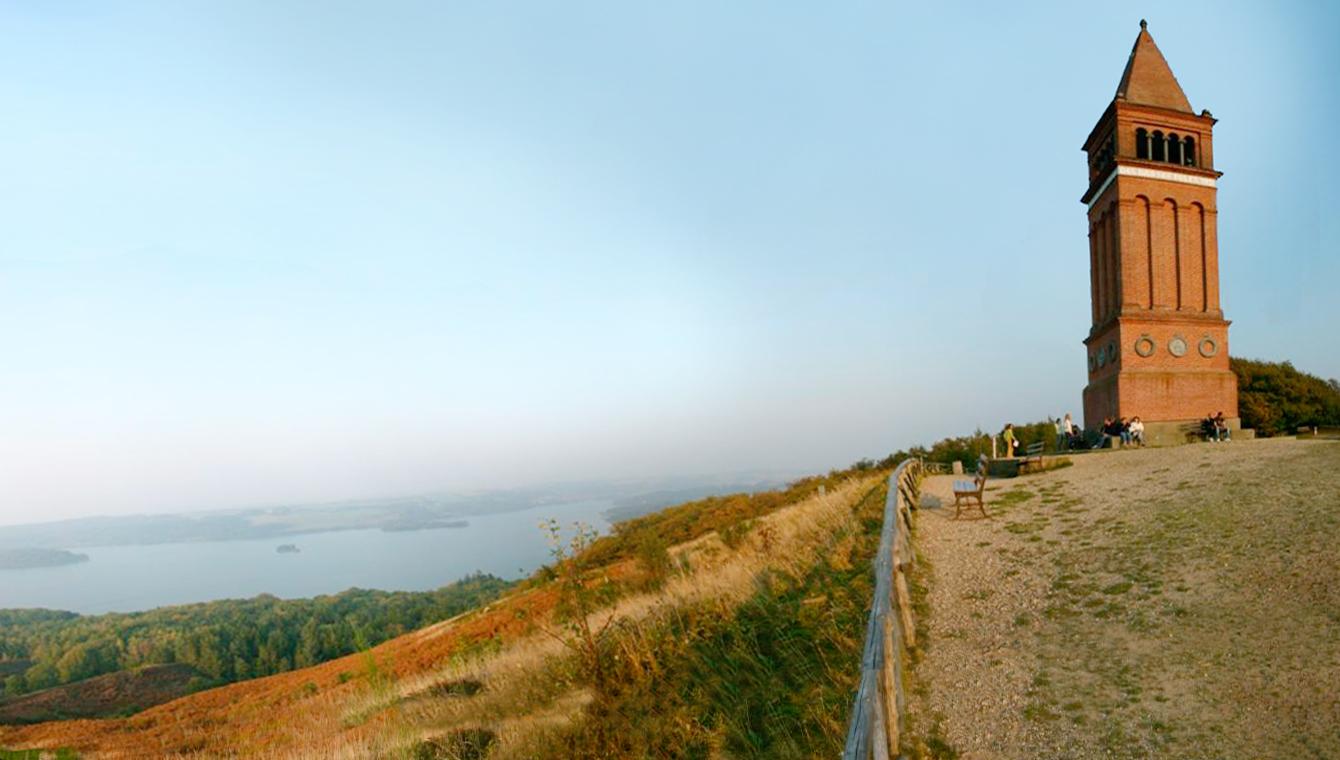
- Combine your visit with the Himmelbjerg Tower (25 meters tall, erected 1875) nearby, which commemorates King Frederik VII and the 1849 Constitution.
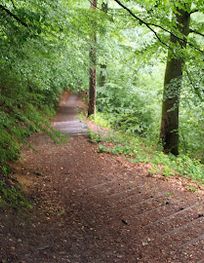
- Explore the network of hiking trails connecting the memorial to Julsø lake; the Aarhus–Silkeborg walking route offers the most scenic approach through the forest.
- Read the inscriptions on the surrounding memorial stones—each tells a distinct story of Danish democratic and cultural history from 1839 onward.
- In summer, consider returning by tourist boat from Julsø to Ry or Silkeborg for a different perspective on the landscape Blicher and his contemporaries cherished.
Do you manage this location?
Take control to get all the benefits, like improved information, better appearance, and stronger visibility across AI-powered discovery. Learn more about listing your business on Evendo
Activate your presenceOther nearby places you may find interesting
The closest places of the same kind, if this one is not quite what you had in mind.
Explore Folkemøde Mindesten anno 1839 on the Map
A handpicked selection of must-see spots near Folkemøde Mindesten anno 1839, mapped for you.
Getting There
-
Train and Walking
From Ry Station (on the Skanderborg–Silkeborg line), walk approximately 2–3 hours via marked forest trails to Himmelbjerget. The route passes through Rye Nørreskov forest and is well-signposted. Alternatively, take a taxi from Ry Station (approximately 10–15 minutes, roughly 100–150 DKK). Trains run hourly during peak hours; check Rejseplanen for current schedules.
-
Tourist Boat and Walking
From May to September, tourist boats (Hjejlen and other operators) depart from Silkeborg and Ry, arriving at Julsø lake near Himmelbjerget. From the boat landing, hiking trails lead uphill to the memorial stone (approximately 30–45 minutes on foot). Boat fares typically range from 80–150 DKK depending on route and season. Check Silkeborg Tourism for current schedules.
-
Car and Parking
Drive to Ry or nearby parking areas (Himmelbjerggården or Julsø parking). From Ry town center, follow signs toward Himmelbjerget. Parking is available at several trailheads; free or minimal fee (typically under 50 DKK). Walking time from parking to the memorial stone varies from 30 minutes to 2 hours depending on chosen route.
-
Guided Tour
Local tourism operators in Ry and Silkeborg offer guided walks and cultural tours of Himmelbjerget and its memorials. Tours typically last 2–4 hours and cost 150–300 DKK per person. Book through Ry Turistbureau or Silkeborg Tourism; advance reservation recommended during summer months.
For the on-the-go comforts that matter to you
-
 Seating Areas
-
 Picnic Areas
-
 Trash Bins
-
 Information Boards
Discover more about Folkemøde Mindesten anno 1839
The Birth of Danish Democracy on a Mountain
On Himmelbjerget's summit in 1839, writer and priest Steen Steensen Blicher orchestrated Denmark's first large-scale democratic gathering. With approximately 500–600 participants, the event brought together farmers, merchants, and officials in an unprecedented assembly designed to kindle patriotic spirit and foster collective political consciousness. Blicher envisioned these gatherings as a means to awaken the nation during a period of economic hardship and political constraint. Denmark had endured the Napoleonic Wars, state bankruptcy, and the loss of Norway in 1814, leaving the population impoverished and politically marginalized under absolute monarchy.The initial success of the 1839 gathering emboldened Blicher to establish an annual tradition. However, the 1840 assembly nearly collapsed when the local landowner, Peder Nielsen, refused permission for crowds to traverse his fields. The dispute was resolved dramatically when King Christian VIII, visiting the region, decided to purchase Himmelbjerget outright for 1,000 rigsdaler. The crown's acquisition transformed the site into public property with a decree guaranteeing free access to all citizens at all times—a revolutionary gesture that legitimized the democratic impulses Blicher had ignited.A Gathering Place for National Consciousness
Between 1839 and 1844, the Himmelbjerg festivals evolved into Denmark's most significant democratic assemblies, eventually attracting 6,000–7,000 participants. These gatherings carried unmistakable political undertones, providing ordinary Danes with a platform to discuss national governance and assert their stake in the country's future. While the festivals did not directly create Danish democracy, they articulated—for the first time before thousands—the principle that ordinary citizens possessed legitimate claims to political voice and influence. The gatherings represented a crucial precursor to the constitutional reforms that would follow.Just ten years after the first festival, Denmark adopted its first free constitution in 1849, granting citizens freedom of assembly, speech, and religion. The Himmelbjerg festivals had prepared the ideological ground for this transformation, demonstrating that democratic participation could be peaceful, patriotic, and broadly embraced by the population.Monuments to Memory and Meaning
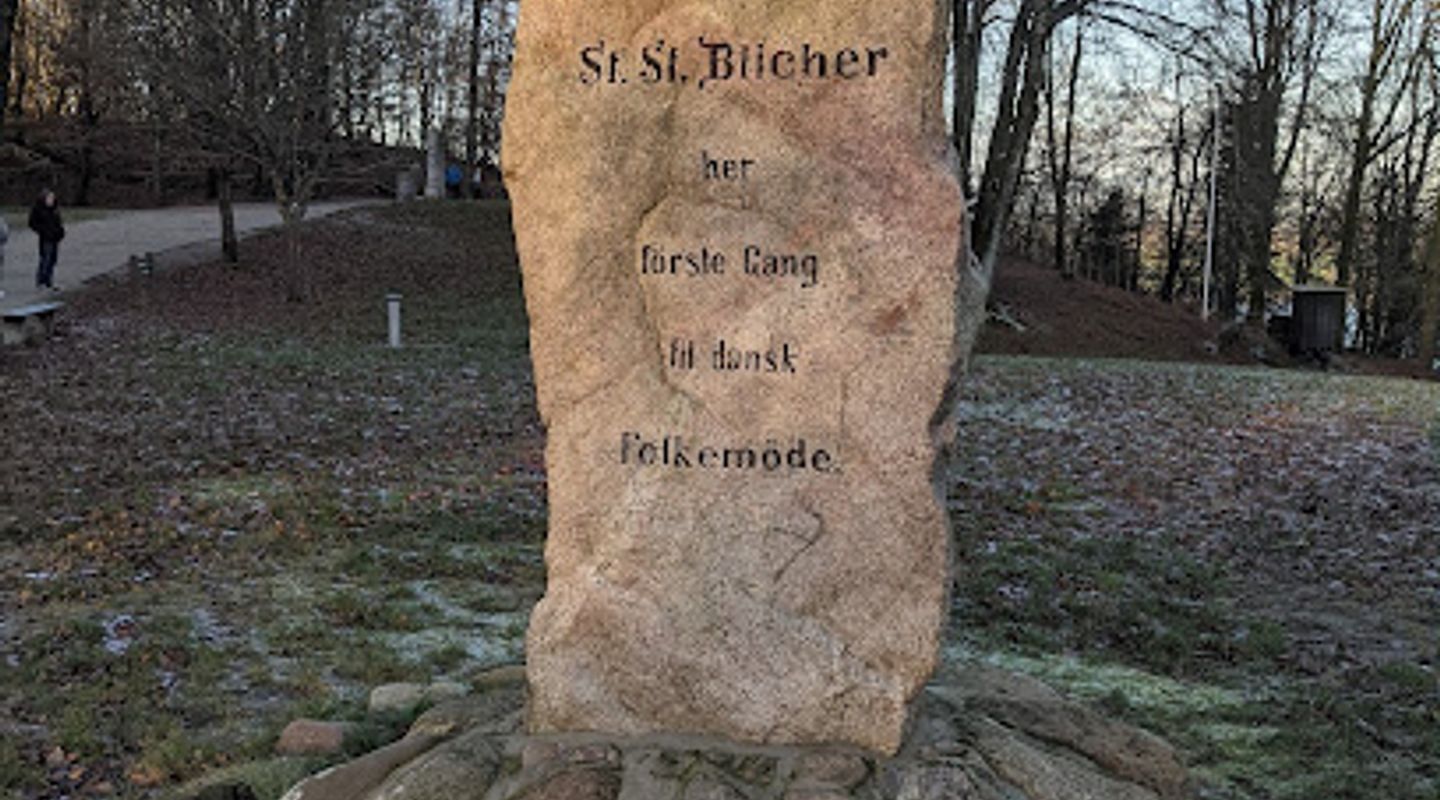
The memorial stone commemorating the 1839 gathering was unveiled on 11 October 1882, marking Blicher's centenary. Carved from natural stone and crowned with Blicher's symbol—the heath lark—the monument bears the inscription: "1839 stævnede St. St. Blicher her første Gang til dansk Folkemøde" (In 1839, St. St. Blicher convened here for the first time to a Danish people's assembly). The stone stands among numerous other memorials that have accumulated on Himmelbjerget over nearly 150 years, each recording pivotal moments in Danish history and culture.Nearby stands the Tscherning Stone, honoring Anton Frederik Tscherning, an officer and advocate for peasant equality who championed universal military service alongside Blicher. The Kvindeegen (Women's Oak), planted in 1915 following the extension of voting rights to women, commemorates the constitutional amendment of that year. Hans Christian Andersen's Bench, established after the author's 1850 visit, overlooks the Gudenå valley with views extending toward Silkeborg. These layered memorials transform Himmelbjerget into an open-air chronicle of Danish democratic development.Landscape and Access
The memorial stone sits within a protected area of approximately 16 hectares, designated as a nature preserve in 1919 and 1932. The state owns roughly 170 hectares surrounding Himmelbjerget, while the broader Rye Nørreskov forest remains partly privately owned. Hiking routes connect the memorial site to the shores of Julsø lake, where summer tourist boats from Ry and Silkeborg provide alternative access. The Aarhus–Silkeborg walking route passes through this region, with the Himmelbjerget section considered among its most scenic stretches.More to explore near Folkemøde Mindesten anno 1839













Your all‑in‑one travel companion app
Explore expert travel guides, compare and book tours, experiences, hotels, and more—all from the palm of your hand. Download now for seamless trip planning wherever your wanderlust takes you.


Explore More of Himmelbjerget
Looking beyond Folkemøde Mindesten anno 1839? Discover Himmelbjerget for broader travel guides, local hot-spots, and regional highlights.
Explore Himmelbjerget