Frederiksborg Castle Gardens
A sweeping blend of Baroque geometry and romantic woodland, Frederiksborg Castle Gardens turn royal history, water, and greenery into one unforgettable landscape.
Wrapping around the fairy-tale silhouette of Frederiksborg Castle in Hillerød, Frederiksborg Castle Gardens blend razor‑sharp Baroque geometry with a soft, romantic landscape. Terraced parterres, clipped hedges and royal monograms sweep down to the castle lake, while winding forest paths, small lakes and the Bathhouse Castle offer quieter corners. Open year‑round with free admission, this expansive park invites unhurried walks, picnics and classic castle views in all seasons.
A brief summary to Frederiksborg Castle Gardens
- Frederiksborg Slot, Hillerød, 3400, DK
- Click to display
- Click to display
- Duration: 1 to 3 hours
- Free
-
 Outdoor
- Mobile reception: 4 out of 5

Know before you go
Hi, I'm Eve. Here are a few practical things to know before exploring Frederiksborg Castle Gardens.
- Plan at least 1–2 hours if you want to experience both the Baroque terraces and the romantic landscape garden without rushing.
- Climb to the top of the Baroque cascade for the best overview of the garden’s geometry and the castle perfectly aligned on the main axis.
- Bring comfortable shoes; paths are mostly level but distances are considerable if you explore the full grounds and lakeside walks.
- Combine your visit with a break at the garden café near the exhibition model, a good place to understand the garden’s design story.
- If possible, time your visit in the warmer months when the cascades and fountains are operating, adding sound and movement to the Baroque layout.
Do you manage this location?
Take control to get all the benefits, like improved information, better appearance, and stronger visibility across AI-powered discovery. Learn more
Activate your presence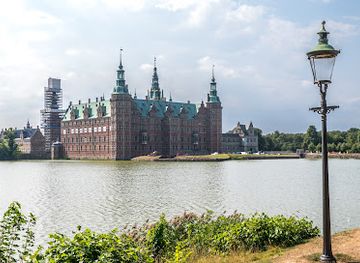
Getting There
-
Train from Copenhagen
From central Copenhagen, take S-train line A toward Hillerød; the journey typically takes about 35–40 minutes and runs several times per hour throughout the day. A standard adult single ticket within the Copenhagen greater area usually costs in the range of 40–60 DKK, depending on zones and ticket type. From Hillerød Station it is roughly a 15–20 minute walk on generally level, paved paths to reach the castle gardens, manageable for most visitors but less convenient for those with very limited mobility.
-
Regional bus within North Zealand
If you are already in North Zealand, several regional buses connect nearby towns such as Helsingør or Fredensborg to Hillerød in about 25–45 minutes, depending on the starting point and route. Local bus fares are typically around 25–40 DKK for an adult single journey purchased via ticket machines or travel apps. Buses usually stop within walking distance of the castle area; expect a 10–20 minute walk from central Hillerød to the gardens, mostly on urban pavements and park paths.
-
Car from Copenhagen region
Driving from the Copenhagen area to Frederiksborg Castle Gardens generally takes 35–50 minutes via major roads, depending on traffic. Several parking areas are available near the castle and gardens; some require payment, often in the range of 10–20 DKK per hour, while others further out can be free but may fill on busy days. Once parked, allow 5–15 minutes to walk into the garden area along well-marked routes; surfaces vary from asphalt to gravel, so consider this if you use a stroller or wheelchair.
For the on-the-go comforts that matter to you
-
 Restrooms
-
 Food Options
-
 Drink Options
-
 Seating Areas
-
 Picnic Areas
-
 Trash Bins
-
 Information Boards
-
 Visitor Center
Discover more about Frederiksborg Castle Gardens
Royal scenery on the shores of the castle lake
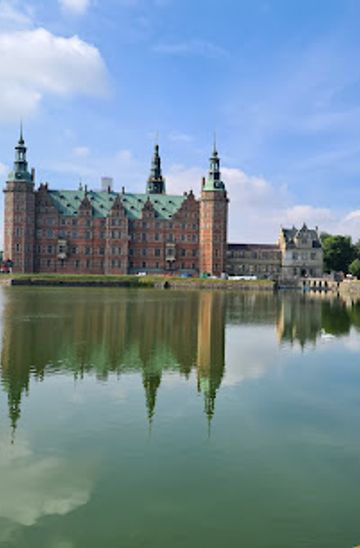
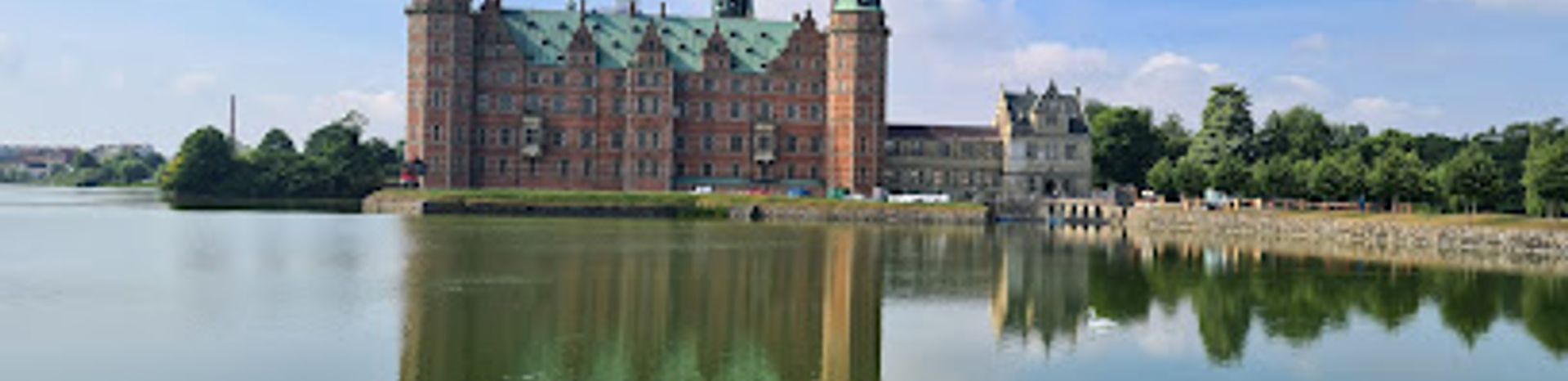
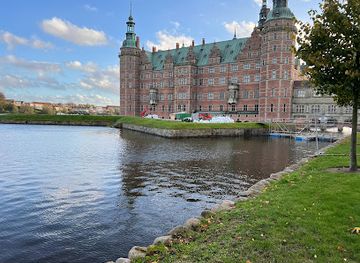
The gardens of Frederiksborg Castle spread out from the red-brick Renaissance castle like an outdoor theatre set, framed by the still waters of the castle lake. Standing on the main axis, the view lines up perfectly: terraces stepping down the slope, clipped hedges enclosing patterned beds, and the castle rising behind fountains and statues. It feels purpose-built for spectacle, a green extension of royal power and pageantry.Yet despite the formal layout, the atmosphere is remarkably relaxed. Locals use the paths for everyday walks and runs, and visitors linger on benches facing the water. The combination of monumental design and easy accessibility makes this one of Denmark’s most engaging historic landscapes.Baroque precision and royal monograms
The star of the ensemble is the Baroque Garden, first laid out in the 1720s under King Frederik IV and painstakingly recreated in the 1990s using historic plans. Four broad terraces descend towards the lake, anchored by a central cascade whose rushing water draws you down the slope. From above, the geometry is strikingly clear: straight alleys, cross axes, and mirrored parterres forming a living tapestry.On the lowest level, hedges clipped into intricate patterns shape the monograms of the monarchs who defined the garden’s story, including Frederik IV and Queen Margrethe II. Here, garden art becomes biography, turning royal initials into sculpted greenery. The strict layout is a textbook example of Baroque ideas about controlling nature, yet seasonal plantings and changing light keep it from feeling static.A romantic counterpoint in the landscape garden
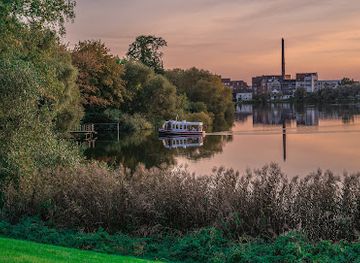
To one side of the formal terraces, the mood changes completely in the romantic landscape garden. Instead of straight lines and symmetry, you find curving paths, mixed woodland and small clearings that frame continually shifting views of the castle and lake. Designed to evoke feeling rather than display order, this area invites slower wandering and quiet pauses beneath mature trees.Hidden within is the small Bathhouse Castle, a charming structure reflected in its own pool of water. Here the castle appears more like a country retreat than a symbol of power. The play between open lawns, water, shrubs and scattered trees echoes the ideals of 18th- and 19th-century English garden design, where carefully composed “natural” scenery replaced strict formality.Seasonal rhythms and everyday pleasures
The gardens reward repeat visits through the year. In spring, new foliage and early flowers soften the sharp edges of the parterres. Summer brings high hedges, flowing cascades and long days when the terraces glow in the evening sun. Autumn layers the landscape garden in gold and copper, while the castle seems to float above misty water on cool mornings. Even in winter, the bare geometry of the Baroque layout becomes more pronounced, its patterns etched in frost.Facilities are thoughtfully placed rather than intrusive. Near the gardens’ café, an exhibition and model explain the history and layout of the Baroque design, useful if you want to understand the thinking behind what you see. Lawns and discreet seating areas make easy picnic spots, and the long, mostly level paths are well suited to unhurried circuits around the grounds.Views, details and quiet corners to seek out
Beyond the big set pieces, much of the appeal lies in smaller discoveries. From the top of the cascade, perspective tricks make parts of the garden seem longer and grander than they are, a deliberate visual illusion. Along the side paths, clipped trees, statues and stone balustrades create ready-made photo compositions. From the lakeside, you can frame the castle’s towers through arching branches or catch their reflections in calmer stretches of water.Whether you treat the gardens as an open-air art gallery of historic design, a peaceful green escape from Copenhagen, or a backdrop for castle photographs, they offer enough variety to fill anything from a brief stroll to a long, contemplative afternoon.Explore the best of what Frederiksborg Castle Gardens has to offer













More about Copenhagen Region
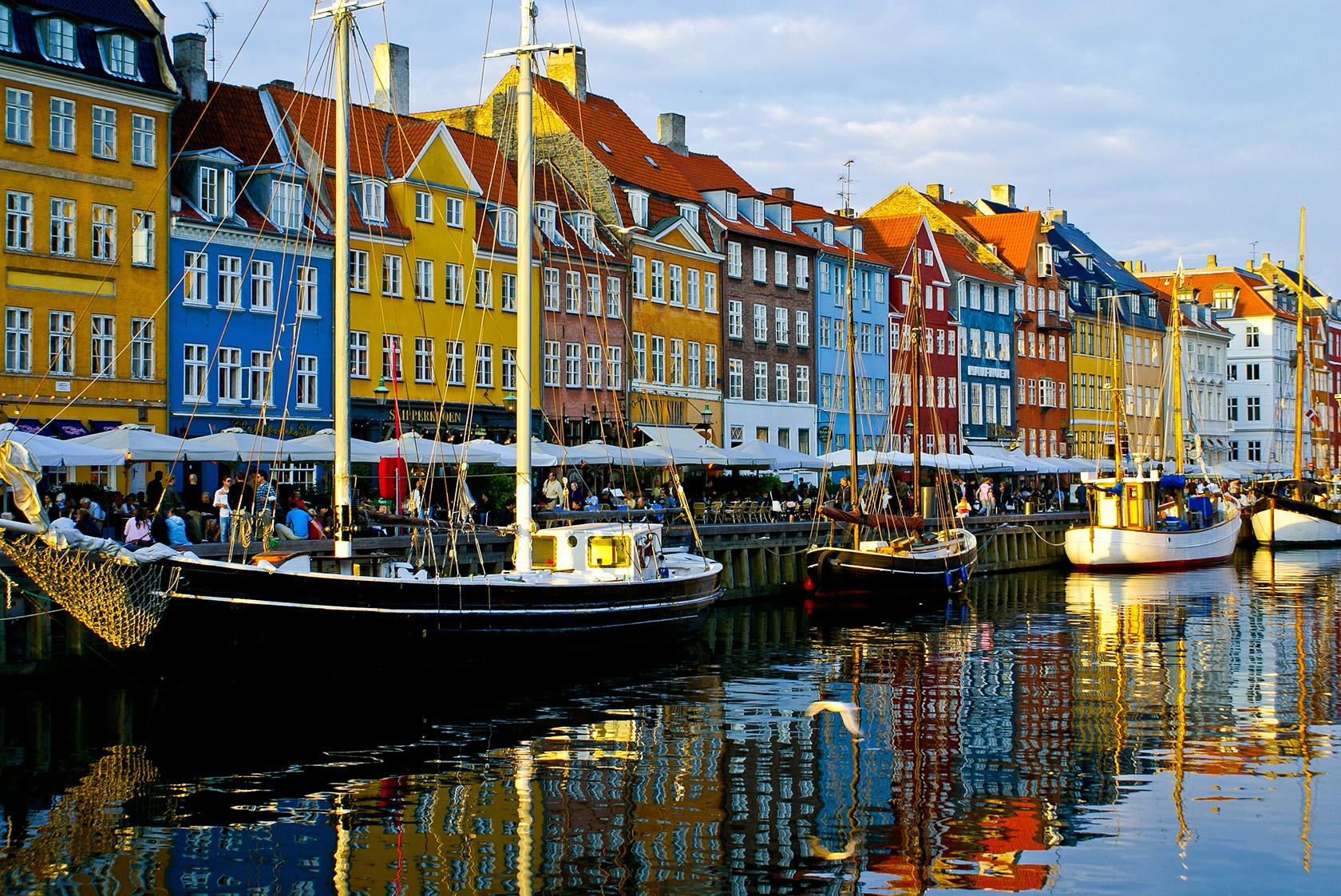
Discover the Copenhagen Region: A perfect mix of historic charm and modern vibrancy, offering scenic beauty, cultural landmarks, and a high quality of life.
Tell me more about Copenhagen Region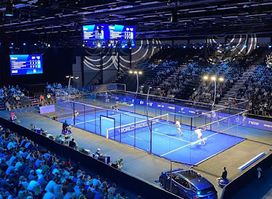
North Zealand's premier multi-purpose arena hosting concerts, sports, and cultural events for up to 2,000 guests.

Sweeping Baroque terraces and romantic woodland paths framing a lake island castle, Frederiksborg Castle Gardens blend royal theatre with everyday green escape.