Kulsvierstenen, Gribskov
A modest forest boulder in Gribskov that marks a dramatic World War II resistance firefight, blending North Zealand’s tranquil woodland with powerful memory.
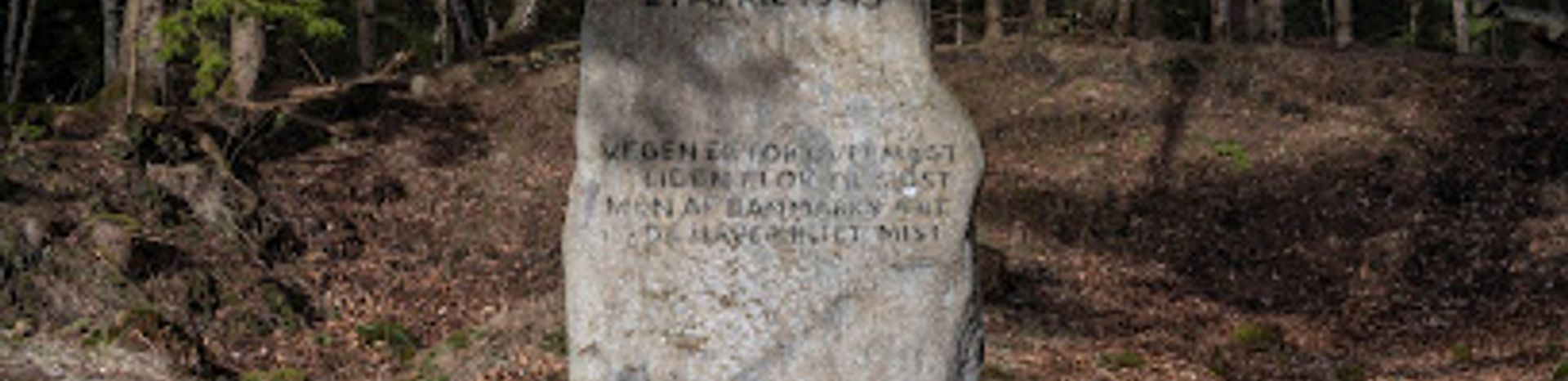
Tucked deep in Gribskov near Fredensborg, Kulsvierstenen is a modest yet powerful memorial stone raised in 1945 to honor Danish resistance fighters. On this secluded forest clearing, a resistance group received illegal weapons from Allied aircraft until a tragic firefight with German forces in April 1945. Today the boulder, flanked by tall trees and birdsong, offers a quiet, atmospheric pause on woodland trails and a poignant glimpse into North Zealand’s World War II history.
A brief summary to Kulsvierstenen
- Fredensborg, 3480, DK
- Click to display
- Duration: 0.5 to 2 hours
- Free
-
 Outdoor
- Mobile reception: 3 out of 5
- Monday 12 am-12 am
- Tuesday 12 am-12 am
- Wednesday 12 am-12 am
- Thursday 12 am-12 am
- Friday 12 am-12 am
- Saturday 12 am-12 am
- Sunday 12 am-12 am

Know before you go
Hi, I'm Eve. Here are a few practical things to know before exploring Kulsvierstenen.
- Wear waterproof or sturdy footwear; forest paths around Kulsvierstenen can be muddy, especially after rain or in autumn leaf-fall.
- Bring a small flashlight if visiting in late afternoon outside summer, as the dense trees make the clearing dim before sunset.
- Combine the memorial with a loop past Smørstenen and the parforce hunting roads to experience both wartime and royal hunting history.
- Read up briefly on the Danish resistance and weapon drops in Gribskov before you go; it adds important context to this otherwise simple stone.
- Pack water and snacks, as there are no facilities at the stone itself and only limited amenities elsewhere in the forest.
Do you manage this location?
Take control to get all the benefits, like improved information, better appearance, and stronger visibility across AI-powered discovery. Learn more
Activate your presenceOther nearby places you may find interesting
Getting There
-
Train and walk from Copenhagen or Helsingør
Take a regional train on the Kystbanen line to Helsingør or directly to Fredensborg, then change to the local line toward Hillerød and get off at Kagerup Station. The journey from central Copenhagen to Kagerup typically takes 55–75 minutes in total and costs around 80–130 DKK one way in standard class, depending on ticket type and time of day. From Kagerup, follow marked forest paths into Gribskov; expect 30–45 minutes of mostly level walking on forest tracks, which can be uneven and muddy after rain but are manageable for most visitors with reasonable mobility.
-
Car from North Zealand towns
From nearby towns such as Fredensborg, Hillerød or Helsingør, driving to the southern part of Gribskov near Stutterivej and Søndre Skovportsvej usually takes 15–30 minutes. There is informal roadside and forest-edge parking in designated spots managed by the Nature Agency, but places can be limited on fine weekends. Expect fuel costs of roughly 20–40 DKK each way for these short distances, plus any city parking fees at your departure point. From the nearest parking areas, allow 15–25 minutes on foot along broad forest roads; surfaces are natural and not fully suitable for narrow wheelchairs or prams.
-
Cycling from Fredensborg or Esrum area
Confident cyclists can ride from Fredensborg town or the Esrum Lake area into Gribskov using a mix of local roads and wide forest tracks. The approach typically takes 25–45 minutes each way, depending on starting point and pace. Cycling in the forest is free, but you should be prepared for gravel, roots and occasional sandy patches, so a city bike with sturdy tires or a trekking bike works best. There is no dedicated bike parking at Kulsvierstenen itself, so plan to lock your bike to a tree or lie it discreetly off the main path while you visit the memorial.
For the on-the-go comforts that matter to you
-
 Information Boards
-
 Picnic Areas
-
 Trash Bins
Discover more about Kulsvierstenen
A quiet forest clearing with a heavy story
Kulsvierstenen sits in a small clearing in Gribskov, one of Zealand’s largest forests, not far from Fredensborg and the shores of Esrum Lake. At first glance it is just a rough, upright boulder in the woods, ringed by heather, moss and tall trunks. But this simple stone marks one of the forest’s most dramatic moments during World War II, turning an ordinary patch of woodland into a place of remembrance.Paths wind through beech and conifer before the forest suddenly opens and the memorial appears. The setting is intimate and still, with filtered light through the canopy and the muted sounds of twigs underfoot. It feels more like stumbling upon a hidden story than arriving at a formal monument.Resistance, weapons drops and a fatal night in 1945
During the occupation, this part of Gribskov served as a clandestine reception site for Allied airdrops. A local resistance group used the clearing to receive weapons and supplies, which were then distributed to fighters in North Zealand and the Copenhagen area. For months, operations here remained secret, relying on darkness, coded signals and the cover of dense forest.In the night between 20 and 21 April 1945, German forces discovered the activity. A firefight broke out around the clearing, and several members of the resistance were killed or captured. In the immediate aftermath of the war, on 23 September 1945, Kulsvierstenen was raised to commemorate their courage and sacrifice at this site.The memorial stone and its symbolism
Kulsvierstenen itself was brought here from the Strødam area and set upright near the existing Smørstenen boulder. It is a dark, glacial erratic rock, roughly shaped but clearly worked to stand as a marker. An inscription, including a verse by Danish poet Carl Ploug, links the stone to the wider narrative of a small nation standing up against overwhelming power.The name refers to the so‑called “Kulsvier” battalion, whose work receiving weapons in Gribskov was crucial to arming resistance groups. The stone’s stark simplicity reflects that role: no grand sculpture, just a solid block of ancient rock carrying a modern memory, blending almost seamlessly into its natural surroundings.Part of a landscape layered with history
Kulsvierstenen is only one of several historic waypoints scattered through Gribskov. Nearby you find Smørstenen, another notable boulder, and further along the forest tracks lie avenues from the royal parforce hunting landscape and other memorial stones linked to Danish cultural figures. This concentration of stones and stories makes the area rewarding for anyone combining a walk with a sense of history.Because it lies directly on marked routes, Kulsvierstenen often becomes a reflective pause on longer hikes or rides. The forest’s birds, shifting light and earthy scents create a calm backdrop that stands in poignant contrast to the violence once played out here. The experience is less about grand ceremony and more about quiet contemplation.Walking, reflection and simple comforts
A visit to Kulsvierstenen fits naturally into a broader exploration of Gribskov’s trails. You can easily combine the memorial with lakes, open clearings with grazing horses and the geometric network of parforce hunting roads that later became World Heritage landscape. Distances here can be adapted from short strolls to half‑day loops.Facilities are simple: the site itself has no buildings or services, but in the wider forest you will find information boards, picnic spots and occasional shelters or fire pits. Good footwear is advisable, especially after rain, when the forest floor can be muddy or slick with leaves. For those interested in Denmark’s twentieth‑century history, a stop at Kulsvierstenen adds human depth to a day out in one of North Zealand’s most atmospheric woodlands.Explore the best of what Kulsvierstenen has to offer















More about Copenhagen Region
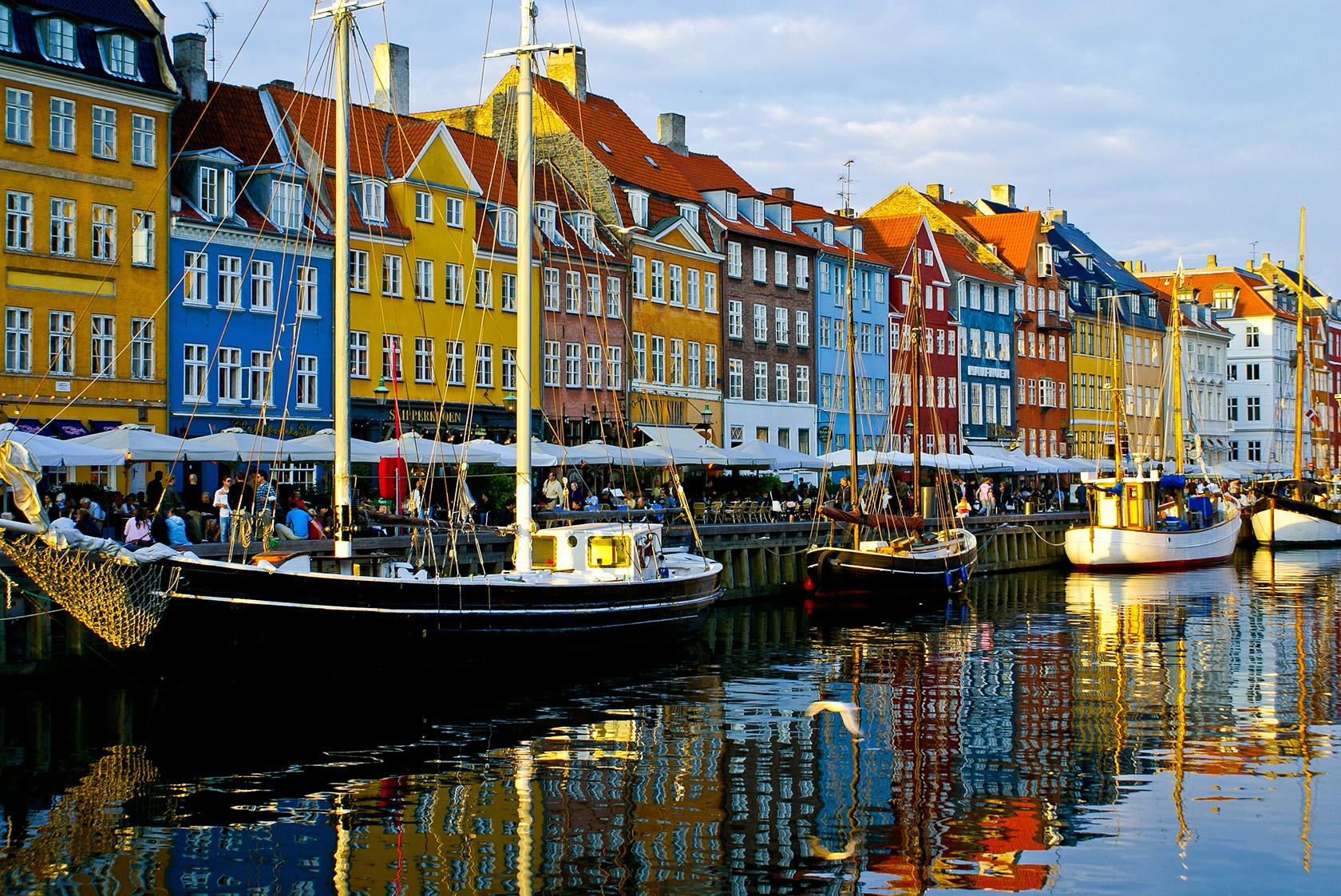
Discover the Copenhagen Region: A perfect mix of historic charm and modern vibrancy, offering scenic beauty, cultural landmarks, and a high quality of life.
Tell me more about Copenhagen Region