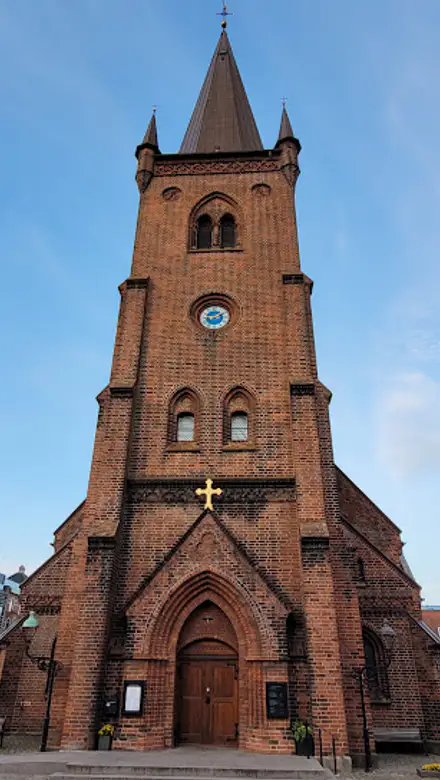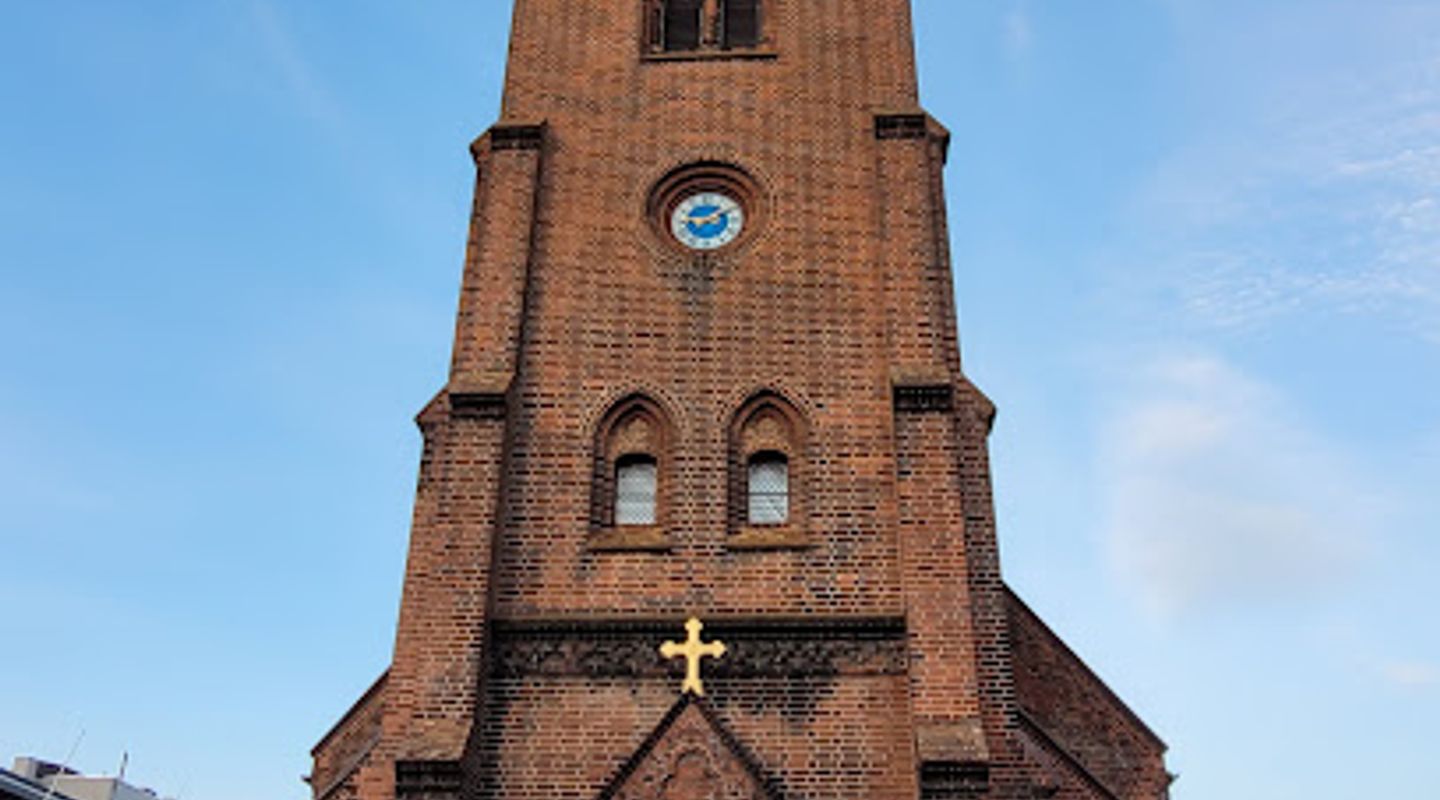
Anno Dom 1913, South Jutland Travel Guide
A modest 1913 fountain on Vejle’s Kirketorvet square, offering a small but telling glimpse into the city’s early‑20th‑century civic life and streetscape.
Set on Vejle’s historic Kirketorvet square, Anno Dom 1913 is a small early‑20th‑century fountain and monument that quietly anchors the heart of the old town. Its stone basin, sculptural detailing and weathered patina evoke the years when Vejle was transforming from market town to modern industrial city. Surrounded by church towers, civic buildings and café terraces, it offers a brief, atmospheric pause amid the everyday bustle of central Vejle.
A brief summary to Anno Dom 1913
- Kirketorvet 1, Vejle, 7100, DK
- Duration: 0.25 to 0.5 hours
- Free
-
 Outdoor
- Mobile reception: 5 out of 5

Know before you go
Hi, I'm Eve. Here are a few practical things to know before exploring Anno Dom 1913.
- Combine a quick stop at Anno Dom 1913 with a visit to nearby churches and the town hall to appreciate how the monument fits into Kirketorvet’s architectural ensemble.
- Visit around early morning or late afternoon for softer light that highlights the fountain’s stone textures and makes photography easier without harsh shadows.
- Use the monument as a central meeting point on Kirketorvet before exploring Vejle’s cafés, restaurants and pedestrian streets radiating from the square.
Do you manage this location?
Take control to get all the benefits, like improved information, better appearance, and stronger visibility across AI-powered discovery. Learn more about listing your business on Evendo
Activate your presenceOther nearby places you may find interesting
The closest places of the same kind, if this one is not quite what you had in mind.

Explore Anno Dom 1913 on the Map
A handpicked selection of must-see spots near Anno Dom 1913, mapped for you.
Getting There
-
Train and walking from Vejle Station
From within Denmark, regional trains connect to Vejle Station regularly from cities such as Aarhus, Odense and Copenhagen, with journeys typically ranging from 35 minutes to 2.5 hours depending on the route and distance. Standard second‑class fares on these routes generally fall between 80 and 350 DKK one way, depending on how far you travel and how early you book. Once you arrive at Vejle Station, Anno Dom 1913 is roughly a 5–10 minute walk through central streets on mostly level, paved surfaces; the area around Kirketorvet is pedestrian‑friendly but can be busy at peak shopping times.
-
Bus to central Vejle and short walk
Local and regional buses serve central Vejle from surrounding suburbs and nearby towns, typically terminating or stopping close to Vejle Station and the adjacent bus hub. Travel times usually range from 10 to 45 minutes depending on departure point, with typical single tickets within the local zones costing around 20–40 DKK. From the central bus stops, allow about 5–10 minutes on foot along paved urban streets to reach Kirketorvet and the Anno Dom 1913 monument. Most buses run throughout the day with reduced frequency in the late evening and on weekends.
-
Car or taxi to central Vejle
If you arrive by car from elsewhere in Jutland, driving times to Vejle are commonly 20–40 minutes from nearby regional towns and up to about 1.5 hours from larger cities like Aarhus or Hamburg’s direction. Expect standard fuel and motorway costs, plus paid parking in central Vejle; short‑stay public car parks near the old town generally charge in the region of 10–25 DKK per hour. From typical central parking areas, you should plan for a 5–15 minute walk along city streets to reach Kirketorvet and Anno Dom 1913. Taxis from within Vejle’s urban area can shorten the walk, with fares often starting around 50–70 DKK and increasing with distance and time.
For the on-the-go comforts that matter to you
-
 Restrooms
-
 Drink Options
-
 Drinking Water
-
 Food Options
-
 Seating Areas
-
 Trash Bins
-
 Information Boards
-
 Visitor Center
Discover more about Anno Dom 1913
A modest fountain in the middle of old Vejle
Anno Dom 1913 is an unassuming but characterful fountain and monument tucked into Kirketorvet, the compact square that forms one of the historic hearts of Vejle. Rather than a grand showpiece, it is a human‑scaled structure: a stone basin with a central sculptural element, raised just enough above the cobblestones to catch your eye as you cross the square. Its inscription marks the year 1913, a moment when Vejle was reimagining itself as a modern Danish city.The fountain sits within sight of church spires and the town hall, surrounded by façades that trace different eras of urban development. In this setting, the piece acts as a quiet punctuation mark – a reminder that even minor civic works can say something about a town’s ambitions and self‑image.Traces of early 20th‑century craftsmanship
Look closely at the stonework and you notice details typical of early 20th‑century design in smaller Nordic cities. The lines are relatively simple, yet softened by curves and subtle ornamentation. It reflects a period moving away from heavy historicism toward more restrained, civic architecture, while still valuing craftsmanship and durable materials.The weathering of the stone and metal is part of its appeal. Edges are rounded from a century of wind, rain and winter frost; surfaces show mineral staining where water once played across them more vigorously. These marks of time lend the monument a slightly nostalgic air, suggesting a practical piece of street furniture that has gradually become a historical object.Kirketorvet’s everyday stage
What makes Anno Dom 1913 engaging is less its size and more its role in the square’s daily life. Kirketorvet is a space where people cut through on errands, linger on benches, or sit at nearby cafés. The fountain stands almost at the center of this movement, a natural meeting reference and visual anchor.From here, your eye jumps easily to the surrounding architecture: the nearby church, civic buildings and narrow streets leading deeper into the old town. In summer, soft light catches the stone, while in winter it can appear almost sculptural against a backdrop of bare trees and muted façades. At different times of day the atmosphere shifts from quiet morning calm to a low urban hum in the afternoon.A pause between church, culture and shopping streets
Anno Dom 1913 also sits at a crossroads of functions: religious, administrative, cultural and commercial. Around the square you find churches, the town hall and cultural institutions, while only a short stroll away lie shopping streets and modern cafés. The monument occupies the seam between these worlds, offering a momentary pause as you transition from one to another.Because it is free to visit and always accessible, the fountain lends itself to short, spontaneous encounters. You might spend only a few minutes here, reading the date, noticing the stonework and taking in the surrounding skyline, before moving on to your next stop in Vejle.Small details for the observant traveler
For travelers who enjoy uncovering quieter corners of a city, Anno Dom 1913 rewards a closer look. Pay attention to the proportions between the basin and its setting in the square, the way paving stones frame the structure, and how people instinctively navigate around it. It is a reminder that not every point of interest needs to be spectacular to be meaningful.Seen in the context of Vejle’s broader story – from market town to industrial center and now a modern regional hub – this modest monument provides a tangible timestamp. It captures, in stone and water, a moment when the city was stepping into the 20th century, leaving you with a subtle but distinct sense of place.












Your all‑in‑one travel companion app
Explore expert travel guides, compare and book tours, experiences, hotels, and more—all from the palm of your hand. Download now for seamless trip planning wherever your wanderlust takes you.


Explore More of South Jutland
Looking beyond Anno Dom 1913? Discover South Jutland for broader travel guides, local hot-spots, and regional highlights.
Explore South Jutland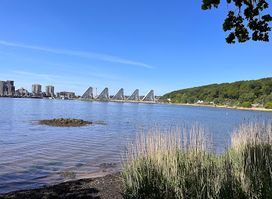
A small pier on Vejle Fjord where Skyttehushaven’s lawns meet open water, offering quiet views, simple fjord access and a relaxed pause by the city’s shoreline.

A small 1913 fountain on Vejle’s church square, Anno Dom 1913 adds quiet historic character and a simple sculptural focus to lively Kirketorvet.