Anno Dom 1913, Southern Jutland Travel Guide
A small 1913 fountain on Vejle’s church square, Anno Dom 1913 adds quiet historic character and a simple sculptural focus to lively Kirketorvet.
Set on Vejle’s central square Kirketorvet, Anno Dom 1913 is a compact historic fountain that quietly anchors the space between Sct. Nicolai Church and the surrounding townhouses. Its early 20th‑century stonework and modest sculptural details recall a period when Vejle was transforming into a modern commercial town, bringing running water and new civic pride to the heart of the city. Today it’s a small but atmospheric landmark and an easy, photogenic pause on any stroll through the old center.
A brief summary to Anno Dom 1913
- Kirketorvet 1, Vejle, 7100, DK
- Duration: 0.25 to 0.5 hours
- Free
-
 Outdoor
- Mobile reception: 5 out of 5

Know before you go
Hi, I'm Eve. Here are a few practical things to know before exploring Anno Dom 1913.
- Combine a look at Anno Dom 1913 with a visit inside nearby Sct. Nicolai Church to better appreciate how the fountain completes the square.
- Aim for early morning or late afternoon light if you want atmospheric photos with softer shadows and the church as a backdrop.
- Use the fountain as a quick rest point between museum visits or shopping; nearby cafés make it easy to pick up a drink and sit on the square.
Do you manage this location?
Take control to get all the benefits, like improved information, better appearance, and stronger visibility across AI-powered discovery. Learn more about listing your business on Evendo
Activate your presenceOther nearby places you may find interesting
The closest places of the same kind, if this one is not quite what you had in mind.

Explore Anno Dom 1913 on the Map
A handpicked selection of must-see spots near Anno Dom 1913, mapped for you.
Getting There
-
Train and short walk from Vejle Station
Most regional and intercity trains in eastern Jutland stop at Vejle Station, including frequent services from Aarhus, Fredericia and Odense. Typical journey times range from about 35–50 minutes from Aarhus and 25–35 minutes from Odense, with standard second-class tickets usually around 80–160 DKK depending on distance and booking conditions. From the station it is an easy, mostly level walk of roughly 5–10 minutes through the compact city center to Kirketorvet and Anno Dom 1913, suitable for most visitors and wheelchairs in dry weather.
-
Local bus to Vejle city center
Vejle’s city buses and regional routes converge near the station and the central streets, with many services stopping within a 5–8 minute walk of Kirketorvet. Typical rides within the Vejle urban area take 10–20 minutes depending on starting point, and single tickets bought on board or via local transport apps are generally in the 20–30 DKK range. Buses run more frequently on weekdays and daytime hours, with reduced evening and weekend schedules, so checking the latest timetable before setting out is advisable.
-
Car from the surrounding region
If you arrive by car from nearby towns such as Billund, Kolding or Horsens, expect driving times of about 30–40 minutes via main roads leading into Vejle. The historic center around Kirketorvet is compact and has a mix of street parking and multi‑storey car parks, many of which are paid and may have time limits during the day. Hourly rates typically fall in the range of 10–25 DKK depending on the facility and duration. From most parking areas you should allow a 5–15 minute walk along pedestrian‑friendly streets to reach the fountain.
For the on-the-go comforts that matter to you
-
 Restrooms
-
 Drink Options
-
 Drinking Water
-
 Food Options
-
 Seating Areas
-
 Trash Bins
-
 Information Boards
-
 Visitor Center
Discover more about Anno Dom 1913
A modest fountain at the heart of Kirketorvet
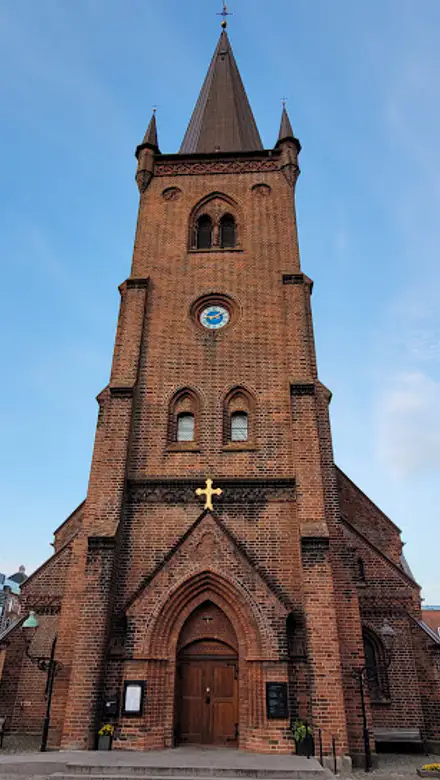
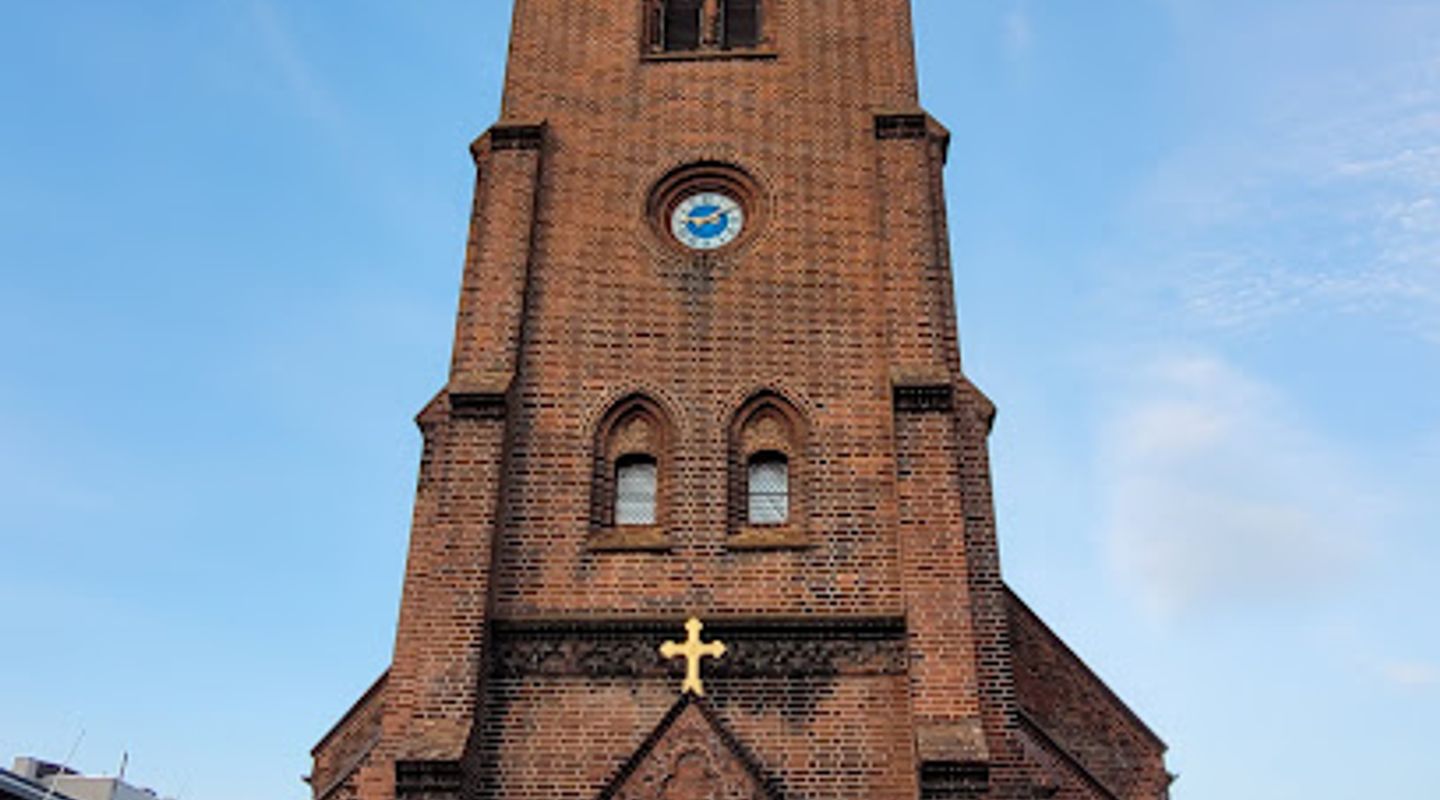
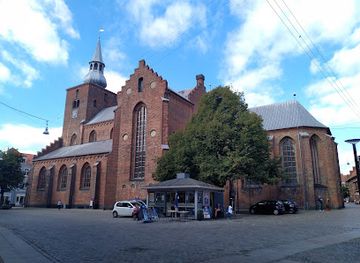
Anno Dom 1913 sits on Kirketorvet, the church square at the historic core of Vejle, where cobbled paving, cafés and the brick tower of Sct. Nicolai Church frame a compact urban space. The fountain is relatively small, more an architectural accent than a showpiece, but it quietly draws the eye with its stone basin, central column and the inscription that gives it its name. In a town of busy shopping streets and modern buildings, this little structure anchors the square with a tangible sense of age.Walk around it and you notice the interplay between water, stone and the façades around the square. The fountain’s simple geometry and restrained ornamentation mirror the sober northern European taste of the early 1900s, when function and civic symbolism mattered more than flamboyance. Even when the water flow is low or temporarily off, the basin and column still serve as a sculptural centerpiece, a rendezvous point and a visual counterbalance to the church steps nearby.A snapshot of Vejle in the early 1900s
The date referenced in its name points to the period when Vejle was growing from a provincial market town into a small industrial city. New infrastructure, rail connections and brick townhouses were reshaping the streets around Kirketorvet, and installing a public fountain here signaled modernity: piped water, improved sanitation and a touch of urban refinement on the main square. The form is modest, but the intent was progressive.Look closely at the stonework and you can imagine the stonemasons and municipal planners who commissioned it. Details such as the proportions of the column, the simple cornice lines and the clear lettering are typical of civic design from that era in Denmark, when decorative excess was giving way to cleaner lines, but historic references were still important. Rather than dominate the square, the fountain was designed to integrate into a streetscape that included the church, the town hall and small commercial buildings.Everyday life flowing around the basin
Today, Anno Dom 1913 is less a grand attraction than a quiet marker in the flow of city life. Office workers and shoppers cut across the square, cyclists weave past, and the sound of traffic mixes with snatches of conversation from nearby terraces. The fountain acts as a natural pause point: you can lean on the edge of the basin, watch the water flicker in the light and take in the skyline of chimneys, towers and rooftops around you.Because the fountain is free to visit and always accessible, it lends itself to repeated, short encounters rather than a long, single visit. Morning light can catch the stone differently from the soft glow of a Scandinavian evening, and in winter the basin might be still and reflective, while in summer the movement of water adds a cooling feel to the square. It is also an easy orientation point when threading your way between the church, the town hall and nearby cultural venues.Architecture in dialogue with its surroundings
Although the fountain itself is relatively plain, its setting gives it architectural weight. Stand on one side and the church tower forms a vertical backdrop, emphasizing the civic relationship between sacred building and secular square. From another angle you see the lines of the town hall and commercial façades, reminding you that Kirketorvet has always been a space where religious, political and everyday life intersect.The fountain’s low profile allows it to be used without interrupting sightlines or dominating the space. Children may circle the basin, couples may sit briefly at the edge, and photographers can frame the column against the church or the sky. As daylight shifts or clouds roll in from Vejle Fjord, the stone softens or sharpens, giving the small monument a surprising variety of moods for such a compact structure.A brief stop on a wider Vejle city walk
Anno Dom 1913 fits naturally into a wider exploration of central Vejle. Within a few steps you can move from the fountain to the church interior, the town hall façade or nearby cultural centers, making the square a useful hub. Because it demands little time, it works well as a short stop to connect different parts of your itinerary, or as a place to let children run a quick loop around the basin while adults regroup.For photographers and urban sketchers, the fountain offers a convenient foreground object when capturing Kirketorvet’s changing light and architecture. For anyone interested in how small civic details shape the feel of a city, Anno Dom 1913 is a good example of how even a modest fountain can lend continuity and character to a public square more than a century after its installation.












Your all‑in‑one travel companion app
Explore expert travel guides, compare and book tours, experiences, hotels, and more—all from the palm of your hand. Download now for seamless trip planning wherever your wanderlust takes you.


Explore More of Southern Jutland
Looking beyond Anno Dom 1913? Discover Southern Jutland for broader travel guides, local hot-spots, and regional highlights.
Explore Southern Jutland
A former parking lot turned vibrant green hub, Mariaparken blends multi-sport play, hammocks, grills and events into Vejle’s most central urban park.
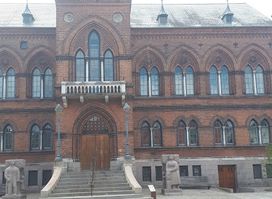
A modest ground-level fountain on Vejle’s main square, Brunnen Rathaus adds playful water, reflections and sound to the neo‑Gothic backdrop of the town hall.