

Fregatten Jylland Travel Guide
Free Guide: Step aboard one of the world’s great wooden warships in Ebeltoft and explore Danish naval history, royal voyages and life at sea across Jylland’s creaking decks.


A brief summary of Fregatten Jylland
Step aboard one of the world’s great wooden warships in Ebeltoft and explore Danish naval history, royal voyages and life at sea across Jylland’s creaking decks.
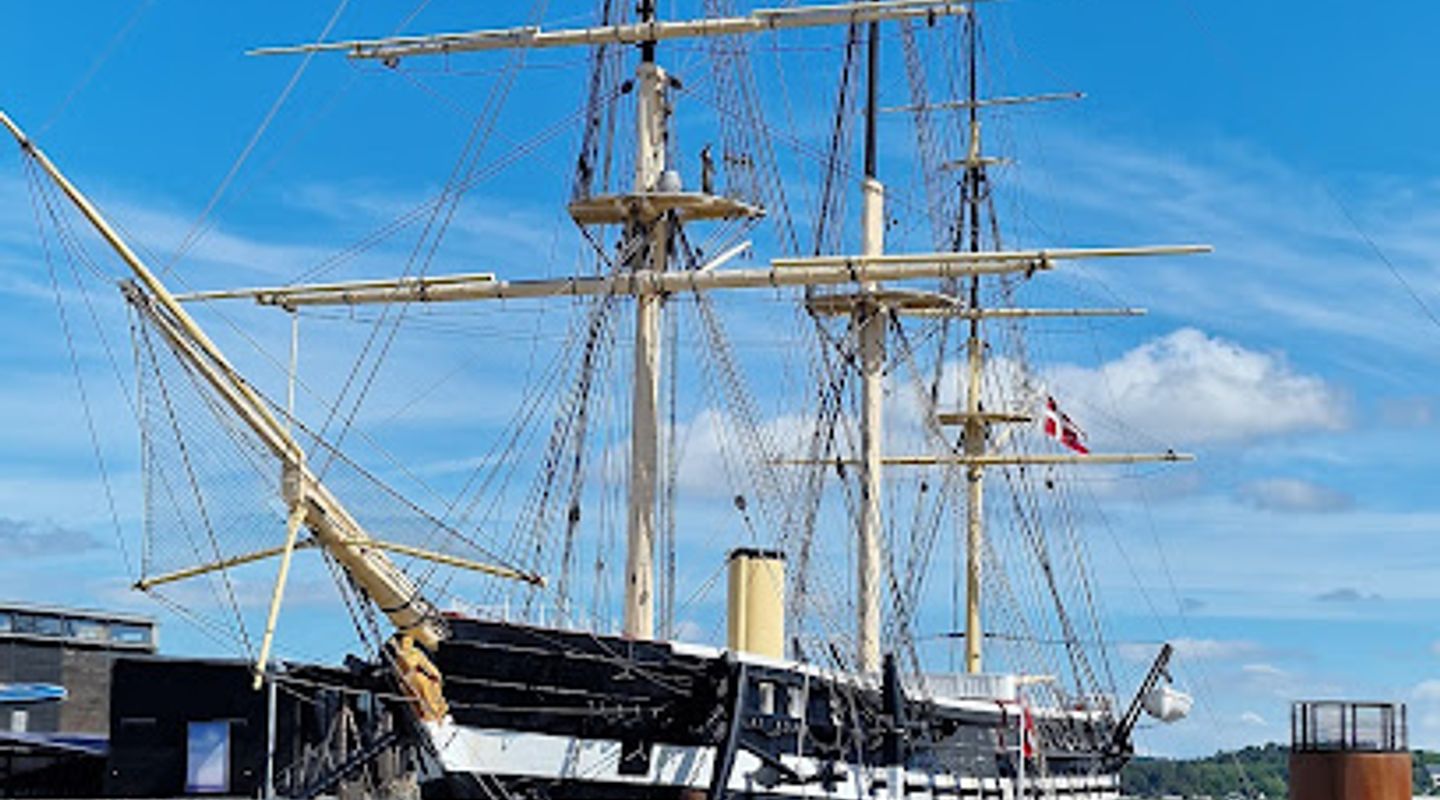
Fregatten Jylland in Ebeltoft is a magnificently restored 19th‑century Danish wooden warship and maritime museum, dramatically set in a dry dock by the harbor. Launched in 1860 and famed for its role in the 1864 Battle of Helgoland, the frigate later sailed on royal voyages and distant expeditions before narrowly escaping the scrapyard. Today you can roam multiple decks, explore immersive exhibitions on naval life and warfare, visit the museum hall and maritime playground, and get a vivid sense of life at sea in the age of sail and steam.
On-site amenities
 Restrooms
 Drinking water
 Seating areas
 Sheltered areas
 Trash bins
 Information boards
 Visitor centre
Opening hours
- Every day10 am–5 pm
Opening hours as listed on the venue’s Google Business Profile. Hours can change for services and special events, so check with the venue before you go.
- Address
- S. A. Jensens Vej 4, 8400 Ebeltoft
- Phone
- Website
Getting there
Bus from Aarhus
Car within Djursland
Coach or group transfer
Cycling from Ebeltoft town
Discover more about Fregatten Jylland
A wooden giant at the heart of Danish naval history
Fregatten Jylland is one of the world’s longest preserved wooden warships, a 19th‑century frigate resting in a purpose-built dry dock on Ebeltoft’s waterfront. Launched in 1860, she represents the transition from sail to steam, with towering masts above and an engine room hidden below decks. The ship’s sleek black hull with white gunports and elegant figurehead tell you at a glance that this was once a symbol of maritime power as well as national prestige.The frigate’s most famous moment came in 1864 at the Battle of Helgoland, when Danish forces clashed with Austrian and Prussian ships in the North Sea. Jylland was hit numerous times yet remained in the fight, and the engagement became an important chapter in Denmark’s story during the Second Schleswig War. Exhibits on board and in the museum hall explain this conflict, the tactics of naval warfare, and the political stakes behind the battle.
From royal yacht to near oblivion
After her years as a frontline warship, Jylland was refitted as a royal vessel, carrying King Christian IX on voyages to the Faroe Islands, Iceland and beyond. Later she undertook long expeditions to the West Indies, the Mediterranean and the North Sea, showing the flag in distant ports. Photographs, models and artefacts trace these journeys, from ceremonial receptions to the more mundane routines of life at sea.By the early 20th century, the proud frigate had become obsolete. Sold for breaking up in 1908, she narrowly escaped being dismantled when she was bought back and gradually reimagined as a heritage ship. Decades of slow decay left the hull and interior in precarious condition, and the story of her rescue and painstaking restoration is told through displays of original timbers, tools and shipyard drawings. The transformation from worn-out hulk to museum centerpiece highlights both craftsmanship and determination.
Life on board: guns, hammocks and hard work
Walking the decks today, you step into the daily world of 19th‑century sailors and officers. On the gun deck, long rows of cannons run along the sides, their ropes and tackle ready as if for action. Information panels describe how crews loaded and fired these heavy weapons, the deafening smoke-filled atmosphere of battle, and the strict routines that governed every movement during combat drills.Below, cramped mess areas and hammocks show how hundreds of men ate, slept and socialized in very limited space. You can see the contrast between the relatively comfortable officers’ cabins and the tightly packed quarters of ordinary seamen. Exhibits use uniforms, personal belongings, ship’s logs and medical instruments to explore themes such as hierarchy, discipline, diet and health on long voyages. For younger visitors, interactive elements and treasure-hunt style activities make these stories accessible and engaging without losing historical depth.
The harbor setting and museum facilities
The ship is part of a broader maritime complex along Ebeltoft’s harbor, with a museum hall that expands the narrative beyond the frigate itself. Here you may find changing exhibitions on shipbuilding, climate and the sea, or Denmark’s relationship to global trade and colonial history. Models, films and hands-on displays help explain how a wooden hull of this size could be constructed and maintained, and what it meant for a small nation to field such a vessel.Outside, the dry dock lets you walk close to the hull and appreciate the scale of the construction from keel to gunwales. The surrounding area includes a maritime-themed playground, open spaces and seating, making it easy to combine intense museum exploring with breaks in the sea air. Nearby cafés and eateries along the waterfront complement the visit without intruding on the historic atmosphere of the dock.
Planning your visit to the frigate
A typical visit lasts two to three hours, though maritime enthusiasts often stay longer to explore every deck and exhibition. Seasonal programs add extra dimensions, from guided historic introductions to storytelling sessions about a cabin boy’s life or small-boat trips from the harbor during peak months. These activities, together with an audio guide available in several languages, allow you to tailor the experience to different ages and interests.Most of the museum spaces are covered or indoors, while the upper decks and dock area are exposed to the weather, so it is worth considering wind and rain when choosing clothing. The site provides visitor facilities such as restrooms, information points and places to sit, and staff are on hand to answer questions about the frigate’s complex past. Whether you are drawn by naval technology, national history or simply the awe of standing on one of Europe’s great wooden warships, Fregatten Jylland offers a richly layered encounter with the 1800s at sea.
Evendo Review Centre
 Google
Guest reviews
Best time to go
Quietest: Jan, Feb & Nov · before 8am or from 7pm
Busy times are Evendo estimates for a typical year, to help you plan. Actual crowds vary with events, school holidays and the weather.
Explore Fregatten Jylland on the map
A handpicked selection of must-see spots near Fregatten Jylland, mapped for you.
Get your free copy of our complete guide to Fregatten Jylland, delivered straight to you.
Everything on this page, from opening hours and how to get there to Eve’s tips and the best time to go, in one PDF you can read offline, print or share.
Already have an account? Sign in
Your Fregatten Jylland guide is ready.
We'll send it to · Not you? Sign out

Getting your guide ready…
We are putting together a fresh copy of the Fregatten Jylland guide. This can take up to a minute.
This can take a few moments. If your browser asks, choose Allow so the download can start. You'll find the guide in your Downloads folder.
Nothing happened? Download it again
Sorry, the guide is taking longer than usual. Please try again in a minute, or get it by email instead.
Other nearby places you may find interesting
The closest places of the same kind, if this one is not quite what you had in mind.
-
-
-
-
-


Swipe for more places
More to explore near Fregatten Jylland

 Best experiences near Fregatten Jylland
 Best hotels near Fregatten Jylland
 Best landmarks near Fregatten Jylland
 Best attractions near Fregatten Jylland
 Best shops near Fregatten Jylland
 Best restaurants near Fregatten Jylland
 Best bars near Fregatten Jylland
Do you manage this location?
Take control to get all the benefits, like improved information, better appearance, and stronger visibility across AI-powered discovery.
Explore more

Explore more of Southern Jutland
Explore Southern Jutland: A blend of scenic nature, rich history, and delightful cuisine in Denmark's picturesque region.
Explore Southern Jutland
Explore more of Denmark
Discover Denmark: A perfect blend of history, modern design, and the cozy concept of hygge. Explore vibrant cities, serene landscapes, and world-class cuisine.
Explore Denmark
