Amalienborg Palace Museum Travel Guide
Free Guide: Step inside Christian VIII’s Palace to explore 150 years of Danish royal life, from intimate apartments and Fabergé treasures to gala halls still used today.


A brief summary of Amalienborg Palace Museum
Step inside Christian VIII’s Palace to explore 150 years of Danish royal life, from intimate apartments and Fabergé treasures to gala halls still used today.
Housed in Christian VIII’s Palace on Copenhagen’s Amalienborg Square, the Amalienborg Palace Museum offers a rare look inside the private world of Denmark’s modern monarchy. Rococo salons, intact royal apartments and glittering treasures trace 150 years of royal life from Christian IX and Queen Louise to today, with Fabergé masterpieces, state rooms still used for official functions, and views straight onto the cobbled square where the Royal Life Guard marches past at noon.
On-site amenities
 Restrooms
 Drink options
 Drinking water
 Food options
 Seating areas
 Sheltered areas
 Trash bins
 Information boards
 Visitor centre
Opening hours
- Every day10 am–5 pm
Opening hours as listed on the venue’s Google Business Profile. Hours can change for services and special events, so check with the venue before you go.
- Address
- Christian VIII's Palæ, Amalienborg Slotsplads 5, 1257 København
- Phone
- Website
Getting there
Metro
City bus
Walking from Kongens Nytorv area
Bicycle or taxi
Discover more about Amalienborg Palace Museum
Royal life behind the palace façades
Amalienborg Palace Museum sits inside Christian VIII’s Palace, one of four near-identical Rococo mansions forming Copenhagen’s most elegant royal square. Step through the formal stone entrance and you leave the public cobbles of Amalienborg Slotsplads behind, entering a working royal residence that doubles as a museum. Here the focus is on the private side of the Danish monarchy from the 19th century to the present, rather than on grand ceremonial spectacle alone.The museum traces the story from Christian IX and Queen Louise, often called the “in‑laws of Europe” because their children married into royal houses across the continent. Portraits, personal gifts and diplomatic mementos make these dynastic ties tangible, turning abstract family trees into real people with tastes, hobbies and intertwined lives.
Intimate apartments and changing tastes
Room by room, you walk through intact royal apartments preserved almost as their occupants left them. Each suite reflects the fashions of its time, from heavy Victorian furnishings and dark woods to lighter, mid‑20th‑century interiors with cleaner lines and softer palettes. The contrast between military studies, ladies’ parlours and family sitting rooms is striking, revealing how each monarch expressed personality through décor.Details reward slow looking: travel souvenirs on side tables, photographs on pianos, uniforms hanging near writing desks. Together they tell stories of duty balanced with everyday life, of a family that is at once ceremonial and domestic. Interpretive displays explain how constitutional monarchy evolved in Denmark and how royal routines adapted to modern society while retaining long‑standing traditions.
Gala rooms and working state spaces
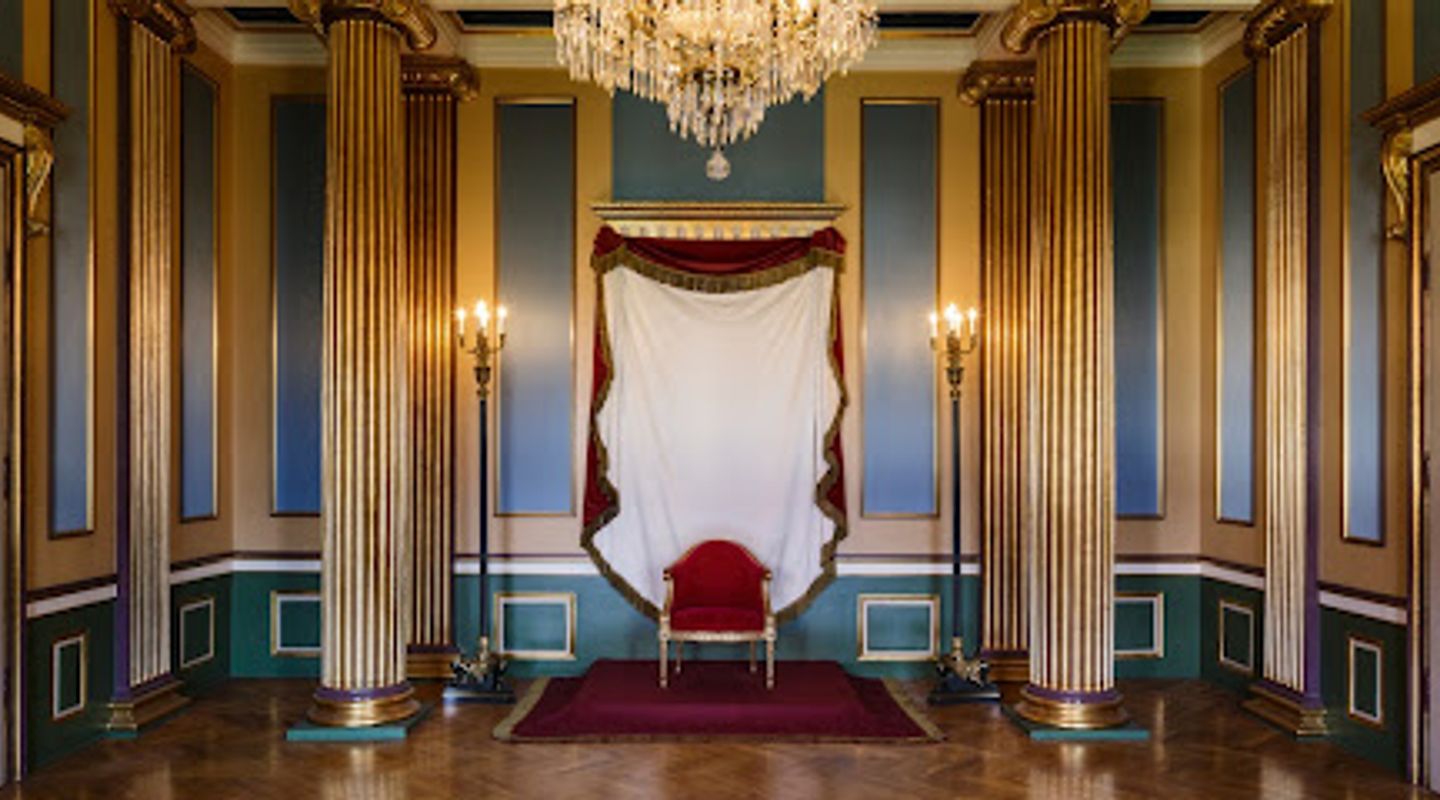
On many days, access is extended to the Gala Hall and other reception rooms on the piano nobile, the grandest floor of the palace. Here high ceilings, stucco work, mirrors and glittering chandeliers create a setting for state banquets, official receptions and royal orders ceremonies. These rooms are not frozen relics: they are still used for representative functions, so displays highlight table settings, seating plans and protocols associated with major occasions.From the tall windows you glimpse the equestrian statue of Frederik V in the centre of the octagonal square and, beyond, the dome of the Marble Church. This visual axis between throne, city and church encapsulates the palace’s role at the heart of Danish public life. Outside, the daily changing of the Royal Life Guard at noon animates the cobbles; inside, uniforms, music scores and photographs connect the ceremony to its historical roots.
Treasures from Fabergé to royal orders
One of the museum’s highlights is the Fabergé chamber, home to one of the world’s significant collections of Russian jewellery and objets d’art linked to Denmark’s close ties with the Romanov court. Intricately worked jewelled boxes, frames and miniatures showcase extraordinary craftsmanship and hint at the international networks that once bound Europe’s royal families together.Elsewhere, you encounter orders, medals and diplomatic gifts, alongside ceremonial outfits and regalia‑adjacent pieces that illuminate the symbolism of crowns, sashes and insignia. Temporary exhibitions periodically focus on themes such as royal fashion, jubilees or specific monarchs, adding new perspectives to the permanent displays.
Planning your visit inside the royal square
The museum can comfortably be explored in about one to two hours, though those with a deep interest in royal history or design often linger longer in the apartments and treasury‑style rooms. Labels and panels are typically available in multiple languages, helping international visitors navigate both objects and timelines.Facilities include a small museum shop offering books, design objects and exhibition‑related items, and there is bench seating in several rooms for brief rests. The palace setting means some floors are reached by staircases, but step‑free routes and assistance are available on selected levels, and accessibility information is clearly signposted at the entrance and online. Combined tickets with nearby royal sites are often available, making it easy to weave Amalienborg into a wider day of Copenhagen palace‑hopping.
Evendo Review Centre
 Google
Guest reviews
Best time to go
Quietest: Jan, Feb & Nov · before 8am or at 7pm or at 8pm
Busy times are Evendo estimates for a typical year, to help you plan. Actual crowds vary with events, school holidays and the weather.
Explore Amalienborg Palace Museum on the map
A handpicked selection of must-see spots near Amalienborg Palace Museum, mapped for you.
Get your free copy of our complete guide to Amalienborg Palace Museum, delivered straight to you.
Everything on this page, from opening hours and how to get there to Eve’s tips and the best time to go, in one PDF you can read offline, print or share.
Already have an account? Sign in
Your Amalienborg Palace Museum guide is ready.
We'll send it to · Not you? Sign out

Getting your guide ready…
We are putting together a fresh copy of the Amalienborg Palace Museum guide. This can take up to a minute.
This can take a few moments. If your browser asks, choose Allow so the download can start. You'll find the guide in your Downloads folder.
Nothing happened? Download it again
Sorry, the guide is taking longer than usual. Please try again in a minute, or get it by email instead.
Unlock the best of Amalienborg Palace Museum
Skip-the-line tickets, guided tours with entry, and walking tours of the area, booked in a few clicks.
 Tour with entry
Copenhagen: Little Mermaid Fairy Tale Quest
from $8.63 Tour with entry
Half Day Self-Guided Audio Walking Private Tour in Copenhagen
from $14.10 Tour with entry
Copenhagen Highlights & Hidden Gems Walking Tour with Local Guide
from $32.13 Tour with entry
Copenhagen Highlights: Small Group Walking Tour - Max 10 people
from $44.82


Other nearby places you may find interesting
The closest places of the same kind, if this one is not quite what you had in mind.
-
-
-
-
-


Swipe for more places
More to explore near Amalienborg Palace Museum
-
 Best experiences near Amalienborg Palace Museum
-
 Best hotels near Amalienborg Palace Museum
-
 Best landmarks near Amalienborg Palace Museum
-
 Best attractions near Amalienborg Palace Museum
-
 Best shops near Amalienborg Palace Museum
-
 Best restaurants near Amalienborg Palace Museum
-
 Best bars near Amalienborg Palace Museum


Do you manage this location?
Take control to get all the benefits, like improved information, better appearance, and stronger visibility across AI-powered discovery.
Explore more
Explore more of Zealand
Discover the charm of Zealand, Denmark's largest island, blending vibrant city life in Copenhagen with serene coastal beauty and rich cultural heritage.
Explore Zealand
Explore more of Denmark
Discover Denmark: A perfect blend of history, modern design, and the cozy concept of hygge. Explore vibrant cities, serene landscapes, and world-class cuisine.
Explore Denmark