Amalienborg Palace Museum, Copenhagen Travel Guide
Step behind the facades of Copenhagen’s royal square to explore intimate apartments, glittering gala halls and Fabergé treasures at Amalienborg Palace Museum.
Housed in Christian VIII’s Palace on Copenhagen’s grand Amalienborg Square, the Amalienborg Palace Museum invites you into the private world of Denmark’s modern monarchs. Period-furnished royal apartments, glittering gala rooms and a renowned Fabergé collection trace 150 years of royal life from Christian IX to today, all within a harmonious Rococo palace complex still used by the Danish royal family.
A brief summary to Amalienborg Palace Museum
- Christian VIII's Palæ, Amalienborg Slotsplads 5, Copenhagen, Indre By, 1257, DK
- Click to display
- Click to display
- Duration: 1 to 2 hours
- Mid ranged
-
 Indoor
- Mobile reception: 5 out of 5
- Monday 10 am-4 pm
- Tuesday 10 am-4 pm
- Wednesday 10 am-4 pm
- Thursday 10 am-4 pm
- Friday 10 am-4 pm
- Saturday 10 am-4 pm
- Sunday 10 am-4 pm

Know before you go
Hi, I'm Eve. Here are a few practical things to know before exploring Amalienborg Palace Museum.
- Time your visit around noon so you can explore the museum and then step outside to watch the daily Changing of the Royal Guard in Amalienborg Square.
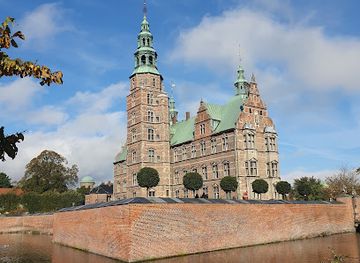
- Consider a combined ticket with Rosenborg Castle if you plan to visit both royal sites within 48 hours; it offers better value than buying separate admissions.
- Large bags and luggage are restricted inside the museum; travel light or be prepared to use on-site storage facilities if available.
- Allow extra time during winter for cloakroom use, as coats must often be checked or carried carefully in the historic rooms.
Do you manage this location?
Take control to get all the benefits, like improved information, better appearance, and stronger visibility across AI-powered discovery. Learn more about listing your business on Evendo
Activate your presenceOther nearby places you may find interesting
The closest places of the same kind, if this one is not quite what you had in mind.

Explore Amalienborg Palace Museum on the Map
A handpicked selection of must-see spots near Amalienborg Palace Museum, mapped for you.
Unlock the Best of Amalienborg Palace Museum
Buy tickets
-
No tickets available
Book tours with entry


Getting There
-
Metro
From central Copenhagen, take the M3 or M4 metro line to Marmorkirken Station, which typically takes 5–10 minutes from major hubs such as København H or Nørreport. Trains run every few minutes and a single zone ticket costs around 20–30 DKK. From Marmorkirken it is a short, level walk through historic streets to Amalienborg Palace Museum; the route is suitable for most visitors, including those using wheelchairs or strollers.
-
City bus
Several city bus lines serve the area around Amalienborg from points across Copenhagen, with typical journey times of 10–20 minutes depending on traffic. Standard bus tickets cost roughly 20–30 DKK for a single ride and can be bought via ticket machines or travel apps. Services run frequently during the day, but expect reduced frequency in late evenings and on some holidays.
-
Walking from central Copenhagen
From Kongens Nytorv and the inner city, Amalienborg can be reached on foot in about 10–15 minutes at a relaxed pace. The walk is mostly flat and passes through historic streets and along elegant boulevards, making it pleasant in most weather. Surfaces are a mix of paving and cobblestones, so comfortable, stable footwear is recommended, especially for visitors with limited mobility.
-
Bicycle
Copenhagen’s extensive cycle network makes it easy to reach Amalienborg by bike from most central districts in 5–20 minutes. You can use city bikes or standard rentals, typically costing from 20–40 DKK per half hour depending on provider. Bike lanes lead close to the palace; you must dismount and park in designated areas near the square, as cycling and parking directly on the central cobbled space are restricted.
For the on-the-go comforts that matter to you
-
 Restrooms
-
 Drink Options
-
 Drinking Water
-
 Food Options
-
 Seating Areas
-
 Trash Bins
-
 Information Boards
-
 Visitor Center
Discover more about Amalienborg Palace Museum
Royal residence at the heart of Copenhagen
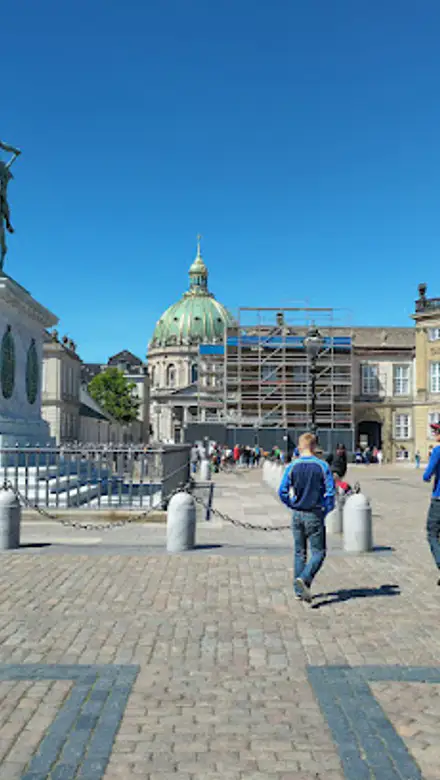
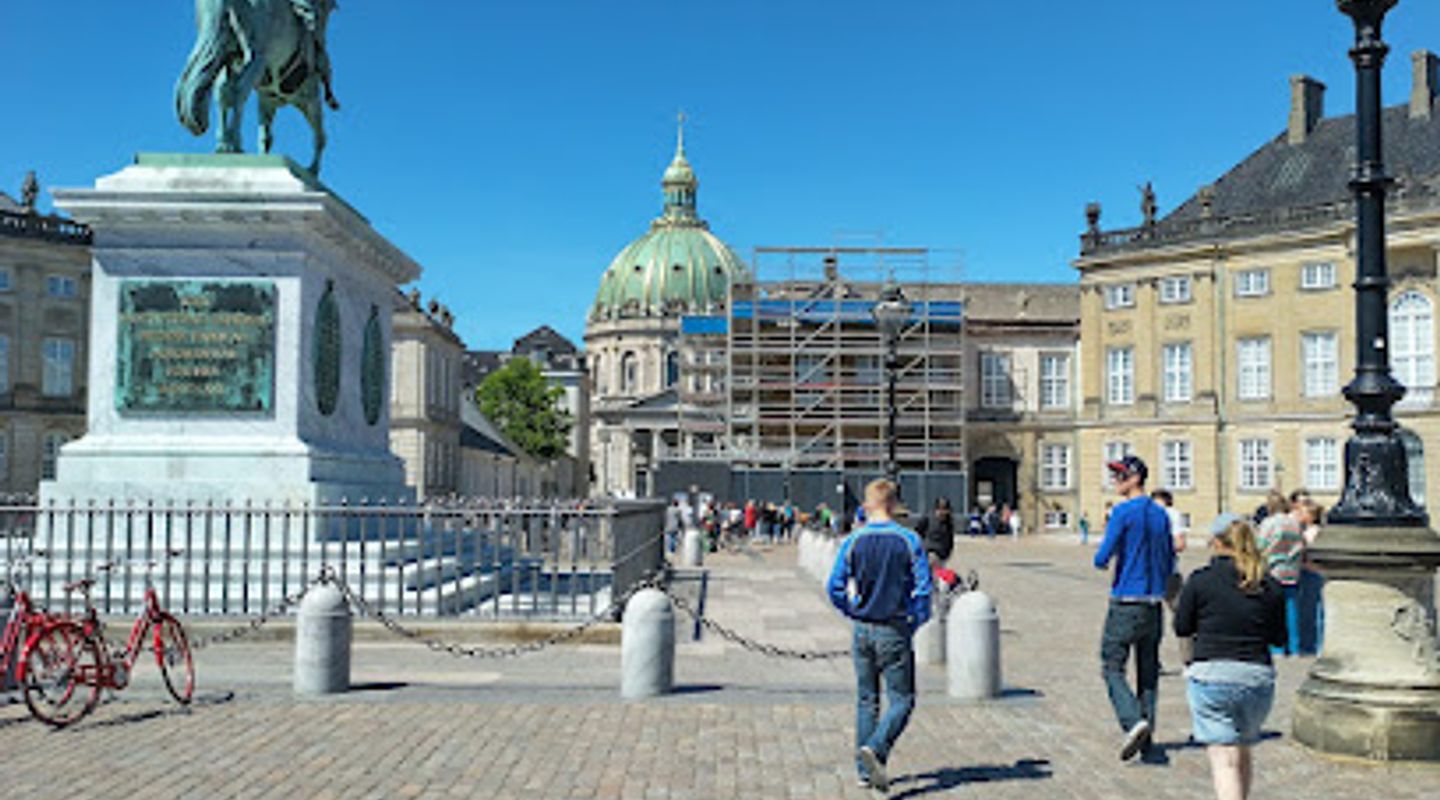
Amalienborg Palace Museum occupies Christian VIII’s Palace on the octagonal Amalienborg Square, the official home of Denmark’s royal family. Here four near-identical Rococo palaces encircle an equestrian statue of King Frederik V, creating one of Copenhagen’s most distinctive urban ensembles. The museum lets you step from the cobblestones into a working royal residence where state business, family life and ceremony have intertwined for generations.Although Amalienborg is very much a living palace complex, Christian VIII’s Palace is dedicated to telling the story of the monarchy from the mid‑19th century to the present day. As you move through its rooms, the square outside remains a constant backdrop, grounding the museum in the everyday rhythms of royal Copenhagen.Inside the royal apartments
The core of the museum is a suite of historic apartments preserved to reflect the tastes and personalities of the kings and queens who lived here. Rooms linked to Christian IX and Queen Louise evoke the late 19th century, when their children married into royal houses across Europe and earned the couple the nickname “the in‑laws of Europe”. Military memorabilia, family portraits and intimate objects give substance to dynastic history.Further along, interiors shift style as you pass into the 20th century. You might notice how changing fashions in furniture, textiles and colour palettes mirror broader European trends while still retaining a distinctly Danish character. Together, the sequence of rooms reads like a visual timeline of royal domestic life, from heavy Victorian formality to lighter, more modern spaces.Gala halls and ceremonial splendour
On many days, visitors can also access the piano nobile, the grand reception floor used for major state events. Here, a series of lofty salon-like rooms culminates in the Gala Hall, where glittering chandeliers, polished parquet floors and mirrored light create a theatrical setting for royal banquets and receptions.These rooms, still in active use for official occasions, underline Amalienborg’s dual identity as both museum and functioning palace. Standing beneath the ornate ceilings, it is easy to imagine processions of guests in formal dress, foreign dignitaries lining up for presentations, and the careful choreography that underpins royal ceremony.Treasures of Fabergé and royal collections
Among the museum’s most celebrated highlights is a Fabergé chamber displaying one of the world’s important collections of Russian jewellery and decorative objects linked to the Danish and Russian courts. Glittering enamels, miniature frames and intricate goldwork tell stories of family ties between Copenhagen and St Petersburg, many of them connected to Empress Dagmar, born a Danish princess.Elsewhere in the displays, you encounter uniforms, orders, tableware and personal possessions that illuminate both the public and private faces of monarchy. Together, these objects reveal how symbolism, craftsmanship and protocol are woven into daily royal life.The living square and the changing of the guard
Outside, Amalienborg Square functions as an open-air stage for royal ritual. Every day at noon, the Royal Life Guard marches in to perform the changing of the guard, a ceremony that underscores the palace’s role as an active royal residence. The rhythmic tramp of boots, the flash of bearskin hats and the measured precision of the routine add an audible layer to the museum visit.Between ceremonies, the square feels more contemplative. Views stretch from the Marble Church’s great dome along the axis to the waterfront, framing Amalienborg within a wider cityscape of domes, spires and harbour light. It is this interplay of urban setting, lived-in palace and carefully curated museum that makes a visit here uniquely revealing.Experiencing royal Denmark today
Interpretive exhibits in the museum explore what it means to be a constitutional monarch in the 21st century. Panels, objects and thematic rooms examine duties ranging from state visits and audiences to patronages and public engagements, placing today’s royal household within a broader civic context.Taken as a whole, Amalienborg Palace Museum offers a concentrated encounter with Danish history through the lens of one family. Instead of grand narratives alone, it foregrounds rooms, furniture and personal artefacts, inviting you to imagine the everyday routines and major milestones that have unfolded within these walls over the past 150 years.More to explore near Amalienborg Palace Museum













Your all‑in‑one travel companion app
Explore expert travel guides, compare and book tours, experiences, hotels, and more—all from the palm of your hand. Download now for seamless trip planning wherever your wanderlust takes you.


Explore More of Copenhagen
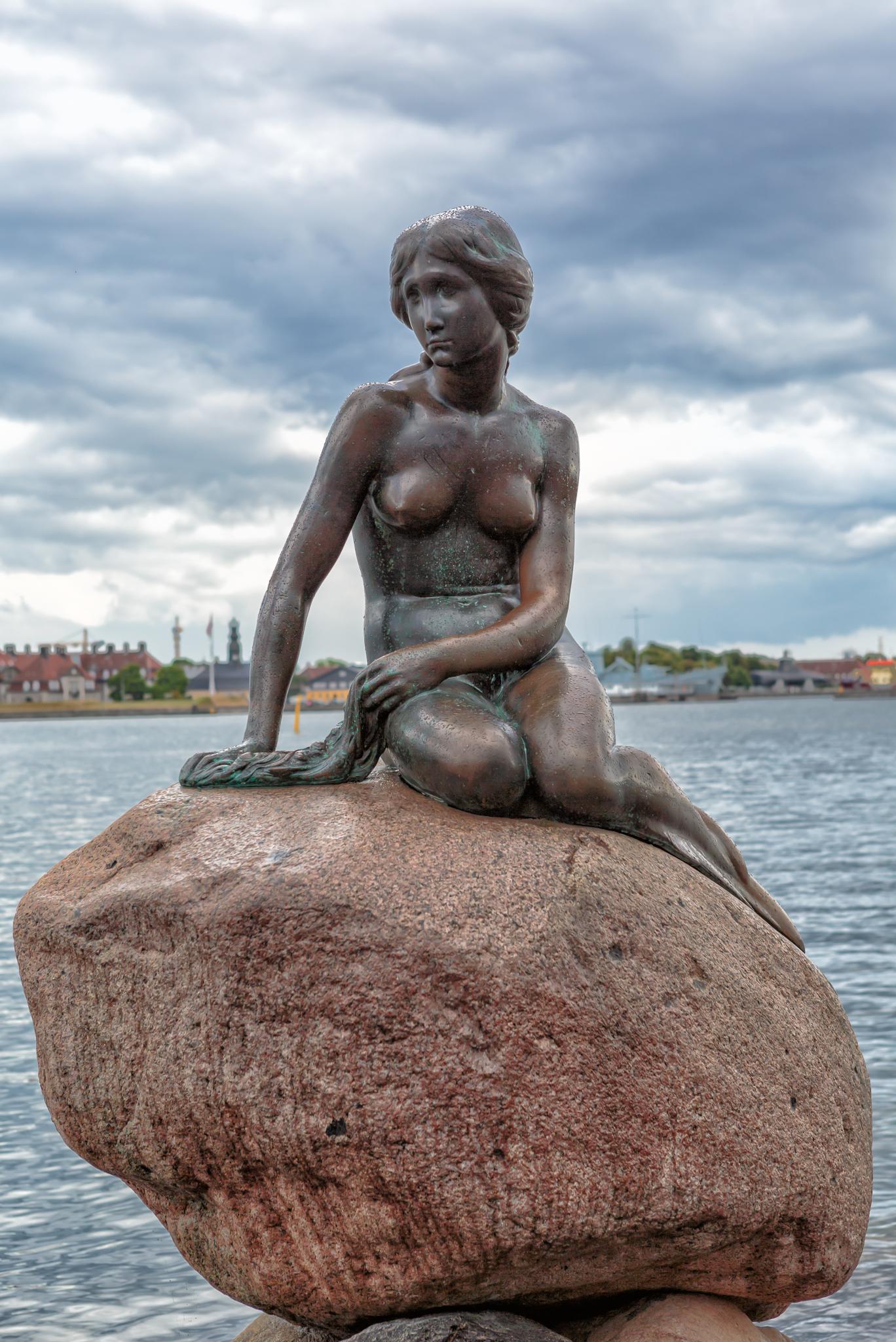
Looking beyond Amalienborg Palace Museum? Discover Copenhagen for broader travel guides, local hot-spots, and regional highlights.
Explore Copenhagen
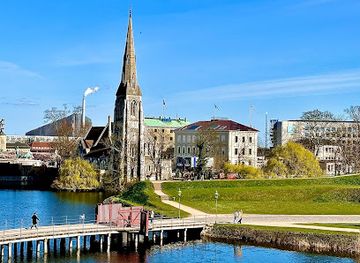
Go underground beside Copenhagen’s Citadel to follow five real lives through occupation, resistance and collaboration in a gripping World War II museum.
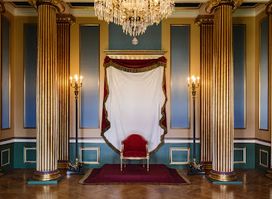
Step inside Christian VIII’s Palace to explore 150 years of Danish royal life, from intimate apartments and Fabergé treasures to gala halls still used today.