
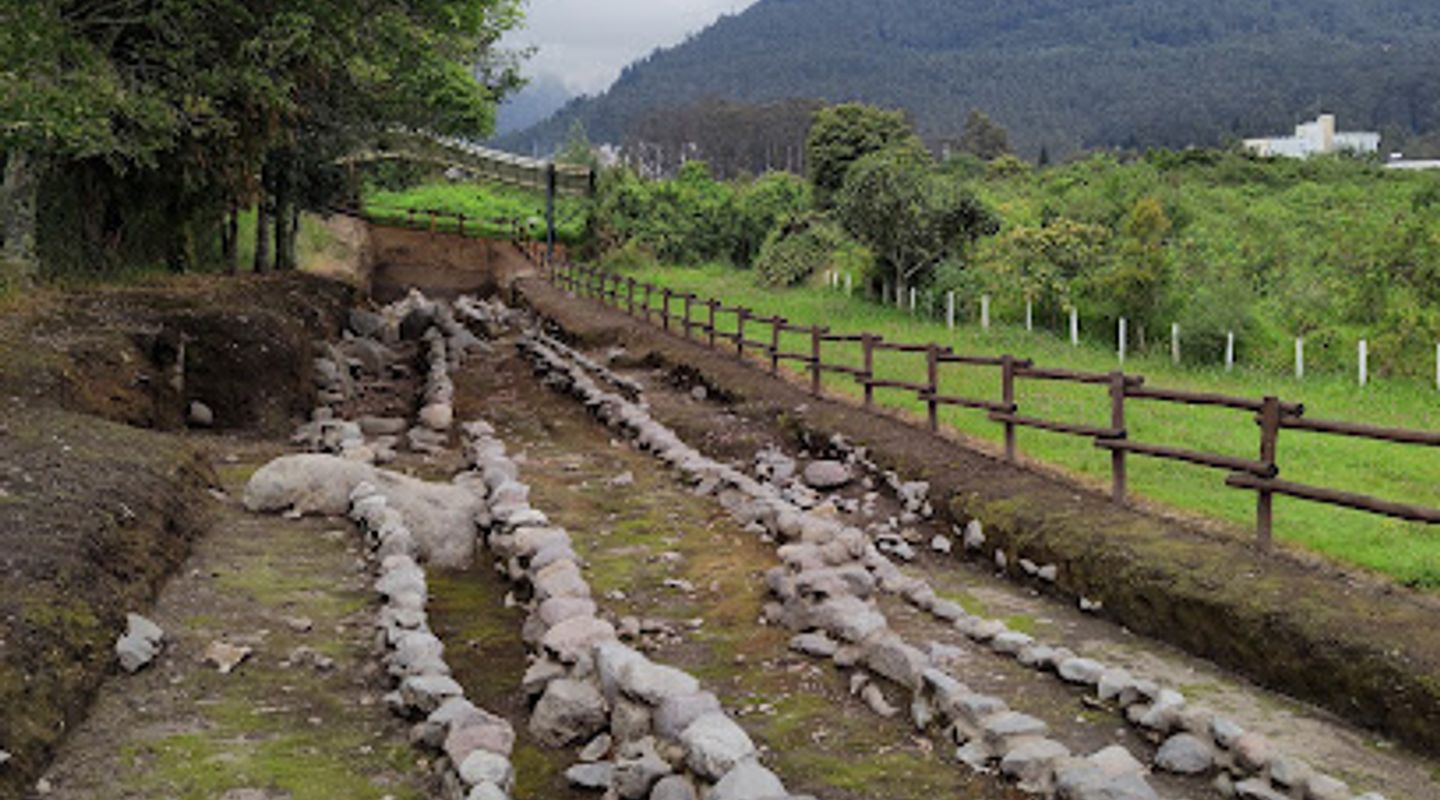
Parque Arqueológico Rumipamba, Western Lowlands Travel Guide
Explore ancient civilizations at Parque Arqueológico Rumipamba in Quito, with ruins, replica dwellings, and an enriching museum experience.
Parque Arqueológico Rumipamba, or 'stone plain' in Quechua, is a 32-hectare open-air museum in Quito, Ecuador, showcasing the remains of pre-Columbian cultures. Evidence suggests the site was inhabited from 1500 BCE to 1500 CE by groups including the Quitu-Cara. Visitors can explore uncovered ruins, replica huts, and an on-site museum displaying artifacts, offering a glimpse into Ecuador's rich ancestral history.
A brief summary to Parque Arqueológico Rumipamba
- Nuño de Valderrama s/n, Quito, Rumipamba, 170147, EC
- Click to display
- Wednesday 6 am-4 pm
- Thursday 6 am-4 pm
- Friday 6 am-4 pm
- Saturday 6 am-4 pm
- Sunday 6 am-4 pm

Know before you go
Hi, I'm Eve. Here are a few practical things to know before exploring Parque Arqueológico Rumipamba.
- Wear comfortable shoes, as the park has gravel-lined trails and uneven terrain.
- Visit early in the morning or late afternoon to avoid crowds and enjoy cooler temperatures; these times are also best for bird watching.
- Bring a camera to capture the stunning views of Quito and the surrounding landscape.
- Check for guided tours for a more in-depth understanding of the site's history and significance.
- Stay hydrated, especially on warm days, as facilities are limited.
Do you manage this location?
Take control to get all the benefits, like improved information, better appearance, and stronger visibility across AI-powered discovery. Learn more about listing your business on Evendo
Activate your presenceOther nearby places you may find interesting
The closest places of the same kind, if this one is not quite what you had in mind.


Explore Parque Arqueológico Rumipamba on the Map
A handpicked selection of must-see spots near Parque Arqueológico Rumipamba, mapped for you.
Getting There
-
Public Transport
From various points in Quito, take the Trolebús, Ecovía, or Metro to a station near Av. Mariana de Jesús and Av. Occidental. From there, take a local bus or taxi to Parque Arqueológico Rumipamba, located on Nuño de Valderrama, in front of the Casa de la Música. Public transportation costs approximately $0.38 per ride. The metro costs $0.45 per ride.
-
Taxi/Ride-Share
Taxis and ride-sharing services are readily available throughout Quito. Input 'Parque Arqueológico Rumipamba, Nuño de Valderrama s/n, Quito' into your app. A taxi from central Quito will cost between $5 and $15. A 5km ride in Quito costs about 9 USD.
-
Walking
From the Casa de la Cultura Ecuatoriana, head north on Av. 6 de Diciembre, then turn west onto Av. Mariana de Jesús. Continue until you reach Nuño de Valderrama, where you'll find the park entrance. This is approximately a 45-minute walk. No costs are associated with walking.
Discover more about Parque Arqueológico Rumipamba
More to explore near Parque Arqueológico Rumipamba













Your all‑in‑one travel companion app
Explore expert travel guides, compare and book tours, experiences, hotels, and more—all from the palm of your hand. Download now for seamless trip planning wherever your wanderlust takes you.


Explore More of Western Lowlands
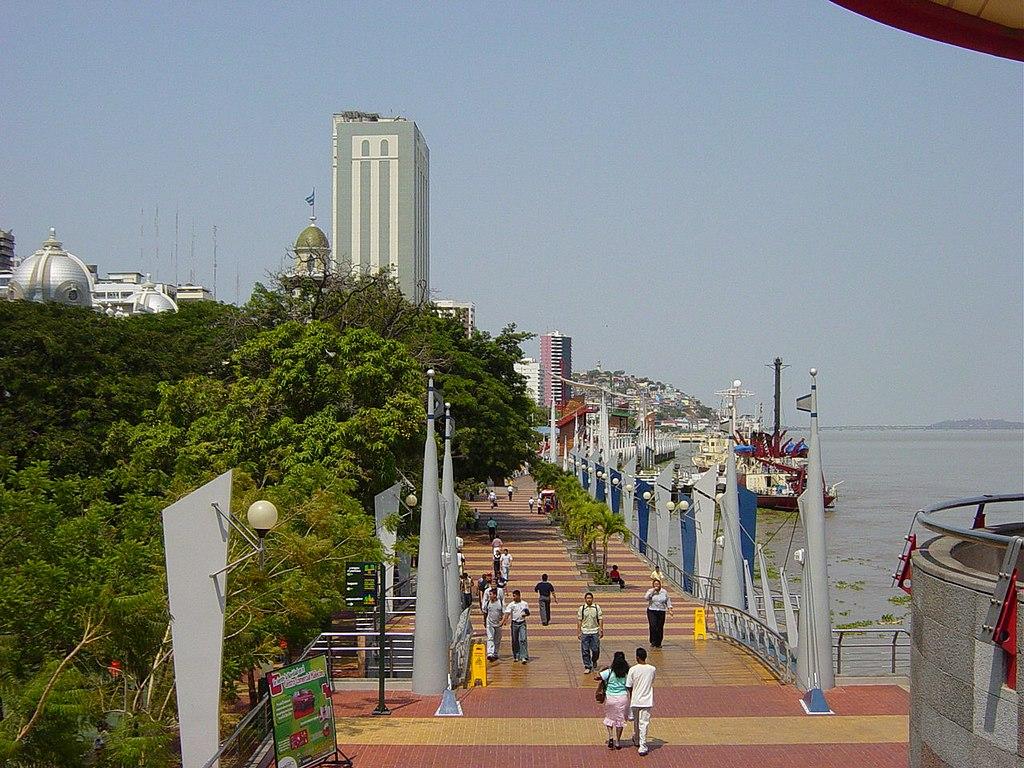
Looking beyond Parque Arqueológico Rumipamba? Discover Western Lowlands for broader travel guides, local hot-spots, and regional highlights.
Explore Western Lowlands
Discover Ecuador's diverse flora at Quito's Botanical Garden, a serene escape in the city's heart, showcasing unique ecosystems and plant collections.

Experience authentic Middle Eastern cuisine in Quito at Delicias de Damasco, offering a rich array of traditional dishes in a welcoming atmosphere.
