

Eira (Helsinki) Travel Guide - Free
Explore Eira in Helsinki with Evendo's free guide. Find the best shops, historic streets, restaurants, and gems on web or mobile.


Eira in Helsinki blends Art Nouveau villas, sea views, quiet parks and neighbourhood cafés, with elegant waterfront walks and local dining near the city centre.
Architecture by the Southern Shore
Eira occupies a small, elegant corner of southern Helsinki, where carefully planned residential streets descend towards the Baltic shoreline. The neighbourhood is best known for its early twentieth-century Art Nouveau architecture: pale façades, curved balconies, ornamental doorways and richly detailed stairwells give streets around Eiranpuisto and Laivurinkatu a distinctive visual character. The atmosphere is residential rather than commercial, with elegant apartment buildings, mature trees and occasional glimpses of the sea shaping the experience of a walk.Read more about Eira
Sea Air and Public Spaces
A Residential Neighbourhood with Local Dining
Best attractions in Eira
Eira’s principal attraction is the neighbourhood itself: a compact architectural landscape of Art Nouveau apartment houses, carefully framed streets and sea-facing viewpoints. Start at Eiranpuisto, where the surrounding façades provide an immediate introduction to the district’s early twentieth-century character, then follow the streets downhill towards Eiranranta and the Baltic shoreline. The waterfront offers open views of the southern islands and a connection to walking routes leading towards Merisatama and Kaivopuisto, areas immediately beyond Eira’s commonly understood boundaries. Eira Hospital is an important building to appreciate from the public street, while the nearby houses of Huvilakatu are often included in architectural walks through southern Helsinki. The area has no large museum or major visitor complex of its own, but its appeal lies in close observation: granite details, enclosed balconies, quiet green spaces, maritime light and the contrast between historic residential streets and newer waterfront development.
-
Plaza
Senate Square
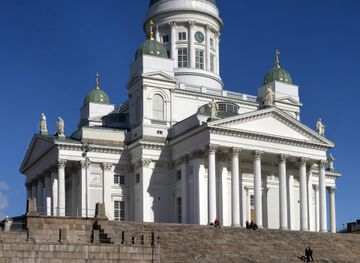
Discover Helsinki's heart at Senate Square: a neoclassical masterpiece surrounded by iconic landmarks and vibrant cultural experiences.
6 min drive · 1.9 km from neighbourhood centre
-
Tourist attraction
Kaivopuisto
Helsinki's iconic seaside park, offering green spaces, stunning views, and a vibrant atmosphere for locals and tourists alike.
13 min walk · 1.1 km from neighbourhood centre
-
Tourist attraction
Flatiron House of Helsinki Vuorimiehenkatu 4.
Discover Helsinki's architectural gem, the Flatiron House: a unique landmark blending history and modern flair in a vibrant urban setting.
15 min walk · 1.2 km from neighbourhood centre


Best landmarks in Eira
Eira’s landmarks are primarily architectural and urban rather than monumental. Eira Hospital, associated with architect Lars Sonck and built in the early twentieth century, is the district’s most recognisable named building and an important example of Helsinki’s Art Nouveau heritage. Eiranpuisto provides a small public focal point among the surrounding apartment houses, whose granite bases, curved balconies, decorative entrances and varied rooflines form a coherent historic streetscape. Eiranranta represents a newer layer of the neighbourhood, with contemporary waterfront buildings and public paths opening towards the archipelago. Huvilakatu, immediately beside Eira in Ullanlinna, is frequently linked with local architectural walks because of its colourful row of historic villas; it should be identified as an adjoining area rather than automatically described as part of Eira. Together, these places show how housing, public space, medical architecture and the shoreline shaped the district’s identity.
-
Plaza
Senate Square
Explore Senate Square, Helsinki's architectural gem, surrounded by stunning neoclassical buildings and vibrant cultural experiences.
6 min drive · 1.9 km from neighbourhood centre
-
Park
Kaivopuisto
Explore the breathtaking landscapes and cultural treasures of Kaivopuisto Park, a must-visit destination in Helsinki for every traveler.
13 min walk · 1.1 km from neighbourhood centre
-
City park
Ursinin kallio
Discover the serene beauty of Ursinin Kallio, a scenic city park in Helsinki perfect for relaxation, picnics, and nature walks.
2 min walk · 0.1 km from neighbourhood centre
-
Tourist attraction
Tsarina's Stone
Explore Tsarina's Stone in Helsinki, a stunning monument that embodies Finnish history and artistic talent, perfect for cultural enthusiasts and photographers alike.
5 min drive · 1.8 km from neighbourhood centre


Explore Eira on the map
A handpicked selection of must-see spots in Eira, mapped for you.
Best hotels in Eira
Best restaurants in Eira
Eira’s dining scene is small-scale and neighbourhood-oriented rather than a concentrated restaurant quarter. Cafés and restaurants are found mainly along Tehtaankatu, Laivurinkatu and the adjoining streets, offering practical stops during an architectural or coastal walk. The local mix reflects Helsinki’s wider urban food culture: coffee and pastries, contemporary Nordic cooking, casual international dishes and relaxed evening meals sit alongside everyday services for residents. The waterfront atmosphere provides a reason to seek out a café near Eiranranta, while the more extensive restaurant choices of Punavuori and the Design District are close enough to reach on foot but should not be confused with Eira itself. Visitors should expect a quieter rhythm than in central Helsinki, with many premises serving a local residential catchment rather than operating as destination dining venues. Checking current opening arrangements is advisable, particularly outside the busiest daytime and evening periods.
-
Restaurant
Cafe Carusel
Discover Café Carusel in Helsinki: A waterfront café serving delicious local cuisine with stunning views.
5 min walk · 0.4 km from neighbourhood centre
-
Restaurant
Restaurant Sea Horse
Experience authentic Finnish flavors at Restaurant Sea Horse in Helsinki – a culinary treasure known for its fresh seafood and warm hospitality.
9 min walk · 0.7 km from neighbourhood centre
-
Italian
Ravintola Nerone
Discover authentic Italian flavors at Ravintola Nerone in Helsinki—where every meal feels like a trip to Italy.
5 min walk · 0.4 km from neighbourhood centre
-
Georgian
Restaurant Georgian Kitchen
Experience authentic Georgian cuisine in Helsinki with delicious dishes and a warm atmosphere at Georgian Kitchen.
8 min walk · 0.6 km from neighbourhood centre


Best bars in Eira
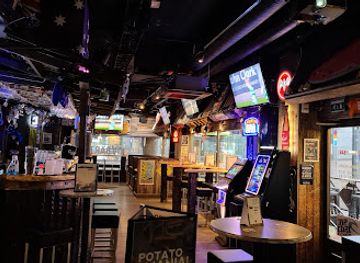
Eira is not a Helsinki nightlife district, and its evenings tend to be calm, residential and shaped by restaurants, cafés and the sea rather than by clubs. A modest selection of places to eat and drink can be found along Tehtaankatu, Laivurinkatu and nearby southern streets, making the area suitable for a quiet dinner or a drink close to accommodation. For cocktail bars, live music and a denser choice of late venues, visitors generally continue north into Punavuori, the Design District or the city centre. After dark, the waterfront and apartment streets are atmospheric but comparatively hushed, so visitors should avoid treating them as entertainment zones and keep noise low near homes. The neighbourhood’s evening appeal lies in illuminated façades, open maritime views and the transition from local dining streets to the darker shoreline, rather than in a large organised club scene.
-
Irish pub
Molly Malone's Irish Bar
Discover the heart of Ireland in Helsinki at Molly Malone's Irish Bar, where good drinks and great company come together.
6 min drive · 1.9 km from neighbourhood centre
-
Bar
The Riff
Experience the vibrant nightlife of Helsinki at The Riff, a bar known for its eclectic drinks, live music, and lively atmosphere.
14 min walk · 1.1 km from neighbourhood centre
-
Cocktail bar
Liberty or Death
Experience the finest cocktails in Helsinki at Liberty or Death, where mixology meets a vibrant atmosphere for an unforgettable night out.
15 min walk · 1.2 km from neighbourhood centre
-
Bar
One Pint Pub
Discover One Pint Pub in Helsinki, where vibrant atmosphere meets a rich selection of local and international beers.
15 min walk · 1.2 km from neighbourhood centre


Best nightclubs in Eira
Eira is not a Helsinki nightlife district, and its evenings tend to be calm, residential and shaped by restaurants, cafés and the sea rather than by clubs. A modest selection of places to eat and drink can be found along Tehtaankatu, Laivurinkatu and nearby southern streets, making the area suitable for a quiet dinner or a drink close to accommodation. For cocktail bars, live music and a denser choice of late venues, visitors generally continue north into Punavuori, the Design District or the city centre. After dark, the waterfront and apartment streets are atmospheric but comparatively hushed, so visitors should avoid treating them as entertainment zones and keep noise low near homes. The neighbourhood’s evening appeal lies in illuminated façades, open maritime views and the transition from local dining streets to the darker shoreline, rather than in a large organised club scene.
-
Night club
On the Rocks
On the Rocks: Dive into Helsinki's vibrant nightlife with live music, great drinks, and an unforgettable atmosphere in this iconic night club.
6 min drive · 1.9 km from neighbourhood centre
-
Night club
Apollo Live Club
Discover the heart of Helsinki's nightlife at Apollo Live Club, where live music, comedy, and vibrant energy come together for an unforgettable experience.
5 min drive · 1.6 km from neighbourhood centre
-
Night club
Aussie Bar
Experience the vibrant nightlife at Aussie Bar in Helsinki, where live music meets a lively bar atmosphere, perfect for every traveler.
5 min drive · 1.7 km from neighbourhood centre
-
Night club
Ravintola Kaarle XII
Dive into Helsinki's nightlife at Ravintola Kaarle XII, where electrifying music and a vibrant atmosphere await every weekend.
17 min walk · 1.4 km from neighbourhood centre



Best shops in Eira
Shopping in Eira is limited and local in character, reflecting the neighbourhood’s primarily residential role. The main streets, particularly Tehtaankatu and Laivurinkatu, provide everyday services, cafés and small businesses rather than a large concentration of specialist retail. Visitors looking for design shops, independent fashion, books, records or a broader choice of boutiques can walk north towards Punavuori and Helsinki’s Design District, which lies nearby but outside Eira. The distinction is useful: Eira’s commercial interest comes from combining a coffee stop or local purchase with an architectural and waterfront walk, not from a dedicated shopping boulevard. Small food shops and neighbourhood services may be useful for self-catering visitors, while the larger market and retail offer around central Helsinki is accessible by tram or on foot. Stock, opening arrangements and the survival of individual businesses naturally change, so the area is best approached as a residential shopping environment rather than a retail destination.
-
Souvenir store
Reindeer Souvenirs Shop & Kiosk
Explore authentic Finnish souvenirs at the Reindeer Souvenirs Shop & Kiosk in Helsinki, featuring handcrafted treasures and traditional reindeer products.
5 min drive · 1.5 km from neighbourhood centre
-
Women's clothing store
Kaunis Veera second hand shop
Explore unique women's fashion at Kaunis Veera, Helsinki's charming second-hand shop for sustainable style enthusiasts.
8 min walk · 0.6 km from neighbourhood centre
-
Gift shop
Santa's Souvenir Shop
Explore Santa's Souvenir Shop in Helsinki for unique gifts and delightful Finnish memorabilia that capture the magic of the holiday spirit.
6 min drive · 2.0 km from neighbourhood centre
-
Boutique
Hetzukoto
Explore Hetzukoto: A Boutique Haven of Finnish Craftsmanship in the Heart of Helsinki, Perfect for Unique Souvenirs and Local Artistry.
13 min walk · 1.0 km from neighbourhood centre


Eira essentials
Getting There
Getting Around
Safety
Emergency Situations
Do's and Don'ts
Local Tips

From Eve
Local phrases worth knowing
You don't need to get them perfect. A few words go a long way, and locals appreciate the effort.
Basics
| English | Local | Say it |
|---|---|---|
| Hello | Hei | [hay] |
| Goodbye | Näkemiin | [nah-keh-meen] |
| Yes | Kyllä | [kuu-laa] |
| No | Ei | [ay] |
| Please/You're welcome | Ole hyvä | [oh-le huu-vaa] |
| Thank you | Kiitos | [kee-tohss] |
| Excuse me/Sorry | Anteeksi | [ahn-tehk-see] |
| How are you? | Miten voit? | [mee-ten voyt] |
| Fine. And you? | Hyvin. Entä sinä? | [hyy-veen. en-taa see-naa] |
| Do you speak English? | Puhutko englantia? | [poo-hoot-koh eng-lan-tee-ah] |
| I don't understand | En ymmärrä | [en um-marr-aa] |
Eating & Drinking
| English | Local | Say it |
|---|---|---|
| I'd like to see the menu, please | Saisinko ruokalistan, kiitos | [sai-sin-koh roo-oh-ka-lee-stahn, kee-tohss] |
| I don't eat meat | En syö lihaa | [en syoo lee-haa] |
| Cheers! | Kippis! | [kip-pis] |
| I would like to pay, please | Haluan maksaa, kiitos | [hah-lu-ahn mahk-saa, kee-tohss] |
Emergencies
| English | Local | Say it |
|---|---|---|
| Help! | Apua! | [ah-poo-ah] |
| Go away! | Mene pois! | [meh-neh poys] |
| Call the Police! | Soita poliisille! | [soy-tah poh-lee-see-leh] |
| Call a doctor! | Soita lääkärille! | [soy-tah lah-kah-rih-leh] |
| I'm lost | Olen eksynyt | [oh-lehn eks-oo-nuut] |
| I'm ill | Olen sairas | [oh-lehn sai-rahs] |
Shopping
| English | Local | Say it |
|---|---|---|
| I'd like to buy... | Haluan ostaa... | [hah-lu-ahn os-taa] |
| I'm just looking | Katson vain | [kaht-son vain] |
| How much is it? | Paljonko se maksaa? | [pahl-yon-koh seh mahk-saa] |
| That's too expensive | Se on liian kallis | [seh ohn lee-ahn kahl-lees] |
| Can you lower the price? | Voitko laskea hintaa? | [voyt-koh lah-say-ah hin-tah] |
Time & Numbers
| English | Local | Say it |
|---|---|---|
| What time is it? | Moneltako kello on? | [moh-nel-tah-koh kel-lo ohn] |
| It's one o'clock | Kello on yksi | [kel-lo ohn yks-ee] |
| Half past (10) | Puoli (kymmenen) | [poo-oh-lee (kuum-meh-nen)] |
| Morning | Aamu | [ah-moo] |
| Afternoon | Iltapäivä | [eel-tah-pai-vaa] |
| Evening | Ilta | [eel-tah] |
| Yesterday | Eilen | [ay-len] |
| Today | Tänään | [tah-nahn] |
| Tomorrow | Huomenna | [hoo-oh-men-nah] |
| 1 | Yksi | [yks-ee] |
| 2 | Kaksi | [kahk-see] |
| 3 | Kolme | [kohl-meh] |
| 4 | Neljä | [nel-yah] |
| 5 | Viisi | [vee-see] |
| 6 | Kuusi | [koo-see] |
| 7 | Seitsemän | [sayt-seh-mahn] |
| 8 | Kahdeksan | [kah-dehk-sahn] |
| 9 | Yhdeksän | [yhd-ehk-sahn] |
| 10 | Kymmenen | [kuum-meh-nen] |
Transport & Directions
| English | Local | Say it |
|---|---|---|
| Where's a/the...? | Missä on... | [mee-ssah ohn] |
| What's the address? | Mikä on osoite? | [mee-kah ohn oh-soy-teh] |
| Can you show me (on the map)? | Voitko näyttää minulle (kartalla)? | [voyt-koh nayt-taa mee-null-leh (kar-tahl-lah)] |
| When's the next (bus)? | Milloin on seuraava (bussi)? | [mil-loin ohn seur-ah-ah-vah (boos-see)] |
| A ticket (to ....) | Lippu (jonnekin) | [lip-poo (yon-ne-keen)] |
History of Eira
From Southern Outskirts to Planned District
Eira developed as Helsinki expanded southwards beyond the older central built-up area in the late nineteenth and early twentieth centuries. The district was planned primarily for housing, and its location beside the rocky shoreline helped create a residential character distinct from the commercial centre. Streets, small parks and carefully positioned apartment buildings were laid out to take advantage of light, sea air and views. The name Eira became closely associated with Eira Hospital, whose presence helped give the area its identity. Unlike districts shaped mainly by factories or port commerce, Eira was conceived as an orderly residential quarter with a strong architectural profile.
Art Nouveau Apartment Architecture
The neighbourhood’s defining building stock emerged during Helsinki’s Art Nouveau period, particularly in the years before the First World War. Architects used local granite, asymmetrical compositions, enclosed balconies, curved forms and decorative masonry to create apartment houses that were individually expressive while still fitting into a coherent streetscape. Eiranpuisto and the surrounding streets preserve this period’s ambition especially clearly. The architecture was not merely ornamental: buildings represented the growth of a modern urban middle class and the wish to create healthier, more spacious housing in the expanding capital.
Eira Hospital and Local Identity
Eira Hospital, completed in the early twentieth century and associated with architect Lars Sonck, became one of the neighbourhood’s most recognisable buildings. Its Art Nouveau design reflects the period’s interest in combining medical care with light, air and a humane setting. The hospital also helped anchor the district’s name and public identity, even though Eira itself remained primarily residential. Nearby institutional and residential buildings together made the area a notable example of Helsinki’s early modern urban development, linking architectural experimentation with changing ideas about public health and city living.
A Preserved Residential Shoreline
During the later twentieth century, Eira retained much of its residential character while Helsinki’s southern waterfront and neighbouring districts changed around it. Restoration and sensitive redevelopment have kept the Art Nouveau streetscape prominent, although the area’s housing has become associated with some of the city’s most sought-after addresses. The Eiranranta waterfront development added newer buildings and public walking space without erasing the older inner streets. Today Eira is valued less as a concentration of large institutions than as a compact architectural and maritime environment within the wider southern Helsinki cityscape.
Eira in Photos
Browse through our photo collection highlighting the charm and character of the destination.
Neighbourhoods near Eira
The closest neighbourhoods to Eira, if you have time for more than one stop.
-

-

-

-


Swipe for more neighbourhoods
Explore more
Explore more of Helsinki
Helsinki blends Finnish design, seaside islands, Nordic architecture and lively market culture, while Suomenlinna, museums and saunas define Helsinki sightseeing.
Explore Helsinki