

Kamppi (Helsinki) Travel Guide - Free
Explore Kamppi in Helsinki with Evendo's free guide. Find the best shops, historic streets, restaurants, and gems on web or mobile.


Kamppi in Helsinki combines design, museums, shopping, live music, cafés and the Chapel of Silence in a highly walkable central urban district.
Central Streets and Everyday Helsinki
Kamppi occupies a busy yet remarkably walkable part of central Helsinki, stretching west from the railway station towards Hietalahti and bordered by major routes including Mannerheimintie, Fredrikinkatu and Bulevardi. Its name recalls the Swedish word kamp, meaning camp, reflecting the area’s former military use. Today, the district combines office buildings, apartment blocks, shopping arcades, transport facilities, cultural venues and broad public squares. The result is a piece of Helsinki that feels practical and metropolitan without losing the city’s measured pace.Read more about Kamppi
Architecture, Culture and Public Space
From Transport Hub to Cultural Stop
Best attractions in Kamppi
Kamppi’s attractions are concentrated within an easily walkable central area. The Chapel of Silence, a small wooden structure beside Narinkka Square, creates a calm interior amid the movement of the shopping and transport district. At Tennispalatsi, the Helsinki Art Museum presents exhibitions in a former sports and commercial building, while the same complex contains cinemas and other leisure facilities. Nearby Lasipalatsi is a notable functionalist building and houses Amos Rex, whose galleries extend below the adjacent square with distinctive sculptural skylights. Narinkka Square itself is useful for observing Helsinki’s daily rhythms, public art and seasonal activity. Along the southern side of the neighbourhood, Hietalahti brings a market setting and a more open urban landscape. Bulevardi, Annankatu and Fredrikinkatu add architectural interest, cafés and independent businesses, making the transition between major cultural venues and ordinary neighbourhood streets part of the sightseeing experience.
-
Tourist attraction
Kamppi Chapel
Find serenity in the heart of Helsinki at the Kamppi Chapel, a modern architectural marvel offering a peaceful escape from the city's hustle.
4 min walk · 0.3 km from neighbourhood centre
-
Tourist attraction
Helsinki Art Museum
Explore Finnish and international modern art at Tennis Palace, and discover art installations throughout the city of Helsinki.
4 min walk · 0.3 km from neighbourhood centre
-
Tourist attraction
Lasipalatsi Square
Experience Helsinki's vibrant heart: Lasipalatsi Square, where history meets modern culture & events in a bustling urban setting.
5 min walk · 0.4 km from neighbourhood centre


Best landmarks in Kamppi
Kamppi’s landmarks express the layered way Helsinki has developed from military ground into a dense commercial and cultural district. The Chapel of Silence is the neighbourhood’s most distinctive contemporary structure, with a rounded timber form designed as a place for quiet reflection rather than conventional worship. Across Narinkka Square, the Kamppi complex is a major piece of modern transport and retail infrastructure, incorporating the underground bus terminal and metro access. Lasipalatsi, dating from the functionalist era of the 1930s, remains important for its streamlined architecture and lively relationship with the street; Amos Rex now extends its cultural presence below the adjoining square. Tennispalatsi is another recognisable local building, transformed from a former sports and commercial facility into a museum and leisure complex. The street walls along Bulevardi, Annankatu and Fredrikinkatu provide a contrasting record of nineteenth- and twentieth-century urban growth.
-
Chapel
Kamppi Chapel
Discover the serene beauty of Kamppi Chapel in Helsinki, a modern architectural gem offering peace and reflection in the city's vibrant heart.
4 min walk · 0.3 km from neighbourhood centre
-
Art museum
Helsinki Art Museum
Explore the vibrant collections and exhibitions at Helsinki Art Museum, where Finnish and international art come alive amidst modern architecture.
4 min walk · 0.3 km from neighbourhood centre
-
Plaza
Narinkka Square
Experience the vibrant atmosphere of Narinkka Square, a central plaza in Helsinki offering shopping, dining, and cultural events, perfect for every traveler.
4 min walk · 0.3 km from neighbourhood centre
-
Tourist attraction
Urho Kekkonen Memorial
Explore the Urho Kekkonen Memorial, a striking tribute in Helsinki that embodies Finland's rich political history and cultural heritage.
13 min walk · 1.0 km from neighbourhood centre


Explore Kamppi on the map
A handpicked selection of must-see spots in Kamppi, mapped for you.
Best hotels in Kamppi
Best restaurants in Kamppi
Kamppi has one of central Helsinki’s broadest dining mixes, shaped by commuter traffic, office workers, students and the district’s cultural venues. The Kamppi shopping centre includes a range of casual places to eat, while the Kortteli restaurant area offers several cuisines in a shared upper-level setting. Around Annankatu, Eerikinkatu, Fredrikinkatu and Bulevardi, visitors find cafés, bakeries, modern Nordic cooking, international restaurants and relaxed bars that suit both quick meals and longer evenings. Hietalahti adds market-related food activity and a more spacious southern edge to the neighbourhood’s dining map. Finnish ingredients and contemporary Helsinki cooking appear alongside familiar European and global styles, reflecting Kamppi’s central location rather than a single local culinary tradition. Because this is a heavily used city district, the scene ranges from practical lunch counters to destination dining, with cultural venues such as Tennispalatsi and Amos Rex making nearby cafés particularly convenient before or after exhibitions and films.
-
Hawaiian
Restaurant HOKU
Discover Restaurant HOKU - where Hawaiian charm meets Asian flair in Helsinki's vibrant dining scene.
4 min walk · 0.3 km from neighbourhood centre
-
South East Asian
Restaurant Farang
Experience authentic South East Asian cuisine at Restaurant Farang in Helsinki – where flavors meet culture.
5 min walk · 0.4 km from neighbourhood centre
-
Seafood
Restaurant Fisken på Disken
Discover the finest seafood at Restaurant Fisken på Disken in Helsinki – where fresh flavors meet cozy maritime charm.
3 min walk · 0.3 km from neighbourhood centre
-
Restaurant
Kosmos
Experience the essence of Finnish cuisine at Kosmos – where tradition meets modern culinary artistry in Helsinki.
6 min walk · 0.4 km from neighbourhood centre


Best bars in Kamppi
Kamppi’s evening life is more varied than its daytime transport role suggests, although it is concentrated around established venues and restaurant streets rather than a single nightlife strip. The area around Urho Kekkosen katu is associated with Helsinki’s live-music culture, including the long-established Tavastia club and its smaller adjoining performance space, Semifinal. Elsewhere, bars and late-opening restaurants cluster around Eerikinkatu, Annankatu, Fredrikinkatu and the streets near the shopping centre. The programme changes frequently, so nightlife can mean a concert, a club evening, a quiet drink or a meal after a cinema visit. Narinkka Square and the main transport corridors remain active after dark, while residential side streets call for lower noise. Visitors should distinguish Kamppi’s established music venues from nearby nightlife in the central districts beyond its informal boundaries.
-
Pub
Bierhuis Rotterdam
Experience the lively atmosphere and delightful flavors at Bierhuis Rotterdam, Helsinki's go-to pub for locals and tourists alike.
3 min walk · 0.2 km from neighbourhood centre
-
Bar
Ravintola Teerenpeli
Discover the essence of Finnish cuisine and craft beverages at Ravintola Teerenpeli, a lively bar and restaurant in the heart of Helsinki.
4 min walk · 0.3 km from neighbourhood centre
-
Bar
Aussie Bar
Experience the vibrant nightlife of Helsinki at Aussie Bar, where live music meets a diverse drink selection for an unforgettable evening.
4 min walk · 0.3 km from neighbourhood centre
-
Pub
Pub Ikkuna
Discover the heart of Helsinki's nightlife at Pub Ikkuna, where traditional Finnish hospitality meets a contemporary bar experience.
4 min walk · 0.3 km from neighbourhood centre


Best nightclubs in Kamppi
Kamppi’s evening life is more varied than its daytime transport role suggests, although it is concentrated around established venues and restaurant streets rather than a single nightlife strip. The area around Urho Kekkosen katu is associated with Helsinki’s live-music culture, including the long-established Tavastia club and its smaller adjoining performance space, Semifinal. Elsewhere, bars and late-opening restaurants cluster around Eerikinkatu, Annankatu, Fredrikinkatu and the streets near the shopping centre. The programme changes frequently, so nightlife can mean a concert, a club evening, a quiet drink or a meal after a cinema visit. Narinkka Square and the main transport corridors remain active after dark, while residential side streets call for lower noise. Visitors should distinguish Kamppi’s established music venues from nearby nightlife in the central districts beyond its informal boundaries.
-
Night club
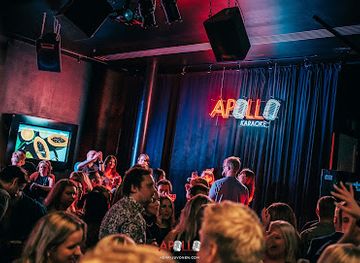
Apollo Live Club
Discover the heart of Helsinki's nightlife at Apollo Live Club, where live music, comedy, and a lively pub atmosphere await.
6 min walk · 0.5 km from neighbourhood centre
-
Night club
Aussie Bar
Discover the lively atmosphere of Aussie Bar, a top night club and live music venue in Helsinki, perfect for unforgettable nights out.
4 min walk · 0.3 km from neighbourhood centre
-
Karaoke bar
Bar IHKU Helsinki
Experience the vibrant karaoke culture at Bar IHKU Helsinki, where everyone is a star and every night is filled with unforgettable performances.
4 min walk · 0.3 km from neighbourhood centre
-
Night club
El Patron Club & Lounge
Immerse yourself in Helsinki's nightlife at El Patron Club & Lounge, where music, dancing, and vibrant energy create unforgettable experiences.
5 min walk · 0.4 km from neighbourhood centre


Best shops in Kamppi
Shopping in Kamppi ranges from large-scale contemporary retail to small specialist businesses on the surrounding streets. The Kamppi shopping centre provides the district’s most concentrated selection of clothing, design, beauty, food and everyday retail, with Narinkka Square serving as its principal public forecourt. Visitors looking for a more independent atmosphere can continue along Fredrikinkatu, Annankatu, Eerikinkatu and Bulevardi, where cafés, interiors shops, boutiques, bookshops and specialist retailers are interspersed with offices and apartment buildings. Hietalahti, at the southern edge of the neighbourhood, contributes a market setting whose character varies according to the season and current trading arrangements. The area is useful for browsing Finnish design and contemporary urban goods, but it is not a single traditional craft quarter; its appeal lies in the contrast between a major central shopping complex, older commercial streets and the market-oriented atmosphere towards Hietalahti.
-
Gift shop
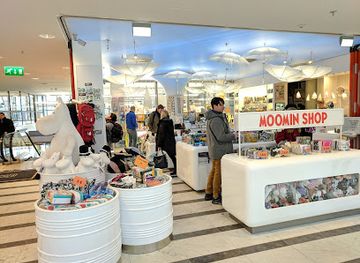
Moomin Shop Lasipalatsi
Explore the whimsical Moomin Shop Lasipalatsi in Helsinki - a charming destination for unique gifts, books, clothing, and toys inspired by Tove Jansson's beloved characters.
5 min walk · 0.4 km from neighbourhood centre
-
Gift shop
Flying Tiger Copenhagen Kamppi
Explore the vibrant and whimsical world of Flying Tiger Copenhagen Kamppi, where unique gifts and playful home goods await every visitor.
2 min walk · 0.2 km from neighbourhood centre
-
Novelty store
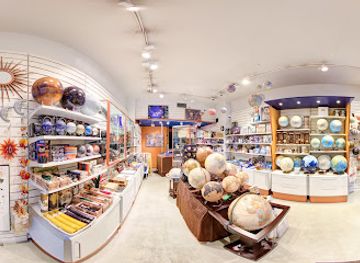
Heureka Shop
Discover the charm of Finnish creativity at Heureka Shop, where unique souvenirs and delightful gifts await every traveler in Helsinki.
2 min walk · 0.2 km from neighbourhood centre
-
Gift shop
Alnilam
Discover unique Finnish gifts at Alnilam, a boutique shop in Helsinki offering a curated selection of local crafts and treasures for every traveler.
4 min walk · 0.3 km from neighbourhood centre


Kamppi essentials
Getting There
Getting Around
Safety
Emergency Situations
Do's and Don'ts
Local Tips

From Eve
Local phrases worth knowing
You don't need to get them perfect. A few words go a long way, and locals appreciate the effort.
Basics
| English | Local | Say it |
|---|---|---|
| Hello | Hei | [hay] |
| Goodbye | Näkemiin | [nah-keh-meen] |
| Yes | Kyllä | [kuh-lah] |
| No | Ei | [ay] |
| Please/You're welcome | Ole hyvä | [oh-le hoo-vah] |
| Thank you | Kiitos | [kee-tohs] |
| Excuse me/Sorry | Anteeksi | [ahn-tehk-see] |
| How are you? | Miten voit? | [mee-ten voyt] |
| Fine. And you? | Hyvin. Entä sinä? | [hoo-veen. en-ta see-nah] |
| Do you speak English? | Puhutko englantia? | [poo-hoot-koh eng-lahn-tee-ah] |
| I don't understand | En ymmärrä | [ayn um-mahr-rah] |
Eating & Drinking
| English | Local | Say it |
|---|---|---|
| I'd like to see the menu, please | Haluan nähdä ruokalistan, kiitos | [hah-lu-ahn nah-dah roo-kah-lee-stahn, kee-tohs] |
| I don't eat meat | En syö lihaa | [ayn syuh lee-hah] |
| Cheers! | Kippis! | [kep-pees] |
| I would like to pay, please | Haluan maksaa, kiitos | [hah-lu-ahn mahk-sah, kee-tohs] |
Emergencies
| English | Local | Say it |
|---|---|---|
| Help! | Apua! | [ah-poo-ah] |
| Go away! | Mene pois! | [meh-neh pois] |
| Call the Police! | Soita poliisille! | [soi-tah poh-lee-see-leh] |
| Call a doctor! | Soita lääkärille! | [soi-tah lah-kah-ree-leh] |
| I'm lost | Olen eksyksissä | [oh-lehn ehk-sehk-si-sah] |
| I'm ill | Olen sairas | [oh-lehn sai-rahs] |
Shopping
| English | Local | Say it |
|---|---|---|
| I'd like to buy... | Haluan ostaa... | [hah-lu-ahn oh-stah] |
| I'm just looking | Katson vain | [kaht-sohn vain] |
| How much is it? | Paljonko se maksaa? | [pahl-yon-koh seh mahk-sah] |
| That's too expensive | Se on liian kallis | [se ohn lee-ahn kahl-lis] |
| Can you lower the price? | Voitteko laskea hintaa? | [voy-tteh-koh lah-skeh-ah hin-tah] |
Time & Numbers
| English | Local | Say it |
|---|---|---|
| What time is it? | Paljonko kello on? | [pahl-yon-koh kehl-lo ohn] |
| It's one o'clock | Kello on yksi | [keh-lo ohn yks-ee] |
| Half past (10) | Puoli (10) | [pwoh-lee (ten)] |
| Morning | Aamu | [ah-moo] |
| Afternoon | Iltapäivä | [eel-tah-pah-ee-vah] |
| Evening | Ilta | [eel-tah] |
| Yesterday | Eilen | [ay-len] |
| Today | Tänään | [tah-nahn] |
| Tomorrow | Huomenna | [hoo-oh-men-nah] |
| 1 | Yksi | [yks-ee] |
| 2 | Kaksi | [kahk-see] |
| 3 | Kolme | [kohl-meh] |
| 4 | Neljä | [nel-yah] |
| 5 | Viisi | [vee-see] |
| 6 | Kuusi | [koo-see] |
| 7 | Seitsemän | [sayt-seh-mahn] |
| 8 | Kahdeksan | [kah-dehk-sahn] |
| 9 | Yhdeksän | [uh-dehk-sahn] |
| 10 | Kymmenen | [kuum-meh-nehn] |
Transport & Directions
| English | Local | Say it |
|---|---|---|
| Where's a/the...? | Missä on... | [mee-ssah ohn] |
| What's the address? | Mikä on osoite? | [mee-kah ohn oh-soy-teh] |
| Can you show me (on the map)? | Voitko näyttää minulle (kartalla)? | [voyt-koh nahy-tah min-ool-leh (kar-tahl-lah)] |
| When's the next (bus)? | Milloin on seuraava (bussi)? | [meel-loin ohn seur-ah-ah-vah (boo-see)] |
| A ticket (to ....) | Lippu (...) | [leep-poo] |
History of Kamppi
A Military Camp on Helsinki’s Edge
Kamppi’s name derives from the Swedish kamp, or camp, and refers to the area’s historical association with military activity outside Helsinki’s older core. In the eighteenth and nineteenth centuries, open ground west of the settled centre was used for drilling and encampments. The district was not yet the dense urban neighbourhood seen today; its position beyond the oldest commercial streets made it suitable for activities requiring space, while roads travelling west began to establish its connection with the expanding city.
Urban Expansion in the Nineteenth Century
As Helsinki grew during the nineteenth century, Kamppi was gradually absorbed into the city’s urban fabric. Streets were laid out, housing and commercial premises replaced open land, and the built environment became increasingly associated with the stone architecture of central Helsinki. Military uses did not disappear immediately, but the area’s role shifted towards transport, residence and commerce. Its position between the historic centre and the western districts helped make it an important route through the expanding capital.
Transport and Functionalist Modernism
The twentieth century brought major changes to Kamppi’s appearance and purpose. Traffic corridors, bus services and commercial development gave the district a strongly urban and practical character. The 1930s Lasipalatsi, designed in the functionalist spirit, became one of the area’s most recognisable buildings, distinguished by its glass surfaces, clean lines and relationship to the street. Later, Tennispalatsi developed into a cultural and leisure complex, reinforcing Kamppi’s position as a meeting point between transport, entertainment and everyday shopping.
Redevelopment Around Narinkka Square
The early twenty-first-century redevelopment of the Kamppi transport and shopping area reshaped the district around the large Narinkka Square. A complex that combined an underground bus terminal, metro access, retail and public space replaced much of the former open bus-station landscape. The area’s name also preserves a historical commercial memory: the Narinkka market was associated with Jewish traders and second-hand goods in nineteenth- and early twentieth-century Helsinki. The contemporary square, together with the Chapel of Silence, gives that heavily trafficked part of Kamppi a more civic and contemplative dimension.
Kamppi in Photos
Browse through our photo collection highlighting the charm and character of the destination.
Neighbourhoods near Kamppi
The closest neighbourhoods to Kamppi, if you have time for more than one stop.
-

-

-

-


Swipe for more neighbourhoods
Explore more
Explore more of Helsinki
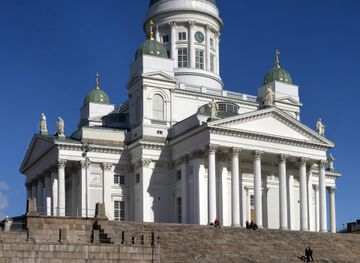
Helsinki blends Finnish design, seaside islands, Nordic architecture and lively market culture, while Suomenlinna, museums and saunas define Helsinki sightseeing.
Explore Helsinki