

Porte d'Aquitaine, Bordeaux Travel Guide
Free Guide: Discover Bordeaux's iconic Porte d'Aquitaine, a majestic gateway to history and culture on Place de la Victoire, leading to the vibrant Rue Sainte-Catherine.


A brief summary of Porte d'Aquitaine
Discover Bordeaux's iconic Porte d'Aquitaine, a majestic gateway to history and culture on Place de la Victoire, leading to the vibrant Rue Sainte-Catherine.
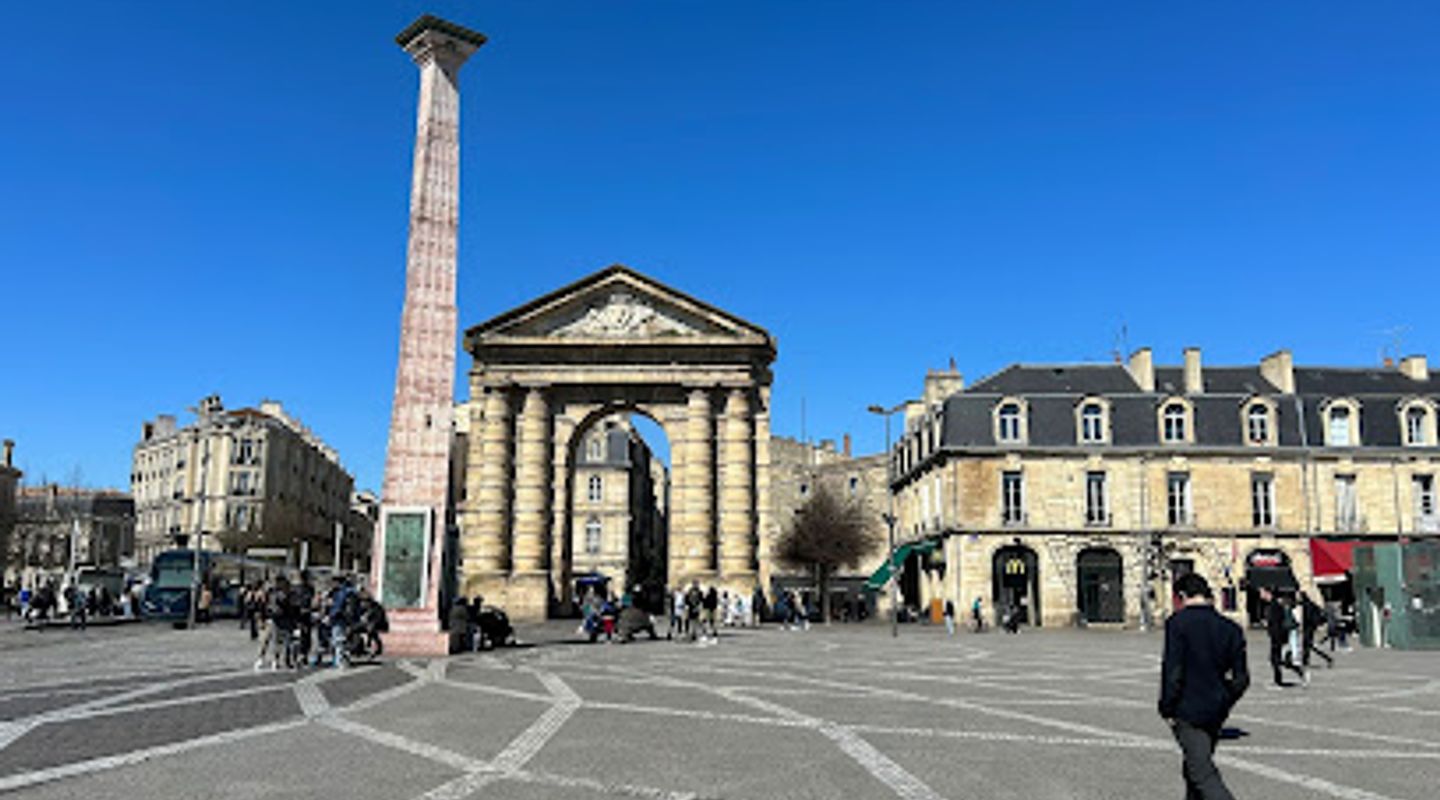
The Porte d'Aquitaine, a magnificent 18th-century triumphal arch, stands proudly on Place de la Victoire in Bordeaux. Built between 1749 and 1754, it marks a grand entrance to the city and the beginning of the bustling Rue Sainte-Catherine. Originally named Porte Saint-Julien, it was erected to honor the Duke of Aquitaine and replace a medieval gate. Its neoclassical design, adorned with intricate sculptures and a triangular pediment, reflects the architectural ambitions of the era. Today, the Porte d'Aquitaine serves as a vibrant social hub, surrounded by cafes, shops, and the energy of student life, offering a picturesque glimpse into Bordeaux's rich history and architectural grandeur. It's a must-see landmark that embodies the city's blend of historical significance and modern vibrancy, making it a perfect starting point for exploring Bordeaux.
Opening hours
- Every dayOpen 24 hours
Opening hours as listed on the venue’s Google Business Profile. Hours can change for services and special events, so check with the venue before you go.
- Address
- Porte d'Aquitaine, Pl. de la Victoire, 33000 Bordeaux
Getting there
Public Transport
Walking
Taxi/Ride-Share
Driving
Discover more about Porte d'Aquitaine
Overview
The Porte d'Aquitaine, an iconic landmark in Bordeaux, France, stands as a testament to the city's rich history and architectural prowess. Located on the bustling Place de la Victoire, this triumphal arch serves as a gateway to the vibrant Rue Sainte-Catherine, one of the longest pedestrian streets in Europe. Its presence marks not just a physical entry point but also a symbolic passage into the heart of Bordeaux's cultural and historical landscape. Originally known as the Porte Saint-Julien, the Porte d'Aquitaine was constructed between 1749 and 1754, under the direction of architect André Portier. The gate was designed to honor the Duke of Aquitaine, a gesture that reflected the city's allegiance and pride. It replaced a former medieval gate that had become obsolete, symbolizing Bordeaux's transition from a fortified city to an open, modern metropolis. The construction was part of a broader urban planning initiative led by Intendant Tourny, aimed at beautifying and modernizing Bordeaux during the 18th century. The architecture of the Porte d'Aquitaine is a prime example of neoclassical design, drawing inspiration from ancient Roman triumphal arches. The structure is characterized by its imposing size, symmetrical proportions, and intricate detailing. The archway is flanked by Corinthian columns, supporting a triangular pediment adorned with sculptures and the coat of arms of Bordeaux. These elements combine to create a visually stunning monument that exudes grandeur and sophistication. The Place de la Victoire, where the Porte d'Aquitaine is situated, has a rich history of its own. In the Middle Ages, the area served as a fairground at the foot of the medieval fortifications. Over time, it evolved into a bustling marketplace and a gathering place for locals. In 1918, the square was renamed Place de la Victoire to commemorate the Allied victory in World War I, adding another layer of historical significance to the site. Today, the Place de la Victoire is a vibrant hub of activity, attracting students, tourists, and locals alike. The square is surrounded by cafes, restaurants, and shops, creating a lively atmosphere that is characteristic of Bordeaux. The presence of the Porte d'Aquitaine adds a touch of historical grandeur to the modern setting, making it a popular spot for photographs and a starting point for exploring the city. Rue Sainte-Catherine, which begins at the Porte d'Aquitaine, is a shopper's paradise, stretching for over a kilometer with a wide array of retail outlets, from high-end boutiques to popular chain stores. The street is always bustling with activity, offering a diverse and exciting experience for visitors. Walking along Rue Sainte-Catherine provides a glimpse into the contemporary culture of Bordeaux, where fashion, food, and entertainment converge. The Porte d'Aquitaine is more than just a monument; it is a symbol of Bordeaux's identity. It represents the city's ability to blend its rich history with modern innovation, creating a unique and captivating atmosphere. The gate serves as a reminder of Bordeaux's past, while also embracing its present and future. Visiting the Porte d'Aquitaine offers a multifaceted experience. For history enthusiasts, it provides a tangible connection to the city's past, allowing them to appreciate the architectural and cultural influences that have shaped Bordeaux. For architecture lovers, the gate is a stunning example of neoclassical design, showcasing the skill and artistry of its creators. For those simply looking to soak in the atmosphere of Bordeaux, the Place de la Victoire and Rue Sainte-Catherine offer a vibrant and engaging environment. The Porte d'Aquitaine is easily accessible by public transportation, with several tram and bus lines serving the Place de la Victoire. This makes it a convenient starting point for exploring other attractions in Bordeaux, such as the Musée d'Aquitaine, the Cathédrale Saint-André, and the Grand Théâtre. The area surrounding the Porte d'Aquitaine is also home to the University of Bordeaux, adding a youthful and energetic vibe to the neighborhood. The presence of students contributes to the diverse and dynamic atmosphere of the Place de la Victoire, making it a melting pot of ideas and cultures. In conclusion, the Porte d'Aquitaine is an essential landmark for any visitor to Bordeaux. Its historical significance, architectural beauty, and vibrant surroundings make it a must-see destination. Whether you are interested in history, architecture, or simply experiencing the local culture, the Porte d'Aquitaine offers a unique and unforgettable glimpse into the heart of Bordeaux. It stands as a proud symbol of the city's past, present, and future, inviting all who pass through its archway to discover the wonders that lie within.
Evendo Review Centre
 Google
Guest reviews
Explore Porte d'Aquitaine on the map
A handpicked selection of must-see spots near Porte d'Aquitaine, mapped for you.
Get your free copy of our complete guide to Porte d'Aquitaine, delivered straight to you.
Everything on this page, from opening hours and how to get there to Eve’s tips and the best time to go, in one PDF you can read offline, print or share.
Already have an account? Sign in
Your Porte d'Aquitaine guide is ready.
We'll send it to · Not you? Sign out

Getting your guide ready…
We are putting together a fresh copy of the Porte d'Aquitaine guide. This can take up to a minute.
This can take a few moments. If your browser asks, choose Allow so the download can start. You'll find the guide in your Downloads folder.
Nothing happened? Download it again
Sorry, the guide is taking longer than usual. Please try again in a minute, or get it by email instead.
Unlock the best of Porte d'Aquitaine
Skip-the-line tickets, guided tours with entry, and walking tours of the area, booked in a few clicks.

Other nearby places you may find interesting
The closest places of the same kind, if this one is not quite what you had in mind.
-
-
-
-
-


Swipe for more places
More to explore near Porte d'Aquitaine

 Best experiences near Porte d'Aquitaine
 Best hotels near Porte d'Aquitaine
 Best landmarks near Porte d'Aquitaine
 Best attractions near Porte d'Aquitaine
 Best shops near Porte d'Aquitaine
 Best restaurants near Porte d'Aquitaine
 Best bars near Porte d'Aquitaine
Do you manage this location?
Take control to get all the benefits, like improved information, better appearance, and stronger visibility across AI-powered discovery.
Explore more

Explore more of Bordeaux
Discover Bordeaux: A blend of world-class wines, historic architecture, and vibrant culture in the heart of southwestern France.
Explore Bordeaux
Explore more of France
Explore France: A land of romance, history, and unparalleled beauty, from the iconic streets of Paris to the serene landscapes of Provence and the luxury of the French Riviera.
Explore France
