Fontaine Roesselmann, Colmar Travel Guide
Free Guide: Discover the Fontaine Roesselmann in Colmar, a stunning monument by Auguste Bartholdi honoring a local hero and showcasing the city's rich history and artistic heritage.


A brief summary of Fontaine Roesselmann
Discover the Fontaine Roesselmann in Colmar, a stunning monument by Auguste Bartholdi honoring a local hero and showcasing the city's rich history and artistic heritage.
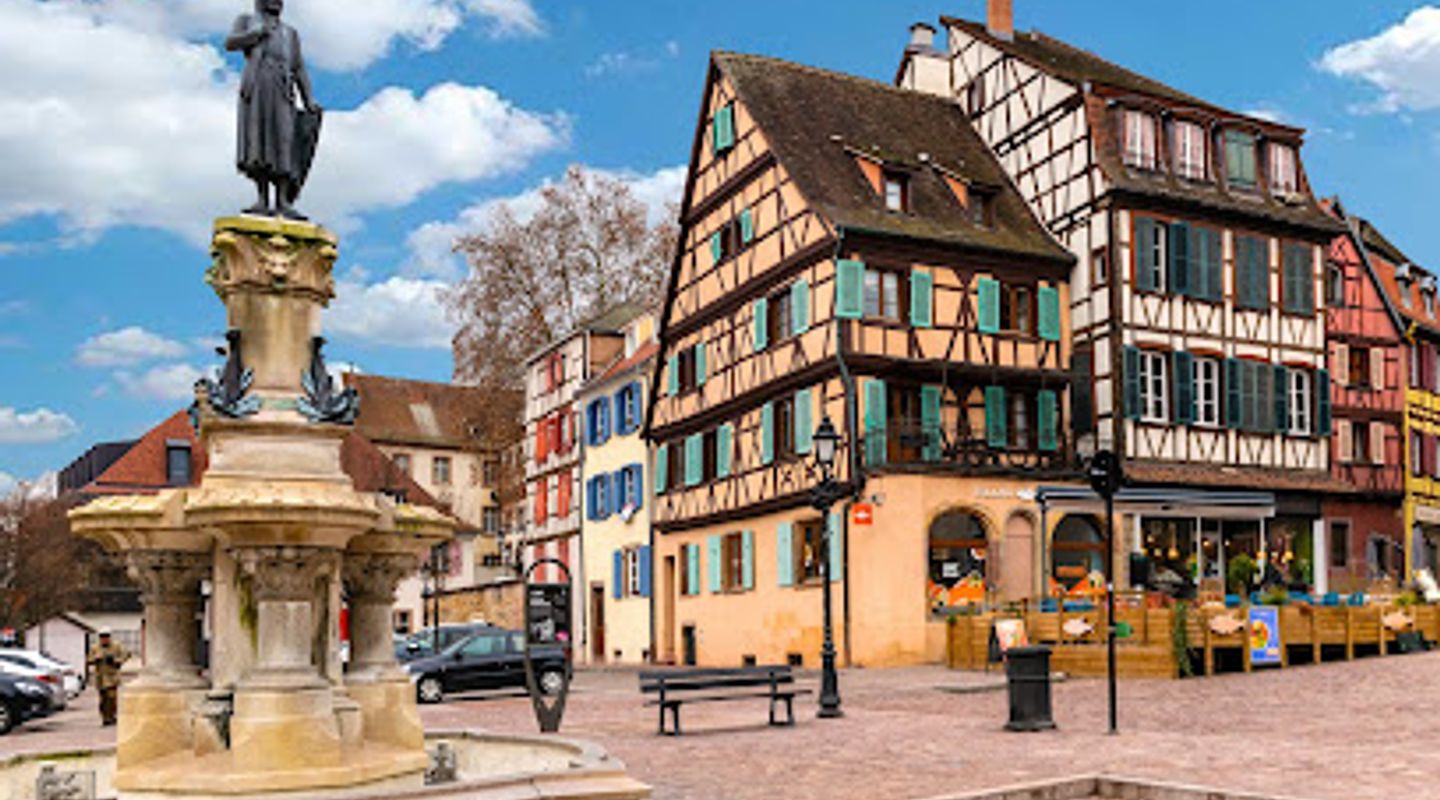
The Fontaine Roesselmann, an ornate fountain crowned with a statue of Jean Roesselmann, stands as a proud symbol of Colmar. Created in 1888 by Auguste Bartholdi, the celebrated sculptor of the Statue of Liberty, the fountain commemorates Roesselmann, a local hero who defended Colmar against the Bishop of Strasbourg in the 13th century. The statue's features are modeled after Hercule de Peyerimhoff, a 19th-century mayor who resisted German annexation. The fountain, with its white stone structure and bronze embellishments, embodies Colmar's rich history and artistic heritage, making it a must-see for visitors exploring the city's architectural gems. Its location on Place des 6 Montagnes Noires makes it easily accessible and a central point for exploring nearby attractions. The fountain is more than just a monument; it's a testament to Colmar's enduring spirit and a beautiful example of public art.
Opening hours
- Mon–Sat9 am–6 pm
- Sun10 am–1 pm
Opening hours as listed on the venue’s Google Business Profile. Hours can change for services and special events, so check with the venue before you go.
- Address
- Pl. des 6 Montagnes Noires, 68000 Colmar
- Phone
- Website
Getting there
Walking
Public Transport
Taxi/Ride-Share
Discover more about Fontaine Roesselmann
Overview
Fontaine Roesselmann, located on the Place des 6 Montagnes Noires in Colmar, is more than just a fountain; it's a historical and artistic landmark that encapsulates the spirit of the city. Erected in 1888, this monument pays homage to Jean Roesselmann, a local hero who valiantly defended Colmar against the Bishop of Strasbourg in 1262. Roesselmann's bravery and sacrifice have made him a symbol of Colmar's resilience and determination to protect its liberties. The fountain is the creation of Auguste Bartholdi, Colmar's most famous son and the sculptor of the Statue of Liberty. Bartholdi masterfully captured Roesselmann's likeness in a bronze statue that stands atop the fountain. Interestingly, the statue's features are not solely based on historical depictions of Roesselmann but also incorporate the likeness of Hercule de Peyerimhoff, a 19th-century mayor of Colmar who, like Roesselmann, resisted external forces and defended the city's autonomy. This blending of historical figures adds another layer of meaning to the monument, connecting Colmar's past struggles with its more recent history. The architecture of the Fontaine Roesselmann is noteworthy. The fountain is constructed from white stone and adorned with bronze elements. The design incorporates elements of Gothic fountains, with a polylobed shape and intricate details. Water flows from the mouths of four bronze fish, adding a dynamic element to the structure. The fountain's design reflects the artistic sensibilities of the 19th century, blending historical and allegorical elements to create a visually stunning and meaningful monument. The Fontaine Roesselmann has faced its share of adversity. During World War II, in 1943, the statue was removed with the intention of melting it down for resources. Fortunately, the statue was recovered, albeit damaged, at the port of the Rhine. Following the war, the statue was restored and reinstalled in 1945, reaffirming its importance to the city and its people. Today, the Fontaine Roesselmann stands as a testament to Colmar's rich history, artistic heritage, and enduring spirit. It is a popular gathering place for locals and tourists alike, a spot to admire the artistry, reflect on the city's past, and enjoy the ambiance of Colmar. The square surrounding the fountain provides a picturesque setting, making it a favorite subject for photographers and artists. Visiting the Fontaine Roesselmann offers more than just a visual experience. It provides an opportunity to connect with Colmar's history and culture. The fountain serves as a reminder of the city's struggles and triumphs, its artistic achievements, and its commitment to preserving its unique identity. As you stand before the fountain, take a moment to appreciate the artistry of Auguste Bartholdi, the bravery of Jean Roesselmann, and the resilience of the people of Colmar. Beyond its historical and artistic significance, the Fontaine Roesselmann is also a practical landmark. Its central location makes it an easy point of reference for navigating the city. It is within walking distance of many other attractions, including the Unterlinden Museum, the Little Venice district, and the Colmar Christmas Market. The fountain is also surrounded by shops, restaurants, and cafes, making it a convenient place to take a break and soak in the atmosphere of Colmar. The Fontaine Roesselmann is more than just a monument; it's a living symbol of Colmar's past, present, and future. It is a place where history, art, and community converge, creating a unique and memorable experience for all who visit. Whether you are a history buff, an art enthusiast, or simply a traveler seeking to experience the essence of Colmar, the Fontaine Roesselmann is a must-see destination. Colmar is also known for other works of Auguste Bartholdi, including the Fontaine Bruat and the Statue du Petit Vigneron, further solidifying the city's connection to the renowned sculptor. Exploring these other works provides a more comprehensive understanding of Bartholdi's artistic vision and his contribution to Colmar's cultural landscape. The Fontaine Roesselmann is not merely a static monument; it is an active participant in the city's cultural life. It has been featured in numerous paintings, photographs, and literary works, further enhancing its cultural significance. The fountain has also been featured in films and television shows, solidifying its place as a recognizable symbol of Colmar. The area surrounding the Fontaine Roesselmann is a vibrant hub of activity. The Place des 6 Montagnes Noires is a popular gathering place for locals and tourists. The square is often the site of events and festivals, adding to the fountain's appeal as a central landmark. The presence of shops, restaurants, and cafes in the area ensures that there is always something to see and do near the fountain. In conclusion, the Fontaine Roesselmann is an essential destination for anyone visiting Colmar. Its historical significance, artistic beauty, and central location make it a must-see landmark. Whether you are interested in history, art, or simply experiencing the charm of Colmar, the Fontaine Roesselmann will leave a lasting impression.
Evendo Review Centre
 Google
Guest reviews
Explore Fontaine Roesselmann on the map
A handpicked selection of must-see spots near Fontaine Roesselmann, mapped for you.
Get your free copy of our complete guide to Fontaine Roesselmann, delivered straight to you.
Everything on this page, from opening hours and how to get there to Eve’s tips and the best time to go, in one PDF you can read offline, print or share.
Already have an account? Sign in
Your Fontaine Roesselmann guide is ready.
We'll send it to · Not you? Sign out

Getting your guide ready…
We are putting together a fresh copy of the Fontaine Roesselmann guide. This can take up to a minute.
This can take a few moments. If your browser asks, choose Allow so the download can start. You'll find the guide in your Downloads folder.
Nothing happened? Download it again
Sorry, the guide is taking longer than usual. Please try again in a minute, or get it by email instead.
Unlock the best of Fontaine Roesselmann
Skip-the-line tickets, guided tours with entry, and walking tours of the area, booked in a few clicks.


Other nearby places you may find interesting
The closest places of the same kind, if this one is not quite what you had in mind.
-
-
-
-
-


Swipe for more places
More to explore near Fontaine Roesselmann

 Best experiences near Fontaine Roesselmann
 Best hotels near Fontaine Roesselmann
 Best landmarks near Fontaine Roesselmann
 Best attractions near Fontaine Roesselmann
 Best shops near Fontaine Roesselmann
 Best restaurants near Fontaine Roesselmann
 Best bars near Fontaine Roesselmann
Do you manage this location?
Take control to get all the benefits, like improved information, better appearance, and stronger visibility across AI-powered discovery.
Explore more

Explore more of Colmar
Discover the fairytale charm of Colmar, a picturesque town in France's Alsace region, known for its medieval architecture, colorful houses, scenic canals, and exceptional wines.
Explore Colmar
Explore more of France
Explore France: A land of romance, history, and unparalleled beauty, from the iconic streets of Paris to the serene landscapes of Provence and the luxury of the French Riviera.
Explore France