
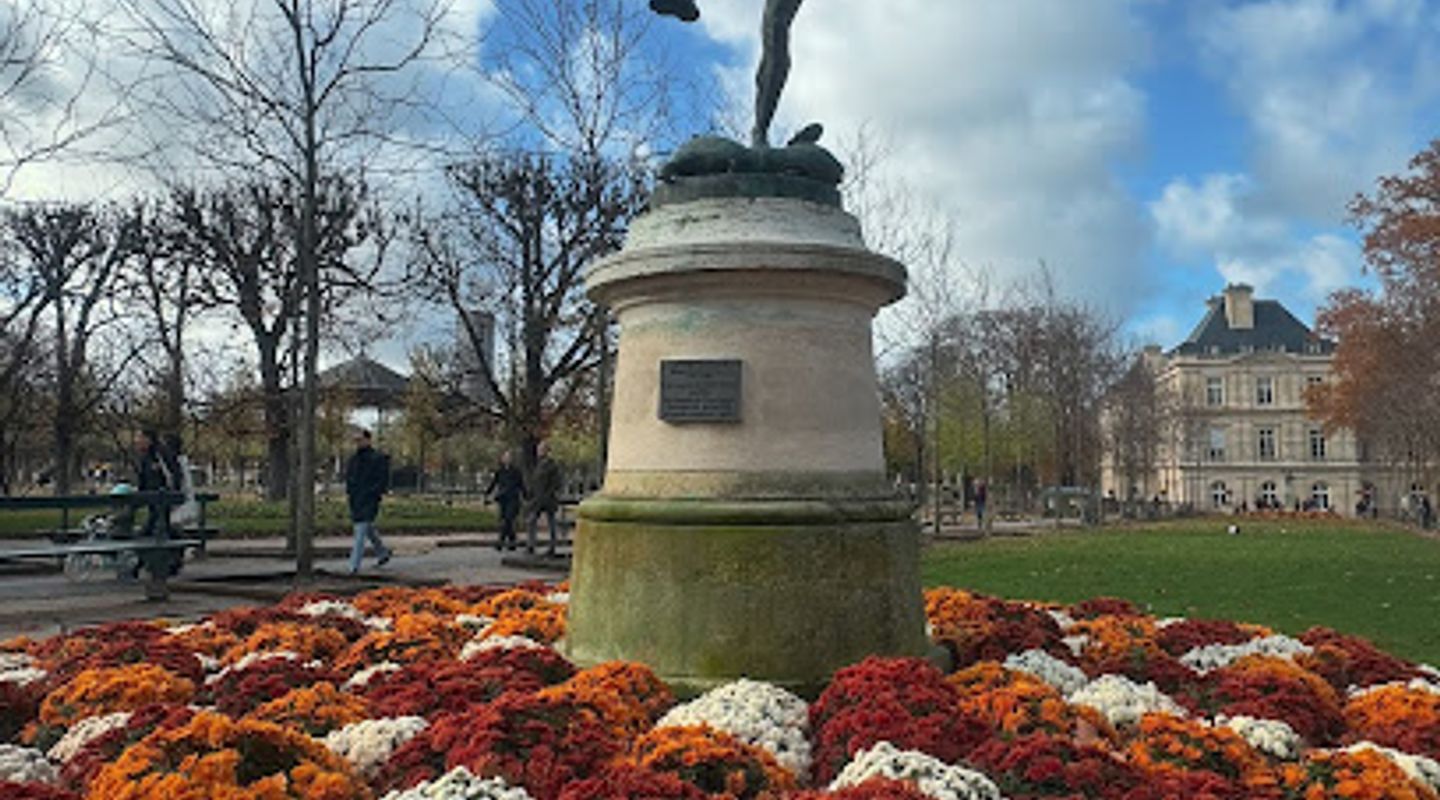
Faune dansant, Ile De France Travel Guide
A spirited bronze sculpture in the Jardin du Luxembourg, the Faune Dansant embodies Parisian charm and artistic history.
The Faune Dansant, or Dancing Faun, is a bronze statue created by Eugène-Louis Lequesne in 1850. Located in the Jardin du Luxembourg, this sculpture depicts a lively faun playing the flute while balancing on a wine skin, embodying a spirit of merriment and music.
A brief summary to Faune dansant
- Paris, 75006, FR

Know before you go
Hi, I'm Eve. Here are a few practical things to know before exploring Faune dansant.
- Take a stroll around the Jardin du Luxembourg to discover other statues and monuments.
- Visit the nearby Medici Fountain for another beautiful sight within the gardens.
- Bring a camera to capture the details of the sculpture and the surrounding gardens.
Do you manage this location?
Take control to get all the benefits, like improved information, better appearance, and stronger visibility across AI-powered discovery. Learn more about listing your business on Evendo
Activate your presenceOther nearby places you may find interesting
The closest places of the same kind, if this one is not quite what you had in mind.

Explore Faune dansant on the Map
A handpicked selection of must-see spots near Faune dansant, mapped for you.
Getting There
-
Walking
From the Saint-Germain-des-Prés metro station, walk along Boulevard Saint-Germain towards Rue de l'Ancienne Comédie. Turn onto Rue de l'Ancienne Comédie, and continue until you reach the Jardin du Luxembourg. The Faune Dansant is located near the entrance at Place Edmond Rostand. Walking is free.
-
Public Transport
Take the Metro Line 4 or 12 to the Vavin or Notre Dame des Champs station. From either station, walk towards the Jardin du Luxembourg. The Faune Dansant is located near the entrance at Place Edmond Rostand. A single metro ticket costs €2.50.
-
Taxi/Ride-share
Taxis and ride-sharing services are readily available throughout Paris. Request a ride to Jardin du Luxembourg, specifically near Place Edmond Rostand. A short taxi ride within the city center will likely cost between €10-€15.
Discover more about Faune dansant













Your all‑in‑one travel companion app
Explore expert travel guides, compare and book tours, experiences, hotels, and more—all from the palm of your hand. Download now for seamless trip planning wherever your wanderlust takes you.


Explore More of Ile De France
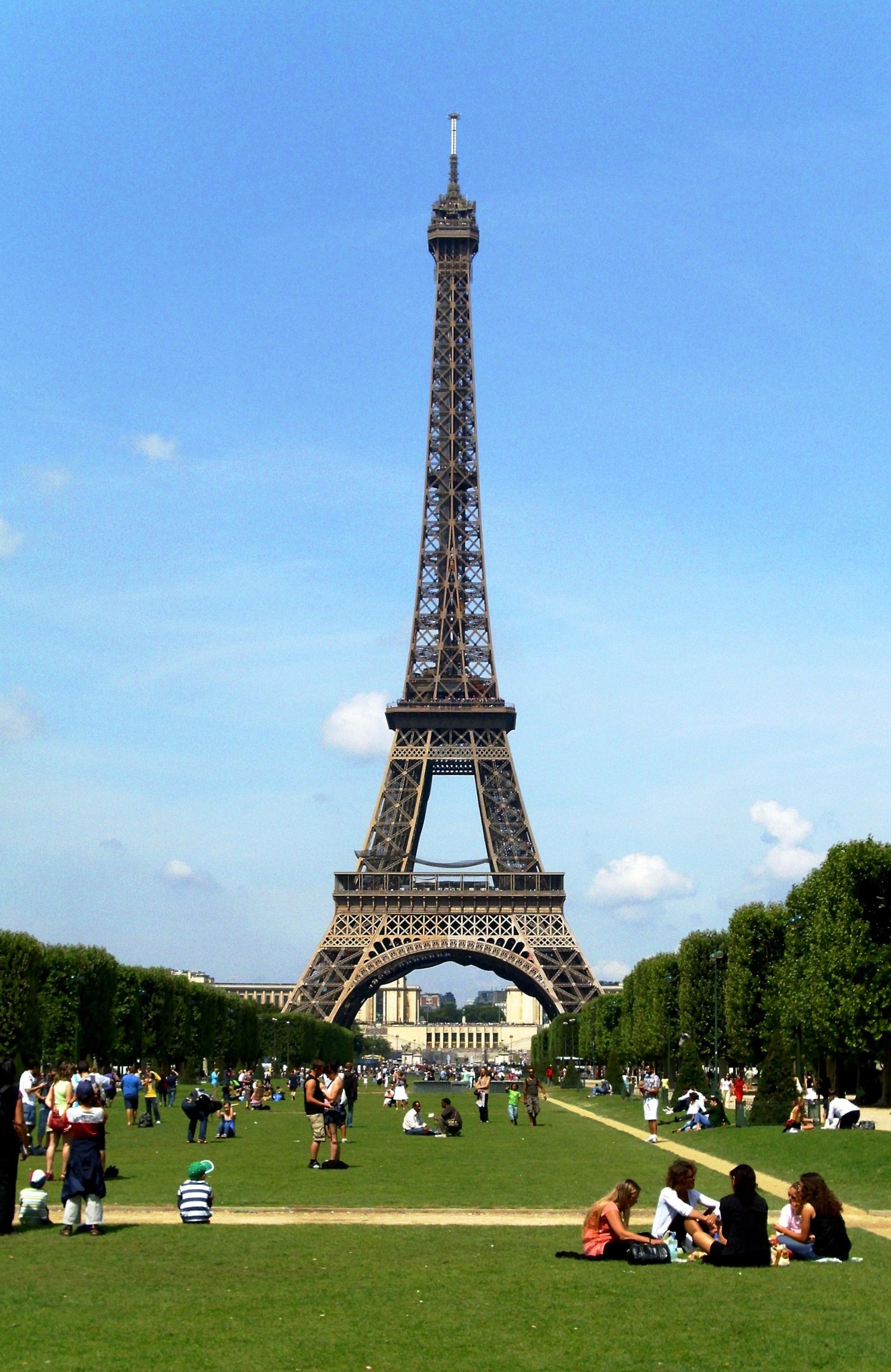
Looking beyond Faune dansant? Discover Ile De France for broader travel guides, local hot-spots, and regional highlights.
Explore Ile De France
Discover the enchanting charm of Place Saint-André des Arts & Rue Danton, where vibrant street life meets Parisian culture and history.
Discover the vibrant culture and historic charm of Boulevard Saint-Michel, a must-see street in the heart of Paris.
