

Hôtel de Ville de Lyon, Lyon Travel Guide
Free Guide: Discover Lyon's Hôtel de Ville, a magnificent architectural masterpiece with centuries of history, standing proudly on Place de la Comédie, a testament to the city's enduring spirit.


A brief summary of Hôtel de Ville de Lyon
Discover Lyon's Hôtel de Ville, a magnificent architectural masterpiece with centuries of history, standing proudly on Place de la Comédie, a testament to the city's enduring spirit.
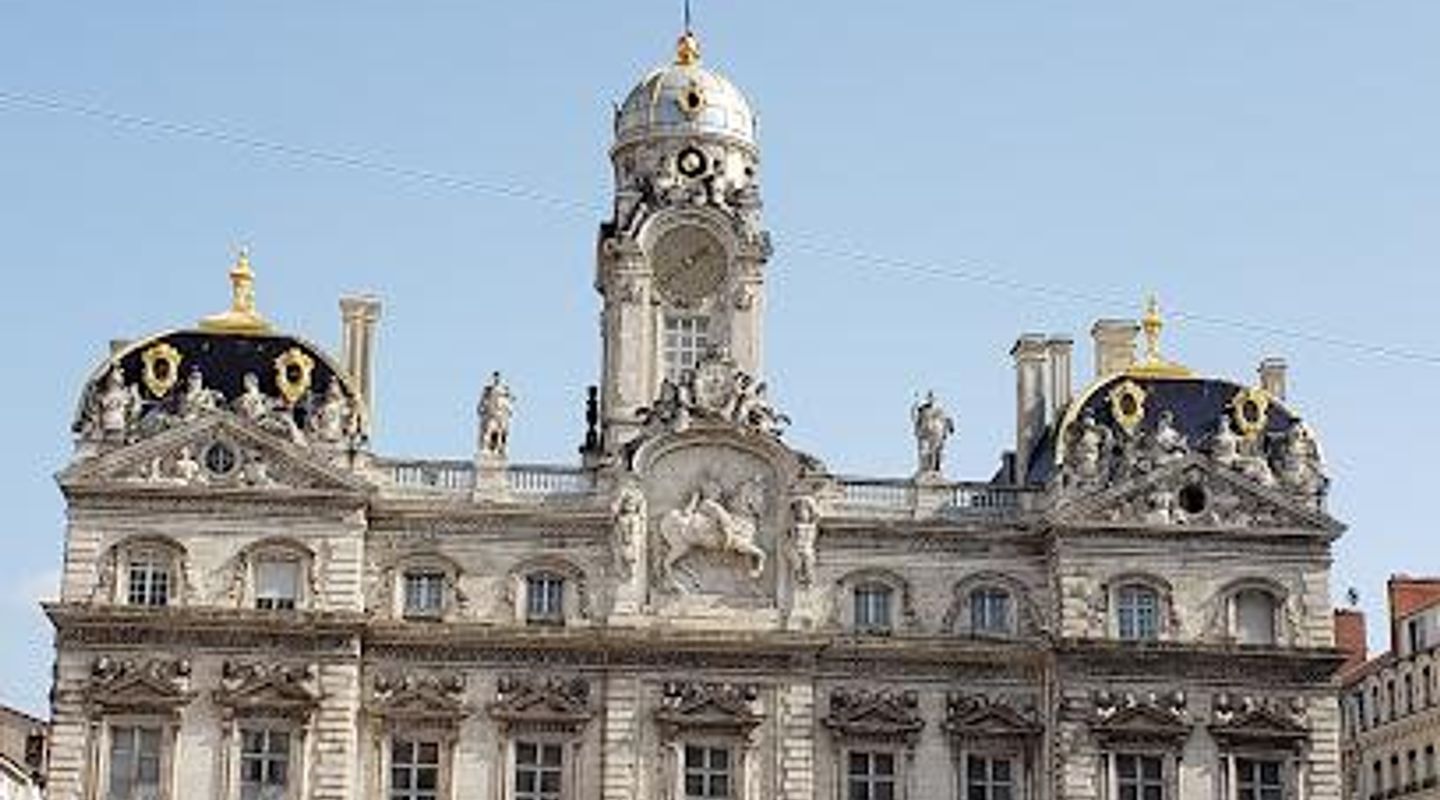
The Hôtel de Ville de Lyon, standing proudly on Place de la Comédie, is a magnificent testament to French architecture and Lyon's rich history. Facing the Opéra Nouvel, this iconic building has witnessed centuries of civic life, from its construction in the 17th century to its role during the French Revolution and beyond. The Hôtel de Ville is more than just a city hall; it's a symbol of Lyon's enduring spirit, resilience, and architectural grandeur. Explore its stunning façade, discover the secrets within its walls, and immerse yourself in the vibrant atmosphere of Place de la Comédie. Guided tours offer insights into its history and art, while the exterior provides a captivating glimpse into Lyon's past. Its location on Place de la Comédie makes it easily accessible and a central point for exploring the city's cultural heart.
- Address
- 1 Pl. de la Comédie, 69001 Lyon
- Phone
- Website
Getting there
Public Transport
Walking
Taxi/Ride-Share
Driving
Discover more about Hôtel de Ville de Lyon
Overview
Lyon's Hôtel de Ville, gracing Place de la Comédie, stands as a powerful symbol of the city's history, resilience, and architectural prowess. This imposing structure, facing the Lyon Opera House, has been at the heart of Lyon's civic life for centuries, witnessing pivotal moments in the city's and France's history. The Hôtel de Ville's story began in the 17th century when Lyon's consuls sought to create a grand and prestigious building to reflect the city's importance. Construction started in 1646, led by architect Simon Maupin, with contributions from Girard Desargues. The initial design showcased a Louis XIII style, featuring a rectangular layout and incorporating existing gardens that stretched towards the Rhône River. The building quickly became a symbol of Lyon's power and prosperity. However, the Hôtel de Ville's early years were marked by tragedy. In 1674, a devastating fire ravaged the building, causing extensive damage to the grand hall, belfry, and interiors. Undeterred, Lyon embarked on a reconstruction project, entrusting the task to Jules Hardouin-Mansart, a renowned architect known for his work on the Palace of Versailles. Mansart's vision incorporated a more Italianate style, adding a story to the building and enhancing its overall grandeur. Further modifications in the 18th and 19th centuries shaped the Hôtel de Ville into the architectural masterpiece we see today. The French Revolution dramatically impacted the Hôtel de Ville. The building's Salle du Consulat was transformed into a revolutionary tribunal, and artwork depicting former officials was destroyed. The Hôtel de Ville became a focal point of the revolution's impact on Lyon. Another fire in 1803 necessitated further renovations during the Second Empire, blending different eras and styles into the building's unique character. Today, the Hôtel de Ville continues to serve as Lyon's city hall, hosting municipal council meetings and important civic events. Its architectural significance and historical importance have earned it a listing as a monument historique since 1886. The building's exterior is a captivating blend of styles, featuring arched windows, medallions, and the symbolic lion of Lyon. The belfry and clock tower, topped by a statue of King Henry IV, add to its imposing presence. Inside, the Hôtel de Ville boasts opulent interiors, including gilded reception rooms, crystal chandeliers, and intricate woodwork. While access is often limited to official business, visitors can glimpse these stunning interiors during special events like the European Heritage Days in September. The Hôtel de Ville is more than just a building; it's a living testament to Lyon's history, art, and civic pride. Its location on Place de la Comédie, facing the Opéra Nouvel, makes it a central point for exploring Lyon's cultural heart. The square itself is a vibrant space, hosting events and providing a gathering place for locals and tourists alike. Visiting the Hôtel de Ville offers a unique opportunity to connect with Lyon's past and present. Whether admiring its architecture, learning about its history, or simply soaking in the atmosphere of Place de la Comédie, the Hôtel de Ville is an unforgettable experience. It stands as a reminder of Lyon's enduring spirit and its place as a major cultural and historical center in France. The Place de la Comédie, where the Hôtel de Ville is located, is a pedestrian square in the Terreaux district. It was named after the Grand Théâtre de Lyon, built in 1756, which was later replaced by the Opéra de Lyon. The square remains a cultural hub near Lyon's Hôtel de Ville. The Hôtel de Ville is also near other attractions, such as the Musée des Beaux-Arts, Le Village des Créateurs du Passage Thiaffait, Jardin Croix Paquet, Église Saint-Nizier, Traboule Passage Thiaffait, Passerelle du Collège, and Opéra de Lyon. The Hôtel de Ville has been renovated several times, including work to the four facades from 1981 to 1989, renovation of the salons for the G7 in 1996, renovation of the roofs in 2006 and 2007, and renovation of the pavement of the Place de la Comédie in 2020. The Hôtel de Ville is open from Monday to Saturday. It is closed on public holidays, but open on Sundays during European Heritage Days.
Evendo Review Centre
 Google
Guest reviews
Explore Hôtel de Ville de Lyon on the map
A handpicked selection of must-see spots near Hôtel de Ville de Lyon, mapped for you.
Get your free copy of our complete guide to Hôtel de Ville de Lyon, delivered straight to you.
Everything on this page, from opening hours and how to get there to Eve’s tips and the best time to go, in one PDF you can read offline, print or share.
Already have an account? Sign in
Your Hôtel de Ville de Lyon guide is ready.
We'll send it to · Not you? Sign out

Getting your guide ready…
We are putting together a fresh copy of the Hôtel de Ville de Lyon guide. This can take up to a minute.
This can take a few moments. If your browser asks, choose Allow so the download can start. You'll find the guide in your Downloads folder.
Nothing happened? Download it again
Sorry, the guide is taking longer than usual. Please try again in a minute, or get it by email instead.
Unlock the best of Hôtel de Ville de Lyon
Skip-the-line tickets, guided tours with entry, and walking tours of the area, booked in a few clicks.


Other nearby places you may find interesting
The closest places of the same kind, if this one is not quite what you had in mind.
-
-
-
-
-


Swipe for more places
More to explore near Hôtel de Ville de Lyon

 Best experiences near Hôtel de Ville de Lyon
 Best hotels near Hôtel de Ville de Lyon
 Best landmarks near Hôtel de Ville de Lyon
 Best attractions near Hôtel de Ville de Lyon
 Best shops near Hôtel de Ville de Lyon
 Best restaurants near Hôtel de Ville de Lyon
 Best bars near Hôtel de Ville de Lyon
Do you manage this location?
Take control to get all the benefits, like improved information, better appearance, and stronger visibility across AI-powered discovery.
Explore more

Explore more of Lyon
Explore Lyon, France's culinary heart, rich in history, culture, and world-class cuisine, nestled between the Rhône and Saône rivers.
Explore Lyon
Explore more of France
Explore France: A land of romance, history, and unparalleled beauty, from the iconic streets of Paris to the serene landscapes of Provence and the luxury of the French Riviera.
Explore France
