

Cimiez (Nice) Travel Guide - Free
Explore Cimiez in Nice with Evendo's free guide. Find the best shops, historic streets, restaurants, and gems on web or mobile.


Cimiez in Nice blends Roman ruins, Matisse and Chagall museums, monastery gardens, olive trees and grand Belle Époque villas on a peaceful hill.
A Hill of History and Gardens
Cimiez occupies the wooded northern heights of Nice, rising above the Mediterranean city in a neighbourhood where Roman archaeology, monastic calm and grand villas share the same streets. Its defining public space is the Jardin des Arènes de Cimiez, an olive-shaded park surrounding the remains of the Roman settlement of Cemenelum. Nearby, the Musée et Site Archéologiques de Nice-Cimiez reveals the ancient baths, roads and amphitheatre that once served the capital of the Roman province of Alpes Maritimae.Read more about Cimiez
Museums, Monastery and Modern Art
A Residential Riviera Atmosphere
Best attractions in Cimiez
Cimiez's principal attractions form a compact cultural circuit around the Jardin des Arènes de Cimiez. The Musée et Site Archéologiques de Nice-Cimiez presents the remains of Roman Cemenelum, including baths, streets and an amphitheatre, while the surrounding olive-shaded gardens provide an atmospheric setting for understanding the ancient settlement. In the nearby Villa des Arènes, the Musée Matisse traces Henri Matisse's artistic career through paintings, drawings and personal objects. The Monastère Notre-Dame-de-Cimiez adds a quieter combination of church, Franciscan history, cloister and planted grounds, and the adjoining cemetery contains notable artistic tombs. Lower on the hill, the Musée National Marc Chagall offers a major collection in a building designed around the artist's biblical works. These sites are best understood together, as a sequence moving from Roman archaeology through religious heritage to the modern art that gives Cimiez its contemporary cultural stature.
-
National museum
Marc Chagall National Museum
Explore the vibrant artistry of Marc Chagall at the National Museum in Nice, a cultural treasure filled with stunning masterpieces and serene gardens.
10 min walk · 0.8 km from neighbourhood centre
-
Garden
Garden of Arenas Cimiez
Discover the Garden of Arenas Cimiez, a lush historical oasis in Nice offering breathtaking views, cultural landmarks, and serene pathways for all visitors.
18 min walk · 1.4 km from neighbourhood centre
-
Art museum
Musée Matisse
Discover the vibrant world of Henri Matisse at the Musée Matisse in Nice, where art and nature harmoniously blend.
17 min walk · 1.4 km from neighbourhood centre
-
Park
Parc Castel des Deux Rois
Experience the tranquility and breathtaking views at Parc Castel des Deux Rois in Nice, a perfect escape for nature lovers and tourists alike.
15 min walk · 1.2 km from neighbourhood centre


Best landmarks in Cimiez
The most important landmark in Cimiez is the archaeological ensemble of ancient Cemenelum, whose exposed baths, roads and amphitheatre establish the hill's Roman significance. Beside it, the Monastère Notre-Dame-de-Cimiez represents the neighbourhood's long Franciscan history through its church, cloister and carefully tended gardens. The Villa des Arènes, now the Musée Matisse, is a substantial seventeenth-century residence whose setting connects the modern museum with the surrounding olive groves. Cimiez's resort-era identity is visible in grand villas and former hotel architecture, most notably the former Hôtel Régina, built during Nice's nineteenth-century winter-season expansion and now used as private residences. Lower down, the purpose-built Musée National Marc Chagall is an important modern cultural landmark, recognised for the close relationship between its galleries, stained-glass elements and Chagall's religious works. Together these structures express the neighbourhood's layered development without reducing it to a single historical period.
-
Garden
Garden of Arenas Cimiez
Discover the enchanting Garden of Arenas Cimiez in Nice, where nature, history, and stunning views create a peaceful retreat in the heart of the French Riviera.
18 min walk · 1.4 km from neighbourhood centre
-
Monastery
Cimiez Monastery
Discover the tranquil beauty of Cimiez Monastery in Nice, a historic site with stunning architecture and lush gardens offering serene views.
18 min walk · 1.4 km from neighbourhood centre
-
Archaeological museum
Musée d'Archéologie de Nice / Cimiez
Discover the ancient treasures of the French Riviera at the Musée d'Archéologie de Nice, showcasing thousands of years of history in a picturesque setting.
17 min walk · 1.4 km from neighbourhood centre
-
Arena
Arènes de Cimiez
Discover the Arènes de Cimiez, an ancient Roman amphitheater in Nice, where history meets breathtaking Mediterranean beauty.
18 min walk · 1.4 km from neighbourhood centre


Explore Cimiez on the map
A handpicked selection of must-see spots in Cimiez, mapped for you.
Best hotels in Cimiez
Best restaurants in Cimiez
Cimiez has a smaller and more restrained dining scene than the Vieux Nice or the central streets near the Promenade des Anglais. Around Avenue des Arènes de Cimiez and the residential roads leading towards the museums, visitors find cafés, bakeries and neighbourhood restaurants suited to a meal before or after sightseeing rather than a dense concentration of destination dining. Menus may draw on the wider cuisine of Nice and the Provençal coast, where vegetables, olive oil, herbs, seafood and local specialities are prominent, but the district is not primarily a food market quarter. More extensive choice, including the city's renowned Niçoise restaurants and casual counters, lies downhill in nearby central districts. Planning a meal around the museum circuit is therefore useful, particularly outside the main commercial corridors, when many businesses serve local residents and daytime visitors rather than late-night crowds.
-
French
La Route du Miam
Discover exquisite French cuisine at La Route du Miam in Nice – a culinary treasure celebrating Southwest France's flavors.
5 min drive · 1.6 km from neighbourhood centre
-
Hawaiian
LITTLE POKE NICE
Experience authentic Hawaiian cuisine at Little Poke Nice – where fresh flavors meet warm hospitality in the heart of France.
8 min walk · 0.6 km from neighbourhood centre
-
Restaurant
Resto Côté Sud...
Experience the essence of French cuisine at Resto Côté Sud in Nice – where every meal is a celebration of flavor and tradition.
14 min walk · 1.1 km from neighbourhood centre
-
Restaurant
Le Pois Chiche
Experience exquisite Mediterranean flavors at Le Pois Chiche in Nice - where culinary artistry meets warm hospitality.
3 min walk · 0.2 km from neighbourhood centre


Best bars in Cimiez
Cimiez is a quiet residential hill rather than a nightlife district, and its evening atmosphere is shaped by apartment buildings, gardens and cultural venues rather than clubs. A modest selection of cafés and restaurants provides places for an early drink or dinner near the main roads, but the neighbourhood does not have the dense bar scene found in Vieux Nice, the Port or the streets around Place Garibaldi. After the museums and gardens close, the area becomes notably calmer, with little reason to expect late-night entertainment beside the Roman site or monastery. Visitors seeking live music, cocktail bars, dancing or a broader choice of evening venues should continue downhill into central Nice and arrange the return journey in advance, especially after the busier city-centre services have reduced.
-
Pub
Wayne's Bar
Experience the vibrant nightlife of Nice at Wayne's Bar, where great drinks and a lively atmosphere await you.
16 min walk · 1.3 km from neighbourhood centre
-
Bar
Waka Bar
Experience the vibrant nightlife at Waka Bar in Nice, offering exquisite cocktails, delicious tapas, and stunning Mediterranean views.
18 min walk · 1.4 km from neighbourhood centre
-
Bar
TOMAHAWK
Discover the vibrant atmosphere of Tomahawk Bar in Nice, where delicious drinks meet a cozy ambiance for an unforgettable night out.
3 min walk · 0.3 km from neighbourhood centre
-
Bar
LE CROQUE BEDAINE Nice
Discover the lively atmosphere and delightful flavors at Le Croque Bedaine, a must-visit bar in the heart of Nice, perfect for tourists seeking local charm.
9 min walk · 0.7 km from neighbourhood centre


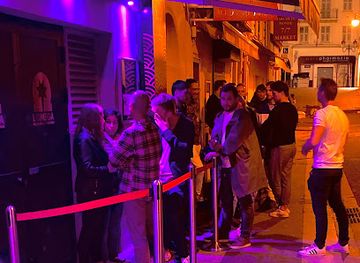
Best nightclubs in Cimiez
Cimiez is a quiet residential hill rather than a nightlife district, and its evening atmosphere is shaped by apartment buildings, gardens and cultural venues rather than clubs. A modest selection of cafés and restaurants provides places for an early drink or dinner near the main roads, but the neighbourhood does not have the dense bar scene found in Vieux Nice, the Port or the streets around Place Garibaldi. After the museums and gardens close, the area becomes notably calmer, with little reason to expect late-night entertainment beside the Roman site or monastery. Visitors seeking live music, cocktail bars, dancing or a broader choice of evening venues should continue downhill into central Nice and arrange the return journey in advance, especially after the busier city-centre services have reduced.
-
Night club
High Club
Experience the electrifying nightlife at High Club in Nice, where stunning views and top DJs create an unforgettable party atmosphere.
7 min drive · 2.4 km from neighbourhood centre
-
Disco club
NOTORIOUS CLUB
Notorious Club: A Must-Visit Disco Club in Nice for an Unforgettable Night Out
5 min drive · 1.7 km from neighbourhood centre
-
Gay night club
L’Oméga Club - Nice
Dive into the electrifying nightlife at L’Oméga Club, the premier gay nightclub in Nice, where music, dance, and diversity unite for unforgettable evenings.
17 min walk · 1.3 km from neighbourhood centre
-
Night club
Nuits Blanches - Discothèque
Experience the vibrant nightlife of Nice at Nuits Blanches, a premier discothèque featuring electrifying music and stylish ambiance.
16 min walk · 1.3 km from neighbourhood centre



Best shops in Cimiez
Shopping in Cimiez is primarily practical and local rather than a major visitor attraction. The roads around Avenue des Arènes de Cimiez contain everyday shops, bakeries, pharmacies and small food businesses serving residents, while the museum circuit offers the usual opportunity to browse exhibition catalogues, art books and cultural souvenirs. There is no large traditional market or concentrated independent retail street comparable with the markets of central Nice, and visitors should not expect a district devoted to fashion, antiques or specialist boutiques. The neighbourhood's most distinctive retail interest lies in its connection with art and heritage: museum shops provide reproductions and publications linked to Matisse, Chagall and the Roman collections. For produce markets, Provençal food shopping, vintage goods and a wider choice of independent stores, central Nice is nearby downhill and offers a more varied commercial experience.
-
Gift shop
Nature and Discoveries
Explore the charm of Nice through unique gifts at Nature and Discoveries, the perfect stop for eco-friendly treasures and local craftsmanship.
14 min walk · 1.1 km from neighbourhood centre
-
Gift shop
ICI Concept Store
Explore ICI Concept Store in Nice for unique gifts and local artisan creations that capture the essence of the French Riviera.
10 min walk · 0.8 km from neighbourhood centre
-
Gift shop
Chimères and CO
Discover unique handcrafted gifts and local handicrafts at Chimères and CO in Nice, a must-visit destination for any tourist.
6 min drive · 2.1 km from neighbourhood centre
-
Costume jewelry shop
Création d'Ana
Explore Création d'Ana in Nice for exquisite handcrafted costume jewelry that embodies the charm and creativity of the French Riviera.
13 min walk · 1.0 km from neighbourhood centre


Cimiez essentials
Getting There
Getting Around
Safety
Emergency Situations
Do's and Don'ts
Local Tips

From Eve
Local phrases worth knowing
You don't need to get them perfect. A few words go a long way, and locals appreciate the effort.
Basics
| English | Local | Say it |
|---|---|---|
| Hello | Bonjour | [bon-zhoor] |
| Goodbye | Au revoir | [oh ruh-vwahr] |
| Yes | Oui | [wee] |
| No | Non | [nohn] |
| Please/You're welcome | S'il vous plaît / De rien | [seel voo pleh / duh ryehn] |
| Thank you | Merci | [mehr-see] |
| Excuse me/Sorry | Excusez-moi / Désolé | [ex-kew-zay mwah / day-zoh-lay] |
| How are you? | Comment ça va? | [koh-mohn sah vah?] |
| Fine. And you? | Bien. Et toi? | [byen. ay twah?] |
| Do you speak English? | Parlez-vous anglais? | [par-lay voo ahn-glay?] |
| I don't understand | Je ne comprends pas | [zhuh nuh kohm-prahnd pah] |
Eating & Drinking
| English | Local | Say it |
|---|---|---|
| I'd like to see the menu, please | Je voudrais voir le menu, s'il vous plaît | [zhuh voo-dray vwar luh muh-noo, seel voo pleh] |
| I don't eat meat | Je ne mange pas de viande | [zhuh nuh mahnj pah duh vyand] |
| Cheers! | Santé! | [sahn-tay] |
| I would like to pay, please | Je voudrais payer, s'il vous plaît | [zhuh voo-dray pay-ay, seel voo pleh] |
Emergencies
| English | Local | Say it |
|---|---|---|
| Help! | Au secours! | [oh suh-coor] |
| Go away! | Allez-vous en! | [ah-lay voo zahn] |
| Call the Police! | Appelez la Police! | [ah-peh-lay lah poh-lees] |
| Call a doctor! | Appelez un médecin! | [ah-peh-lay uh meh-duh-sahn] |
| I'm lost | Je suis perdu | [zhuh swee pair-doo] |
| I'm ill | Je suis malade | [zhuh swee mah-lahd] |
Shopping
| English | Local | Say it |
|---|---|---|
| I'd like to buy... | Je voudrais acheter... | [zhuh voo-dray zah-shtay...] |
| I'm just looking | Je regarde juste | [zhuh ruh-gahrd zhust] |
| How much is it? | Combien ça coûte? | [kohm-byen sah koot?] |
| That's too expensive | C'est trop cher | [say troh shair] |
| Can you lower the price? | Pouvez-vous baisser le prix? | [poo-veh voo bay-say luh pree?] |
Time & Numbers
| English | Local | Say it |
|---|---|---|
| What time is it? | Quelle heure est-il? | [kell er ay-teel] |
| It's one o'clock | Il est une heure | [eel ay tun er] |
| Half past (10) | Dix heures et demie | [dee-zeur ay duh-mee] |
| Morning | Matin | [mah-tan] |
| Afternoon | Après-midi | [ah-pray mee-dee] |
| Evening | Soir | [swahr] |
| Yesterday | Hier | [yehr] |
| Today | Aujourd'hui | [oh-zhoor-dwee] |
| Tomorrow | Demain | [duh-mahn] |
| 1 | Un | [uhn] |
| 2 | Deux | [duh] |
| 3 | Trois | [twah] |
| 4 | Quatre | [kat] |
| 5 | Cinq | [sank] |
| 6 | Six | [sees] |
| 7 | Sept | [set] |
| 8 | Huit | [wheat] |
| 9 | Neuf | [nuff] |
| 10 | Dix | [deeze] |
Transport & Directions
| English | Local | Say it |
|---|---|---|
| Where's a/the...? | Où est...? | [oo ay...] |
| What's the address? | Quelle est l'adresse? | [kell ay la-dress] |
| Can you show me (on the map)? | Pouvez-vous me montrer (sur la carte)? | [poo-veh voo muh mohn-tray (soor lah kart)] |
| When's the next (bus)? | Quand est le prochain (bus)? | [kahn ay luh proh-shan (boos)] |
| A ticket (to ....) | Un billet (pour ....) | [uhn bee-yay (poor ....)] |
History of Cimiez
Cemenelum and Roman Cimiez
Cimiez takes its name from Cemenelum, the Roman settlement established on the hill above the Greek-founded port of Nikaia. From the first century BCE and especially under the Roman Empire, Cemenelum became the capital of the province of Alpes Maritimae. Its surviving archaeological complex includes public baths, roads and an amphitheatre, evidence of an organised settlement whose location allowed it to oversee the coastal route and the surrounding territory. The ruins now set the historical framework for the modern neighbourhood, although the ancient town extended across a wider area than the visitor site visible today.
From Late Antiquity to the Monastery
After the decline of Roman civic power, the hill lost its urban prominence, but its religious importance grew. The Franciscan presence at Cimiez dates from the sixteenth century, when friars established the monastery that remains beside the Roman gardens. The church, cloister and monastic grounds helped preserve a distinct landscape of orchards, olive trees and cultivated terraces. The monastery's continued religious role, together with its later artistic heritage, distinguishes Cimiez from a purely archaeological site and explains the enduring connection between the hill and quiet, landscaped spaces.
The Winter Resort Hill
Cimiez changed substantially during the nineteenth century as Nice developed into an international winter resort. Roads, villas, gardens and large hotels extended uphill from the older city, attracting wealthy seasonal visitors from northern Europe and Russia. The former Hôtel Régina, built for the resort era and associated with Queen Victoria, is one of the clearest reminders of this transformation, although it is now divided into private residences rather than operating as a hotel. The architecture of the period gave Cimiez its spacious residential character and its concentration of elegant façades.
Museums and Modern Cultural Identity
During the twentieth century, Cimiez's historic buildings and open spaces acquired new cultural roles. The Villa des Arènes became the Musée Matisse, linking the neighbourhood with the artist who lived and worked in Nice for much of his later life, while the Musée National Marc Chagall established a major collection lower on the hill. Archaeological excavations and the museum beside the Roman remains made Cemenelum more accessible to the public. Today, Cimiez's identity rests on the layering of Roman, Franciscan, Belle Époque and modern artistic histories within a predominantly residential district.
Cimiez in Photos
Browse through our photo collection highlighting the charm and character of the destination.
Neighbourhoods near Cimiez
The closest neighbourhoods to Cimiez, if you have time for more than one stop.
-

-

-

-


Swipe for more neighbourhoods
Explore more

Explore more of Nice
Nice, France blends Mediterranean promenades, Belle Époque architecture, Provençal cuisine and celebrated museums with the Côte d’Azur’s bright coastal spirit today.
Explore Nice