

Promenade des Anglais (Nice) Travel Guide - Free
Explore Promenade des Anglais in Nice with Evendo's free guide. Find the best shops, historic streets, restaurants, and gems on web or mobile.


Promenade des Anglais in Nice pairs Mediterranean beaches, grand hotels, cycling, sunsets and Belle Époque landmarks along France’s iconic Riviera seafront.
The Bay, the Boulevard and the City
Promenade des Anglais follows the curve of the Baie des Anges, linking Nice’s urban centre with the airport area along a broad Mediterranean waterfront. It is less a conventional residential neighbourhood than a defining coastal avenue: a place where residents walk, jog, cycle, swim, fish and gather beneath the palms, while visitors move between the old city, grand hotels, beaches and the sea. The famous blue chairs provide frequent pauses along the seafront, with the broad pavement and cycleway offering changing views of the bay, the pale curve of the coastline and the foothills beyond.Read more about Promenade des Anglais
Hotels, Beaches and Belle Époque Grandeur
Everyday Life on the Waterfront
Best attractions in Promenade des Anglais
The principal attraction is the seafront itself: a long public promenade with blue chairs, palms, cycle lanes and uninterrupted views across the Baie des Anges. Visitors can combine a walk beside the Mediterranean with time on Nice’s pebbly public beaches or at one of the private beach establishments that line parts of the shore. Near the eastern end, the avenue leads naturally towards the Jardin Albert 1er and the old city, while the Villa Masséna offers an inland cultural stop focused on Nice’s history and resort heritage. The Hôtel Negresco provides a memorable architectural sight from outside, and the Palais de la Méditerranée adds a later entertainment-era landmark. Farther west, the seafront opens towards the airport and the Parc Phoenix area beyond the promenade’s central visitor zone.
-
Tourist attraction
Colline du Château
Experience the breathtaking views and rich history at Colline du Château, a must-visit park and historical landmark in Nice, France.
13 min walk · 1.1 km from neighbourhood centre
-
Tourist attraction
Villa Masséna Musée
Explore the Villa Masséna Musée, a cultural gem in Nice offering rich history, stunning art, and beautiful gardens.
9 min walk · 0.7 km from neighbourhood centre
-
Hiking area
尼斯天使湾
Discover the breathtaking hiking trails of Mont Boron, where nature meets stunning views of the French Riviera in Nice, France.
7 min drive · 2.2 km from neighbourhood centre
-
Tourist attraction
サン・ルパラット大聖堂
Experience the stunning beauty of Saint-Jean-Cap-Ferrat, a luxurious coastal retreat near Nice, France, with breathtaking views and tranquil beaches.
9 min walk · 0.7 km from neighbourhood centre


Best landmarks in Promenade des Anglais
The Hôtel Negresco is the promenade’s most recognisable landmark, distinguished by its pinkish dome and its long association with Nice’s luxury-hotel history. Just inland, the Villa Masséna, built for the Masséna family and now a museum, represents the grand villas and gardens of the Belle Époque resort. The Palais de la Méditerranée, with its 1920s Art Deco heritage and later rebuilt façade, recalls the boulevard’s historic role as an entertainment address. The broad avenue, blue chairs and sea walls are themselves part of Nice’s civic identity, while the Baie des Anges supplies the geographical setting that made the promenade significant. At the western end, the memorial garden connected with the 2016 attack adds a solemn contemporary landmark to the seafront.
-
Park
Colline du Château
Experience the breathtaking views and rich history of Colline du Château, a serene park and historical landmark in Nice, France.
13 min walk · 1.1 km from neighbourhood centre
-
Garden
Jardin Albert 1er
Discover the beauty of Jardin Albert 1er, a stunning garden in Nice, France, featuring vibrant flora, artistic sculptures, and serene pathways for relaxation.
2 min walk · 0.2 km from neighbourhood centre
-
Historical landmark
Place Masséna
Experience the charm and vibrancy of Place Masséna, Nice's iconic square blending history, culture, and modernity in the heart of the French Riviera.
5 min walk · 0.4 km from neighbourhood centre
-
Historical landmark
Fontaine du Soleil
Explore the enchanting Fontaine du Soleil, a historical landmark in Nice, where art, culture, and beauty converge in a stunning urban setting.
4 min walk · 0.3 km from neighbourhood centre


Explore Promenade des Anglais on the map
A handpicked selection of must-see spots in Promenade des Anglais, mapped for you.
Best hotels in Promenade des Anglais
Best restaurants in Promenade des Anglais
Dining along the Promenade des Anglais is shaped by the sea, hotels and beach culture rather than by a single local cuisine. Beach restaurants and private lidos offer meals and drinks close to the water, while hotel dining rooms provide some of the avenue’s most formal settings. The nearby streets around rue de France, the Carré d’Or and the old city provide a broader choice, from cafés and bakeries to restaurants serving Provençal and Niçoise specialities such as salade niçoise, socca and petits farcis. Restaurants directly on the boulevard tend to emphasise views and convenience, whereas inland establishments are better suited to exploring Nice’s everyday food culture. Markets and food shops in the wider central area make it possible to assemble a picnic for the beach, although local rules and private beach boundaries should be observed.
-
Mediterranean
Blue Beach
Discover Blue Beach in Nice - A Mediterranean paradise offering exquisite seafood and French cuisine with stunning seaside views.
8 min walk · 0.6 km from neighbourhood centre
-
French
Les Jardins Du Capitole
Experience exquisite French cuisine at Les Jardins Du Capitole, where every meal is paired with stunning views along Nice's iconic Promenade des Anglais.
13 min walk · 1.0 km from neighbourhood centre
-
Restaurant
Le Grand Café de France
Savor exquisite French cuisine at Le Grand Café de France in Nice - where elegance meets flavor amidst stunning Mediterranean vibes.
4 min walk · 0.3 km from neighbourhood centre
-
Seafood
Le Koudou
Experience exquisite seafood dining at Le Koudou on Nice's stunning Promenade des Anglais - where fresh flavors meet breathtaking views.
7 min walk · 0.6 km from neighbourhood centre


Best bars in Promenade des Anglais
Evenings on the Promenade des Anglais are generally more about sunset walks, hotel bars, beach establishments and leisurely drinks than about a concentrated club district. Several hotels and waterfront venues provide polished spaces for cocktails or aperitifs, while restaurants and bars on nearby rue de France and in the Carré d’Or offer a wider choice after dark. The Palais de la Méditerranée remains an important symbol of the seafront’s entertainment history, although the avenue itself is not a continuous strip of nightclubs. The atmosphere becomes quieter along stretches dominated by hotels, beaches and traffic, and visitors should remember that the promenade borders residential and accommodation areas where late-night noise carries.
-
Bar
Blue Beach
Experience the charm of Blue Beach in Nice, where Mediterranean flavors meet stunning seaside views for an unforgettable escape.
8 min walk · 0.6 km from neighbourhood centre
-
French
Les Jardins Du Capitole
Discover the flavors of France at Les Jardins Du Capitole, a charming brasserie in Nice offering stunning views and exquisite cuisine.
13 min walk · 1.0 km from neighbourhood centre
-
French
Côté Lounge
Discover the exquisite flavors of French Mediterranean cuisine at Côté Lounge, where every meal is a delightful experience in the heart of Nice.
4 min walk · 0.3 km from neighbourhood centre
-
Wine bar
BAY SIDE
Discover the charm of Bay Side, Nice's premier wine bar offering exquisite selections and a warm atmosphere perfect for relaxation.
7 min walk · 0.5 km from neighbourhood centre


Best nightclubs in Promenade des Anglais
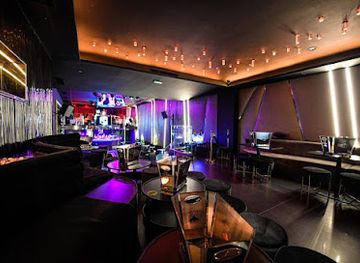
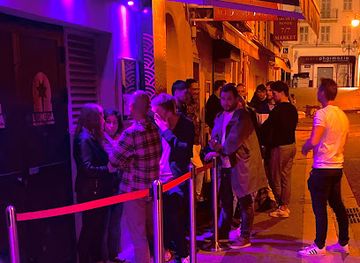
Evenings on the Promenade des Anglais are generally more about sunset walks, hotel bars, beach establishments and leisurely drinks than about a concentrated club district. Several hotels and waterfront venues provide polished spaces for cocktails or aperitifs, while restaurants and bars on nearby rue de France and in the Carré d’Or offer a wider choice after dark. The Palais de la Méditerranée remains an important symbol of the seafront’s entertainment history, although the avenue itself is not a continuous strip of nightclubs. The atmosphere becomes quieter along stretches dominated by hotels, beaches and traffic, and visitors should remember that the promenade borders residential and accommodation areas where late-night noise carries.
-
Night club
High Club
High Club in Nice, France – A premier night club with breathtaking views and an electrifying atmosphere for unforgettable nightlife experiences.
12 min walk · 0.9 km from neighbourhood centre
-
Disco club
NOTORIOUS CLUB
Notorious Club in Nice: An iconic nightlife destination where music, dance, and a vibrant atmosphere create unforgettable nights.
3 min walk · 0.2 km from neighbourhood centre
-
Gay night club
L’Oméga Club - Nice
L’Oméga Club in Nice offers an electrifying nightlife experience for the LGBTQ+ community and allies, with diverse music and a vibrant atmosphere.
6 min walk · 0.4 km from neighbourhood centre
-
Disco club
Maze Club
Dive into the pulsating nightlife of Nice at Maze Club, where the music never stops and the dance floor is always alive.
7 min walk · 0.6 km from neighbourhood centre


Best shops in Promenade des Anglais
Shopping directly on the Promenade des Anglais is limited compared with the retail streets inland, where the emphasis is on hotels, beaches, cafés and traffic. The most useful nearby shopping lies around rue de France, avenue de Verdun, the Carré d’Or and the pedestrian streets leading towards Vieux Nice. There visitors find fashion boutiques, beauty shops, galleries, cafés and everyday services, while the old city offers speciality food shops and stalls selling regional products. The Cours Saleya market is nearby in Vieux Nice rather than on the promenade itself and is the stronger destination for flowers, produce and local food culture. Along the seafront, shopping is best treated as an incidental part of a coastal walk rather than as a dedicated retail experience.
-
Shopping mall
Centre Commercial NICETOILE
Explore the bustling Centre Commercial NICETOILE, a shopping haven in Nice offering diverse stores, delightful dining, and vibrant atmosphere.
10 min walk · 0.8 km from neighbourhood centre
-
Department store
Galeries Lafayette Nice Masséna
Explore the ultimate shopping experience in Nice at Galeries Lafayette, featuring luxury brands, local boutiques, and culinary delights.
6 min walk · 0.5 km from neighbourhood centre
-
Gift shop
Trésors Publics - Boutique
Explore Trésors Publics in Nice for unique gifts and local artisan treasures that embody the spirit of the French Riviera.
9 min walk · 0.7 km from neighbourhood centre
-
Vintage clothing store
Vintage & Dépôt-vente DECO ROYAL Antiquités Expert
Discover vintage treasures and unique antiques at DECO ROYAL Antiquités in Nice, where every item tells a story of its own.
7 min walk · 0.5 km from neighbourhood centre


Promenade des Anglais essentials
Getting There
Getting Around
Safety
Emergency Situations
Do's and Don'ts
Local Tips

From Eve
Local phrases worth knowing
You don't need to get them perfect. A few words go a long way, and locals appreciate the effort.
Basics
| English | Local | Say it |
|---|---|---|
| Hello | Bonjour | [bohn-zhoor] |
| Goodbye | Au revoir | [oh ruh-vwahr] |
| Yes | Oui | [wee] |
| No | Non | [nohn] |
| Please/You're welcome | S'il vous plaît/De rien | [seel voo pleh/dee ryehn] |
| Thank you | Merci | [mehr-see] |
| Excuse me/Sorry | Excusez-moi/Désolé | [ehk-skew-zay mwah/dey-zoh-lay] |
| How are you? | Comment ça va? | [koh-mohn sah vah] |
| Fine. And you? | Bien. Et vous? | [byehn/ ay voo] |
| Do you speak English? | Parlez-vous anglais? | [pahr-lay voo ahn-glay] |
| I don't understand | Je ne comprends pas | [zhuh nuh kohm-prahnd pah] |
Eating & Drinking
| English | Local | Say it |
|---|---|---|
| I'd like to see the menu, please | Je voudrais voir le menu, s'il vous plaît | [zhuh voo-dray vwar luh muh-nyuh/seel voo pleh] |
| I don't eat meat | Je ne mange pas de viande | [zhuh nuh mahnj pah duh vee-ahnd] |
| Cheers! | Santé! | [sahn-tay] |
| I would like to pay, please | Je voudrais payer, s'il vous plaît | [zhuh voo-dray pay-yay/seel voo pleh] |
Emergencies
| English | Local | Say it |
|---|---|---|
| Help! | Au secours! | [oh suh-koor] |
| Go away! | Allez-vous en! | [ah-lay voo zahn] |
| Call the Police! | Appelez la police! | [ah-puh-lay lah poh-lees] |
| Call a doctor! | Appelez un médecin! | [ah-puh-lay uh may-d'sahn] |
| I'm lost | Je suis perdu(e) | [zhuh swee pair-doo] |
| I'm ill | Je suis malade | [zhuh swee mah-lahd] |
Shopping
| English | Local | Say it |
|---|---|---|
| I'd like to buy... | Je voudrais acheter... | [zhuh voo-dray zah-shay] |
| I'm just looking | Je regarde juste | [zhuh ruh-gard zhew-st] |
| How much is it? | Combien ça coûte? | [kohm-byen sah koot] |
| That's too expensive | C'est trop cher | [say troh shair] |
| Can you lower the price? | Pouvez-vous baisser le prix? | [poo-vay voo beh-say luh pree] |
Time & Numbers
| English | Local | Say it |
|---|---|---|
| What time is it? | Quelle heure est-il? | [kell er ay-teel] |
| It's one o'clock | Il est une heure | [eel ay tun er] |
| Half past (10) | Dix et demie | [dee ay duh-mee] |
| Morning | Matin | [mah-tan] |
| Afternoon | Après-midi | [ah-pray mee-dee] |
| Evening | Soir | [swahr] |
| Yesterday | Hier | [yehr] |
| Today | Aujourd'hui | [oh-zhoor-dwee] |
| Tomorrow | Demain | [duh-man] |
| 1 | Un | [uhn] |
| 2 | Deux | [duh] |
| 3 | Trois | [twah] |
| 4 | Quatre | [kat] |
| 5 | Cinq | [sank] |
| 6 | Six | [sees] |
| 7 | Sept | [set] |
| 8 | Huit | [wheet] |
| 9 | Neuf | [nuff] |
| 10 | Dix | [dee] |
Transport & Directions
| English | Local | Say it |
|---|---|---|
| Where's a/the...? | Où est...? | [oo ay] |
| What's the address? | Quelle est l'adresse? | [kell ay lah-dress] |
| Can you show me (on the map)? | Pouvez-vous me montrer (sur la carte)? | [poo-vay voo muh mohn-tray/sur lah kart] |
| When's the next (bus)? | Quand est le prochain (bus)? | [kahn ay luh proh-shahn/bus] |
| A ticket (to ....) | Un billet (pour ....) | [uhn bee-yay/poor] |
History of Promenade des Anglais
The English Way by the Sea
The avenue’s name recalls the English visitors and residents who wintered in Nice during the early nineteenth century. In the severe winter of 1821–22, the Reverend Lewis Way helped organise finance for a seafront path, known locally as the chemin des Anglais, intended to provide work for local people as well as a pleasant route beside the water. The original path was modest, but its association with foreign visitors established the coastal road as both a practical link and a social promenade. Its development also reflected Nice’s growing importance as a health and winter resort before the city became part of France in 1860.
From Coastal Path to Grand Boulevard
During the second half of the nineteenth century, the seafront route was progressively widened, formalised and integrated into Nice’s expanding resort city. Hotels, villas and gardens appeared inland from the shore, while improved roads and railway connections brought a larger seasonal population. The promenade became a public stage for carriage rides, strolling and the display of fashionable architecture. Buildings such as the Villa Masséna, completed in 1901, belong to this period of aristocratic and cosmopolitan development, when Nice’s coastline was being shaped as much for visitors as for local movement.
Modern Resort Architecture
The twentieth century brought new forms of leisure and a more urban character to the waterfront. The Hôtel Negresco, opened in 1913, gave the boulevard one of its enduring domed silhouettes, while the Palais de la Méditerranée, inaugurated in 1929, introduced a bold Art Deco entertainment venue to the seafront. The promenade’s role expanded beyond winter residence as improvements in transport, aviation and mass tourism made Nice a year-round destination. Hotels, casinos, beaches and public walking space increasingly shared the same narrow band between the city and the Mediterranean.
A Contemporary Civic Waterfront
In recent decades, the Promenade des Anglais has remained a working piece of city infrastructure as well as a symbol of Nice. The airport and major roads have intensified traffic towards the western end, while pedestrian and cycling facilities have strengthened the avenue’s recreational role. The terrorist attack of 14 July 2016, when a lorry was driven into crowds celebrating France’s national day, profoundly affected Nice and the promenade in particular; a memorial garden at the western end of the city commemorates the victims. Today, the seafront continues to balance tourism, commuting, recreation and remembrance.
Promenade des Anglais in Photos
Browse through our photo collection highlighting the charm and character of the destination.
Neighbourhoods near Promenade des Anglais
The closest neighbourhoods to Promenade des Anglais, if you have time for more than one stop.
-

-

-

-


Swipe for more neighbourhoods
Explore more

Explore more of Nice
Nice, France blends Mediterranean promenades, Belle Époque architecture, Provençal cuisine and celebrated museums with the Côte d’Azur’s bright coastal spirit today.
Explore Nice