Obelisk, Berlin Travel Guide
Free Guide: Discover Berlin's thought-provoking Obelisk in Charlottenburg Palace Garden, a unique monument challenging historical significance and celebrating the beauty of the everyday, created by Braco Dimitrijević.



A brief summary of Obelisk
Discover Berlin's thought-provoking Obelisk in Charlottenburg Palace Garden, a unique monument challenging historical significance and celebrating the beauty of the everyday, created by Braco Dimitrijević.
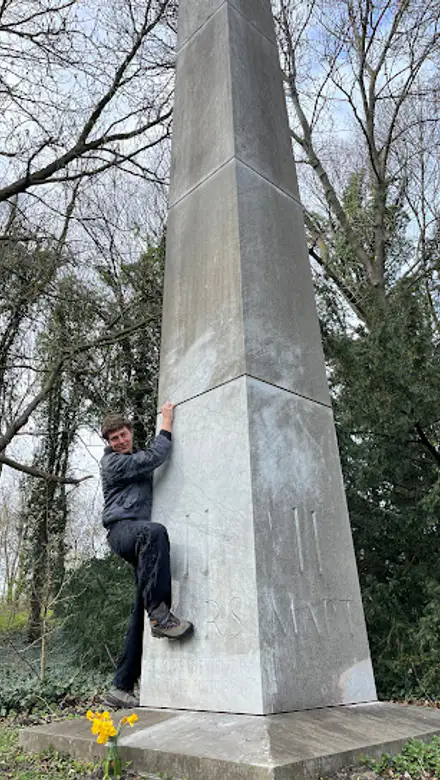
Nestled in the tranquil Charlottenburg Palace Garden, the Obelisk is a thought-provoking monument challenging conventional notions of historical significance. Created by Yugoslavian artist Braco Dimitrijević in 1979, this ten-meter-high Carrara marble obelisk commemorates not a war, a ruler, or a grand event, but an arbitrary date: March 11th. This date, chosen at random by a passerby, is inscribed on the monument in multiple languages, prompting reflection on the nature of remembrance and the importance we place on specific moments in history. The Obelisk encourages visitors to consider the value of individual experience and question the narratives imposed by traditional monuments, offering a unique and engaging artistic experience within a serene park setting. It's a perfect spot for contemplation and a memorable photo opportunity.
Opening hours
- Every day8 am–6 pm
Opening hours as listed on the venue’s Google Business Profile. Hours can change for services and special events, so check with the venue before you go.
- Address
- 14059 Berlin
Getting there
Public Transport
Taxi/Ride-Share
Walking
Discover more about Obelisk
Overview
In the northeastern corner of Berlin's Charlottenburg Palace Garden stands a monument unlike any other: the Obelisk by Braco Dimitrijević. Completed in 1979, this ten-meter-high obelisk, crafted from gleaming white Carrara marble, challenges the very essence of what a monument should represent. It doesn't celebrate a victorious battle, a powerful ruler, or a pivotal moment in history. Instead, it commemorates an ordinary day, March 11th, questioning the traditional values associated with historical importance. The story behind the Obelisk is as intriguing as the artwork itself. Dimitrijević, a Yugoslavian conceptual artist, sought to create an "anti-monument" that would provoke reflection on the nature of memory and the arbitrary nature of historical significance. During his residency in Berlin in 1976, he approached a passerby, Peter Malwitz, and asked him to choose a date. Malwitz selected March 11th, his birthday, and that date became the focal point of this unique artwork. The inscription on the Obelisk, "11 March – This could be a day of historical importance," is rendered in German, English, French, and Croatian, encircling the base of the monument. This simple yet profound statement invites viewers to contemplate the countless unsung moments that shape our lives and the subjective nature of historical narratives. It challenges the grand narratives of traditional monuments, suggesting that even the most ordinary day holds the potential for significance. Dimitrijević's Obelisk is part of a larger body of work that explores themes of chance, identity, and the questioning of established power structures. His "Casual Passer-by" series, for example, featured large-scale photographic portraits of ordinary citizens displayed on prominent buildings, subverting the traditional glorification of dignitaries and historical figures. The Obelisk extends this concept, elevating an anonymous date to the status of a national monument. Located in the tranquil Charlottenburg Palace Garden, the Obelisk offers a serene setting for contemplation. The contrast between the classical form of the obelisk and its unconventional message creates a compelling tension, inviting visitors to engage with the artwork on multiple levels. The monument's placement near the edge of the park, surrounded by trees, further enhances its contemplative atmosphere. While the Obelisk may not be as widely known as other Berlin landmarks, its unique concept and thought-provoking message make it a worthwhile destination for art enthusiasts and those seeking a deeper understanding of Berlin's cultural landscape. It stands as a testament to the power of art to challenge conventions, question assumptions, and inspire new perspectives. Visiting the Obelisk offers a chance to escape the hustle and bustle of the city and immerse oneself in a moment of quiet reflection. The surrounding park provides ample opportunities for leisurely strolls and picnics, making it an ideal destination for a relaxing afternoon. The Obelisk's enduring appeal lies in its ability to resonate with viewers on a personal level. It reminds us that history is not just a collection of grand events and famous figures, but also a tapestry of individual experiences and everyday moments. By challenging the traditional notion of historical importance, the Obelisk encourages us to find meaning in our own lives and to appreciate the significance of the present moment. Whether you are an art aficionado, a history buff, or simply someone seeking a unique and thought-provoking experience, the Obelisk in Charlottenburg Palace Garden is sure to leave a lasting impression. It is a monument to the everyday, a celebration of the ordinary, and a reminder that every day has the potential to be a day of historical importance. The Obelisk is more than just a sculpture; it's an invitation to question, to reflect, and to find meaning in the world around us. It's a reminder that history is not just something that happened in the past, but something that is constantly being created, one day at a time. As you stand before this unassuming monument, take a moment to consider the significance of your own life, the moments that have shaped you, and the potential for greatness that lies within each and every day. For in the end, it is not the grand events that define us, but the small, everyday moments that make us who we are. The Obelisk in Charlottenburg Palace Garden is a hidden gem, a testament to the power of art to challenge our perceptions and inspire new ways of thinking. It's a place where history and the present converge, where the ordinary becomes extraordinary, and where every day has the potential to be a day of historical importance.
Evendo Review Centre
 Google
Guest reviews
Explore Obelisk on the map
A handpicked selection of must-see spots near Obelisk, mapped for you.
Get your free copy of our complete guide to Obelisk, delivered straight to you.
Everything on this page, from opening hours and how to get there to Eve’s tips and the best time to go, in one PDF you can read offline, print or share.
Already have an account? Sign in
Your Obelisk guide is ready.
We'll send it to · Not you? Sign out

Getting your guide ready…
We are putting together a fresh copy of the Obelisk guide. This can take up to a minute.
This can take a few moments. If your browser asks, choose Allow so the download can start. You'll find the guide in your Downloads folder.
Nothing happened? Download it again
Sorry, the guide is taking longer than usual. Please try again in a minute, or get it by email instead.
Other nearby places you may find interesting
The closest places of the same kind, if this one is not quite what you had in mind.
-
-
-
-
-


Swipe for more places
More to explore near Obelisk

 Best experiences near Obelisk
 Best hotels near Obelisk
 Best landmarks near Obelisk
 Best attractions near Obelisk
 Best shops near Obelisk
 Best restaurants near Obelisk
 Best bars near Obelisk
Do you manage this location?
Take control to get all the benefits, like improved information, better appearance, and stronger visibility across AI-powered discovery.
Explore more

Explore more of Charlottenburg
Discover Charlottenburg, Berlin: A perfect blend of historical grandeur, modern shopping, and culinary excellence in one captivating neighborhood.
Explore Charlottenburg
Explore more of Berlin
Berlin: A fascinating blend of history, culture, and modernity, offering everything from historic landmarks to vibrant nightlife and culinary delights.
Explore Berlin