Rheinsberg Palace Travel Guide
Free Guide: Discover Prussian elegance at Rheinsberg Palace: where history, art, and nature converge on the shores of Lake Grienerick, offering a serene escape and cultural immersion.


A brief summary of Rheinsberg Palace
Discover Prussian elegance at Rheinsberg Palace: where history, art, and nature converge on the shores of Lake Grienerick, offering a serene escape and cultural immersion.
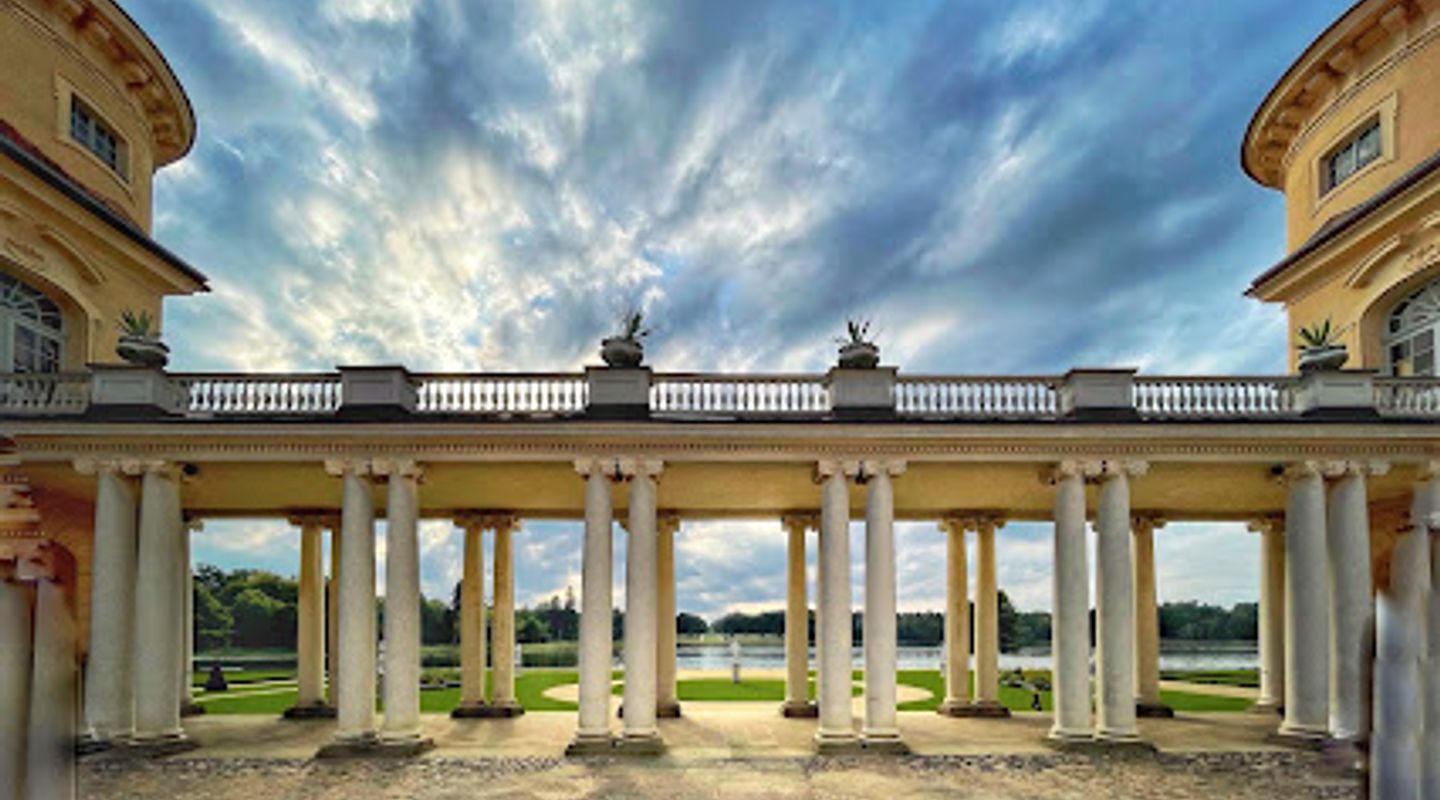
Rheinsberg Palace, nestled on the shores of Lake Grienerick, offers a captivating glimpse into Prussian history and architectural elegance. Originally a medieval castle, it blossomed under Frederick the Great and his brother, Prince Henry, into a stunning Rococo and Neoclassical masterpiece. Explore opulent halls adorned with art, stroll through meticulously landscaped gardens, and immerse yourself in the serene atmosphere that once inspired a 'court of muses.' The palace also houses the Kurt Tucholsky Literature Museum, adding a literary dimension to your visit. With its picturesque setting and rich cultural heritage, Rheinsberg Palace promises an unforgettable experience, transporting you back to the splendor of 18th-century Prussia. It's a must-see destination for history buffs, art enthusiasts, and anyone seeking a tranquil escape.
Opening hours
- MonClosed
- Tue10 am–5:30 pm
- Wed10 am–5:30 pm
- Thu10 am–5:30 pm
- Fri10 am–5:30 pm
- Sat10 am–5:30 pm
- Sun10 am–5:30 pm
Opening hours as listed on the venue’s Google Business Profile. Hours can change for services and special events, so check with the venue before you go.
- Address
- Schloß Rheinsberg 2, 16831 Rheinsberg
- Phone
- Website
Getting there
Public Transport
Driving
Discover more about Rheinsberg Palace
Overview
Rheinsberg Palace, or Schloss Rheinsberg, is more than just a building; it's a journey through Prussian history, art, and culture. Located approximately 100 kilometers northwest of Berlin, in the charming town of Rheinsberg, the palace graces the eastern shore of Lake Grienerick, offering visitors a picturesque and serene escape. Originally a moated medieval castle, the site underwent a transformation in 1566 into a Renaissance-style palace. However, its true significance began in 1734 when King Frederick William I acquired it and gifted it to his son, the future Frederick the Great. As crown prince, Frederick spent some of the happiest years of his life in Rheinsberg, between 1736 and 1740. During this time, he transformed the palace into a court of muses, a place of artistic and intellectual exchange. He engaged architects Johann Gottfried Kemmeter and Georg Wenzeslaus von Knobelsdorff to remodel and expand the palace, adding an upper floor and extending the east wing. This marked the beginning of the Frederician Rococo style, known for its ornate elegance and harmonious proportions. Frederick's time in Rheinsberg served as a testing ground for ideas he would later implement on a grander scale at Sanssouci Palace in Potsdam. In 1740, upon ascending to the throne, Frederick relinquished Rheinsberg to his younger brother, Prince Henry. Prince Henry, an art enthusiast, further embellished the palace and its surrounding park, leaving a lasting impact on its design in the early Neoclassical style. He transformed Rheinsberg into a leading center of artistic endeavor, attracting artists, writers, and musicians from across Europe. The palace itself is a testament to the architectural styles of the 18th century. The exterior showcases a blend of Rococo and Neoclassical elements, while the interior is adorned with exquisite works of art, including paintings, sculptures, and decorative objects. Visitors can explore the opulent halls and chambers, each telling a story of the palace's rich history and the lives of its former inhabitants. A highlight is the Spiegelsaal (Hall of Mirrors), featuring a ceiling painting by Antoine Pesne depicting Cupid and his companions. The palace grounds are equally captivating. The meticulously landscaped gardens, expanded by Prince Henry, offer a tranquil escape with classical sculptures, grottoes, salons and stern theaters. Stroll along the paths, admire the carefully manicured lawns and flowerbeds, and soak in the serene atmosphere. The Rheinsberg Obelisk, erected in the early 1790s, stands as a tribute to Prince Henry's friends and fellow officers. Today, Rheinsberg Palace and its gardens belong to the Prussian Palaces and Gardens Foundation Berlin-Brandenburg. After extensive restoration work, the palace now serves as a museum, offering visitors a glimpse into the past. It also houses the Kurt Tucholsky Literature Museum, dedicated to the life and works of the renowned German writer. The former Cavalier House accommodates the Federal and State Rheinsberg Music Academy, which runs the palace theatre. Since 1991, the International Opera Festival has taken place in the palace theatre, the courtyard and the open-air theatre, blending history with contemporary art. Rheinsberg Palace has also been immortalized in literature. Theodor Fontane, in his "Wanderungen durch die Mark Brandenburg," and Kurt Tucholsky, in his novel "Rheinsberg: A Picture Book for Lovers," captured the charm and beauty of the palace and its surroundings, further cementing its place in German cultural history. A visit to Rheinsberg Palace is an immersive experience that engages the senses and stimulates the mind. Whether you are a history buff, an art enthusiast, or simply seeking a tranquil escape, Rheinsberg Palace promises an unforgettable journey back to the splendor of 18th-century Prussia. The combination of architectural beauty, artistic treasures, and serene natural surroundings makes it a truly special destination.
Evendo Review Centre
 Google
Guest reviews
Explore Rheinsberg Palace on the map
A handpicked selection of must-see spots near Rheinsberg Palace, mapped for you.
Get your free copy of our complete guide to Rheinsberg Palace, delivered straight to you.
Everything on this page, from opening hours and how to get there to Eve’s tips and the best time to go, in one PDF you can read offline, print or share.
Already have an account? Sign in
Your Rheinsberg Palace guide is ready.
We'll send it to · Not you? Sign out

Getting your guide ready…
We are putting together a fresh copy of the Rheinsberg Palace guide. This can take up to a minute.
This can take a few moments. If your browser asks, choose Allow so the download can start. You'll find the guide in your Downloads folder.
Nothing happened? Download it again
Sorry, the guide is taking longer than usual. Please try again in a minute, or get it by email instead.
Other nearby places you may find interesting
The closest places of the same kind, if this one is not quite what you had in mind.
-
-
-
-
-


Swipe for more places
More to explore near Rheinsberg Palace

 Best experiences near Rheinsberg Palace
 Best hotels near Rheinsberg Palace
 Best landmarks near Rheinsberg Palace
 Best attractions near Rheinsberg Palace
 Best shops near Rheinsberg Palace
 Best restaurants near Rheinsberg Palace
 Best bars near Rheinsberg Palace
Do you manage this location?
Take control to get all the benefits, like improved information, better appearance, and stronger visibility across AI-powered discovery.
Explore more

Explore more of Brandenburg
Discover Brandenburg: Explore a region rich in history, culture, and natural beauty, featuring stunning landscapes, historic sites, and vibrant cultural experiences.
Explore Brandenburg
Explore more of Germany
Experience Germany: where history meets innovation, and urban energy blends with natural beauty. Discover diverse cultures, delicious cuisine, and stunning landscapes.
Explore Germany