Background

Dreischeibenhaus: A Symbol of Düsseldorf's Post-War Modernism

An iconic example of post-war modernist architecture in Düsseldorf, the Dreischeibenhaus stands as a symbol of Germany's economic recovery and innovative spirit, offering a glimpse into the city's vibrant history.

4.5

The Dreischeibenhaus, an iconic office building in Düsseldorf, stands as a testament to Germany's post-war economic resurgence. Completed in 1960, its sleek, modernist design, characterized by three offset slabs, made it one of the first skyscrapers in the country. Once the headquarters of ThyssenKrupp, it now houses various businesses and offers stunning city views. Its architectural significance and historical context make it a notable landmark, representing Düsseldorf's blend of tradition and modernity. While primarily an office building, its architectural importance and the occasional opening of the 22nd-floor terrace to the public provide a unique glimpse into the city's past and present.

A brief summary to Dreischeibenhaus

Local tips

  • Check the Dreischeibenhaus website for occasional public openings of the 22nd-floor terrace, offering panoramic city views.
  • Admire the building's architecture from the Hofgarten park, providing a serene backdrop for photographs.
  • Explore the nearby Königsallee shopping street and MedienHafen district to experience Düsseldorf's blend of commerce and modern architecture.
widget icon

Getting There

  • Public Transport

    From Düsseldorf Hauptbahnhof (main train station), take any of the U-Bahn lines U70, U74, U75, U76, U77, or U78 towards Krefeld/Neuss to Heinrich-Heine-Allee station. From there, it's approximately a 10-minute walk to Dreischeibenhaus. Alternatively, take tram 707 from the main station in the direction of 'Düsseldorf Unterrath' to the Jacobistraße stop. From the Jacobistraße stop, walk towards Schadowstraße, cross it, and follow the signs for pedestrians to the Dreischeibenhaus. A single public transport fare within Düsseldorf (Tarifgebiet A) is approximately €2.90.

  • Taxi/Ride-Share

    A taxi or ride-share from Düsseldorf Hauptbahnhof to Dreischeibenhaus typically takes around 10 minutes, depending on traffic. The estimated cost is between €10 and €15.

  • Driving

    If driving, be aware that parking near Dreischeibenhaus can be limited. Public car parks are available at Kö-Bogen (Königsallee 2), Schadowstraße/Bleichstraße, and KII/Schauspielhaus. Access to visitor parking at Dreischeibenhaus itself is via Goltsteinstraße/Bleichstraße, requiring prior registration. Parking fees at these car parks typically range from €2 to €4 per hour.

Unlock the Best of Dreischeibenhaus

Buy tickets

    No tickets available

Book tours with entry

    No tours available

Book tours without entry

    No tours available

Discover more about Dreischeibenhaus

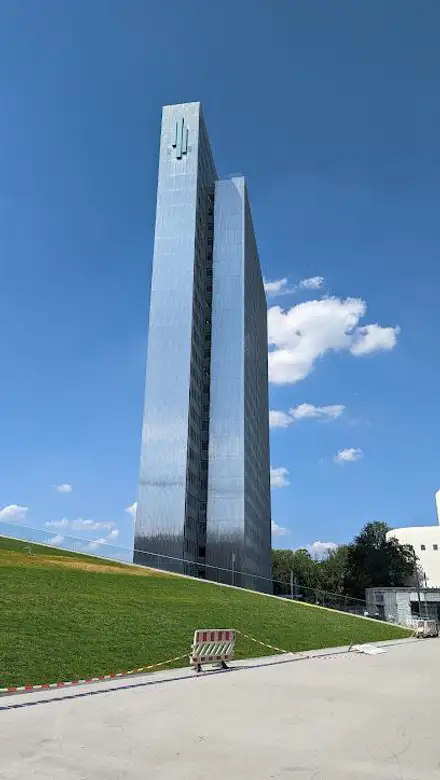
The Dreischeibenhaus, located in the heart of Düsseldorf, is more than just an office building; it's a symbol of the city's post-war recovery and architectural innovation. Completed in 1960, it quickly became a landmark, representing West Germany's economic miracle (Wirtschaftswunder) and the forward-thinking spirit of the time. Designed by architects Helmut Hentrich and Hubert Petschnigg, the Dreischeibenhaus, translating roughly to "Three-Slab Building," was commissioned by Phönix-Rheinrohr AG, later acquired by Thyssen. The building's distinctive design features three slender slabs arranged in a staggered formation, with the central slab reaching a height of 95 meters. This innovative structure was one of the first skyscrapers in Germany and a pioneering example of steel-skeleton construction in Europe. The architectural style is a prime example of post-war modernism, characterized by its clean lines, glass and aluminum curtain wall, and functional design. The building's design cleverly avoids long, dark corridors, creating an open and flexible office space, a visionary approach for its time. The slender front ends, clad in stainless steel, and the glazed access areas contribute to its striking visual appeal. For many years, the Dreischeibenhaus served as the headquarters for Thyssen and later ThyssenKrupp, solidifying its status as a corporate icon. In 2010, the company relocated, and the building underwent a comprehensive renovation, completed in 2014, to meet modern standards while preserving its historical significance. The renovation, overseen by HPP Architects, included a new facade that matched the original appearance but with improved thermal performance. Today, the Dreischeibenhaus offers approximately 35,000 square meters of gross floor area and houses a variety of businesses. While primarily an office building, it remains an important architectural landmark in Düsseldorf. The building's former reception lobby now houses an Italian restaurant, Cecino's. The terrace on the 22nd floor is open to the public on selected days and offers panoramic views of the city. The Dreischeibenhaus has also gained international recognition, having been featured in films like "Cloud Atlas," which brought a touch of Hollywood glamour to Düsseldorf. Its architectural significance has been recognized with awards, including the MIPIM Award for Best Refurbished Building in 2015. The building's location is central, situated near the Hofgarten park and the Düsseldorfer Schauspielhaus theater, contributing to the area's cultural and commercial vibrancy. Its proximity to Königsallee, Düsseldorf's famous shopping street, and the MedienHafen district, known for its modern architecture, further enhances its appeal. The Dreischeibenhaus stands in contrast to the traditional timber-framed houses often associated with Germany. Instead, it exemplifies Düsseldorf's reputation as a hub of industry and innovation, showcasing steel-and-glass architecture. The building's history, architectural design, and cultural significance make it a compelling landmark for visitors interested in Düsseldorf's past and present. While access to the building is generally limited to those with business inside, its exterior can be admired from the surrounding streets and the Hofgarten park. The occasional opening of the 22nd-floor terrace provides a unique opportunity to experience the city from a historical vantage point. The Dreischeibenhaus is a reminder of Düsseldorf's resilience and its commitment to progress. It is a symbol of the city's transformation from a war-torn landscape to a thriving economic and cultural center. Its enduring presence on the Düsseldorf skyline is a testament to its architectural significance and its place in the city's collective memory. Visiting the Dreischeibenhaus offers a glimpse into Düsseldorf's architectural heritage and its post-war identity. It is a reminder of the city's ability to blend tradition with modernity, creating a unique urban landscape that attracts visitors from around the world. The building's story is intertwined with the city's own, making it an essential landmark for anyone seeking to understand Düsseldorf's character and its place in German history.

Popular Experiences near Dreischeibenhaus

Popular Hotels near Dreischeibenhaus

Select Currency