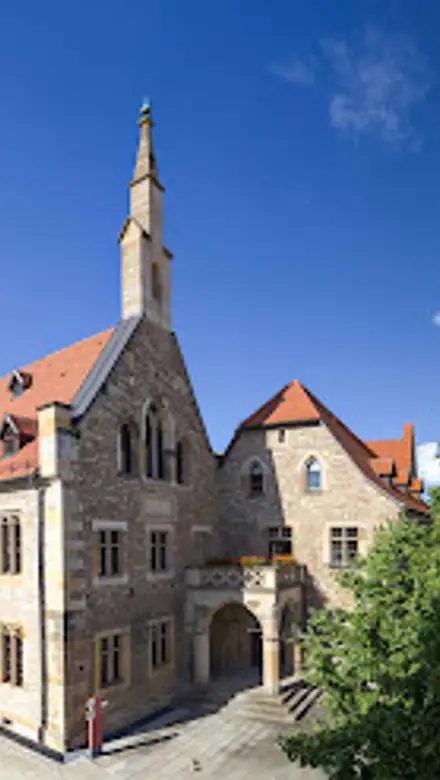
Protestant Augustinian Monastery Erfurt, Erfurt Travel Guide
Free Guide: Explore the former home of Martin Luther, a 13th-century monastery in Erfurt's old town, offering historical insights, spiritual reflection, and architectural beauty in the heart of Germany.


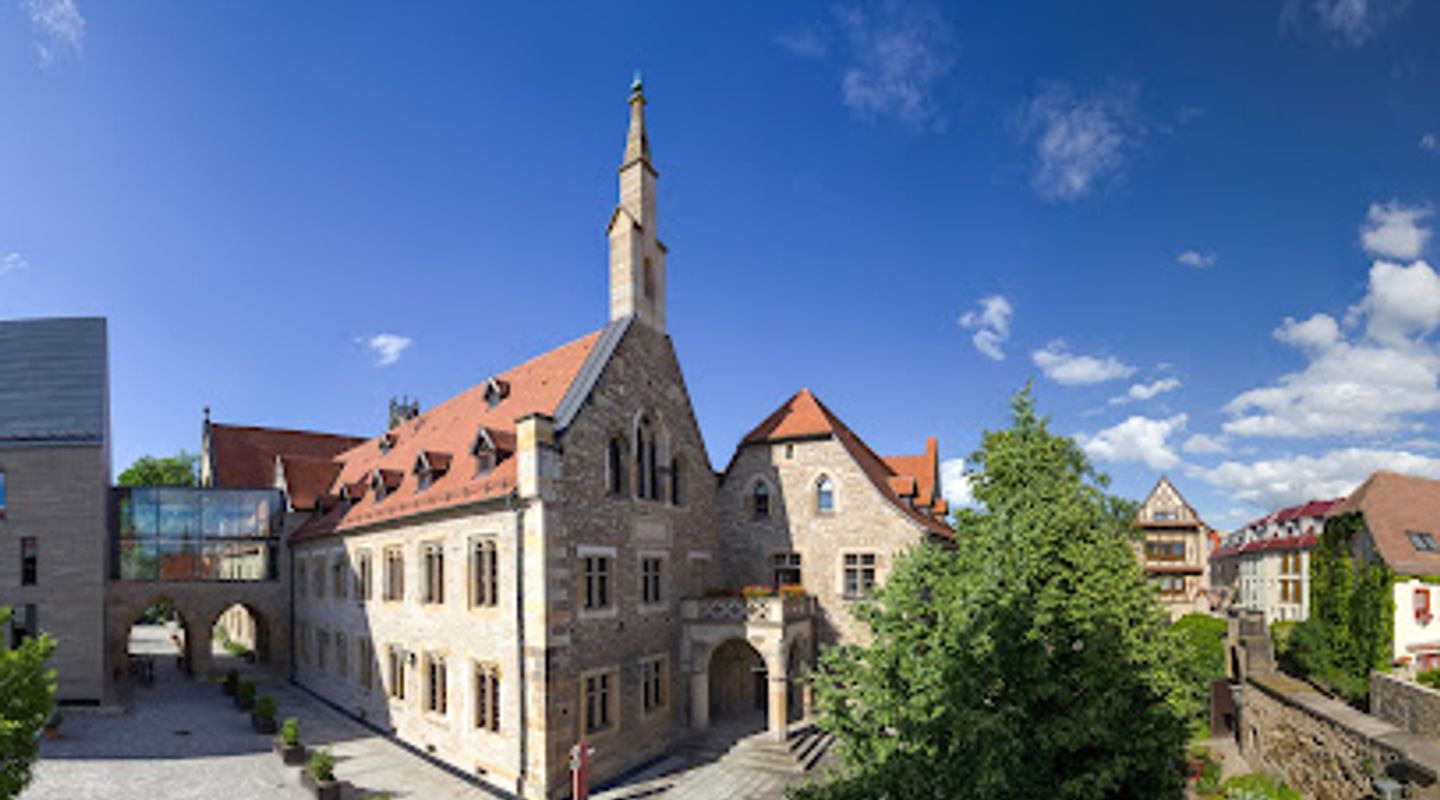
A brief summary of Protestant Augustinian Monastery Erfurt
Explore the former home of Martin Luther, a 13th-century monastery in Erfurt's old town, offering historical insights, spiritual reflection, and architectural beauty in the heart of Germany.
The Augustinian Monastery in Erfurt, Germany, is a captivating blend of medieval architecture and profound historical significance. Founded in the 13th century, it's most renowned as Martin Luther's home from 1505 to 1511, where he lived as an Augustinian friar and developed the theological foundations that would ignite the Reformation. Today, the monastery serves as a living church, a conference center, and a place of pilgrimage, offering visitors a chance to explore Luther's cell, admire stunning stained glass, and delve into centuries of religious and cultural heritage. Its location in Erfurt's Altstadt makes it easily accessible and a central point for exploring other historical landmarks. The monastery provides a unique opportunity to step back in time and connect with a pivotal moment in European history.
- Address
- Augustinerstraße 10, 99084 Erfurt
- Phone
- Website
Getting there
Walking
Public Transport
Taxi/Ride-Share
Driving
Discover more about Protestant Augustinian Monastery Erfurt
Overview
The Augustinian Monastery in Erfurt stands as a testament to centuries of religious devotion, intellectual ferment, and architectural evolution. Founded in the late 13th century by Augustinian friars, the monastery quickly became a significant center of learning and spiritual practice. Its history is inextricably linked to Martin Luther, who entered the monastery in 1505 and spent six formative years within its walls. During his time here, Luther grappled with theological questions, experienced profound spiritual awakenings, and laid the groundwork for the Protestant Reformation. The monastery complex itself is a fascinating blend of architectural styles, reflecting its long and varied history. The church, with its soaring Gothic arches and intricate stained glass windows, provides a serene space for contemplation and worship. The cloisters, with their peaceful courtyard and arcaded walkways, offer a glimpse into the daily life of the monks who once resided here. The library, housing a collection of over 60,000 historical books and manuscripts, stands as a testament to the monastery's commitment to learning and scholarship. Visitors to the Augustinian Monastery can explore a variety of exhibits and historical sites. Luther's cell, preserved as a memorial to the reformer, offers a glimpse into his personal life and the spartan conditions in which he lived. The monastery's museum showcases artifacts and documents related to Luther's life and the history of the Reformation. Guided tours provide in-depth information about the monastery's architecture, history, and spiritual significance. Beyond its connection to Martin Luther, the Augustinian Monastery has played a significant role in the history of Erfurt and the surrounding region. During the Middle Ages, the monastery served as a center of trade and commerce, with the Augustinian friars actively involved in the production and sale of woad, a blue dye used in the textile industry. The monastery also provided education and social services to the local community. Following the Reformation, the Augustinian Monastery underwent significant changes. In 1525, the monastery church was given to the newly formed Lutheran-Protestant church. The last of the friars died in 1556, and the property became the property of the Erfurt city council. The monastery was secularized in 1559, but reconsecrated in 1854. Today it belongs to the Evangelical Church in Central Germany. In the 20th century, the Augustinian Monastery suffered significant damage during World War II. A British air raid in 1945 destroyed parts of the complex, killing hundreds of people who had sought shelter within its walls. After the war, the monastery was painstakingly rebuilt, with efforts made to preserve its historical character while incorporating modern amenities. Today, the Augustinian Monastery serves as a multifaceted institution, encompassing a church, a conference center, a guesthouse, and a museum. It hosts religious services, concerts, lectures, and other cultural events throughout the year. Visitors can stay overnight in the monastery's guesthouse, experiencing the tranquility and spiritual atmosphere of this historic site. The monastery also serves as a center for ecumenical dialogue and social justice, promoting understanding and cooperation among people of different faiths and backgrounds. Visiting the Augustinian Monastery is more than just a sightseeing trip; it's an opportunity to connect with a pivotal moment in European history and to reflect on the enduring power of faith, ideas, and human resilience. Whether you're a history buff, a religious pilgrim, or simply a curious traveler, the Augustinian Monastery offers a rich and rewarding experience. The stained glass windows of the church, created between 1310 and 1340, are particularly noteworthy. The historical library comprises over 60,000 historical books and is one of the most important ecclesiastical book collections in Germany. In addition, there are around 13,000 manuscripts and prints dating from before 1850. The monastery can only be visited as part of a guided tour. Individual guided tours with audio guide or with guide service are available Monday to Friday: 10.00am-04.00pm, Saturday: 10.00am-03.00pm, Sundays and public holidays: 10.00am-01.30pm. There are also guided tours of the Augustinian Monastery and its Gardens daily at 11.00 am. Evening tours of Luther's sleepless nights in Erfurt are also available on Fridays. Culinary monastery tours are available on the 3rd Saturday of the month at 1.00 pm.
Evendo Review Centre
 Google
Guest reviews
Explore Protestant Augustinian Monastery Erfurt on the map
A handpicked selection of must-see spots near Protestant Augustinian Monastery Erfurt, mapped for you.
Get your free copy of our complete guide to Protestant Augustinian Monastery Erfurt, delivered straight to you.
Everything on this page, from opening hours and how to get there to Eve’s tips and the best time to go, in one PDF you can read offline, print or share.
Already have an account? Sign in
Your Protestant Augustinian Monastery Erfurt guide is ready.
We'll send it to · Not you? Sign out

Getting your guide ready…
We are putting together a fresh copy of the Protestant Augustinian Monastery Erfurt guide. This can take up to a minute.
This can take a few moments. If your browser asks, choose Allow so the download can start. You'll find the guide in your Downloads folder.
Nothing happened? Download it again
Sorry, the guide is taking longer than usual. Please try again in a minute, or get it by email instead.
Other nearby places you may find interesting
The closest places of the same kind, if this one is not quite what you had in mind.
-
-
-

-
-


Swipe for more places
More to explore near Protestant Augustinian Monastery Erfurt
-
 Best experiences near Protestant Augustinian Monastery Erfurt
-
 Best hotels near Protestant Augustinian Monastery Erfurt
-
 Best landmarks near Protestant Augustinian Monastery Erfurt
-
 Best attractions near Protestant Augustinian Monastery Erfurt
-
 Best shops near Protestant Augustinian Monastery Erfurt
-
 Best restaurants near Protestant Augustinian Monastery Erfurt
-
 Best bars near Protestant Augustinian Monastery Erfurt


Do you manage this location?
Take control to get all the benefits, like improved information, better appearance, and stronger visibility across AI-powered discovery.
Explore more
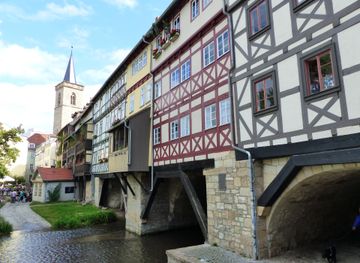
Explore more of Erfurt
Discover Erfurt: A medieval city with stunning architecture, rich history, and vibrant culture in the heart of Germany.
Explore Erfurt
Explore more of Germany
Experience Germany: where history meets innovation, and urban energy blends with natural beauty. Discover diverse cultures, delicious cuisine, and stunning landscapes.
Explore Germany