Background

Dreischeibenhaus: A Modernist Icon

A landmark of post-war modernism in Düsseldorf, the Dreischeibenhaus stands as a symbol of Germany's economic resurgence with its iconic three-slab design and innovative architecture.

4.5

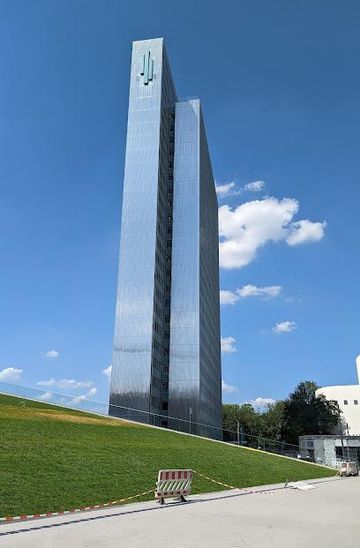
The Dreischeibenhaus, an architectural marvel in Düsseldorf, stands as a testament to post-war modernist design and Germany's economic resurgence. Completed in 1960, this 95-meter office building, composed of three staggered slabs, was a pioneering skyscraper and a symbol of innovation. Its sleek glass and steel facade, a novelty for its time, quickly became a landmark, gracing film sets and capturing international attention. Today, the Dreischeibenhaus continues to house offices and commercial spaces, including an Italian restaurant in its former lobby, while its 22nd-floor terrace offers panoramic city views on select days. A sensitive renovation has preserved its historical significance while adapting it to modern standards, solidifying its place as a must-see architectural gem in Düsseldorf.

A brief summary to Dreischeibenhaus

Local tips

  • Check the Dreischeibenhaus website for information on public access to the 22nd-floor terrace, which offers panoramic views of Düsseldorf.
  • Visit the Italian restaurant Cecino's, located in the building's former lobby, for a taste of modern Italian cuisine in a historic setting.
  • Explore the surrounding Hofgarten district, home to other notable landmarks like the Düsseldorfer Schauspielhaus and the Königsallee shopping boulevard.
widget icon

Getting There

  • Public Transport

    From Düsseldorf Hauptbahnhof (main train station), take any of the U-Bahn lines U70, U74, U75, U76, U77, or U78 towards Krefeld/Neuss to Heinrich-Heine-Allee station. From there, it's approximately a 10-minute walk to Dreischeibenhaus. Alternatively, take tram 707 from the main station in the direction of Düsseldorf Unterrath to the Jacobistraße stop, which is a short walk to the building. A single public transport fare within Düsseldorf (Tarifgebiet A) costs approximately €2.90.

  • Taxi/Ride-Share

    A taxi or ride-share from Düsseldorf Hauptbahnhof to Dreischeibenhaus typically takes around 10 minutes, depending on traffic. Expect to pay approximately €10-€15 for the ride.

  • Driving

    If driving, be aware that the Dreischeibenhaus is located in a busy area with limited immediate parking. Public parking is available in the Kö-Bogen group of buildings (Königsallee 2) and the Schadowstraße/Bleichstraße parking garages, a few minutes' walk away. Hourly parking rates typically range from €2.50 to €4.00.

Unlock the Best of Dreischeibenhaus

Buy tickets

    No tickets available

Book tours with entry

    No tours available

Book tours without entry

    No tours available

Discover more about Dreischeibenhaus

The Dreischeibenhaus, located in the heart of Düsseldorf, is more than just an office building; it's a symbol of post-war Germany's economic miracle and a prime example of modernist architecture. Completed in 1960, the building, whose name translates to "Three-Slab House," quickly became a landmark, its sleek design a stark contrast to the war-torn landscape of the time. Designed by architects Helmut Hentrich and Hubert Petschnigg, the Dreischeibenhaus was commissioned by Phönix-Rheinrohr AG, later acquired by ThyssenKrupp, who used it as their headquarters until 2010. The building's innovative design, featuring three offset slabs, was a first for Europe, utilizing a steel skeleton construction and a curtain wall of aluminum and glass. This created a light and airy feel, a departure from the heavy, traditional architecture of the past. The Dreischeibenhaus rises 95 meters (312 feet) high, a dizzying height for the era. Its three slabs intersect at the core, housing elevators, stairwells, and service facilities. This design cleverly avoids long, dark corridors, creating flexible office spaces that can be adapted to various needs. The exterior is equally striking, with stainless steel cladding accentuating the slender front ends of the slabs. Over the years, the Dreischeibenhaus has undergone several renovations to maintain its structural integrity and adapt to modern standards. In the early 1990s, a new curtain wall was installed to improve thermal performance and moisture control. A more comprehensive renovation in 2013, led by HPP Architects (the successors to the original architects), modernized the building's interior and enhanced its energy efficiency, achieving LEED Gold certification. Despite its age, the Dreischeibenhaus remains a vibrant part of Düsseldorf's cityscape. It houses a mix of offices, commercial spaces, and even an Italian restaurant, Cecino's, in its former reception lobby. The 22nd-floor terrace, open to the public on select days, offers stunning panoramic views of the city. The Dreischeibenhaus has also made its mark on popular culture. Its distinctive appearance has been featured in numerous films and television shows, including the Hollywood blockbuster "Cloud Atlas," which brought a touch of glamour to Düsseldorf in 2013. Located in the Hofgarten district, the Dreischeibenhaus is surrounded by other notable landmarks, including the Düsseldorfer Schauspielhaus (Düsseldorf Theatre) and the Königsallee, a famous shopping boulevard. Its central location makes it easily accessible by public transportation and car. The Dreischeibenhaus stands as a symbol of Düsseldorf's resilience and innovation. Its pioneering design, its role in Germany's economic recovery, and its continued presence in the city's skyline make it a must-see destination for architecture enthusiasts and anyone interested in the history of post-war Germany. Visiting the Dreischeibenhaus offers a glimpse into the past while showcasing the best of modern design. Whether you're admiring its sleek facade, exploring its interior spaces, or taking in the views from its terrace, the Dreischeibenhaus is sure to leave a lasting impression. The building's significance extends beyond its architectural merits. It represents a pivotal moment in German history, a time of rebuilding and reinvention. The Dreischeibenhaus embodies the optimism and forward-thinking spirit of the era, a spirit that continues to inspire Düsseldorf today. As you stand before this iconic structure, take a moment to appreciate its history, its design, and its enduring legacy. The Dreischeibenhaus is more than just a building; it's a symbol of a city's strength, its creativity, and its unwavering commitment to progress. While primarily an office building, the Dreischeibenhaus offers a unique opportunity to experience a piece of architectural history. Its central location, its striking design, and its cultural significance make it a worthwhile addition to any Düsseldorf itinerary. The building is a testament to the power of architecture to shape a city's identity and to inspire generations to come. Today, the Dreischeibenhaus is a protected historical landmark, ensuring that its legacy will endure for years to come. Its story is a reminder that even in the face of adversity, innovation and creativity can flourish, creating lasting symbols of hope and progress. The Dreischeibenhaus is a living testament to Düsseldorf's past, present, and future.

Popular Experiences near Dreischeibenhaus

Popular Hotels near Dreischeibenhaus

Select Currency