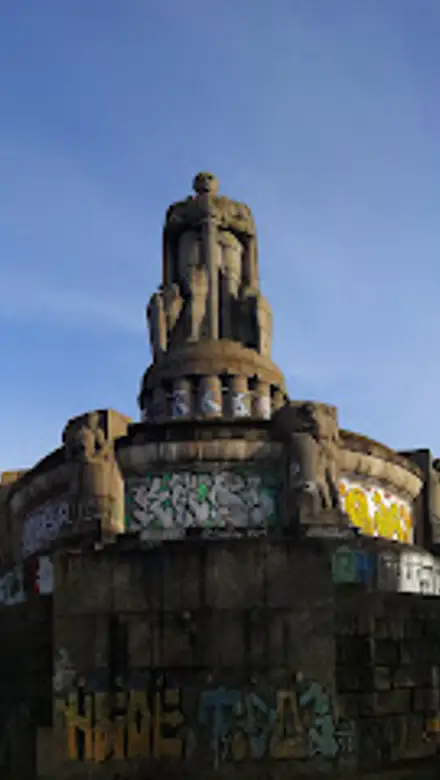
Bismarck Monument, Hamburg Travel Guide
Free Guide: A colossal granite monument honoring Otto von Bismarck, offering panoramic views of Hamburg's harbor and a glimpse into German history.


A brief summary of Bismarck Monument
A colossal granite monument honoring Otto von Bismarck, offering panoramic views of Hamburg's harbor and a glimpse into German history.
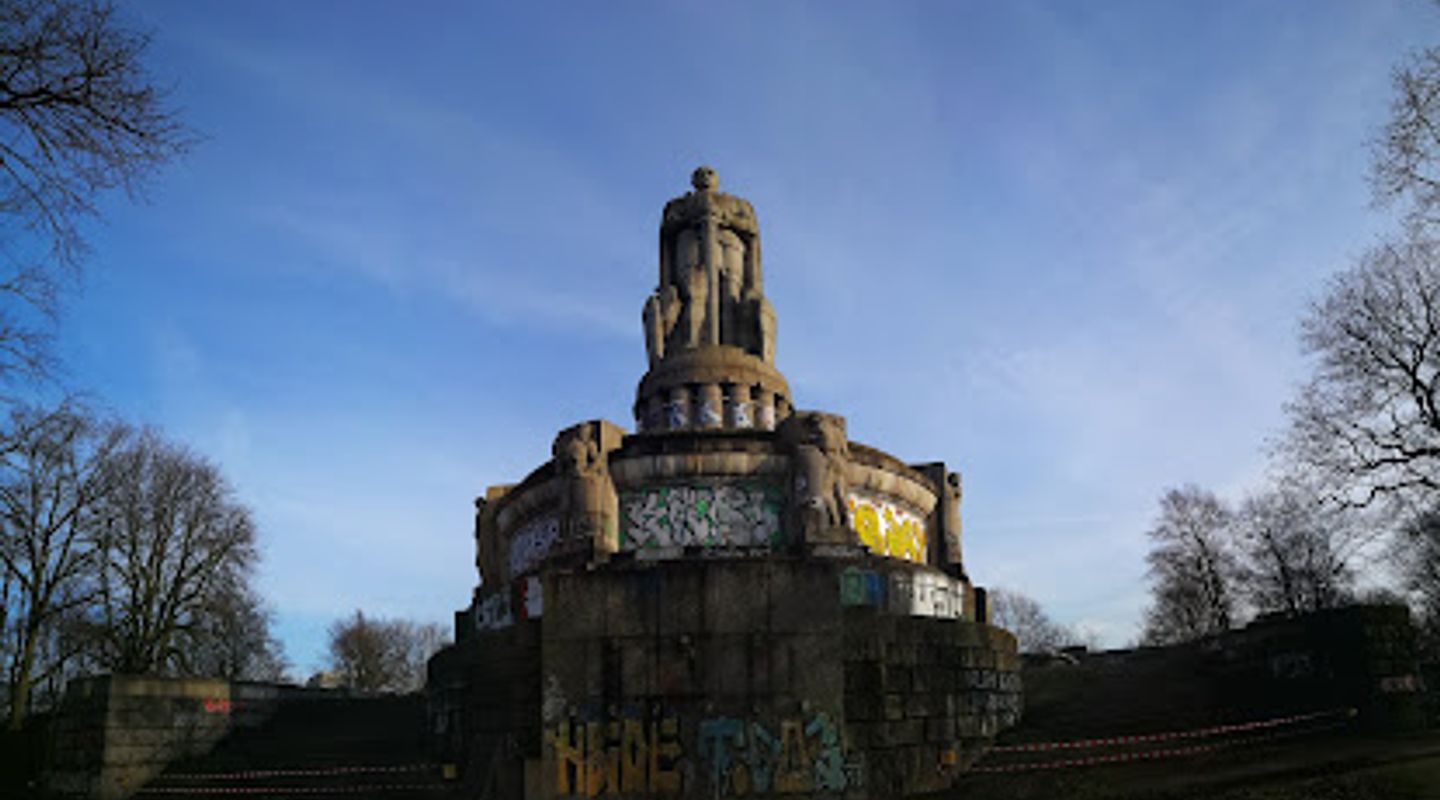
Dominating the Hamburg skyline, the Bismarck Monument is a colossal tribute to Otto von Bismarck, the first Chancellor of the German Empire. Erected between 1903 and 1906, this imposing granite structure stands 34 meters (112 feet) tall in the Alter Elbpark, overlooking the bustling harbor. The monument portrays Bismarck as a stern, resolute figure, embodying the strength and unity he brought to Germany. More than just a statue, it's a symbol of German history and a reminder of the complex legacy of a powerful leader. Visitors can explore the surrounding park, enjoy panoramic views of the Elbe River, and reflect on the historical significance of this iconic landmark. While the catacombs beneath the monument are currently inaccessible, the sheer scale and historical context of the Bismarck Monument make it a compelling destination for anyone interested in German history and impressive monuments.
Opening hours
- Every dayOpen 24 hours
Opening hours as listed on the venue’s Google Business Profile. Hours can change for services and special events, so check with the venue before you go.
- Address
- Seewartenstraße 4, 20459 Hamburg
- Website
Getting there
Walking
Public Transport
Taxi/Ride-Share
Discover more about Bismarck Monument
Overview
The Bismarck Monument in Hamburg is more than just a statue; it's a towering symbol of German history and a testament to the complex legacy of Otto von Bismarck, the first Chancellor of the German Empire. Located in the St. Pauli quarter, within the Alter Elbpark, the monument stands as the largest and arguably the most well-known of the numerous Bismarck memorials scattered across the globe. Erected between 1903 and 1906, the monument was the result of an architectural competition held to honor Bismarck after his death in 1898. The winning design, a collaboration between architect Johann Emil Schaudt and sculptor Hugo Lederer, presented Bismarck as a modern-day Roland, a symbol of freedom and justice. This choice was somewhat controversial, as Bismarck's relationship with Hamburg was often characterized by discord. Nevertheless, the monument has become inextricably linked with the city. The monument's sheer size is awe-inspiring. Rising to a height of approximately 35 meters (115 feet) and weighing a staggering 625 tons, it dominates the Elbpark and is visible from afar, especially from the harbor. The granite figure of Bismarck himself stands 14.8 meters tall, wielding an 8-meter-long sword. The monument depicts Bismarck as a stern, resolute figure, embodying the strength and determination that characterized his political career. The base of the monument is adorned with reliefs depicting scenes from Bismarck's life and achievements. Eagles, symbols of the German Empire, are prominently featured, further emphasizing the monument's connection to German national identity. The overall style is distinctly Germanic, reflecting the artistic trends of the early 20th century. Beneath the monument lies a network of catacombs, the original purpose of which remains shrouded in mystery. During the Second World War, these catacombs served as an air-raid shelter, providing refuge for up to 650 people. After 1941, murals depicting Bismarck quotes and Prussian national images were added to the catacombs. Today, the catacombs are inaccessible to the public due to safety concerns, adding to the monument's mystique. The Bismarck Monument has not been without its critics. Some locals view it as an outdated symbol of imperial Germany, while others question the appropriateness of honoring a figure whose relationship with Hamburg was often strained. Nevertheless, the monument remains a popular tourist attraction and a significant landmark in the city. In recent years, efforts have been made to revitalize the Alter Elbpark surrounding the monument. These revitalization measures include extensive work to improve the park's landscaping and amenities. There are also plans to install a small history museum within the catacombs, providing visitors with a more comprehensive understanding of Bismarck's life and legacy. The monument's location in the St. Pauli quarter places it in close proximity to other popular attractions, including the Reeperbahn, the Landungsbrücken, and the Heiligengeistfeld. This makes it easy to combine a visit to the Bismarck Monument with other sightseeing activities. Whether you are a history enthusiast, an architecture lover, or simply looking for a unique photo opportunity, the Bismarck Monument is well worth a visit. Its imposing size, historical significance, and stunning views of the Elbe River make it a truly unforgettable landmark. Visiting the Bismarck Monument is free of charge, and it is open to the public year-round. The monument is easily accessible by public transportation, with several U-Bahn and S-Bahn stations located nearby. From the Landungsbrücken, it's a short walk uphill to the monument, offering stunning views of the harbor along the way. The Bismarck Monument stands as a powerful reminder of Germany's complex past and the enduring legacy of one of its most influential figures. It is a must-see destination for anyone interested in German history, architecture, and culture. While visiting, take a moment to reflect on the historical context of the monument. Consider the political climate in which it was built, the controversies surrounding Bismarck's legacy, and the monument's evolving role in Hamburg's urban landscape. By engaging with the monument on a deeper level, you can gain a greater appreciation for its significance and its enduring impact on the city. The Bismarck Monument is more than just a statue; it's a living testament to the power of history and the enduring legacy of a complex and controversial figure.
Evendo Review Centre
 Google
Guest reviews
Explore Bismarck Monument on the map
A handpicked selection of must-see spots near Bismarck Monument, mapped for you.
Get your free copy of our complete guide to Bismarck Monument, delivered straight to you.
Everything on this page, from opening hours and how to get there to Eve’s tips and the best time to go, in one PDF you can read offline, print or share.
Already have an account? Sign in
Your Bismarck Monument guide is ready.
We'll send it to · Not you? Sign out

Getting your guide ready…
We are putting together a fresh copy of the Bismarck Monument guide. This can take up to a minute.
This can take a few moments. If your browser asks, choose Allow so the download can start. You'll find the guide in your Downloads folder.
Nothing happened? Download it again
Sorry, the guide is taking longer than usual. Please try again in a minute, or get it by email instead.
Unlock the best of Bismarck Monument
Skip-the-line tickets, guided tours with entry, and walking tours of the area, booked in a few clicks.


Other nearby places you may find interesting
The closest places of the same kind, if this one is not quite what you had in mind.
-
-
-
-
-


Swipe for more places
More to explore near Bismarck Monument

 Best experiences near Bismarck Monument
 Best hotels near Bismarck Monument
 Best landmarks near Bismarck Monument
 Best attractions near Bismarck Monument
 Best shops near Bismarck Monument
 Best restaurants near Bismarck Monument
 Best bars near Bismarck Monument
Do you manage this location?
Take control to get all the benefits, like improved information, better appearance, and stronger visibility across AI-powered discovery.
Explore more

Explore more of Sternschanze
Discover Sternschanze in Hamburg: A Bohemian Neighbourhood with a Rich History, Vibrant Food Scene, and Lively Nightlife.
Explore Sternschanze
Explore more of Hamburg
Discover Hamburg: A vibrant port city blending rich maritime heritage, eclectic neighborhoods, and cultural treasures, offering unforgettable experiences for every traveler.
Explore Hamburg