

Aegidienkirche, Hannover Travel Guide
Free Guide: Discover Hanover's Aegidienkirche: A poignant war memorial, preserved as ruins, symbolizing peace and resilience, featuring a Hiroshima peace bell and Gothic architecture.


A brief summary of Aegidienkirche
Discover Hanover's Aegidienkirche: A poignant war memorial, preserved as ruins, symbolizing peace and resilience, featuring a Hiroshima peace bell and Gothic architecture.
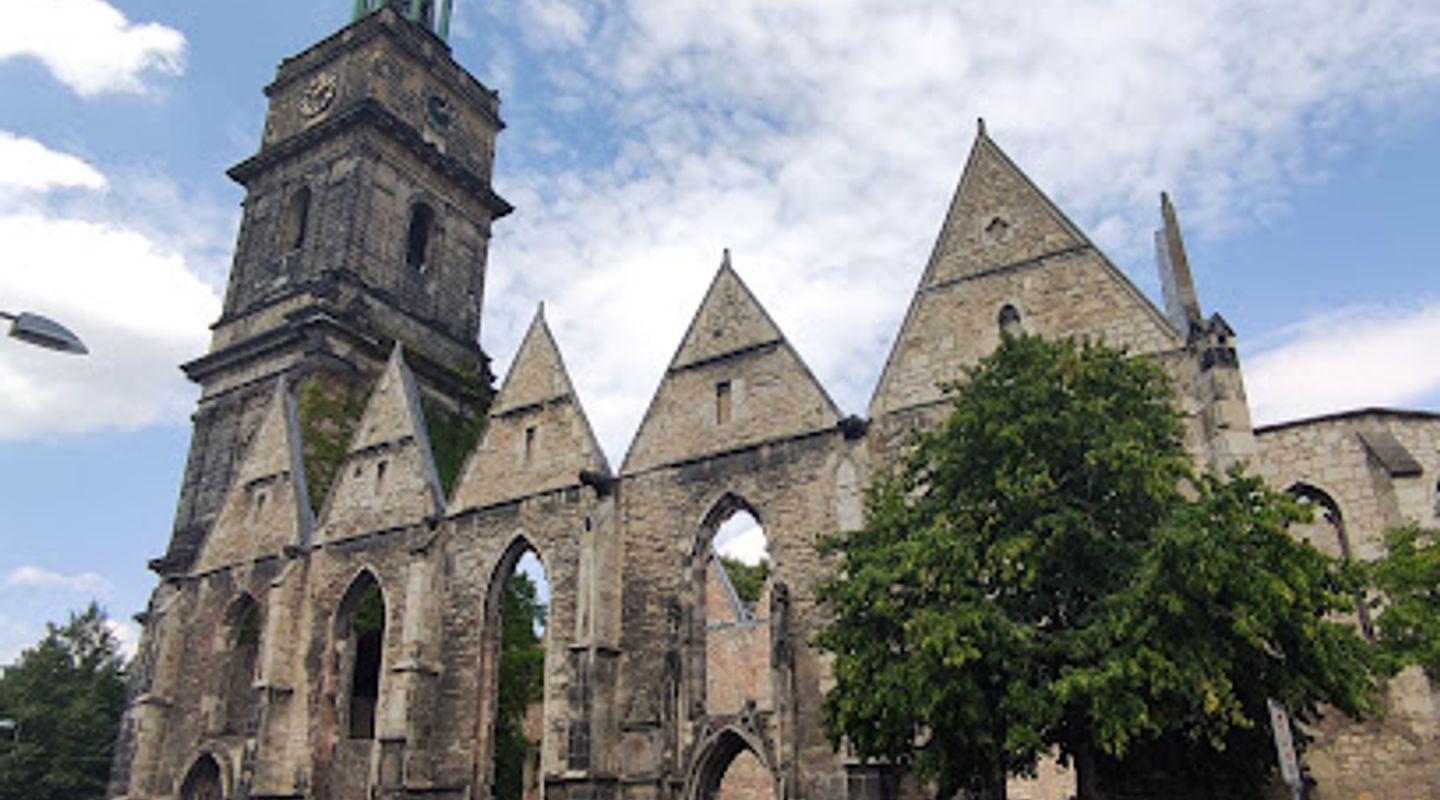
The Aegidienkirche, a partially ruined 14th-century church in Hanover, stands as a poignant war memorial. Bombed during World War II, its remains were intentionally preserved as a reminder of the horrors of war and a symbol of peace and reconciliation. Visitors can explore the haunting ruins, including the skeletal tower and remnants of Gothic architecture, and reflect on the church's history and significance. The site features a peace bell donated by Hiroshima, a sculpture symbolizing humility, and epitaphs that survived the bombings. Open daily, the Aegidienkirche offers a tranquil space for contemplation amidst the bustling city, inviting reflection on the past and a commitment to peace. It's a must-see for those seeking a deeper understanding of Hanover's history and its dedication to global harmony.
Opening hours
- Every day10 am–6 pm
Opening hours as listed on the venue’s Google Business Profile. Hours can change for services and special events, so check with the venue before you go.
- Address
- Aegidienkirchhof 1, 30159 Hannover
- Website
Getting there
Public Transport
Walking
Bus
Discover more about Aegidienkirche
Overview
Aegidienkirche, or St. Giles' Church, is more than just a historical landmark; it's a powerful symbol of Hanover's resilience and commitment to peace. Originally constructed in 1347, replacing earlier Romanesque structures, the church served as a vital religious center in the heart of Hanover's Old Town. Dedicated to Saint Giles, the patron saint of beggars and the handicapped, it held significant importance for the community. The church's architecture evolved over centuries, showcasing a blend of styles. The main structure was built in the Gothic style using sandstone from the nearby Deister hills. In the early 18th century, the tower received a Baroque facade designed by Sudfeld Vick, adding a touch of elegance. Later, in the 19th century, architects like Georg Ludwig Friedrich Laves and Conrad Wilhelm Hase contributed to interior renovations, incorporating cast-iron columns and other enhancements. However, the night of October 8, 1943, irrevocably altered the Aegidienkirche. During a series of devastating air raids, the church was heavily bombed, leaving it in ruins. While many other historical buildings in Hanover were reconstructed after the war, a deliberate decision was made to preserve the Aegidienkirche as a war memorial. This act transformed the site into a profound reminder of the destruction and suffering caused by war and violence. Today, visitors can wander through the haunting remains of the church, including the skeletal tower, sections of the nave, and fragments of the original walls. The open-air structure allows for quiet contemplation, with sunlight filtering through the empty window frames, creating a powerful atmosphere of reflection. The ruins are not merely remnants of destruction; they are a testament to the enduring human spirit. Within the Aegidienkirche, several features enhance its significance as a memorial. A sculpture titled "Demut" (Humility) by Kurt Lehmann, created in 1959, stands as a central symbol of the site's message. Additionally, the church houses a peace bell, a gift from Hanover's sister city, Hiroshima, Japan. This bell is rung annually on August 6th, the anniversary of the atomic bombing of Hiroshima, during a memorial service for the victims. This act of international solidarity underscores the church's role as a beacon of peace and reconciliation. Surrounding the church, the Aegidienkirchhof provides a tranquil space for visitors to reflect on the site's history and message. Epitaphs that survived the bombings can be seen on the outer walls, offering glimpses into the lives of people who were part of the church's community centuries ago. One notable epitaph is dedicated to Susanna Magdalena Oldekop, who died as a child in 1648, depicting her with an angel. Another significant feature is the Siebenmännerstein, a relief depicting seven praying men. This is a copy of the original, which is housed in the Historical Museum of Hanover. The relief is linked to a local legend about seven men who sacrificed themselves during an attack to save the city. The Aegidienkirche also features a carillon in its bell tower, which chimes regularly, adding a melodic element to the site's ambiance. The interplay of light and shadow within the ruins creates stunning photographic opportunities, making it a compelling destination for history enthusiasts and casual travelers alike. The Aegidienkirche is more than just a collection of stones; it is a living memorial that connects the past with the present. It serves as a reminder of the importance of peace, reconciliation, and understanding in a world often marked by conflict. A visit to this site offers a unique and enriching experience, inviting reflection on the human condition and a renewed commitment to building a more peaceful future. The Aegidienkirche is open daily from 10:00 to 18:00, offering ample opportunity for visitors to explore its grounds and absorb its history. Whether you are drawn to its architectural beauty, its historical significance, or its message of peace, the Aegidienkirche promises an unforgettable experience in the heart of Hanover.
Evendo Review Centre
 Google
Guest reviews
Explore Aegidienkirche on the map
A handpicked selection of must-see spots near Aegidienkirche, mapped for you.
Get your free copy of our complete guide to Aegidienkirche, delivered straight to you.
Everything on this page, from opening hours and how to get there to Eve’s tips and the best time to go, in one PDF you can read offline, print or share.
Already have an account? Sign in
Your Aegidienkirche guide is ready.
We'll send it to · Not you? Sign out

Getting your guide ready…
We are putting together a fresh copy of the Aegidienkirche guide. This can take up to a minute.
This can take a few moments. If your browser asks, choose Allow so the download can start. You'll find the guide in your Downloads folder.
Nothing happened? Download it again
Sorry, the guide is taking longer than usual. Please try again in a minute, or get it by email instead.
Unlock the best of Aegidienkirche
Skip-the-line tickets, guided tours with entry, and walking tours of the area, booked in a few clicks.


Other nearby places you may find interesting
The closest places of the same kind, if this one is not quite what you had in mind.
-
-
-
-
-


Swipe for more places
More to explore near Aegidienkirche

 Best experiences near Aegidienkirche
 Best hotels near Aegidienkirche
 Best landmarks near Aegidienkirche
 Best attractions near Aegidienkirche
 Best shops near Aegidienkirche
 Best restaurants near Aegidienkirche
 Best bars near Aegidienkirche
Do you manage this location?
Take control to get all the benefits, like improved information, better appearance, and stronger visibility across AI-powered discovery.
Explore more
Explore more of Hannover
Discover Hannover: A charming blend of history, culture, and nature in the heart of Lower Saxony, perfect for travelers seeking a unique and enriching experience.
Explore Hannover
Explore more of Germany
Experience Germany: where history meets innovation, and urban energy blends with natural beauty. Discover diverse cultures, delicious cuisine, and stunning landscapes.
Explore Germany
