

Deutsches Eck, Koblenz Travel Guide
Free Guide: Witness the confluence of history and nature at Deutsches Eck in Koblenz, where the Rhine and Moselle meet beneath the gaze of Kaiser Wilhelm I's monument, a symbol of German unity.


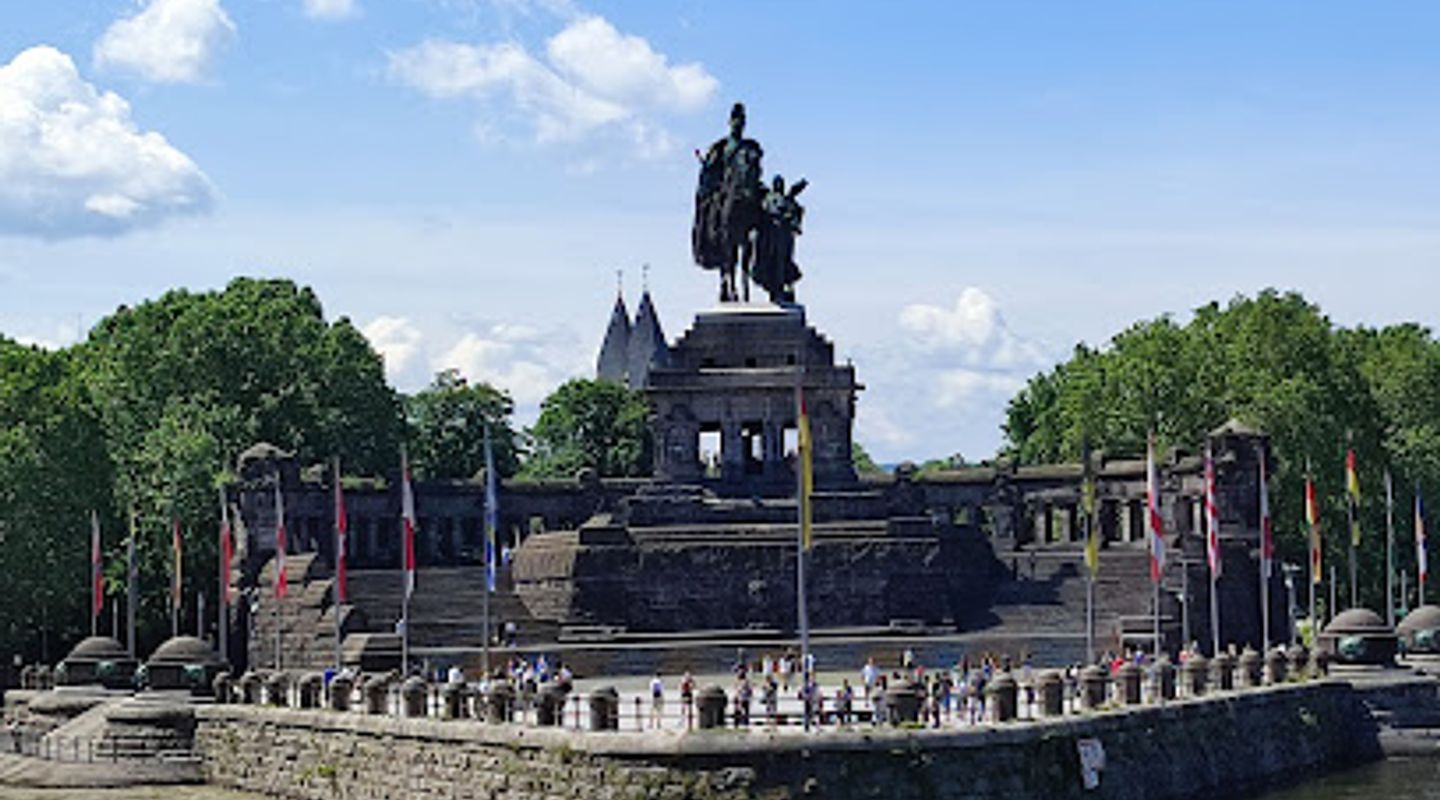
A brief summary of Deutsches Eck
Witness the confluence of history and nature at Deutsches Eck in Koblenz, where the Rhine and Moselle meet beneath the gaze of Kaiser Wilhelm I's monument, a symbol of German unity.
The Deutsches Eck (German Corner) in Koblenz is a powerful symbol of German history and reunification. This iconic landmark marks the confluence of the Rhine and Moselle rivers, offering stunning panoramic views and a tangible connection to the nation's past. Dominated by a colossal equestrian statue of Kaiser Wilhelm I, the Deutsches Eck serves as a reminder of German imperial ambitions and the subsequent divisions of the 20th century. Today, it stands as a monument to unity and a popular gathering place for locals and tourists alike. The surrounding promenade provides ample space for leisurely strolls, while the vibrant atmosphere and the constant flow of river traffic create a dynamic and engaging experience. Whether you're a history buff, a photography enthusiast, or simply seeking a picturesque spot to soak in the beauty of the Rhineland, the Deutsches Eck is an unmissable destination.
Opening hours
- Every dayOpen 24 hours
Opening hours as listed on the venue’s Google Business Profile. Hours can change for services and special events, so check with the venue before you go.
- Address
- Konrad-Adenauer-Ufer, 56068 Koblenz
- Phone
- Website
Getting there
Walking
Public Transport
Taxi/Ride-Share
Discover more about Deutsches Eck
Overview
The Deutsches Eck, or German Corner, in Koblenz is more than just a scenic point where the Rhine and Moselle rivers converge; it's a living testament to German history, a symbol of national unity, and a vibrant public space that draws visitors from around the globe. Its story begins in the late 19th century, during the reign of Kaiser Wilhelm I, the first German Emperor. In 1897, a monumental equestrian statue of the Kaiser was erected at the point where the two great rivers meet, a powerful statement of imperial Germany's strength and ambition. The statue, a colossal bronze figure atop a towering pedestal, quickly became a national icon, embodying the spirit of the German Empire. The choice of Koblenz as the location for this grand monument was no accident. The city, strategically situated at the confluence of the Rhine and Moselle, had long been a place of historical significance, a crossroads of cultures and a vital center of trade and transportation. By placing the statue here, the imperial government sought to emphasize the importance of the Rhineland region to the German nation. However, the Deutsches Eck's history is not without its darker chapters. Following World War I, the Rhineland was occupied by Allied forces, and the statue of Kaiser Wilhelm I became a symbol of a bygone era, a reminder of the imperial ambitions that had led to the devastating conflict. During World War II, the Deutsches Eck suffered heavy damage from Allied bombing raids, and the statue itself was severely damaged. In the aftermath of the war, with Germany divided and the future uncertain, the Deutsches Eck took on a new significance. In 1953, Federal President Theodor Heuss declared the site a monument to German unity, a symbol of hope for a reunified nation. A German flag was raised in place of the damaged statue, representing the longing for a united Germany. The fall of the Berlin Wall in 1989 and the subsequent reunification of Germany in 1990 marked a turning point in the Deutsches Eck's history. The desire to restore the statue of Kaiser Wilhelm I grew, and after years of fundraising and restoration work, a replica of the original monument was unveiled in 1993. The restored statue, once again dominating the Deutsches Eck, became a symbol of the reunited Germany, a reminder of the nation's past and a celebration of its present. Today, the Deutsches Eck is one of the most popular tourist destinations in Germany, attracting millions of visitors each year. The site offers stunning panoramic views of the Rhine and Moselle rivers, as well as the city of Koblenz and the surrounding landscape. Visitors can stroll along the promenade, take a boat trip on the rivers, or simply relax and soak in the atmosphere of this historic place. The Deutsches Eck is also a popular venue for events and festivals throughout the year. From open-air concerts to wine festivals, there's always something happening at this vibrant public space. The site is also a popular spot for wedding photos, with couples from around the world choosing to exchange vows against the backdrop of the iconic statue and the majestic rivers. Beyond its historical and symbolic significance, the Deutsches Eck is also a place of natural beauty. The confluence of the Rhine and Moselle creates a unique ecosystem, supporting a diverse range of plant and animal life. The surrounding landscape is characterized by rolling hills, vineyards, and picturesque villages, making it an ideal destination for hiking and cycling. Visiting the Deutsches Eck is an experience that engages all the senses. The sight of the colossal statue, the sound of the flowing rivers, the smell of the fresh air, and the taste of the local wine all combine to create a memorable and enriching experience. Whether you're a history buff, a nature lover, or simply seeking a place to relax and unwind, the Deutsches Eck has something to offer everyone. The area surrounding the Deutsches Eck is equally compelling. The Ehrenbreitstein Fortress, perched high on a hill across the Rhine, offers breathtaking views and a glimpse into the region's military history. The Koblenz Old Town, with its charming cobblestone streets and historic buildings, is a delight to explore. And the numerous wineries and vineyards in the surrounding area offer the opportunity to sample some of the region's finest wines. The Deutsches Eck is more than just a monument; it's a living, breathing part of German history and culture. It's a place where the past meets the present, where the rivers flow together, and where visitors from around the world come to experience the beauty and the spirit of the Rhineland.
Evendo Review Centre
 Google
Guest reviews
Explore Deutsches Eck on the map
A handpicked selection of must-see spots near Deutsches Eck, mapped for you.
Get your free copy of our complete guide to Deutsches Eck, delivered straight to you.
Everything on this page, from opening hours and how to get there to Eve’s tips and the best time to go, in one PDF you can read offline, print or share.
Already have an account? Sign in
Your Deutsches Eck guide is ready.
We'll send it to · Not you? Sign out

Getting your guide ready…
We are putting together a fresh copy of the Deutsches Eck guide. This can take up to a minute.
This can take a few moments. If your browser asks, choose Allow so the download can start. You'll find the guide in your Downloads folder.
Nothing happened? Download it again
Sorry, the guide is taking longer than usual. Please try again in a minute, or get it by email instead.
Unlock the best of Deutsches Eck
Skip-the-line tickets, guided tours with entry, and walking tours of the area, booked in a few clicks.
 Tour with entry
Discover Koblenz: Old Town, Rhine Promenade & Deutsches Eck
from $373.80 Tour with entry
Koblenz: Deutsches Eck, Cable Car ride & Ehrenbreitstein Fortress
from $450.70 Tour with entry
Frankfurt: Eltz Castle, Cochem and Moselle Valley Private Tour
from $741.08 Tour with entry
Private Eltz Castle and Cochem and Koblenz Tour from Frankfurt
from $747.60


Other nearby places you may find interesting
The closest places of the same kind, if this one is not quite what you had in mind.
-
-
-
-
-


Swipe for more places
More to explore near Deutsches Eck

 Best experiences near Deutsches Eck
 Best hotels near Deutsches Eck
 Best landmarks near Deutsches Eck
 Best attractions near Deutsches Eck
 Best shops near Deutsches Eck
 Best restaurants near Deutsches Eck
 Best bars near Deutsches Eck
Do you manage this location?
Take control to get all the benefits, like improved information, better appearance, and stronger visibility across AI-powered discovery.
Explore more

Explore more of Koblenz
Discover Koblenz: A Historic City at the Confluence of the Rhine and Moselle, Offering Stunning Views, Rich Culture, and Scenic River Cruises.
Explore Koblenz
Explore more of Germany
Experience Germany: where history meets innovation, and urban energy blends with natural beauty. Discover diverse cultures, delicious cuisine, and stunning landscapes.
Explore Germany
