
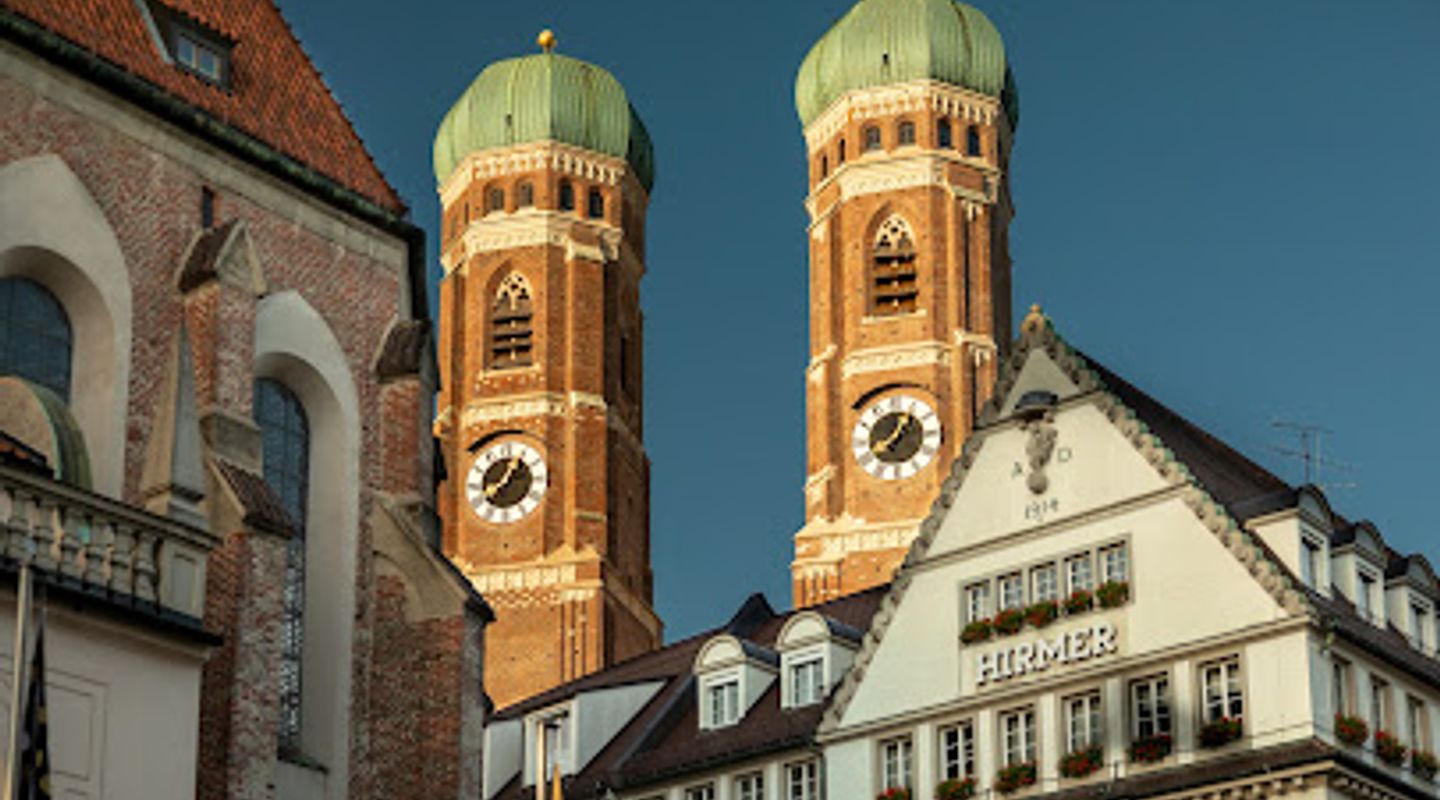
Frauenkirche, Munich Travel Guide
Discover Munich's iconic Frauenkirche: a symbol of resilience, architectural grandeur, and rich history, offering panoramic views and a glimpse into Bavarian heritage.
The Frauenkirche, or Cathedral of Our Lady, is Munich's most recognizable landmark, its twin towers dominating the city skyline. Built in the late Gothic style, the red-brick church stands as a testament to Munich's resilience, having been painstakingly restored after severe damage in World War II. Inside, discover the Devil's Footprint, a mysterious mark with a legendary tale, and climb the south tower for panoramic views stretching to the Alps. The Frauenkirche is more than just a beautiful building; it's a symbol of Munich's history, faith, and architectural ingenuity, drawing visitors from around the globe to experience its unique atmosphere and rich cultural heritage. Its simple yet imposing design, coupled with its central location, makes it an unmissable stop for any traveler exploring the Bavarian capital.
A brief summary to Frauenkirche
- Frauenplatz 1, Munich, Altstadt-Lehel, 80331, DE
- Click to display
- Click to display

Know before you go
Hi, I'm Eve. Here are a few practical things to know before exploring Frauenkirche.
- Climb the south tower for panoramic views of Munich and, on clear days, the Alps. Tickets are available in the cathedral shop.
- Look for the Devil's Footprint (Teufelstritt) near the entrance and learn the legend behind this mysterious mark.
- Attend an organ concert or cathedral music performance to experience the Frauenkirche's remarkable acoustics.
- Combine your visit with a stroll through the pedestrian zone of Frauenplatz and nearby Marienplatz to soak in the atmosphere of Munich.
- Check the opening hours before your visit, as the church may be closed for services or special events.
Do you manage this location?
Take control to get all the benefits, like improved information, better appearance, and stronger visibility across AI-powered discovery. Learn more about listing your business on Evendo
Activate your presenceOther nearby places you may find interesting
The closest places of the same kind, if this one is not quite what you had in mind.

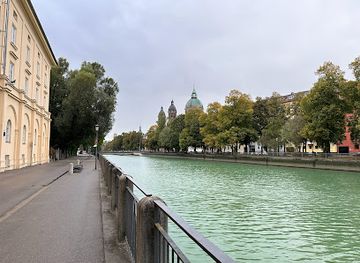
Explore Frauenkirche on the Map
A handpicked selection of must-see spots near Frauenkirche, mapped for you.
Unlock the Best of Frauenkirche
Buy tickets
-
No tickets available
Book tours with entry


Getting There
-
Walking
The Frauenkirche is located in the heart of Munich's Altstadt (Old Town) and is easily accessible on foot from most central locations. From Marienplatz, head north along Kaufingerstrasse. The Frauenkirche will be visible on your right after a short walk. The walk is approximately 5 minutes and takes you through a pedestrian zone with shops and cafes.
-
Public Transport
The closest public transport stop is Marienplatz, served by both U-Bahn (lines U3 and U6) and S-Bahn (all S-Bahn lines). From Marienplatz station, follow the signs towards Kaufingerstrasse and the Frauenkirche. The walk from the station exit to the church is approximately 5 minutes. A single short trip ticket (Kurzstrecke) on the U-Bahn or S-Bahn costs around €1.90. A day ticket (Tageskarte) might be a better value if you plan to use public transport multiple times.
-
Taxi/Ride-Share
Taxis and ride-sharing services can drop you off near the Frauenkirche, but note that the immediate area is a pedestrian zone. The closest drop-off point is likely on one of the streets bordering the Altstadtring, such as Kardinal-Faulhaber-Strasse or Augustinerstrasse. From there, it's a short walk to the church. A taxi ride from Munich Central Station (Hauptbahnhof) to the vicinity of the Frauenkirche will cost approximately €10-€15, depending on traffic.
-
Driving
Driving directly to the Frauenkirche is not recommended due to the pedestrian zone in the city center. Parking is available in several garages in the vicinity, such as the Parkgarage Marienplatz (Rindermarkt 16) or the parking garage at the Schrannenhalle (Prälat-Zistel-Straße). Parking fees typically range from €6-€8 per 2 hours, with daily maximums around €45. Street parking is very limited and difficult to find. Consider using a Park and Ride (P+R) facility outside the city center and taking public transport to Marienplatz.
Discover more about Frauenkirche













Your all‑in‑one travel companion app
Explore expert travel guides, compare and book tours, experiences, hotels, and more—all from the palm of your hand. Download now for seamless trip planning wherever your wanderlust takes you.


Explore More of Munich
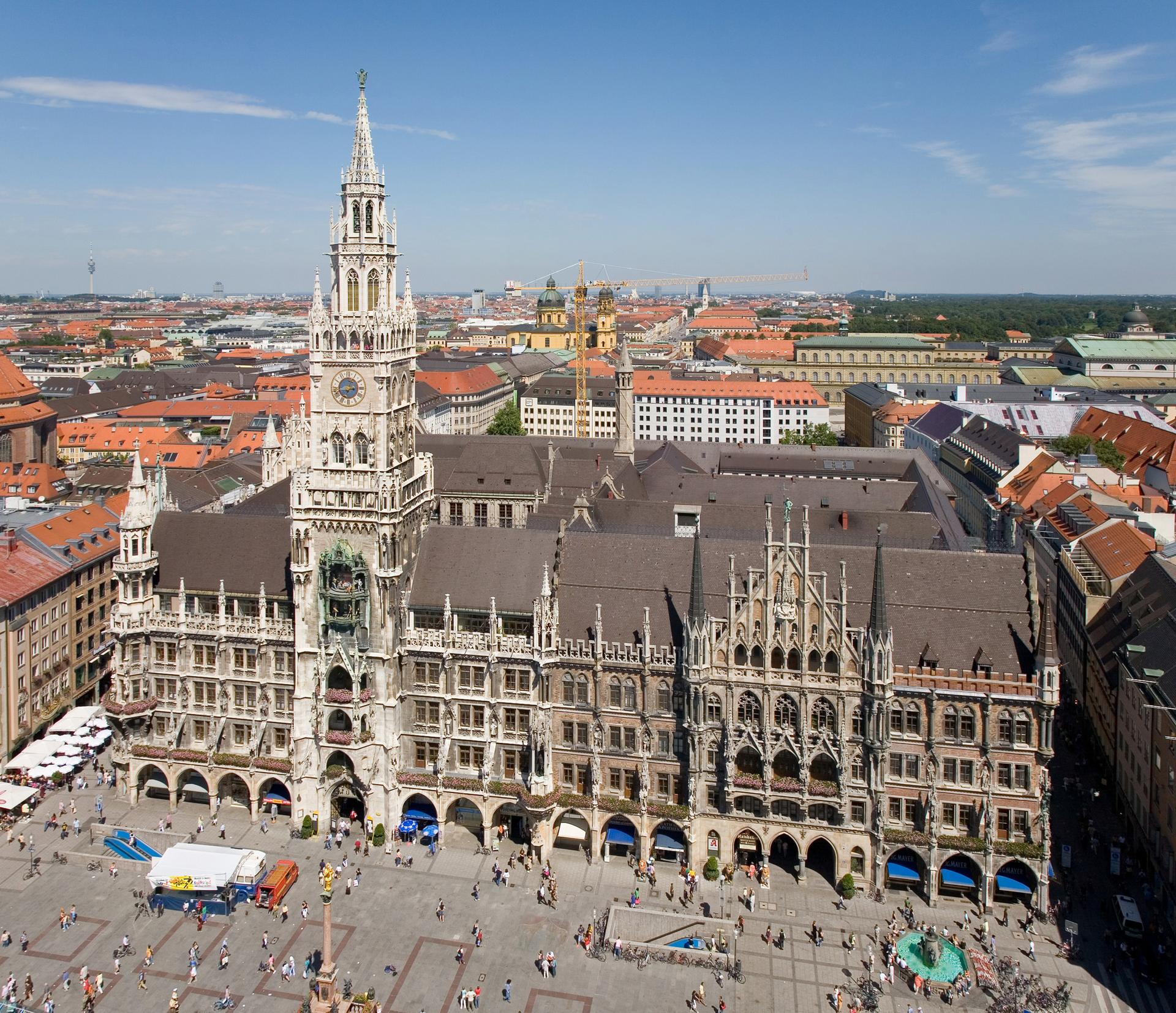
Looking beyond Frauenkirche? Discover Munich for broader travel guides, local hot-spots, and regional highlights.
Explore Munich
Discover the enchanting Marienplatz in Munich, where history, culture, and vibrant city life converge in a stunning architectural setting.
Experience Munich in miniature at the Model of Munich, a fascinating tourist attraction showcasing the city’s rich history and iconic landmarks.
