

Vier-Flüsse-Brunnen Travel Guide
Free Guide: Discover Würzburg's baroque splendor at the Vier-Flüsse-Brunnen, a captivating fountain symbolizing the region's rivers and rich history, nestled in the serene Juliusspital park.


A brief summary of Vier-Flüsse-Brunnen
Discover Würzburg's baroque splendor at the Vier-Flüsse-Brunnen, a captivating fountain symbolizing the region's rivers and rich history, nestled in the serene Juliusspital park.
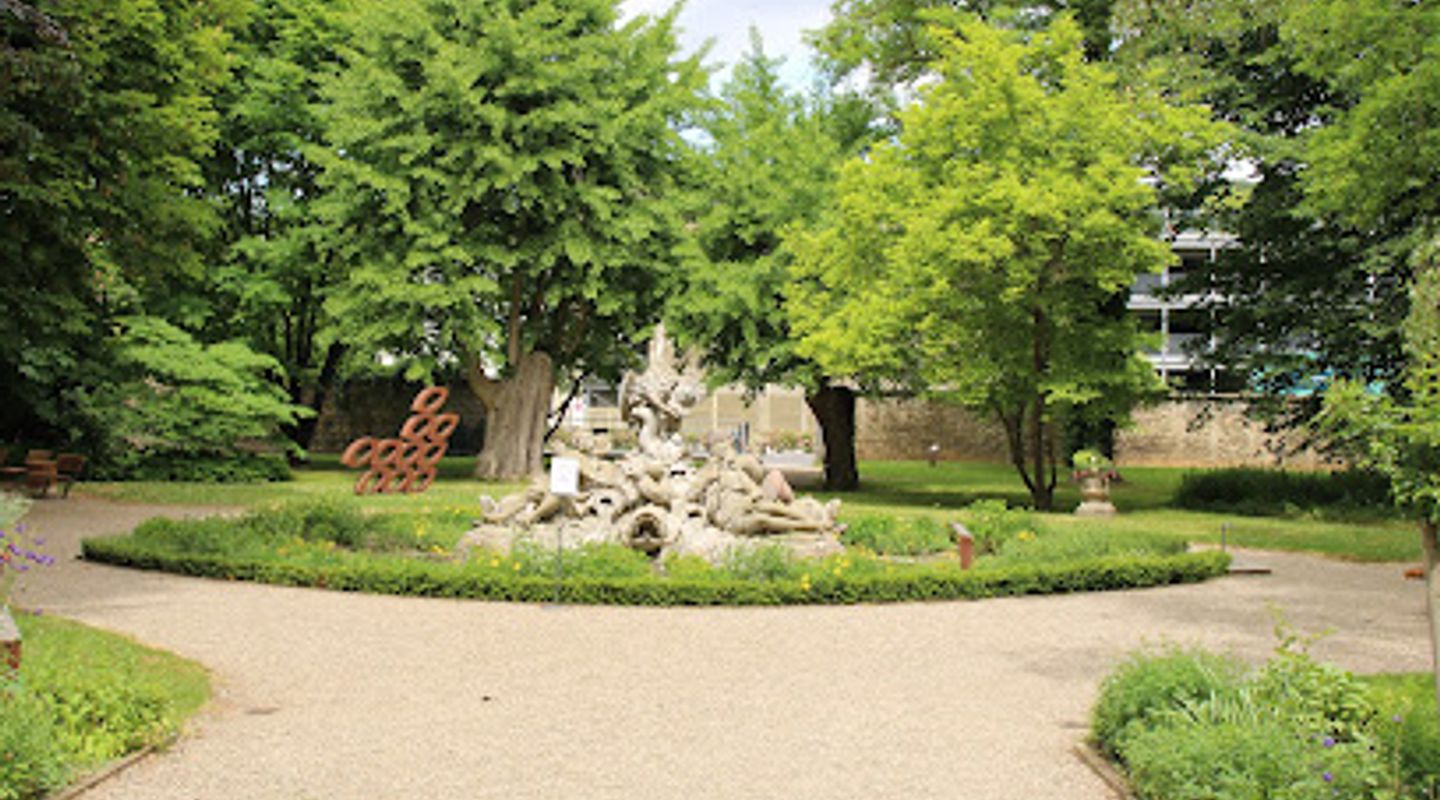
The Vier-Flüsse-Brunnen (Four Rivers Fountain) in Würzburg is a stunning baroque fountain created by sculptor Jakob van der Auwera between 1706 and 1708. Commissioned by Prince-Bishop Johann Philipp von Greiffenclau, it stands as a centerpiece in the park of the Juliusspital, representing the four main rivers of Franconia: the Main, Tauber, Sinn, and Saale. The fountain's design, reminiscent of Bernini's famous Roman fountain, features allegorical figures of the rivers, a dolphin, and a griffin bearing the coat of arms. Its intricate details and historical significance make it a must-see attraction, embodying the city's rich artistic heritage and offering a serene escape in the heart of Würzburg's Old Town. The surrounding park provides a tranquil setting to admire this exquisite work of art, blending history, mythology, and baroque splendor.
- Address
- 97070 Würzburg
Getting there
Walking
Public Transport
Taxi/Ride-Share
Discover more about Vier-Flüsse-Brunnen
Overview
The Vier-Flüsse-Brunnen, or Four Rivers Fountain, is a captivating baroque monument gracing the park of the Juliusspital in Würzburg, Germany. Created by the Flemish sculptor Jakob van der Auwera between 1706 and 1708, this fountain stands as a testament to the city's rich history and artistic heritage. Commissioned by Prince-Bishop Johann Philipp von Greiffenclau, it was conceived as the centerpiece of the newly redesigned baroque garden, reflecting the era's penchant for grandeur and symbolism. The fountain's design draws inspiration from Gian Lorenzo Bernini's renowned Four Rivers Fountain in Rome's Piazza Navona, yet it possesses its own distinct character and charm. Rising from a quatrefoil basin, the fountain features a rocky foundation adorned with allegorical figures representing the four major rivers of Franconia: the Main, Tauber, Sinn, and Saale. These figures, two male and two female, are depicted in classical poses, each holding attributes that symbolize their respective rivers. Water flows from ornate cornucopias held by the river figures, adding to the fountain's visual and auditory appeal. At the heart of the ensemble, a dolphin rises majestically, carrying on its tail a griffin – a mythical creature with the body of a lion and the head and wings of an eagle. The griffin proudly displays the coat of arms of Prince-Bishop von Greiffenclau, a symbol of his patronage and the fountain's connection to the city's ruling elite. The figures are crafted from yellow sandstone, their surfaces textured to create a play of light and shadow, enhancing their three-dimensional presence. The arrangement of the figures is not strictly symmetrical, reflecting a blend of baroque and classical elements typical of Flemish sculpture at the time. The Vier-Flüsse-Brunnen is more than just a decorative element; it is a symbol of Würzburg's identity and its connection to the surrounding region. The four rivers represented in the fountain have played a vital role in the city's history, serving as transportation routes, sources of sustenance, and inspiration for artists and poets. The fountain's location within the Juliusspital park adds another layer of significance. The Juliusspital, a charitable foundation and hospital, has been an integral part of Würzburg's social fabric for centuries, providing care for the sick and needy. The park, with its meticulously manicured gardens and tranquil atmosphere, offers a respite from the bustling city center. Over the centuries, the Vier-Flüsse-Brunnen has undergone several restorations to preserve its beauty and integrity. The original sandstone figures, exposed to the elements, suffered from weathering and erosion. In 1927 and again in 1964, the figures were replaced with replicas, while the originals were moved to the Museum für Franken for safekeeping. Today, visitors can admire the fountain in its full glory, marveling at the skill of the sculptor and the enduring power of its symbolism. The Vier-Flüsse-Brunnen is a popular gathering place for locals and tourists alike. Its central location, near the Old Main Bridge and other major attractions, makes it easily accessible. The fountain's soothing sounds and picturesque setting provide a welcome oasis in the heart of the city. Visitors can stroll through the park, admire the fountain from different angles, and learn about its history and significance. The surrounding area is home to numerous cafes, restaurants, and shops, offering a variety of options for refreshment and souvenirs. Visiting the Vier-Flüsse-Brunnen is an opportunity to step back in time and experience the grandeur of the baroque era. It is a chance to appreciate the artistry of Jakob van der Auwera and the vision of Prince-Bishop Johann Philipp von Greiffenclau. It is a reminder of the importance of water in shaping the history and culture of Würzburg. Whether you are a history buff, an art lover, or simply seeking a moment of tranquility, the Vier-Flüsse-Brunnen is sure to captivate your senses and leave a lasting impression. The fountain is a testament to Würzburg's enduring spirit and its commitment to preserving its cultural heritage for generations to come. Its beauty, symbolism, and historical significance make it an essential stop for any visitor to this charming Franconian city. As you stand before the Vier-Flüsse-Brunnen, take a moment to reflect on the stories it has to tell. Imagine the bustling city life that has unfolded around it over the centuries. Listen to the gentle murmur of the water, a constant reminder of the life-giving force that has sustained Würzburg for centuries. And let the beauty of the fountain inspire you to explore the many other treasures that this city has to offer.
Evendo Review Centre
 Google
Guest reviews
Explore Vier-Flüsse-Brunnen on the map
A handpicked selection of must-see spots near Vier-Flüsse-Brunnen, mapped for you.
Get your free copy of our complete guide to Vier-Flüsse-Brunnen, delivered straight to you.
Everything on this page, from opening hours and how to get there to Eve’s tips and the best time to go, in one PDF you can read offline, print or share.
Already have an account? Sign in
Your Vier-Flüsse-Brunnen guide is ready.
We'll send it to · Not you? Sign out

Getting your guide ready…
We are putting together a fresh copy of the Vier-Flüsse-Brunnen guide. This can take up to a minute.
This can take a few moments. If your browser asks, choose Allow so the download can start. You'll find the guide in your Downloads folder.
Nothing happened? Download it again
Sorry, the guide is taking longer than usual. Please try again in a minute, or get it by email instead.
Other nearby places you may find interesting
The closest places of the same kind, if this one is not quite what you had in mind.
-
-
-
-
-


Swipe for more places
More to explore near Vier-Flüsse-Brunnen

 Best experiences near Vier-Flüsse-Brunnen
 Best hotels near Vier-Flüsse-Brunnen
 Best landmarks near Vier-Flüsse-Brunnen
 Best attractions near Vier-Flüsse-Brunnen
 Best shops near Vier-Flüsse-Brunnen
 Best restaurants near Vier-Flüsse-Brunnen
 Best bars near Vier-Flüsse-Brunnen
Do you manage this location?
Take control to get all the benefits, like improved information, better appearance, and stronger visibility across AI-powered discovery.
Explore more
Explore more of Spessart
Discover Spessart, Germany's enchanting forested region, rich in folklore, history, and natural beauty. Wander through medieval towns, ancient woodlands, and captivating trails.
Explore Spessart
Explore more of Germany
Experience Germany: where history meets innovation, and urban energy blends with natural beauty. Discover diverse cultures, delicious cuisine, and stunning landscapes.
Explore Germany
