

Bismarck Tower Travel Guide
Free Guide: Discover panoramic Spreewald views from the historic Bismarck Tower in Burg, a landmark offering a glimpse into Germany's past and the region's natural beauty.


A brief summary of Bismarck Tower
Discover panoramic Spreewald views from the historic Bismarck Tower in Burg, a landmark offering a glimpse into Germany's past and the region's natural beauty.
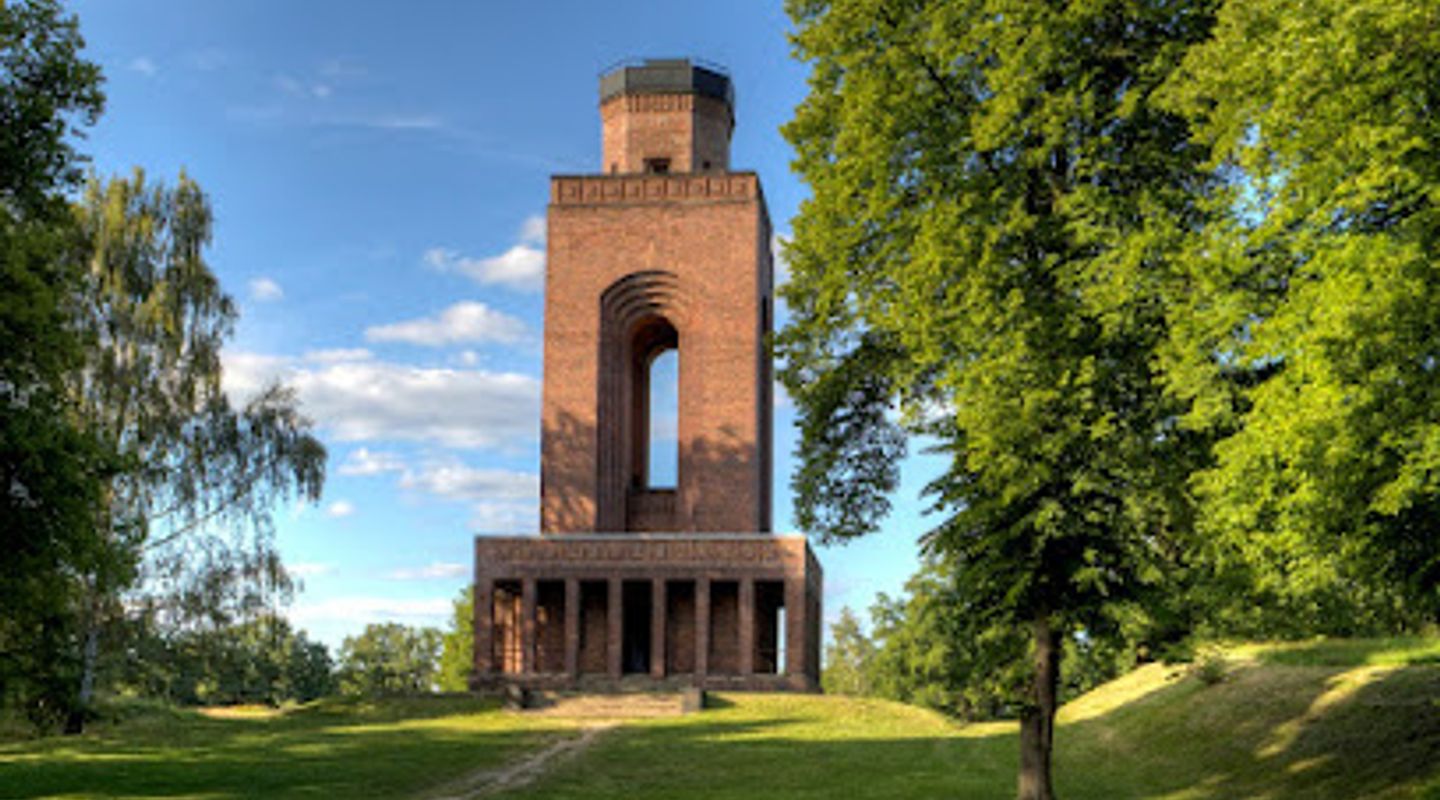
The Bismarck Tower in Burg (Spreewald) is a historical landmark offering panoramic views of the Spreewald region. Constructed between 1915 and 1917 from over 1.5 million red clinker bricks, the 28-meter tower stands on Schlossberg hill, commemorating Otto von Bismarck. It has served various purposes throughout history, including as a World War I memorial and a military observation post during World War II. After a period of closure during the mid-20th century, it reopened in 1990 and has since been a popular destination for tourists seeking scenic vistas and a glimpse into the area's rich past. Visitors can climb the tower for stunning views of the unique Spreewald landscape, characterized by its intricate network of waterways and lush forests. The tower also hosts occasional events, adding to its appeal as a cultural and historical site.
Opening hours
- Mon5:30 pm–10 pm
- TueClosed
- WedClosed
- Thu10 am–6 pm
- Fri10 am–6 pm
- Sat5:30 pm–10 pm
- Sun5:30 pm–10 pm
Opening hours as listed on the venue’s Google Business Profile. Hours can change for services and special events, so check with the venue before you go.
- Address
- Byhleguhrer Str., 03096 Burg (Spreewald)
- Phone
- Website
Getting there
Walking
Public Transport
Driving
Discover more about Bismarck Tower
Overview
Rising proudly from Schlossberg hill in Burg (Spreewald), the Bismarck Tower is more than just an observation point; it's a monument steeped in history and offering breathtaking views of the unique Spreewald landscape. Constructed between 1915 and 1917, this 28-meter tower stands as a testament to both architectural ingenuity and the tumultuous events of the 20th century. The tower's origins lie in the early 1900s when plans were first conceived to build an observation tower near Burg. In 1910, the decision was made to dedicate it to Otto von Bismarck, the first Chancellor of the German Empire, a figure both admired and controversial. Donations were collected, and architect Bruno Möhring from Berlin was commissioned to create a design, which was then executed by Cottbus architect Hermann Hauke. The outbreak of World War I significantly impacted the construction timeline. Work finally commenced in the spring of 1915, with the tower also becoming a memorial to soldiers who perished in the war. Approximately 1.5 million red clinker bricks were used in its construction, resulting in a robust and imposing structure. The base is square, measuring 13.77 meters on each side, with the first floor maintaining a square shape with 9.35-meter sides. Inside, a memorial hall is encircled by 28 pillars, topped by an octagonal dome. Viewing platforms are situated at 5 and 18 meters, offering progressively expansive views. During the Third Reich, the tower grounds were used for solstice celebrations, reflecting the regime's appropriation of historical symbols for propaganda purposes. In 1944, the Wehrmacht established a military observation point and radio control center within the tower, highlighting its strategic importance during the war. In 1945, plans were made to demolish the tower, but these were ultimately prevented for unknown reasons, sparing it from destruction. Following World War II, the tower underwent significant changes. "Ideological components" such as Bismarck's coat of arms and bust were removed, and the fire bowl at the top was dismantled. In 1951, it was renamed the "Tower of Youth," reflecting the socialist government's attempt to erase its connection to the German Empire. From the 1950s to 1990, the tower was closed to the public for strategic military reasons, further isolating it from the community. However, with the reunification of Germany, the tower experienced a renaissance. On October 3, 1990, it was officially renamed "Bismarckturm" during a public festival and reopened to visitors. In 1999, an additional exit was added to the tower head, increasing its height from 27 to 28 meters. Today, the Bismarck Tower stands as a symbol of resilience and transformation. Visitors can climb the 122 steps to the top, where they are rewarded with panoramic views of Burg and the Spreewald Biosphere Reserve. The Spreewald, a UNESCO-protected area, is a unique landscape of waterways, forests, and meadows, offering a tranquil escape from urban life. From the tower, one can appreciate the intricate network of canals that have shaped the region's culture and economy for centuries. The area surrounding the tower also offers opportunities for exploration. Walking paths wind through the Schlossberg hill, leading to picnic spots and viewpoints. The nearby village of Burg offers traditional Spreewald cuisine and cultural experiences. The tower also occasionally hosts events such as the "Night of the Pumpkin Ghosts", which bathes the tower in magical light. The Bismarck Tower is a reminder of Germany's complex history, from the rise of the German Empire to the division and reunification of the country. It is a place where visitors can reflect on the past while enjoying the natural beauty of the Spreewald. Whether you are interested in history, architecture, or simply breathtaking views, the Bismarck Tower in Burg is a must-see destination.
Evendo Review Centre
 Google
Guest reviews
Explore Bismarck Tower on the map
A handpicked selection of must-see spots near Bismarck Tower, mapped for you.
Get your free copy of our complete guide to Bismarck Tower, delivered straight to you.
Everything on this page, from opening hours and how to get there to Eve’s tips and the best time to go, in one PDF you can read offline, print or share.
Already have an account? Sign in
Your Bismarck Tower guide is ready.
We'll send it to · Not you? Sign out

Getting your guide ready…
We are putting together a fresh copy of the Bismarck Tower guide. This can take up to a minute.
This can take a few moments. If your browser asks, choose Allow so the download can start. You'll find the guide in your Downloads folder.
Nothing happened? Download it again
Sorry, the guide is taking longer than usual. Please try again in a minute, or get it by email instead.
Other nearby places you may find interesting
The closest places of the same kind, if this one is not quite what you had in mind.
-
-
-
-
-


Swipe for more places
More to explore near Bismarck Tower

 Best experiences near Bismarck Tower
 Best hotels near Bismarck Tower
 Best landmarks near Bismarck Tower
 Best attractions near Bismarck Tower
 Best shops near Bismarck Tower
 Best restaurants near Bismarck Tower
 Best bars near Bismarck Tower
Do you manage this location?
Take control to get all the benefits, like improved information, better appearance, and stronger visibility across AI-powered discovery.
Explore more

Explore more of Spreewald
Discover the enchanting waterways, lush landscapes, and rich cultural heritage of Spreewald, Germany's hidden gem and a UNESCO biosphere reserve.
Explore Spreewald
Explore more of Germany
Experience Germany: where history meets innovation, and urban energy blends with natural beauty. Discover diverse cultures, delicious cuisine, and stunning landscapes.
Explore Germany
