

Schicksalsbrunnen, Stuttgart Travel Guide
Free Guide: Discover the poignant beauty of Stuttgart's Schicksalsbrunnen, a memorial fountain rich in art nouveau symbolism, reflecting on love, loss, and the complexities of fate in a serene park setting.


A brief summary of Schicksalsbrunnen
Discover the poignant beauty of Stuttgart's Schicksalsbrunnen, a memorial fountain rich in art nouveau symbolism, reflecting on love, loss, and the complexities of fate in a serene park setting.
The Schicksalsbrunnen (Fountain of Fate) is a poignant art nouveau fountain located in Stuttgart's Oberer Schlossgarten. Created in 1914 by Karl Donndorf, it serves as a memorial to the opera singer Anna Sutter, who was tragically murdered in 1910. The fountain depicts allegories of love, life, and sorrow, inviting contemplation amidst the bustling city. Its intricate sculptures and serene setting offer a moment of reflection on the complexities of human existence. Situated near the Stuttgart Opera House, the Schicksalsbrunnen is easily accessible and provides a captivating glimpse into Stuttgart's artistic and cultural heritage. The fountain's design and symbolism make it a compelling destination for those seeking beauty and historical significance in Stuttgart.
Opening hours
- Every dayOpen 24 hours
Opening hours as listed on the venue’s Google Business Profile. Hours can change for services and special events, so check with the venue before you go.
- Address
- Oberer Schloßgarten 6, 70173 Stuttgart
- Website
Getting there
Walking
Public Transport
Taxi/Ride-Share
Driving
Discover more about Schicksalsbrunnen
Overview
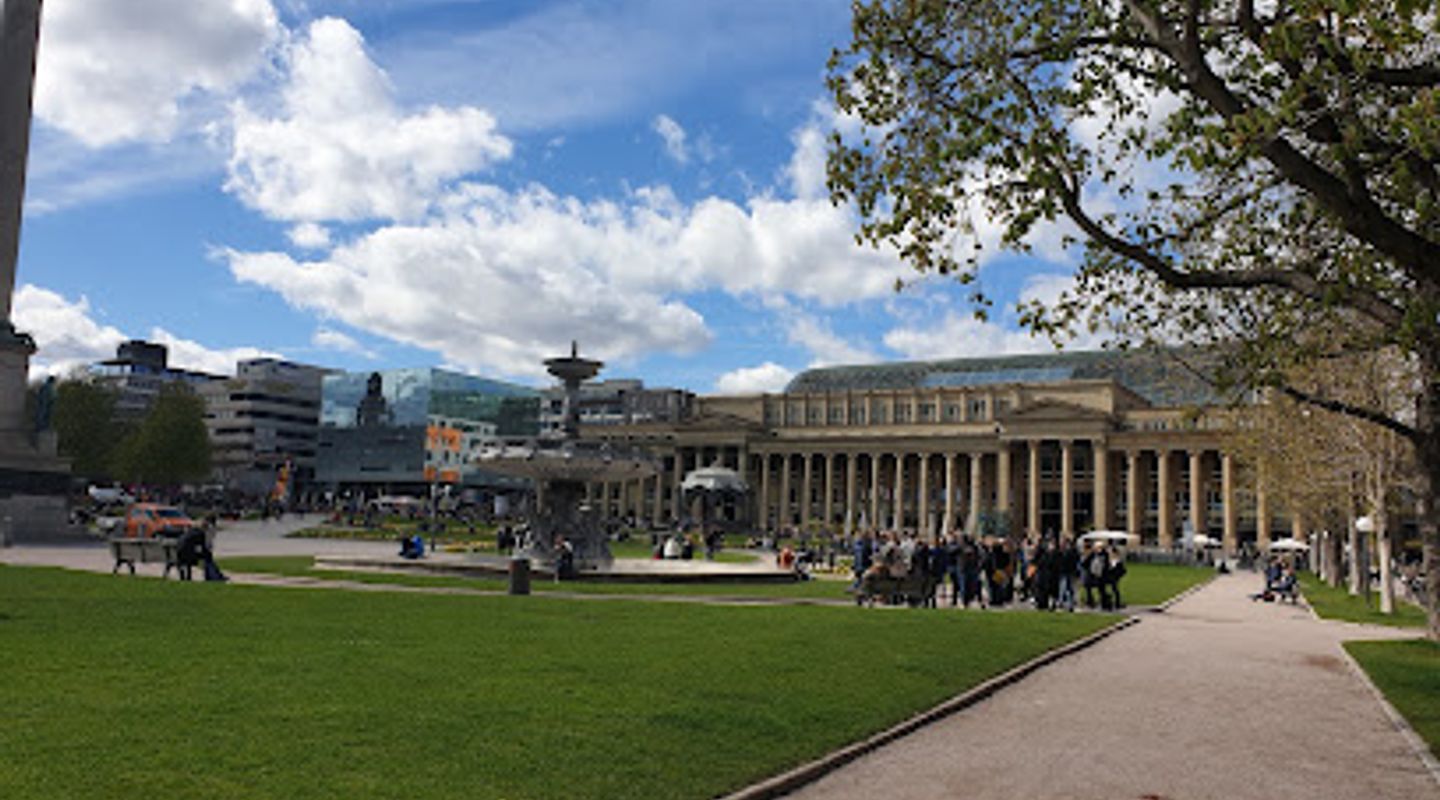
Nestled within the verdant expanse of Stuttgart's Oberer Schlossgarten, the Schicksalsbrunnen, or Fountain of Fate, stands as a testament to both artistic brilliance and tragic remembrance. This art nouveau masterpiece, created by sculptor Karl Donndorf, serves as a memorial to Anna Sutter, a celebrated opera singer whose life was cut short by a violent act of passion in 1910. Inaugurated in 1914, the fountain has since become a cherished landmark, inviting visitors to pause and reflect on the intricate tapestry of human existence. The fountain's design is rich in symbolism, reflecting the themes of love, life, and sorrow. Two primary allegorical groups flank the central basin. On one side, a triumphant male figure, adorned with a victor's wreath, holds aloft a brimming bowl, representing the fullness and abundance of life. A woman gazes adoringly at him, embodying the joy and optimism of love. This scene captures the blissful moments of human connection and the promise of a bright future. In stark contrast, the opposite side of the fountain portrays the darker aspects of fate. A despondent man, his head buried in his hands, finds solace in the lap of a seated woman. This poignant tableau embodies the pain of loss, the weight of despair, and the comfort found in empathy. The juxtaposition of these two scenes encapsulates the duality of life, where joy and sorrow are inextricably intertwined. The Schicksalsbrunnen's creation was deeply rooted in the tragedy surrounding Anna Sutter's death. Sutter, a renowned soprano, was murdered by a former lover, an event that shocked Stuttgart's artistic community. Donndorf's fountain serves not only as a memorial to Sutter but also as a meditation on the unpredictable nature of fate and the fragility of life. Originally located near the artist's entrance of the Stuttgart State Theater, the fountain was moved to its current location in the Oberer Schlossgarten in 1963. This relocation placed the Schicksalsbrunnen in a more public and accessible setting, allowing it to be appreciated by a wider audience. The Oberer Schlossgarten itself provides a fitting backdrop for the Schicksalsbrunnen. This expansive park, with its manicured lawns, winding pathways, and tranquil ponds, offers a respite from the urban bustle. Visitors can stroll through the gardens, admiring the diverse flora and fauna, before arriving at the fountain's serene setting. The Schicksalsbrunnen is more than just a beautiful work of art; it is a historical artifact that reflects Stuttgart's cultural heritage. Its presence in the Oberer Schlossgarten enriches the park's atmosphere, providing a space for contemplation and remembrance. The fountain's intricate sculptures and symbolic imagery invite visitors to engage with the themes of love, loss, and the human condition. Visiting the Schicksalsbrunnen offers a unique opportunity to connect with Stuttgart's past and appreciate the city's artistic legacy. The fountain's location in the heart of Stuttgart makes it easily accessible to both locals and tourists. Whether you are an art enthusiast, a history buff, or simply seeking a moment of tranquility, the Schicksalsbrunnen is a destination that will leave a lasting impression. The fountain is typically operational from mid-May to mid-September, maintained through the collaborative efforts of the city of Stuttgart, the Stiftung Stuttgarter Brünnele foundation, and dedicated fountain patrons. During these months, the flowing water enhances the fountain's beauty and symbolism, creating a more immersive and evocative experience. The Schicksalsbrunnen stands as a reminder of the power of art to commemorate, to console, and to inspire. Its enduring presence in Stuttgart's Oberer Schlossgarten ensures that Anna Sutter's memory lives on, and that visitors continue to contemplate the profound mysteries of fate.
Evendo Review Centre
 Google
Guest reviews
Explore Schicksalsbrunnen on the map
A handpicked selection of must-see spots near Schicksalsbrunnen, mapped for you.
Get your free copy of our complete guide to Schicksalsbrunnen, delivered straight to you.
Everything on this page, from opening hours and how to get there to Eve’s tips and the best time to go, in one PDF you can read offline, print or share.
Already have an account? Sign in
Your Schicksalsbrunnen guide is ready.
We'll send it to · Not you? Sign out

Getting your guide ready…
We are putting together a fresh copy of the Schicksalsbrunnen guide. This can take up to a minute.
This can take a few moments. If your browser asks, choose Allow so the download can start. You'll find the guide in your Downloads folder.
Nothing happened? Download it again
Sorry, the guide is taking longer than usual. Please try again in a minute, or get it by email instead.
Unlock the best of Schicksalsbrunnen
Skip-the-line tickets, guided tours with entry, and walking tours of the area, booked in a few clicks.

Other nearby places you may find interesting
The closest places of the same kind, if this one is not quite what you had in mind.
-
-
-
-
-


Swipe for more places
More to explore near Schicksalsbrunnen

 Best experiences near Schicksalsbrunnen
 Best hotels near Schicksalsbrunnen
 Best landmarks near Schicksalsbrunnen
 Best attractions near Schicksalsbrunnen
 Best shops near Schicksalsbrunnen
 Best restaurants near Schicksalsbrunnen
 Best bars near Schicksalsbrunnen
Do you manage this location?
Take control to get all the benefits, like improved information, better appearance, and stronger visibility across AI-powered discovery.
Explore more

Explore more of Stuttgart
Discover Stuttgart: A perfect blend of automotive history, cultural richness, and natural beauty. Explore museums, palaces, and vineyards in this dynamic German city.
Explore Stuttgart
Explore more of Germany
Experience Germany: where history meets innovation, and urban energy blends with natural beauty. Discover diverse cultures, delicious cuisine, and stunning landscapes.
Explore Germany
