
The Staatstheater Stuttgart, Stuttgart Travel Guide
Experience world-class opera, ballet, and theater at Europe's largest three-section Staatstheater, a cultural landmark in Stuttgart's heart, showcasing artistic excellence since the 17th century.
The Staatstheater Stuttgart, a distinguished landmark in the heart of Stuttgart, is Europe's largest three-section theater, encompassing the Stuttgart Opera, Stuttgart Ballet, and Schauspiel Stuttgart. With a history dating back to the 17th century and a stunning architectural presence designed by Max Littmann in the early 20th century, the Staatstheater offers a rich tapestry of performances ranging from classic operas to contemporary dance and dramatic plays. Its central location in the Oberer Schlossgarten, near other attractions like the Neues Schloss and Königstraße, makes it an easily accessible and integral part of Stuttgart's cultural landscape. A visit promises an immersive experience in the performing arts, enhanced by the theater's historical significance and architectural beauty, drawing nearly half a million spectators annually.
A brief summary to The Staatstheater Stuttgart
- Oberer Schloßgarten 6, Stuttgart, Stuttgart-Mitte, 70173, DE
- Click to display
- Click to display

Know before you go
Hi, I'm Eve. Here are a few practical things to know before exploring The Staatstheater Stuttgart.
- Check the Staatstheater's schedule in advance, as performances often sell out quickly, especially for popular operas and ballets.
- Arrive early to explore the theater's stunning architecture and historical exhibits, providing context to the performances you're about to see.
- Consider attending a guided tour to discover the behind-the-scenes secrets and learn about the Staatstheater's rich history and artistic significance.
- Take advantage of the free public transit included with your ticket within the VVS area, making it easy to reach the Staatstheater and explore other Stuttgart attractions.
- Combine your visit with a stroll through the Oberer Schlossgarten, offering beautiful views and a relaxing atmosphere before or after the show.
Do you manage this location?
Take control to get all the benefits, like improved information, better appearance, and stronger visibility across AI-powered discovery. Learn more about listing your business on Evendo
Activate your presenceOther nearby places you may find interesting
The closest places of the same kind, if this one is not quite what you had in mind.



Explore The Staatstheater Stuttgart on the Map
A handpicked selection of must-see spots near The Staatstheater Stuttgart, mapped for you.
Unlock the Best of The Staatstheater Stuttgart
Buy tickets
-
No tickets available
Book tours with entry


Book tours without entry

Getting There
-
Public Transport
From Stuttgart Hauptbahnhof (main train station), the Staatstheater is approximately a 10-minute walk through the Oberer Schlossgarten. Alternatively, take the U1, U2, U4, U9, or U14 to the Staatsgalerie stop, followed by a 5-7 minute walk. A single VVS ticket for a short trip (Kurzstrecke) costs around €1.80. Your ticket to the Staatstheater entitles you to free transit in the VVS area.
-
Taxi/Ride-Share
A taxi or ride-share from Stuttgart Hauptbahnhof to the Staatstheater typically costs between €8 and €12, depending on traffic and demand. The journey usually takes about 5-10 minutes.
-
Driving
If driving, the nearest car parks are Staatsgalerie, Schlossplatz, Schlossgarten, and Landtag. Parking fees at the Staatsgalerie car park are approximately €3.00 per hour, with a daily maximum of €20. Evening rates (6 PM - 6 AM) and Sunday/holiday rates are capped at €8. Be aware that parking spaces are limited, especially during peak performance times.
Discover more about The Staatstheater Stuttgart
More to explore near The Staatstheater Stuttgart













Your all‑in‑one travel companion app
Explore expert travel guides, compare and book tours, experiences, hotels, and more—all from the palm of your hand. Download now for seamless trip planning wherever your wanderlust takes you.


Explore More of Stuttgart

Looking beyond The Staatstheater Stuttgart? Discover Stuttgart for broader travel guides, local hot-spots, and regional highlights.
Explore Stuttgart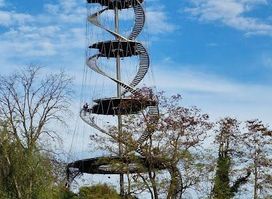
Escape to Stuttgart's Höhenpark Killesberg: Discover vibrant gardens, panoramic views from Killesberg Tower, and the charming Killesberg Railway in this urban oasis.

Discover Stuttgart's green heart: Oberer Schlossgarten, where nature meets culture in a vibrant urban oasis, offering tranquility and scenic beauty for all to enjoy.