

Hercules' Fountain Travel Guide
Free Guide: Marvel at Augsburg's Hercules Fountain, a Renaissance masterpiece and key part of the city's UNESCO-recognized water management system, symbolizing strength and ingenuity.


A brief summary of Hercules' Fountain
Marvel at Augsburg's Hercules Fountain, a Renaissance masterpiece and key part of the city's UNESCO-recognized water management system, symbolizing strength and ingenuity.
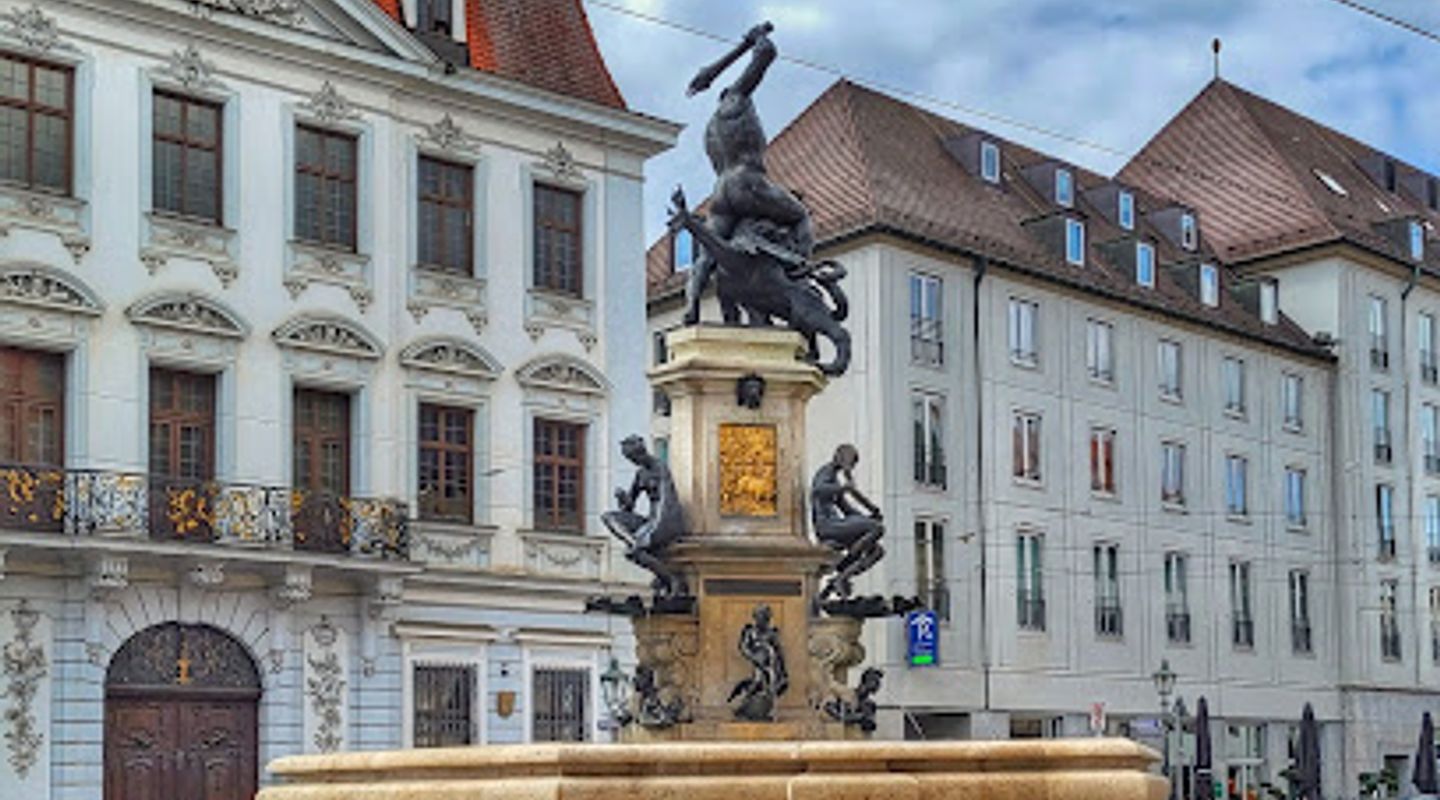
The Hercules' Fountain, a commanding bronze monument in Augsburg's Maximilianstraße, stands as a testament to the city's rich history and innovative water management system. Created by Adriaen de Vries and completed in 1602, the fountain depicts Hercules battling the Lernaean Hydra, symbolizing the triumph over the chaotic forces of nature. More than just a visual spectacle, the fountain once served a vital role in the city's drinking water supply, showcasing Augsburg's pioneering use of water power. Today, it remains a beloved landmark, drawing visitors to admire its intricate details and learn about its historical significance. The fountain is a key element of the UNESCO World Heritage Site, 'Augsburg Water Management System'.
Opening hours
- Every dayOpen 24 hours
Opening hours as listed on the venue’s Google Business Profile. Hours can change for services and special events, so check with the venue before you go.
- Address
- Maximilianstraße, 86150 Augsburg
- Website
Getting there
Walking
Public Transport
Taxi/Ride-Share
Discover more about Hercules' Fountain
Overview
Dominating the central Maximilianstraße in Augsburg, the Hercules' Fountain is more than just a beautiful monument; it's a powerful symbol of the city's history, ingenuity, and artistic achievement. Completed in 1602, this bronze masterpiece by Adriaen de Vries is one of three monumental fountains that once played a crucial role in Augsburg's unique water management system. The fountain's design is rich in symbolism. Hercules, the muscular and bearded Greek hero, stands triumphantly atop a solid base, wielding a flaming club to defeat the seven-headed Hydra. This scene represents humanity's struggle against the untamed forces of nature, with Hercules embodying strength, courage, and virtue. The Hydra, a serpentine monster that regrows two heads for every one severed, symbolizes the challenges overcome by Augsburg's innovative water engineers. Below Hercules, three Naiads, female figures representing water, add another layer of meaning. Each Naiad is engaged in a different activity: one wrings a cloth, another wipes water from her hair, and the third pours water from a jug. These figures are believed to represent the goddesses of time and fate, linking the concept of life's thread to the life-giving element of water. Further down, the fountain features sea gods holding shells and fish, along with mischievous putti strangling geese, from which water playfully spurts. These details add to the fountain's visual appeal and create a dynamic display of water in motion. The Hercules' Fountain is not only a work of art but also a testament to Augsburg's pioneering water management system. In the 16th and 17th centuries, Augsburg developed a sophisticated network of canals, water towers, and pumping stations that harnessed water power for various purposes, including providing clean drinking water to the city's residents. The three monumental fountains – Augustus, Mercury, and Hercules – were integral to this system, serving as both decorative landmarks and functional components of the water supply network. The Hercules Fountain, along with the Mercury Fountain, was particularly important for supplying drinking water to the citizens of Augsburg. The fountain's location in Maximilianstraße, the city's main thoroughfare, further emphasizes its significance. Maximilianstraße was historically the center of Augsburg's economic and social life, and the Hercules' Fountain served as a gathering place for locals and visitors alike. Its presence in front of the Fugger houses also nods to the family's financial support, emphasizing the intertwined history of art, politics, and power in Augsburg. Over the centuries, the Hercules' Fountain has undergone several restorations and modifications. Due to weathering concerns, the original bronze figures have been replaced by casts, with the originals now displayed in the Maximilian Museum. Despite these changes, the fountain remains a faithful representation of de Vries's original design and continues to inspire awe and admiration. Today, the Hercules' Fountain is a key element of the UNESCO World Heritage Site, 'Augsburg Water Management System,' recognized for its outstanding universal value. It stands as a reminder of Augsburg's rich history, its innovative spirit, and its enduring connection to water. A visit to the Hercules' Fountain is an essential experience for anyone seeking to understand and appreciate the cultural heritage of this remarkable city. Beyond its historical and artistic significance, the Hercules' Fountain offers a glimpse into the values and beliefs of the Renaissance era. The depiction of Hercules as a strong and virtuous hero reflects the Renaissance ideal of human potential and the importance of civic virtue. The fountain's intricate details and symbolic imagery invite viewers to contemplate the relationship between humanity, nature, and the divine. Whether you're an art enthusiast, a history buff, or simply a curious traveler, the Hercules' Fountain is sure to captivate your imagination and leave you with a lasting impression of Augsburg's unique charm. Take a stroll down Maximilianstraße, admire the fountain's majestic presence, and reflect on the rich history and cultural heritage that it represents. It's an experience that will transport you back in time and deepen your appreciation for the beauty and ingenuity of the human spirit. The Hercules Fountain is more than just a monument; it's a living symbol of Augsburg's past, present, and future. It's a testament to the city's enduring commitment to innovation, sustainability, and the preservation of its cultural heritage. As you stand before this magnificent fountain, take a moment to appreciate the legacy of those who came before us and to consider the importance of preserving our cultural treasures for generations to come.
Evendo Review Centre
 Google
Guest reviews
Explore Hercules' Fountain on the map
A handpicked selection of must-see spots near Hercules' Fountain, mapped for you.
Get your free copy of our complete guide to Hercules' Fountain, delivered straight to you.
Everything on this page, from opening hours and how to get there to Eve’s tips and the best time to go, in one PDF you can read offline, print or share.
Already have an account? Sign in
Your Hercules' Fountain guide is ready.
We'll send it to · Not you? Sign out

Getting your guide ready…
We are putting together a fresh copy of the Hercules' Fountain guide. This can take up to a minute.
This can take a few moments. If your browser asks, choose Allow so the download can start. You'll find the guide in your Downloads folder.
Nothing happened? Download it again
Sorry, the guide is taking longer than usual. Please try again in a minute, or get it by email instead.
Unlock the best of Hercules' Fountain
Skip-the-line tickets, guided tours with entry, and walking tours of the area, booked in a few clicks.


Other nearby places you may find interesting
The closest places of the same kind, if this one is not quite what you had in mind.
-
-
-
-
-


Swipe for more places
More to explore near Hercules' Fountain

 Best experiences near Hercules' Fountain
 Best hotels near Hercules' Fountain
 Best landmarks near Hercules' Fountain
 Best attractions near Hercules' Fountain
 Best shops near Hercules' Fountain
 Best restaurants near Hercules' Fountain
 Best bars near Hercules' Fountain
Do you manage this location?
Take control to get all the benefits, like improved information, better appearance, and stronger visibility across AI-powered discovery.
Explore more

Explore more of Swabia
Discover Swabia: A picturesque region in southwestern Germany, offering medieval architecture, scenic landscapes, and a rich culinary tradition.
Explore Swabia
Explore more of Germany
Experience Germany: where history meets innovation, and urban energy blends with natural beauty. Discover diverse cultures, delicious cuisine, and stunning landscapes.
Explore Germany
