

Swabia, Germany Travel Guide
Discover Swabia: A picturesque region in southwestern Germany, offering medieval architecture, scenic landscapes, and a rich culinary tradition.
Swabia is a charming region in southwestern Germany, known for its picturesque landscapes, rich history, and unique cultural heritage. Nestled between the Black Forest and the Bavarian Alps, Swabia offers a variety of attractions that cater to all kinds of travelers. Explore the medieval architecture in its towns and villages, such as the famous Hohenzollern Castle. The region is also home to the beautiful Danube River, perfect for scenic boat rides and leisurely walks along its banks. Swabia's capital, Stuttgart, is a bustling city renowned for its automotive industry, with museums dedicated to Mercedes-Benz and Porsche. One of Swabia's highlights is its culinary scene. Traditional dishes like Maultaschen (Swabian dumplings) and Spätzle (soft egg noodles) are a must-try. The region's vineyards also produce excellent wines, making it a delight for food and wine enthusiasts. Whether you're interested in history, nature, or gastronomy, Swabia has something special to offer.

Know before you go
Hi, I'm Eve. Here are a few practical things to know before exploring Swabia.
- Visit the Hohenzollern Castle early in the morning to avoid crowds and enjoy a peaceful experience.
- Try the local Swabian dishes like Maultaschen and Spätzle at traditional restaurants for an authentic culinary experience.
- Explore the vineyards and wineries in the region for a taste of Swabia's excellent wines.
- Stuttgart's automotive museums are a must-visit for car enthusiasts.
- Take a boat ride on the Danube River for stunning views and a relaxing experience.
Top City Travel Guides in Swabia
The cities of Swabia, and the easiest places to base yourself.

Destinations in Swabia
Resorts, valleys and scenic spots worth a trip of their own.


Explore Swabia: Things to Do, Places to Eat, Hotels & More
Handpicked recommendations for top attractions, local dining, accommodations, and more

Top Attractions & Sightseeing in Swabia
Top-rated picks
Best Attractions

Neuschwanstein Castle
Discover the enchanting Neuschwanstein Castle, a breathtaking fairytale fortress nestled in the Bavarian Alps, capturing the essence of romance and history.

Partnachklamm
Explore the breathtaking Partnachklamm gorge in Garmisch-Partenkirchen—where nature's beauty meets adventure in the heart of Bavaria.

Andechs Monastery
Discover the serene charm of Andechs Monastery, a stunning pilgrimage site with breathtaking views and world-renowned Bavarian beer.

Blombergbahn Bad Tölz
Discover the breathtaking beauty and thrilling adventures of Blombergbahn Bad Tölz, a top Bavarian destination for nature and fun lovers.

Best landmarks in Swabia
Top-rated picks
Best Landmarks
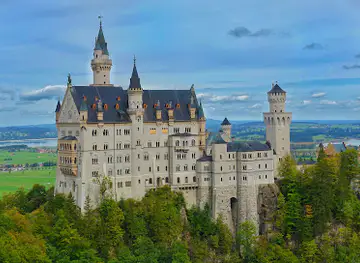
Neuschwanstein Castle
Explore the fairy-tale charm of Neuschwanstein Castle, a stunning historical landmark in the Bavarian Alps, renowned for its enchanting beauty and rich history.

Hohenschwangau Castle
Discover Hohenschwangau Castle, a stunning 19th-century palace in Bavaria, rich in history and surrounded by breathtaking alpine landscapes.

Linderhof Palace
Discover the enchanting Linderhof Palace, a stunning testament to Bavarian royalty, nestled in the idyllic landscape of Germany's Bavarian Alps.

Ulm Minster
Discover Ulm Minster, a stunning Gothic church in Germany, renowned for its magnificent architecture and breathtaking views from the tallest spire in the world.

Best restaurants in Swabia
Top-rated picks
Best Restaurants

Rasthaus Zugspitzblick
Savor exquisite flavors with stunning views at Rasthaus Zugspitzblick in Biberwier - an alpine dining experience like no other.

Alpe Dornach
Experience exquisite dining and breathtaking alpine views at Alpe Dornach in Oberstdorf – your perfect retreat in Bavaria.

Zum Wildschütz
Experience authentic Bavarian cuisine at Zum Wildschütz in Garmisch-Partenkirchen - where tradition meets flavor.

Riegele WirtsHaus
Discover Riegele WirtsHaus: A charming Bavarian restaurant in Augsburg offering exquisite German cuisine and craft beers in a lively atmosphere.

Best bars in Swabia
Top-rated picks
Best Bars

Fischer's Mohrenplatz
Discover authentic Bavarian flavors and a lively beer garden at Fischer's Mohrenplatz in Garmisch-Partenkirchen, a culinary gem in the Alps.

Germar's Best Burger
Experience the ultimate burger indulgence at Germar's Best Burger in Schwabmünchen, where flavor meets fun in an American-style eatery.

Bräustüberl Garmisch
Experience authentic Bavarian flavors and craft brews at Bräustüberl Garmisch in the heart of Garmisch-Partenkirchen.

Kaiserschmarrn-Alm
Experience the alpine charm and indulge in authentic Kaiserschmarrn at Kaiserschmarrn-Alm in Garmisch-Partenkirchen.

Best nightclubs in Swabia
Top-rated picks
Best Nightclubs

Spectrum Club
Discover Augsburg's nightlife at Spectrum Club, a dynamic disco club offering electrifying music, vibrant ambiance, and unforgettable dance experiences.

The Irish Pub
Experience the warmth of Irish hospitality at The Irish Pub in Garmisch-Partenkirchen, where great food, drinks, and live music await.

Kesselhaus
Experience the vibrant nightlife of Augsburg at Kesselhaus, a premier night club featuring exceptional DJs and a lively atmosphere.

Peaches Cocktailbar
Discover the vibrant nightlife at Peaches Cocktailbar, a top spot in Garmisch-Partenkirchen for creative cocktails and a lively atmosphere.

Best shops in Swabia
Top-rated picks
Best Shops

OUTLETCITY Metzingen
Discover unbeatable deals at OUTLETCITY Metzingen, Germany's premier outlet mall for luxury shopping and dining experiences.

Olympia Shopping Center
Unleash your shopping potential at Munich's Olympia Shopping Center, where over 130 stores await to satisfy every shopping desire.

Pasing Arcaden
Explore Pasing Arcaden, Munich's premier shopping mall with diverse stores, delectable dining, and a lively atmosphere perfect for tourists.

City-Galerie
Explore City-Galerie, Augsburg's largest shopping mall, offering diverse shops, delicious dining, and exciting events for all visitors.

Explore Swabia on the Map
A handpicked selection of must-see spots in Swabia, mapped for you.
Swabia Essentials
-
Swabia is located in the southwestern region of Germany. The major international airports closest to Swabia are Stuttgart Airport (STR) and Munich Airport (MUC). From these airports, you can easily reach Swabia by train, bus, or car. The German railway system, Deutsche Bahn, offers frequent services to major cities in Swabia such as Stuttgart, Ulm, and Augsburg.
-
Swabia boasts an excellent public transportation network, including trains, trams, and buses. The Deutsche Bahn trains connect major cities and smaller towns, while local buses and trams are perfect for intra-city travel. Renting a car is also a convenient option, especially for exploring rural areas and scenic routes. Bicycles can be rented in most cities, providing a popular way to explore the picturesque landscapes.
-
The official currency in Germany is the Euro (EUR). Credit and debit cards are widely accepted in hotels, restaurants, and shops, but it is advisable to carry some cash, especially for smaller establishments and rural areas. ATMs are readily available across Swabia, and most accept international cards.
-
Swabia is generally a safe destination for tourists. However, it is always wise to take standard precautions. Avoid walking alone at night in unfamiliar areas and keep an eye on your belongings in crowded places, such as markets and public transport. While there are no specific high-crime areas in Swabia, staying vigilant and aware of your surroundings is always advisable.
-
In case of emergency, dial 112 for immediate assistance. This number connects you to police, medical services, and fire departments. Hospitals and clinics are available in major cities and towns. It’s recommended to have travel insurance that covers medical emergencies. Pharmacies are available for minor health issues and over-the-counter medications.
-
Fashion: Do dress neatly and appropriately. Germans appreciate a well-groomed appearance. Avoid overly casual or revealing clothing, especially when visiting religious sites. Religion: Do respect local customs and traditions. If you visit a church, make sure to dress modestly and remain quiet. Public Transport: Do be punctual and purchase your ticket before boarding. Don’t talk loudly or play music. Give up your seat to elderly passengers. Greetings: Do greet people with a firm handshake. When addressing someone, use their title and last name until invited to use their first name. Eating & Drinking: Do try local Swabian specialties like Maultaschen and Spätzle. Don’t start eating until everyone is served and the host says 'Guten Appetit.'
-
To experience Swabia like a local, visit the weekly markets where you can buy fresh produce and local specialties. Engage with locals at beer gardens and try the regional beers. Attend a traditional festival like the Cannstatter Volksfest in Stuttgart or the Ulm Fishermen's Jousting (Fischerstechen). Exploring the Swabian Jura and the Black Forest offers an authentic taste of the region’s natural beauty.
When is the best time to visit Swabia?
Useful Local Phrases for Swabia
You don't need to speak the language perfectly. Even learning a few simple words can make conversations warmer—and locals usually appreciate the effort.
— Eve

Here are the phrases I use most often in Swabia. Try a few—you'll be surprised how far they go! 😊
❤️
-
- HelloGrüß Gott
[Greeß Gott] - GoodbyeAuf Wiedersehen
[Owf Veederzehn] - YesJa
[Ya] - NoNein
[Nyn] - Please/You're welcomeBitte
[Bittah] - Thank youDanke
[Dahngkeh] - Excuse me/SorryEntschuldigung
[Entshooldigung] - How are you?Wie geht's?
[Vee geht's?] - Fine. And you?Gut. Und dir?
[Gooot. Unt deer?] - Do you speak English?Sprechen Sie Englisch?
[Shprecken Zee Englisch?] - I don't understandIch verstehe nicht
[Ish fershteh nicht]
- HelloGrüß Gott
-
- I'd like to see the menu, pleaseIch hätte gerne die Speisekarte, bitte
[Ish het-teh gern-eh dee Shpieze-kart-eh, bittah] - I don't eat meatIch esse kein Fleisch
[Ish ess-eh kyn Flysh] - Cheers!Prost!
[Prohst!] - I would like to pay, pleaseIch möchte bezahlen, bitte
[Ish merkhte beh-zahlen, bittah]
- I'd like to see the menu, pleaseIch hätte gerne die Speisekarte, bitte
-
- Help!Hilfe!
[Hil-feh!] - Go away!Geh weg!
[Gay vek!] - Call the Police!Rufen Sie die Polizei!
[Roo-fen Zee dee Polizai!] - Call a doctor!Rufen Sie einen Arzt!
[Roo-fen Zee eye-nen Artz!] - I'm lostIch habe mich verlaufen
[Ish hah-bee mikh fer-lau-fen] - I'm illIch bin krank
[Ish bin krank]
- Help!Hilfe!
-
- I'd like to buy...Ich möchte ... kaufen
[Ish merkhte ... kauffen] - I'm just lookingIch schaue nur
[Ish shau-eh noor] - How much is it?Wie viel kostet es?
[Vee feel kostet es?] - That's too expensiveDas ist zu teuer
[Das ist tsoo toyer] - Can you lower the price?Könnten Sie den Preis senken?
[Kern-ten Zee den Preis senken?]
- I'd like to buy...Ich möchte ... kaufen
-
- What time is it?Wie spät ist es?
[Vee shpaht ist es?] - It's one o'clockEs ist ein Uhr
[Es ist ine Oor] - Half past (10)Halb (10)
[Halb (zehn)] - MorningMorgen
[Morg-en] - AfternoonNachmittag
[Nahc-mit-tahg] - EveningAbend
[Ah-bend] - YesterdayGestern
[Gess-tern] - TodayHeute
[Hoy-teh] - TomorrowMorgen
[Morg-en] - 1Eins
[Eins] - 2Zwei
[Tsvy] - 3Drei
[Dry] - 4Vier
[Fear] - 5Fünf
[Fünf] - 6Sechs
[Zex] - 7Sieben
[Zee-ben] - 8Acht
[Acht] - 9Neun
[Noyn] - 10Zehn
[Tzehn]
- What time is it?Wie spät ist es?
-
- Where's a/the...?Wo ist ein/eine ...?
[Vo ist ine/ine ...?] - What's the address?Wie ist die Adresse?
[Vee ist dee Ah-dress-eh?] - Can you show me (on the map)?Könnten Sie mir (auf der Karte) zeigen?
[Kern-ten Zee meer (owf der Kart-eh) tzig-eh?] - When's the next (bus)?Wann kommt der nächste (Bus)?
[Vahn kommt der nay-sht-eh (Boos)?] - A ticket (to ....)Ein Ticket (nach ...)
[Ine Ticket (nahkh ...)]
- Where's a/the...?Wo ist ein/eine ...?
History of Swabia
-
Swabia, known as Schwaben in German, traces its origins back to the early Middle Ages. It was named after the Suebi, a Germanic tribe that migrated to the region during the Migration Period. The Suebi eventually settled and formed the Duchy of Swabia, one of the five stem duchies of the medieval German kingdom.
-
Founded in the 10th century, the Duchy of Swabia played a significant role in medieval German politics. It was ruled by the Hohenstaufen dynasty, which produced several Holy Roman Emperors. The duchy's influence peaked under Emperor Frederick I Barbarossa in the 12th century, who fortified the region and developed its infrastructure.
-
In the early 14th century, the Swabian League was formed as a defensive alliance among Swabian cities, knights, and clergy. The league aimed to maintain peace and order in the region, protecting its members from external threats and internal conflicts. This alliance played a crucial role in the regional politics of the Holy Roman Empire.
-
Swabia was significantly impacted by the Protestant Reformation in the 16th century. The region saw widespread support for Martin Luther's ideas, leading to religious and social upheaval. During the German Peasants' War (1524-1525), Swabia was a hotbed of rebellion as peasants revolted against feudal oppression, inspired by the call for religious reform.
-
The Thirty Years' War (1618-1648) devastated Swabia, as it did much of the Holy Roman Empire. The region suffered from battles, plundering, and widespread destruction. Swabia's economy and population were severely affected, leading to a prolonged period of recovery and rebuilding after the war.
-
In the 19th century, Swabia experienced significant industrial growth, particularly in the textile and machinery industries. Cities like Stuttgart and Ulm became industrial hubs, attracting workers and fostering economic development. The rise of industry transformed Swabian society, leading to urbanization and modernization.
-
Swabia, like the rest of Germany, was deeply affected by the two World Wars. The region saw heavy fighting and bombing during World War II. After the war, Swabia underwent extensive reconstruction, supported by the Marshall Plan. This period also saw the rise of democratic governance and economic recovery, which set the stage for Swabia's modern prosperity.
-
Swabia is renowned for its rich cultural heritage, including traditional Swabian cuisine, dialect, and festivals. The region is famous for dishes like Maultaschen (Swabian dumplings) and Spätzle (a type of egg noodle). Swabian culture also includes a strong tradition of craftsmanship, particularly in clock-making and automotive industries, with companies like Mercedes-Benz and Porsche headquartered in Stuttgart.
-
Swabia boasts stunning natural landscapes, including the Swabian Jura mountains, the Black Forest, and the picturesque Danube River. These natural attractions, combined with historic towns like Tübingen and Augsburg, make Swabia a popular destination for tourists seeking both cultural and outdoor experiences.
Neighbouring Regions of Swabia
The closest regions to Swabia, if you have time for more than one.



Your all‑in‑one travel companion app
Explore expert travel guides, compare and book tours, experiences, hotels, and more—all from the palm of your hand. Download now for seamless trip planning wherever your wanderlust takes you.


Explore More of Germany

Looking beyond Swabia? Discover Germany for broader travel guides, local hot-spots, and regional highlights.
Explore GermanySwabia in Photos
Browse through our photo collection highlighting the charm and character of the destination.


Swabia: A Hidden Gem in Germany
Swabia is a charming region in southwestern Germany, known for its picturesque landscapes, rich history, and unique cultural heritage. Nestled between the Black Forest and the Bavarian Alps, Swabia offers a variety of attractions that cater to all kinds of travelers. Explore the medieval architecture in its towns and villages, such as the famous Hohenzollern Castle. The region is also home to the beautiful Danube River, perfect for scenic boat rides and leisurely walks along its banks. Swabia's capital, Stuttgart, is a bustling city renowned for its automotive industry, with museums dedicated to Mercedes-Benz and Porsche. One of Swabia's highlights is its culinary scene. Traditional dishes like Maultaschen (Swabian dumplings) and Spätzle (soft egg noodles) are a must-try. The region's vineyards also produce excellent wines, making it a delight for food and wine enthusiasts. Whether you're interested in history, nature, or gastronomy, Swabia has something special to offer.