

Kronberg Castle Travel Guide
Free Guide: Explore Kronberg Castle, a historic landmark showcasing centuries of German heritage, from its Romanesque origins to its transformation into a museum, offering guided tours and cultural events.


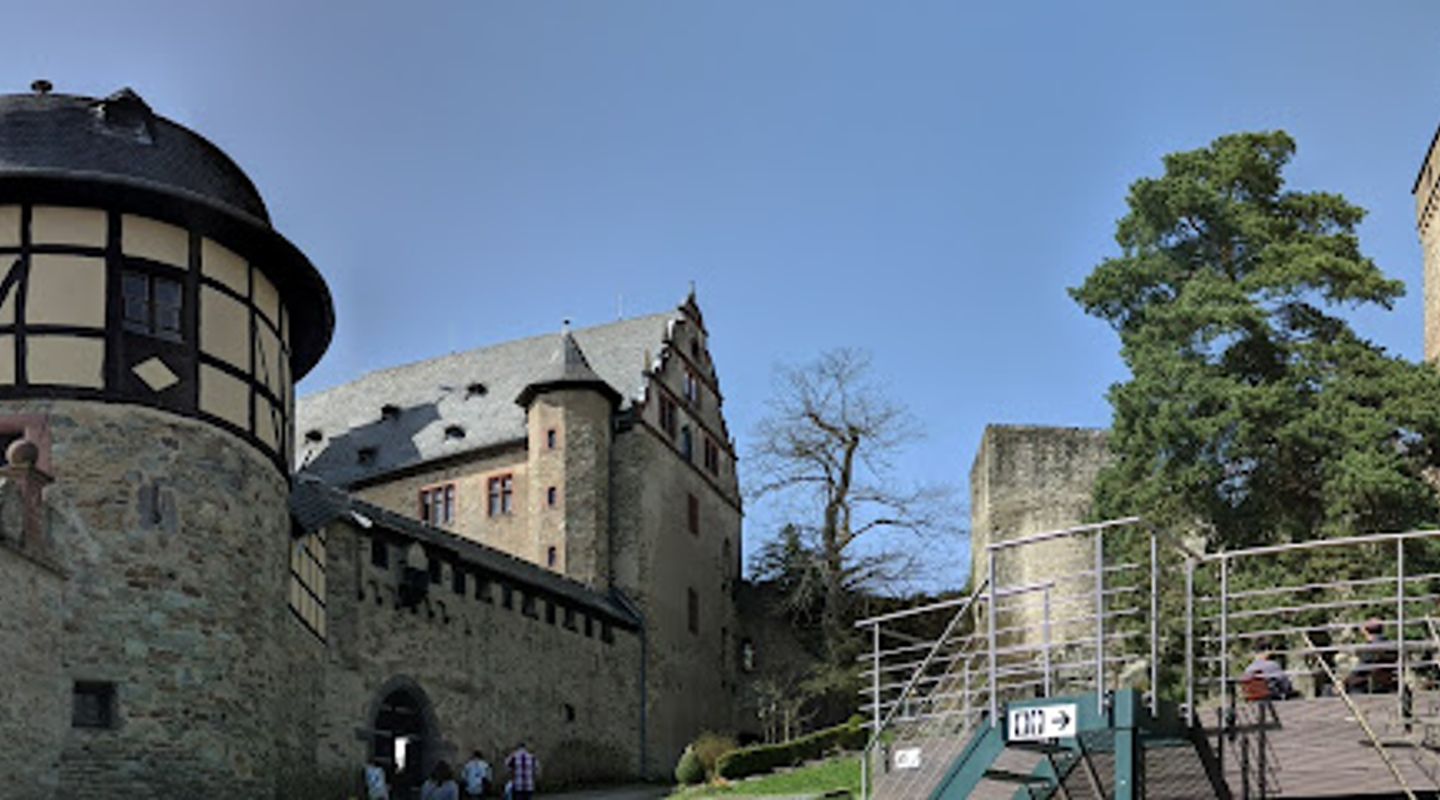
A brief summary of Kronberg Castle
Explore Kronberg Castle, a historic landmark showcasing centuries of German heritage, from its Romanesque origins to its transformation into a museum, offering guided tours and cultural events.
Kronberg Castle, a landmark steeped in history, offers a captivating glimpse into Germany's past. Founded in the Hohenstaufen period, the castle complex showcases architectural styles from the Romanesque upper castle to the Renaissance middle castle. Explore the ruins of the upper castle, including the imposing keep, and wander through the restored rooms that reflect the lives of the Lords of Kronberg and Empress Victoria. The castle's museum houses fascinating artifacts, including reproduced armor and a Gothic kitchen, providing a vivid portrayal of medieval life. With its rich heritage and stunning views, Kronberg Castle is a must-visit destination for history enthusiasts and travelers seeking a unique cultural experience. The castle's transformation over the centuries, from a defensive stronghold to a residential palace and finally a museum, makes it an intriguing destination.
Opening hours
- MonClosed
- TueClosed
- Wed1 pm–5 pm
- Thu1 pm–5 pm
- Fri1 pm–5 pm
- Sat1 pm–6 pm
- Sun11 am–6 pm
Opening hours as listed on the venue’s Google Business Profile. Hours can change for services and special events, so check with the venue before you go.
- Address
- Schloßstraße 10–12, 61476 Kronberg im Taunus
- Phone
- Website
Getting there
Public Transport
Walking
Taxi/Ride-Share
Driving
Discover more about Kronberg Castle
Overview
Kronberg Castle, perched atop a rocky outcrop in the Taunus region, is a testament to centuries of German history and architectural evolution. Its story begins in the late 12th century when the Holy Roman Emperor commissioned the Knights of Eschborn to construct a fortress, marking the genesis of what would become one of Germany's most extensive castle complexes. The oldest section, the Romanesque upper castle, dates back to 1170-1200. Today, only ruins remain, offering a glimpse into the castle's earliest defensive structures. The pentagonal tower, believed to have been built around 1175, stands as a silent witness to the castle's initial purpose as a stronghold. The imposing keep, constructed around 1200, dominates the landscape, its dungeon a chilling reminder of medieval justice. Around 1500, the 'middle castle' underwent a transformation, with half-timbered houses replaced by grand stone residences. This section reflects the influence of the Flügel and Kronen dynasties, the lords of Kronberg. The lower castle, dating back to the early 14th century, features a gatehouse and a chapel completed in 1342, showcasing the castle's evolving architectural styles. The castle's history is intertwined with the lives of the Lords of Kronberg, who resided here until their lineage ended in 1704. The permanent exhibition in the north wing of the middle castle delves into their lives, offering insights into their daily routines and the castle's economic significance. Replicas of Hartmuth VI of Kronberg's armor and the Gothic kitchen, complete with a large fireplace and well, provide a tangible connection to the past. In 1891, Kaiser Wilhelm II gifted the castle to his mother, Empress Victoria, the eldest daughter of Queen Victoria of Great Britain. Empress Victoria played a pivotal role in preserving the castle, initiating restoration projects under the guidance of architect Louis Jacobi. Her vision was to recreate the castle's appearance during the time of the last Lords of Kronberg, transforming it into a museum that would showcase its rich history. Following Empress Victoria's death in 1901, the castle passed to her daughter Margarete and her husband, Prince Friedrich Carl of Hesse. In 1992, the town of Kronberg acquired the castle and its grounds, leading to further restoration efforts spearheaded by the Burgverein (castle association). Today, visitors can explore large sections of the castle, including rooms meticulously restored to their original splendor. The chapel within the castle serves as the burial place for the House of Hesse and several Kronberg knights and their wives. The Gothic kitchen, with its barrel vaults and stone pillar hearth, evokes the atmosphere of medieval domestic life. The castle's evolution reflects changing notions of comfort and chivalry, with the introduction of heaters and the development of a refined domestic culture. Kronberg Castle has served various purposes throughout its history, including residential quarters, workshops, storage facilities, council offices, a prison, and even a school and painter's studio. This adaptability has ensured the castle's preservation and its continued relevance as a cultural landmark. Visiting Kronberg Castle is an immersive experience that transports visitors back in time. The castle's blend of architectural styles, its rich history, and its stunning location make it a unique and unforgettable destination. Whether exploring the ruins of the upper castle, wandering through the restored rooms of the middle castle, or delving into the castle's history at the museum, visitors are sure to be captivated by the charm and grandeur of Kronberg Castle. The castle walls of the upper castle enclose 750m2 and date back to the 12th and 13th centuries. At that time the courtyard would have been densely packed with stables, living quarters and battlements, all built very closely together. These buildings have disappeared over the centuries. There is historical evidence suggesting that the oldest part of the castle which is visible today, however, is the pentagonal tower, built in about 1175. At first it would have been used as living quarters. The keep is the most striking part of the castle grounds. It was built in about 1200. Beneath the entrance is the dungeon. Today, large areas are once again open to visitors, and guided tours of the rooms, which have been restored to their original style, are offered on a regular basis. The history of Kronberg Castle is the subject of the permanent exhibition, which can be visited in the north wing of the middle castle.
Evendo Review Centre
 Google
Guest reviews
Explore Kronberg Castle on the map
A handpicked selection of must-see spots near Kronberg Castle, mapped for you.
Get your free copy of our complete guide to Kronberg Castle, delivered straight to you.
Everything on this page, from opening hours and how to get there to Eve’s tips and the best time to go, in one PDF you can read offline, print or share.
Already have an account? Sign in
Your Kronberg Castle guide is ready.
We'll send it to · Not you? Sign out

Getting your guide ready…
We are putting together a fresh copy of the Kronberg Castle guide. This can take up to a minute.
This can take a few moments. If your browser asks, choose Allow so the download can start. You'll find the guide in your Downloads folder.
Nothing happened? Download it again
Sorry, the guide is taking longer than usual. Please try again in a minute, or get it by email instead.
Other nearby places you may find interesting
The closest places of the same kind, if this one is not quite what you had in mind.
-
-
-
-
-


Swipe for more places
More to explore near Kronberg Castle

 Best experiences near Kronberg Castle
 Best hotels near Kronberg Castle
 Best landmarks near Kronberg Castle
 Best attractions near Kronberg Castle
 Best shops near Kronberg Castle
 Best restaurants near Kronberg Castle
 Best bars near Kronberg Castle
Do you manage this location?
Take control to get all the benefits, like improved information, better appearance, and stronger visibility across AI-powered discovery.
Explore more
Explore more of Taunus
Discover the enchanting Taunus Mountains in Germany, where lush landscapes, historic towns, and cultural treasures await amidst serene natural beauty.
Explore Taunus
Explore more of Germany
Experience Germany: where history meets innovation, and urban energy blends with natural beauty. Discover diverse cultures, delicious cuisine, and stunning landscapes.
Explore Germany
